California Insurance Commissioner Ricardo Lara’s recent wildfire resiliency report 1 is being discussed as a roadmap for rebuilding after a catastrophe. From my reading, it is a lot more than that. To me, it signals a subtle shift in power from legislatures to insurers.
The report lays out a simple premise that wildfire risk can be engineered downward. When that happens, insurance availability in wildfire-prone areas follows. That sounds reasonable until you understand the mechanism driving it. The mechanism is not a statute or regulation. It is a standard created by the Insurance Institute for Business & Home Safety, and its Wildfire Prepared Home program.
For decades, building codes have been the floor of safety. They tell you what you must do to construct a home legally. But the IBHS standard is something different because it is a ceiling for insurability. It is a detailed, science-based system designed not just to help a structure survive, but to prevent ignition in the first place. Insurers are increasingly treating compliance with this standard as a signal of whether a risk is acceptable.
Lara’s report makes that connection explicit. It explains that insurers rely on catastrophe models and expected loss calculations to determine whether to write policies and at what price. Lower the expected loss, and insurers return. Raise it, and coverage disappears or becomes unaffordable. The report then points to the IBHS Wildfire Prepared Home standard as the tool capable of materially reducing those expected losses across entire communities.
I was surprised by how effective the standard is. Community-wide adoption of the standard can reduce average annual wildfire losses by roughly one-third. In an insurance marketplace driven by numbers, that kind of shift gets attention.
But to understand why this matters, you must examine what the IBHS standard requires. That was not listed in Lara’s report. This is not a vague set of recommendations. It is a detailed checklist that treats wildfire as a systems problem. It assumes that fire finds the weakest link, and it is built on the premise that if any one vulnerability remains, the entire system can fail.
That is why landscaping rules are treated with the same seriousness as structural design. The area within five feet of a home must be essentially noncombustible. No mulch. No shrubs. No wooden attachments. IBHS research shows that this immediate zone is where ignition most often occurs. A single decorative choice can become the fuse that leads to total loss.
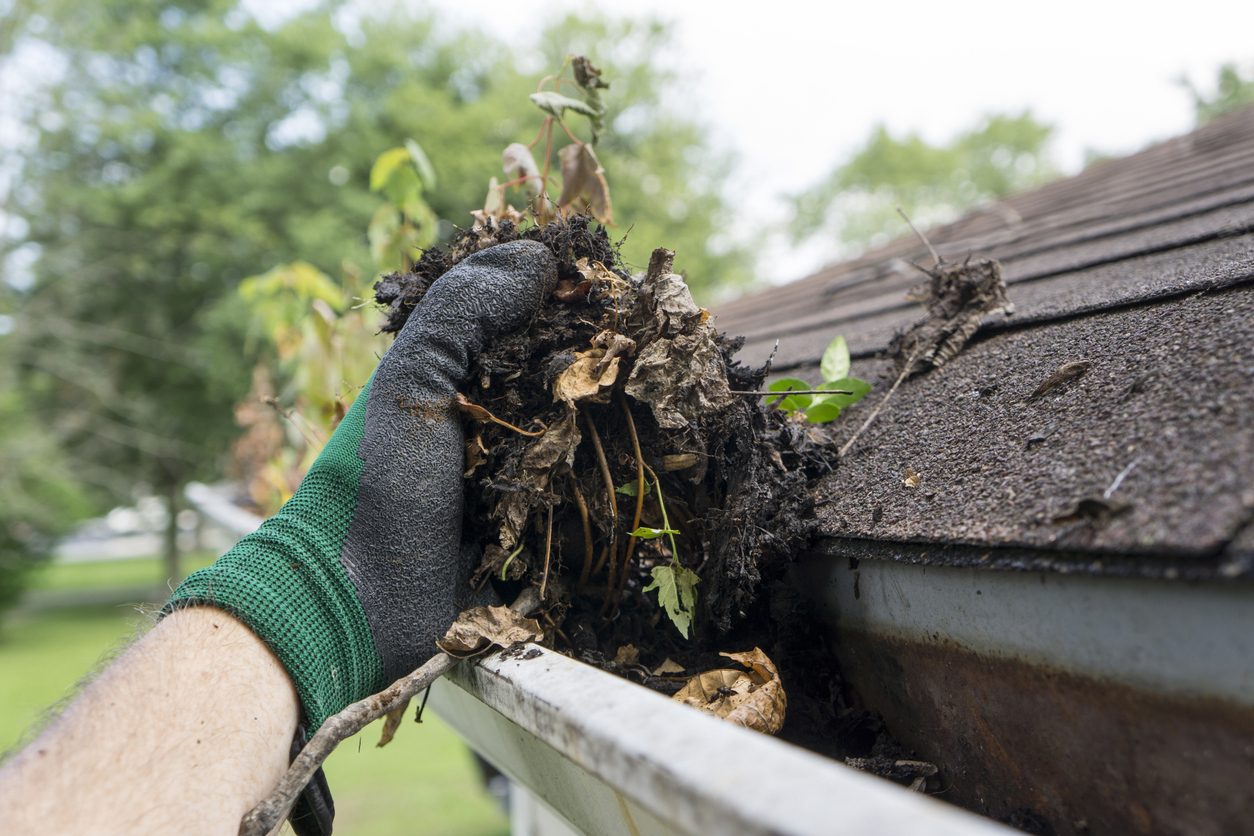
The structure itself is then hardened in ways that may seem minor but are anything but. Vents must resist embers because wind-driven embers are the leading cause of home ignition. Gutters must be noncombustible and kept clear because debris-filled gutters can become ignition points. Roofs must meet the highest fire-resistance ratings. There must be clearance at the base of walls, because fire does not need a large opening.
These details are not dramatic changes. But the IBHS standard’s philosophy is that small details determine outcomes.
Beyond the structure, the standard extends into defensible space, requiring careful management of vegetation and separation of fuels. Structures like sheds and fences cannot act as bridges for fire to travel from one ignition point to the home. Everything is interconnected.
There are two levels within the program. The base level focuses primarily on preventing embers from entering, which is responsible for most losses. The higher level adds protections against radiant heat and direct flame, requiring more aggressive material choices and spacing. The difference between the two is not cosmetic. It reflects whether a home is designed to resist ignition or to withstand a fire event that has already arrived at its doorstep.
Here is the critical point that Lara’s report makes, whether explicitly or implicitly. These standards do not need to become law to become mandatory in practice. If insurers decide that homes meeting these standards represent acceptable risk, and those that do not represent unacceptable risk, the market will enforce compliance far more effectively than any statute ever could.
We are already seeing the early signs of that shift in California. Insurers are offering discounts for mitigation. Some are signaling a willingness to write policies for homes that meet IBHS standards. The report suggests that broader adoption could bring carriers back into areas of California that they have been abandoning. In other words, the path back to an improved California insurance market for wildfire-prone areas may run directly through this private standard.
That raises uncomfortable but necessary questions. What happens to homeowners who cannot afford to retrofit? What happens when a home partially complies? Who decides whether compliance is sufficient? Will claims disputes arise over whether a homeowner maintained these conditions? Are we witnessing the emergence of a new, unwritten condition of coverage? Lara made suggestions, but nothing is in place. I was surprised that tax deductions weren’t included in the suggestions; instead, we’re relying on grant funding.
The legal implications are significant. If insurers begin to rely on IBHS standards in underwriting, it is only a matter of time before those standards appear in policy language, underwriting guidelines, and claims handling decisions. What begins as a “best practice” can quickly evolve into an expectation, and expectations have a way of becoming obligations.
There is also a broader societal question. Lara’s report emphasizes community-wide adoption, not just individual compliance. That is because wildfire does not respect property lines. A hardened home surrounded by vulnerable structures remains at risk. The report correctly notes that meaningful risk reduction—and meaningful insurance recovery—requires entire neighborhoods to move together.
That is easier said than done. It requires coordination, funding, and political will. It also requires homeowners to accept that the aesthetics and traditions of landscaping and construction may need to change in fundamental ways.
Still, the opportunity is real. The report calls this a once-in-a-generation rebuilding moment. That may sound like rhetoric, but it is grounded in reality. After a catastrophe, there is a brief window where rebuilding decisions can reshape risk for decades. If that window closes without change, the same losses will repeat, and the insurance market will continue its retreat.
What Lara’s report ultimately reveals is that the future of insurance in wildfire-prone areas will not be dictated solely by regulators or insurers. It will be dictated by physics and engineering, and by whether communities are willing to align with what the science already shows.
To clarify, the IBHS standard is not a suggestion. It is a blueprint for insurability.
The question is whether homeowners will treat it that way before the insurance market forces them to.
Thought For The Day
“Climate change is real. It is happening right now, it is the most urgent threat facing our entire species.”
— Gavin Newsom
1 Rebuilding With Wildfire Safety & Insurability. Cal. Dept. of Ins. (March 2026).