For decades, the insurance industry has justified legislative reforms, regulatory changes, and restrictions on policyholder rights by pointing to the specter of insurance fraud. We have repeatedly been told that fraudulent claims are a major driver of rising premiums and instability in insurance markets. Legislators and regulators have heard it. The public, newspapers, and television reporters have heard it.
I suggest that all readers of this blog post read “When Do Insurance Company Lobbyists and Trade Association Supporters Lie About Insurance Fraud Statistics? Every Time They Say or Write Anything,” and “Claims of Fraud Exaggerated by Insurance Industry’s Own Statistics.”
The problem is that the facts increasingly tell a different story. The truth is that statistics show that it is very rare that policyholders filing claims after disasters are attempting to cheat the system. The truth is that the number one reason that insurers are not paying has to do with claim value. This suggests we need more laws and regulations protecting policyholders from systemic lowballing by insurers and punishing those insurers who are aggressively undervaluing claims. The data from Hurricane Milton confirms this reality.
Recent claims statistics released following Hurricane Milton reveal that fraud was virtually nonexistent as a reason for claim closure. Out of the enormous number of claims reported, only a handful were closed because of fraud. At the same time, tens of thousands of claims were closed because insurers determined that the loss did not exceed the deductible, that the claim lacked sufficient value, or for various administrative reasons.
These numbers should force an honest discussion about where the real problems exist. For years, insurance industry representatives have appeared before legislatures and regulatory bodies arguing that fraud is rampant and that stronger measures are needed to combat dishonest policyholders. The result has often been laws that make it more difficult for policyholders to challenge claim decisions, obtain attorney representation, recover litigation costs, or hold insurers accountable for improper conduct.
Yet when actual catastrophe claims data is examined, the overwhelming majority of policyholders are not attempting fraud. They are people whose homes have been damaged by hurricanes, wildfires, hailstorms, tornadoes, and other disasters. They are seeking the benefits for which they paid premiums.
What the data increasingly suggests is that the larger problem is not fraudulent claims but undervalued claims. Anyone who regularly represents policyholders has seen the pattern. An insurer offers a payment that does not account for all damages. Code-required upgrades are omitted. Scope items are ignored. Depreciation calculations are stretched. Expert opinions are narrowly interpreted. Then, after a public adjuster, contractor, engineer, or attorney becomes involved, the claim value suddenly increases.
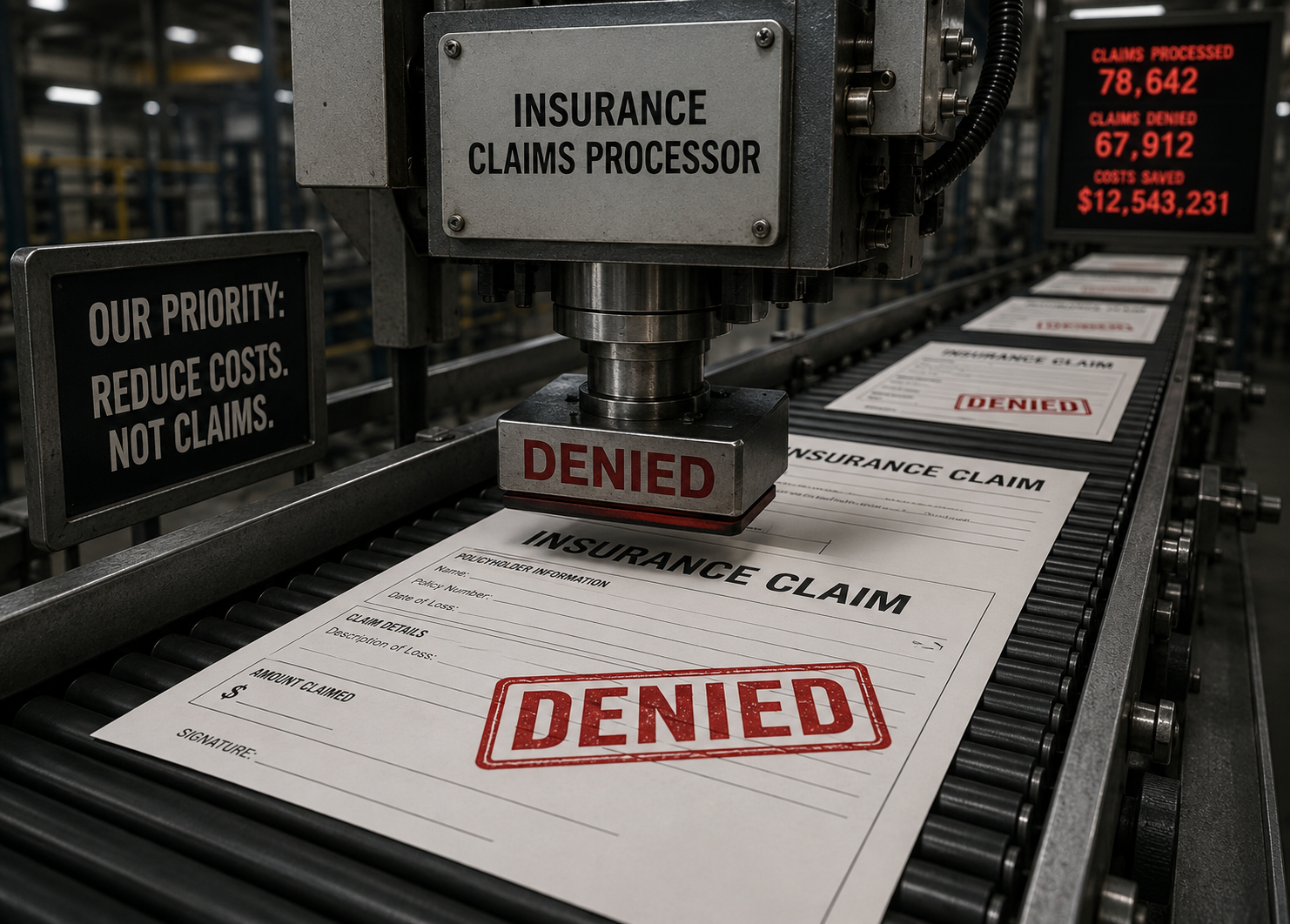
This phenomenon is not anecdotal. It occurs too frequently and too consistently to be dismissed as isolated mistakes. The Wall Street Journal recently reported that more than 44 percent of homeowners insurance claims resolved by the nation’s largest insurers resulted in no payment whatsoever. 1 Think about that number. Nearly half of policyholders who filed claims received nothing.
The insurance industry’s response is often that many claims fall below deductibles. That explanation deserves closer scrutiny. When insurers continually raise deductibles while simultaneously narrowing claim valuations, more losses inevitably fall below deductible thresholds. A claim that should be valued at $25,000 but is adjusted at $9,000 becomes a “below deductible” claim if the deductible is $10,000. The classification may sound objective, but the underlying valuation process deserves examination.
This is why lawmakers and regulators should focus less attention on fraud rhetoric and more attention on claims practices.
How often do claim payments increase after professional representation becomes involved? How often are initial estimates materially different from final settlements? How often are code upgrades omitted from original estimates only to be included later? How often are expert reports revised after challenges are raised? How often are policyholders forced to hire professionals simply to obtain benefits they were entitled to receive in the first place?
These are the questions that deserve serious study. Consumer protection laws exist because markets do not always police themselves. Banking regulations exist because of historical abuses. Securities laws exist because of historical abuses. Product safety regulations exist because of historical abuses. Insurance regulation should be no different.
Insurance industry propagandists have been far too liberal in invoking fraud as an explanation for market problems while being far too reluctant to acknowledge the financial incentives that can lead to systematic claim undervaluation. Fraud makes for compelling testimony before legislative committees. It provides a convenient villain. But the actual data increasingly suggests that the larger threat to consumers is not widespread fraud by policyholders. It is the underpayment and undervaluation of legitimate claims.
If policymakers are serious about protecting consumers, they should direct their attention to the area where the evidence points. They should demand greater transparency regarding claim valuations. They should examine claim settlement patterns. They should strengthen accountability measures when insurers repeatedly engage in unreasonable claim practices.
The purpose of insurance is to restore policyholders after a loss. When nearly half of claimants receive nothing and fraud represents only a microscopic fraction of claims, it is time to stop focusing on the wrong problem. The numbers tell us where the real issue lies. We should have the courage to follow the evidence.
Thought For The Day
“The first principle is that you must not fool yourself—and you are the easiest person to fool.”
— Richard Feynman
1 Jean Eaglesham and Jaclyn Jeffrey-Wilensky. “The Home-Insurance Coin Flip: Nearly Half of Claims Result in Zero Payout.” Wall Street Journal (May 30, 2026).