
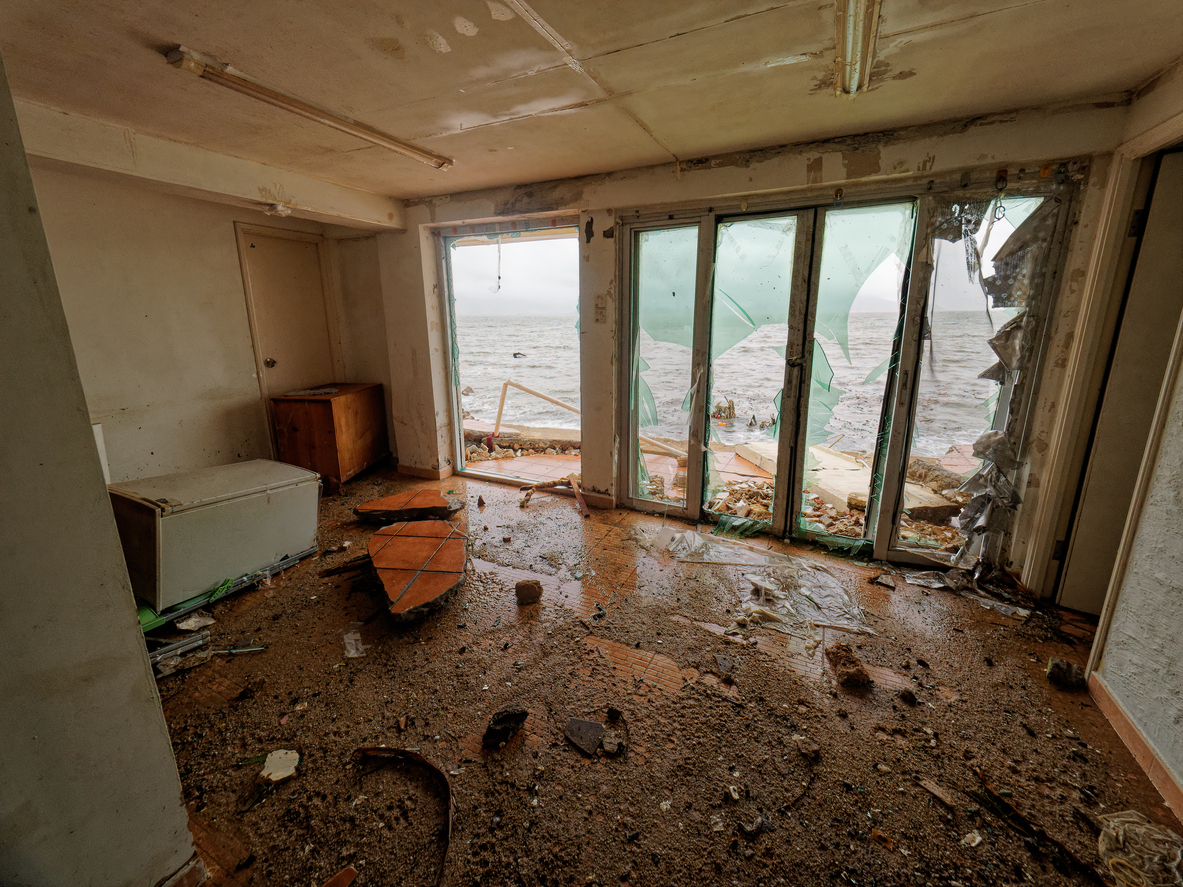
Flood insurance cases often look deceptively simple from a distance. Water came in, damage occurred, repairs were required, and insurance should respond. But anyone who has handled National Flood Insurance Program claims knows that the real battle is rarely about whether flood damage occurred. It is about paperwork, timing, and unforgiving federal rules that often collide head-on with the practical realities of rebuilding after a catastrophe.
A recent case decision involving Hartford and a condominium association damaged by Hurricane Ian illustrates this current problem with the National Flood Insurance Program. 1 The case did not turn on whether the buildings flooded. It did not turn on whether Category 3 water contaminated drywall, flooring, or mechanical systems. It did not even turn on whether the insurer and FEMA reviewed the additional claimed damages on the merits. Instead, the case turned on whether the policyholder filed a signed and sworn proof of loss stating an exact dollar amount for every additional item it later sought to recover.
The court granted summary judgment to Hartford, holding that, under the Standard Flood Insurance Policy, strict compliance with the proof-of-loss requirement is a condition precedent to both payment and suit. Invoices, contractor estimates, engineering reports, FEMA appeals, and ongoing adjustment activity were all deemed legally insufficient substitutes for a sworn proof of loss stating a sum certain. In federal flood cases, close enough is not enough when it comes to filing the insurance paperwork.
The court’s reasoning followed a long trend of federal authority. Flood policies are not treated like ordinary insurance contracts. They are federal regulations backed by the U.S. Treasury. Because every dollar paid is a charge against public funds, courts repeatedly emphasize that policyholders must “turn square corners” when seeking payment. Equity, cooperation, and common sense give way to formal compliance. I have written about this numerous times, including NFIP Escapes Payment with Form-Over-Substance Rules—The Need For Reform of the National Flood Insurance Program.
What makes this ruling especially troubling is how divorced it is from the way flood losses actually unfold. Even with FEMA extensions, policyholders are expected to submit precise proofs of loss within a fixed window, often before demolition is complete, before hidden damage is discovered, and long before reconstruction pricing stabilizes. Anyone who has handled a serious flood loss knows that construction work routinely takes months, not weeks. Mechanical systems fail later. Contamination spreads. Costs escalate. Entire categories of damage are discovered only after walls and floors are opened.
Under this ruling, if those additional damages were not captured in a signed and sworn proof of loss within the deadline, they are legally lost forever. It does not matter if the insurer knew about them. It does not matter if FEMA reviewed them on appeal. It does not matter if the damages were real, necessary, and flood-caused. If they were not reduced to a sworn number on the right form at the right time, they might as well not exist.
This places policyholders in an impossible position. File early and risk being wrong, or wait for accuracy and risk forfeiture. Guess low and leave money on the table, or guess high and invite scrutiny and denial. The law demands certainty at precisely the moment when certainty is least achievable.
The decision also sends a message to policyholders who believe cooperation with adjusters and FEMA will protect them. Continued adjustment, additional payments, FEMA waivers for specific amounts, and merit-based appeal decisions do not waive the proof-of-loss requirement unless FEMA expressly says so in writing. Silence is not waiver. Process is not forgiveness.
For policyholders and public adjusters handling these flood losses, the lesson is clear. In flood claims, the proof of loss is not just paperwork. It is the claim. If a damage item is not included in a timely, signed, sworn proof of loss stating a sum certain, federal courts may never allow it to be paid, no matter how legitimate it is.
This is not how most people think insurance should work. It is, however, how federal flood insurance works, based on interpretation by federal judges. Until Congress or FEMA changes the system, accuracy and completeness in proofs of loss are not aspirational goals. They are survival requirements which, from a practical standpoint, are not going to be met.
Thought for the Day
“In a flood of evils, when the boat is low, the first thing thrown overboard is dignity.”
— Aristotle
1 Bay Haven at Coco Bay Condo. Assoc. v. Hartford Ins. Co. of the Midwest, No. 2:24-cv-696 (M.D. Fla. Jan. 14, 2026). (See also, Hartford Motion for Summary Judgment, and Bay Haven Response to Motion for Summary Judgment).