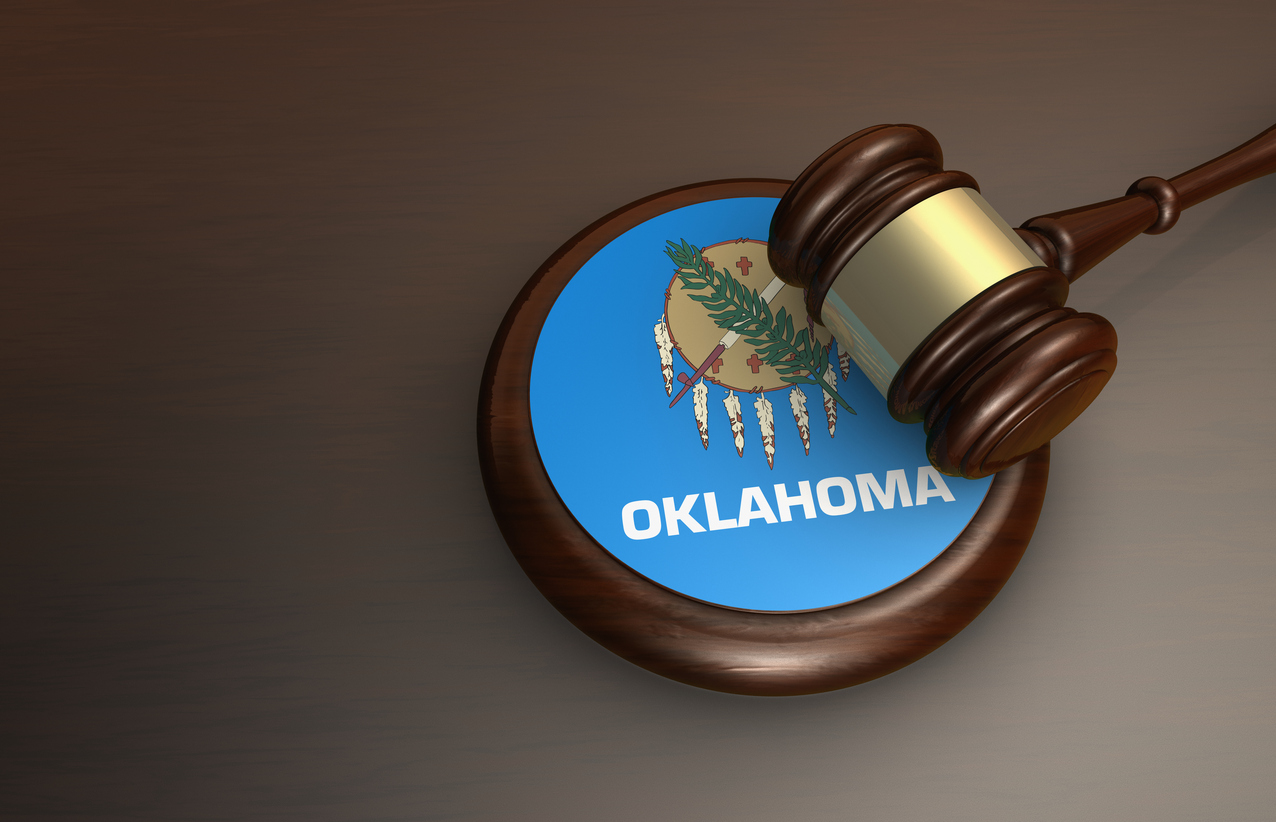

The Oklahoma Attorney General has filed another major lawsuit against a national insurance company. This time, the target is Allstate. The allegations are serious. They are not yet proven. Allstate will have every right to defend itself. But if the Petition is even close to accurate, the lawsuit raises a fundamental question about modern property insurance claims handling. Are insurance companies adjusting claims under the policy, or under internal financial programs designed to reduce aggregate claim payments?
The State Farm lawsuit I discussed in “Did State Farm Win the Battle but Lose the Advantage in the Oklahoma Hail Claims War?” alleged a “Hail Focus Initiative.” The Allstate lawsuit alleges what the Attorney General calls a “Disaster Payment Minimization Scheme.” That phrase alone should make every policyholder, public adjuster, regulator, claims executive, and judge pause.
Insurance claims departments are not supposed to be profit centers. They are supposed to be promise centers. The premium has already been collected. The product has already been sold. When the storm hits, the insurer’s job is to investigate promptly, evaluate honestly, and pay the full amount owed under the policy.
The Allstate lawsuit alleges something very different. It claims Allstate implemented an internal program to “drastically reduce aggregate indemnity payments in Oklahoma.” It alleges Allstate secretly substituted restrictive, extra-contractual standards for the policy language and used those hidden standards to deny or minimize legitimate covered losses. That sounds similar to the State Farm lawsuit, but the Allstate case pleadings go further in several important ways.
The State Farm lawsuit was largely about an alleged internal claims initiative that narrowed hail claim payments after the policy had been sold. The Allstate lawsuit is also about claims handling, but it adds a sharper sales-side allegation. The Attorney General alleges that Allstate and its agents marketed homeowners policies as providing replacement cost coverage for wind and hailstorm damage while, in the alternative, Allstate allegedly did not truly issue replacement cost coverage policies in Oklahoma as that term is understood under Oklahoma law.
This is significant because a claims dispute asks whether the insurer paid enough for a covered loss. A sales-and-claims fraud case asks whether the policyholder was sold one promise and delivered another. If the Attorney General can prove that homeowners asked for or were led to believe they purchased replacement cost protection, but Allstate later treated the coverage as something materially less, the case becomes much more than a fight about shingle valuations. It becomes a case about the integrity of the insurance promise at the point of sale.
The Allstate complaint also paints a different operational picture from the State Farm case. In the State Farm case, the allegations focused on higher-level approvals, curtailed adjuster authority, and restrictive hail-damage standards. In the Allstate case, the Attorney General alleges that licensed adjusters were stripped of meaningful decision-making authority and that Allstate, in some instances, replaced traditional in-person inspections with unlicensed third-party “picture takers.” Those photographs were allegedly uploaded to a portal and reviewed by others who could deny coverage or require estimate revisions based on undisclosed internal standards. I discussed some of these issues in “Meet The New Low-Cost Independent Field Adjuster.”
If proven, these facts put more space between the damaged property and the claims person making the decision to pay or how much to pay. It can turn field adjustment into a photography errand and the desk adjuster never going to the property into a messenger for a claim-center outcome.
Many insurers have adopted this adjustment model, so this is a significant allegation and industry wide claims handling issue. A claim decision made through a screen, filtered through photographs and internal review protocols, may miss what an experienced on-site field adjuster sees while standing on the roof and conducting a thorough investigation with an ethical culture value looking for all the damage.
The complaint further alleges that Allstate’s internal process reduced estimates below deductibles, eliminating payments entirely. That is a key allegation. In modern property claims, the difference between a covered loss and a no-pay claim can be a few estimate line items. If internal reviewers are pushing estimates below the deductible based on undisclosed standards, severity control, or leakage KPI’s and goals, that is not simply “estimating discipline.” It may be claim suppression wearing a green eyeshade.
The most dangerous allegation for Allstate may be that the alleged scheme was tracked to meet predetermined savings targets “down to the dollar.” That is the kind of allegation that discovery can prove or disprove. Claims dashboards, severity reports, reinspection programs, reviewer notes, closed-file audits, authority changes, vendor instructions, and management communications will tell the story.
The question in this case is whether the system was designed to promptly pay the full amount owed, or was it designed to reduce indemnity payments? That is where these wrongful claims practice lawsuits against State Farm and Allstate share a common theme. Both ask whether internal claims initiatives became secret amendments to the policy. Insurers are allowed to train adjusters. They are allowed to demand proof. They are allowed to fight fraud. They are allowed to make good-faith coverage decisions. They are not allowed to sell coverage with one hand and take it away through hidden claim standards and goals to suppress full payment with the other.
The Allstate lawsuit is more ambitious than the State Farm lawsuit because it attacks both the adjustment of claims and the nature of the coverage allegedly sold. That makes it potentially more powerful. It also makes it more vulnerable.
Allstate will almost certainly argue that the Attorney General is oversimplifying replacement cost coverage. Many policies pay actual cash value first and allow recovery of depreciation after repair or replacement. Some replacement cost provisions have conditions. Some policyholders never complete repairs. Some losses are below deductibles. Some roofs are old. Some damage is wear and tear. Those defenses are real and should not be brushed aside.
The Attorney General will need more than outrage. He will need documents, data, and testimony. He will need the internal playbook. He will need the dashboards. He will need the training materials. He will need the directives to reviewers and vendors. He will need to show whether the alleged program was about fair and consistent claims handling or about reducing payments to hit financial goals.
Allstate is famous for telling policyholders they are “in good hands.” That is a powerful brand promise. But the promise of insurance is measured after the loss, not during the commercial. If the hands that collect the premium are open, but the hands that adjust the claim are closed, the public has every right to ask hard questions.
This lawsuit should also be a wake-up call to other insurance companies. The age of invisible claims initiatives may be ending. Attorneys General are learning where to look. Market conduct exams too often count files and deadlines while missing the machinery behind the files. The real evidence is usually inside the claims operation: authority limits, severity metrics, vendor selection patterns, estimate revision logs, internal claims bulletins and discussions, annual claims goals, and managerial pressure to reduce loss ratios.
If the Oklahoma Attorney General proves these allegations, the Allstate case may become a roadmap for other states. If he cannot, it may still force a long-overdue conversation about whether catastrophe claims are being adjusted for policyholders or managed for financial outcomes.
The State Farm lawsuit asks whether hail claims were narrowed by a hidden claims initiative. The Allstate lawsuit asks that question and adds another: Was replacement cost coverage sold in name but not delivered in substance? That is why this case matters. It is not just about Allstate. It is about whether the insurance promise survives contact with the claims department.
Thought For The Day
“Customers are the reason we exist and deserve exceptional value.”
—Tom Wilson, Chair, President & CEO of The Allstate Corporation