Only in California do we get an insurance coverage dispute where wildfire, PG&E power shutoffs, closed coastal roads, seawater pumps, and dead abalone all come together in one appellate opinion. American Abalone Farms, LLC v. Star Insurance Company 1 is a reminder that the efficient proximate cause doctrine still matters, especially when insurers try to turn a wildfire loss into something smaller, narrower, and excluded.
American Abalone Farms raised abalone in tanks near the ocean in Santa Cruz County. During the CZU Lightning Complex Fires, electricity to the area was shut off, and the road to the farm was closed. The pumps that supplied fresh seawater to the abalone tanks stopped operating. Most of the abalone died.
Star Insurance largely denied the claim for the abalone stock. Its argument was straightforward: the abalone were not burned by flames. They died because of power loss, pump failure, lack of oxygen, and lack of access. Star relied heavily on the policy’s Off-Premises Services exclusion, which addressed the failure of power or utility service away from the insured location. Star also argued that Coverage F for farm products was a named-peril coverage and that the loss was not caused by a covered peril in the way the policy required.
The trial court granted summary judgment to Star, largely because the insured had trouble presenting admissible evidence. But the Court of Appeal reversed as to breach of contract and declaratory relief because Star’s own evidence and admissions raised triable issues. The insurer had admitted enough of the causal chain to defeat summary judgment: the CZU fire caused the power shutoff and road closure, which caused the pumps to stop, which caused the abalone to die.
The most important policy wording was the main insuring agreement. Star promised to pay for “direct physical loss” to covered property “caused by or resulting from” a covered cause of loss. The appellate court refused to rewrite it as if it said: “directly caused by fire.” 2 The word “direct” modified the physical loss, not the causation chain. The abalone were dead. That is about as direct a physical loss as one can imagine. The question was whether that direct physical loss was caused by or resulted from a covered cause of loss.
Fire was a covered cause of loss. The abalone were covered stock under the farm products coverage. Star acknowledged that the “stock” listed in the declarations meant the abalone. Once those two points were established, the battleground became causation.
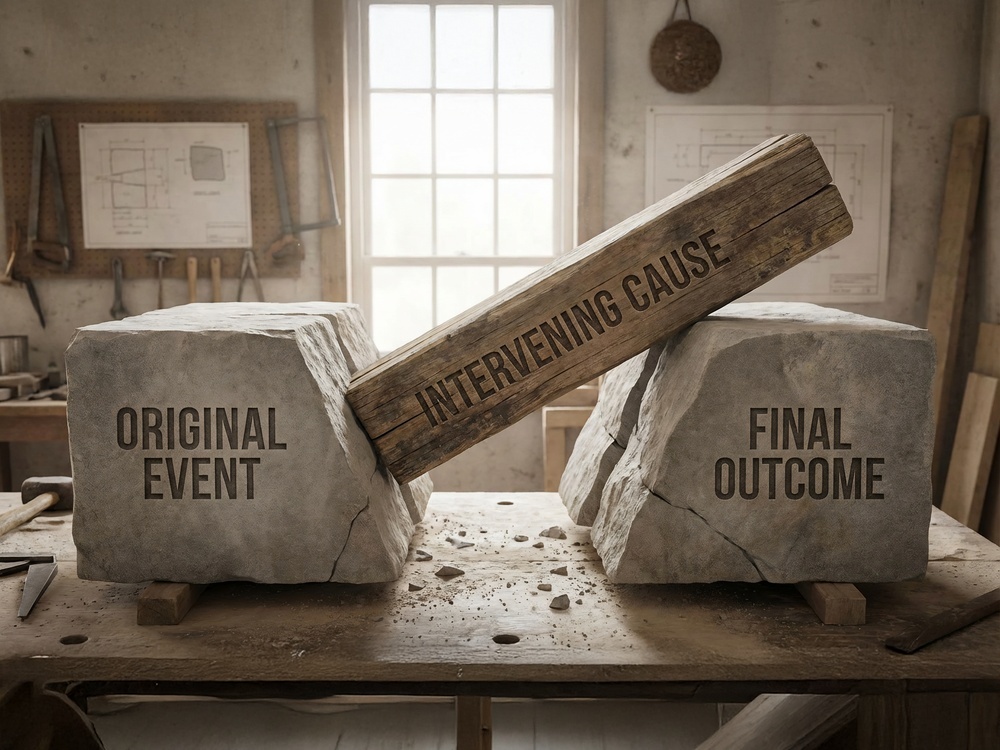
California law asks what peril was the predominant, moving, or triggering cause of the loss. Here, the fire set everything else in motion. The power shutoff did not happen in a vacuum. The road closure did not happen because somebody felt like taking a scenic highway off the map. These were fire-driven events. The wildfire was the reason the utility service stopped and the reason access was barred. The abalone died because the fire caused the conditions that stopped the pumps keeping them alive.
Insurers often attempt to re-label wildfire losses as something else: smoke contamination, civil authority, power interruption, evacuation, spoilage, loss of access, deterioration, mold, vacancy, delay, or business interruption caused by some intermediate event. The efficient proximate cause doctrine requires a disciplined look at what actually set the loss in motion.
This case is especially useful in the age of Public Safety Power Shutoffs, evacuation orders, road closures, and utility-related wildfire responses. A wildfire may damage property without flames crossing the property line. It may cause loss through smoke, ash, loss of access, mandatory evacuation, power interruption, or the inability to maintain property that requires constant human attention. Farms, wineries, aquaculture operations, refrigerated inventory, livestock facilities, restaurants, and coastal businesses can all suffer losses through fire-driven chains of events.
The insurer’s exclusion for off-premises utility service did not end the analysis. If a covered peril is the efficient proximate cause of the loss, an exclusion cannot always be enforced to defeat coverage merely because an excluded or noncovered peril appears somewhere in the causal chain. This does not mean every wildfire-adjacent loss is covered. Facts matter. The policyholder survived because the fire was not remote. It was the event that caused the shutdowns and closures while the emergency was unfolding. The court compared the case to prior efficient proximate cause cases where fire indirectly caused later physical loss. In American Abalone, the causal link was even tighter because the abalone died while the wildfire response was still underway.
There is also something uniquely Californian about this loss. Abalone are part of California’s coastal identity. They are creatures of cold Pacific water, kelp forests, rocky shorelines, and a fragile marine ecosystem that has long fascinated divers, fishermen, scientists, and coastal communities. An abalone farm is not a generic warehouse full of widgets. It is a living operation dependent on water, oxygen, pumps, access, timing, and care. When wildfire cuts off the life-support system, the resulting death of the stock is not some abstract economic inconvenience. It is physical loss.
Wildfires cause loss in many ways. Sometimes they burn structures to the ground. Sometimes they poison the air, close roads, shut off power, stop pumps, and kill abalone along the California coast. The efficient proximate cause being fire won the day. The deeper lesson is that causation in property insurance should follow reality, not the insurer’s preferred label.
Thought For The Day
“The Monterey coast is the greatest meeting of land and water in the world.”
— Francis McComas
2 1 American Abalone Farms v. Star Ins. Co., No. H052643, 2026 WL 1141732 (Cal. App. Apr. 27, 2026). See Star Insurance answer brief and American Abalone Farms reply brief.
Id. at *5.