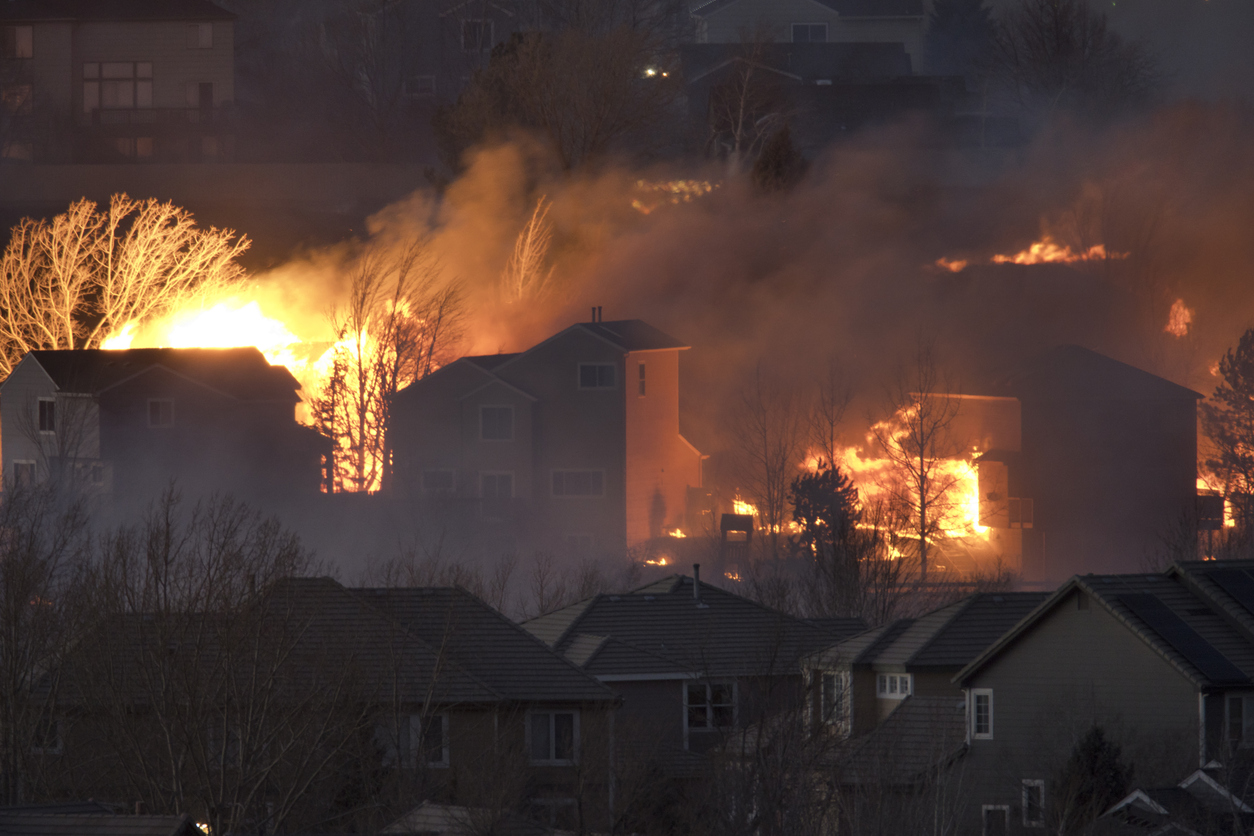
More than a year after the January 2025 Southern California wildfires, many families remain displaced even though their homes are still standing. The structures survived the flames, yet meaningful restoration work has not begun. Claims remain stalled while Additional Living Expense (ALE) benefits continue moving toward exhaustion.
For many homeowners, ALE has become the dominant source of stress. When payments are reduced or cut off while disputes remain unresolved, the pressure is immediate. Housing costs do not pause. Temporary rent does not wait. Families are often forced to choose between financial survival and continuing to challenge claim decisions they believe are wrong.
Why ALE Becomes the Pressure Point
ALE coverage is supposed to stabilize policyholders. In practice, when claims disputes delay restoration work, expiring ALE limits can function very differently. When carriers contest contamination, remediation scope, or contents losses while ALE benefits continue running, policyholders face extraordinary financial and psychological pressure. Many homeowners feel compelled to accept incomplete cleaning protocols simply to avoid running out of benefits.
While construction delays are often blamed, many bottlenecks arise much earlier at the scope and coverage determination stage. A standing home is not necessarily a habitable home. Modern wildfires generate microscopic particulates that infiltrate insulation, HVAC systems, drywall, and concealed cavities. Properly addressing these conditions may require extensive decontamination, including removal of building components. Carriers, however, frequently default to a clean first approach, predictably creating disputes that stall projects.
Contents claims further complicate recovery. Wildfire contamination rarely stops with structural elements. Personal property, including furnishings, clothing, and electronics, is often affected. When carriers resist contents replacement or remediation, restoration projects frequently cannot move forward. Homeowners cannot reasonably rebuild while unresolved disputes linger over contaminated belongings inside the home.
Cleaning Versus Decontamination
Many standing homes require far more than surface cleaning. True decontamination, when warranted, carries a vastly different scope and cost profile than cosmetic soot removal. When carriers minimize contamination concerns and homeowners, or their consultants, reach different conclusions, projects often grind to a halt.
These issues were addressed during a recent United Policyholders presentation held on February 12, 2026, featuring Amy Bach, Sandra Moriarity, CPCU, and Denise Sze.
United Policyholders remains one of the most valuable resources available to disaster survivors:
During the presentation, Amy Bach made a striking observation. In her view, this wildfire produced the worst particulate impaction she has seen in thirty-five years. That assessment mirrors what many policyholders and consultants continue to encounter. The contamination conditions inside many homes simply do not align with ordinary cleaning assumptions.
The presenters also offered practical guidance that often determines whether claims spiral into deeper conflict. Testing should occur before cleaning begins. Follow up testing after remediation is critical. Careful ALE documentation is essential. United Policyholders’ tracking tools and spreadsheets, long relied upon by survivors, can prevent many avoidable disputes.
In many of these cases, litigation is not a strategic choice, but a predictable result of how the claims process unfolds. When carriers refuse to address contamination, delay contents decisions, and allow ALE benefits to run down, policyholders are left with few options. Filing suit often becomes the only mechanism capable of forcing progress. As Denise Sze noted during the presentation, echoing a principle I regularly emphasize to clients, an insurer’s duty to adjust a claim fairly does not disappear simply because litigation begins.