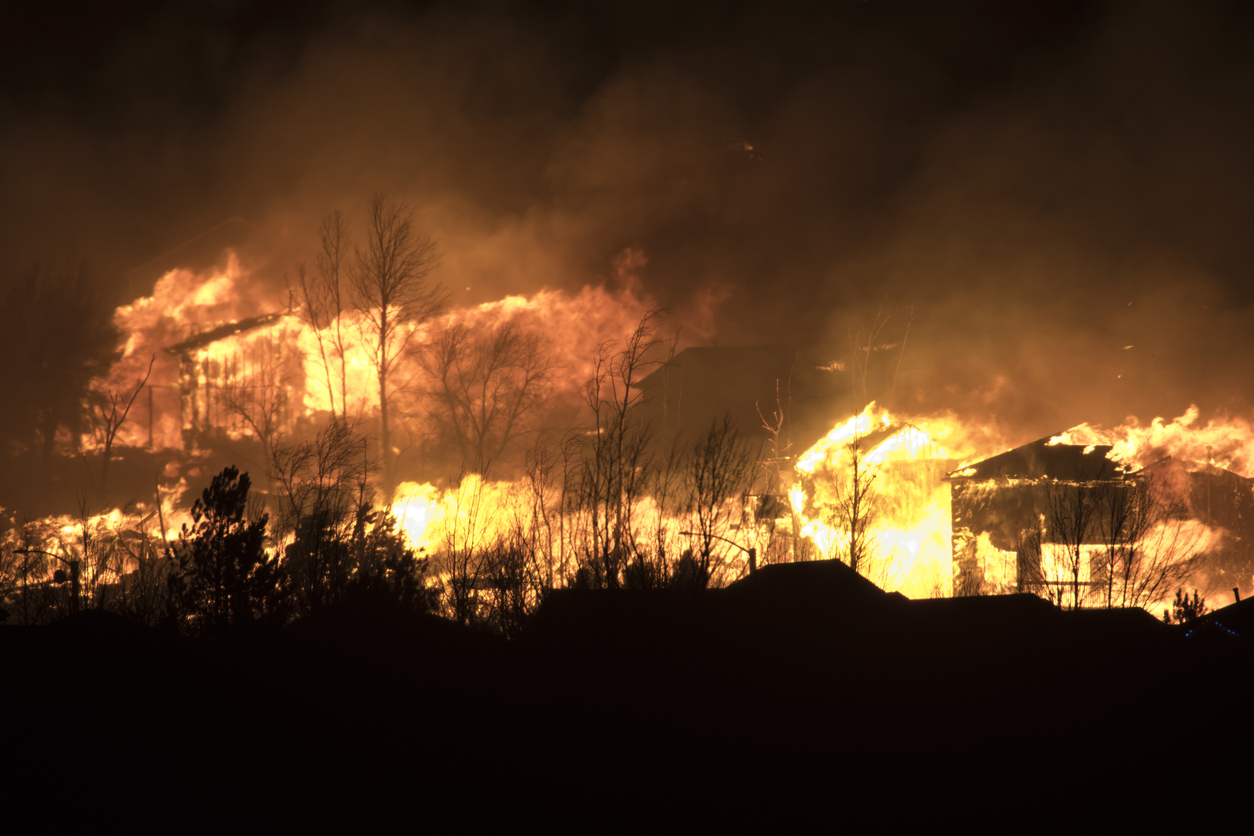
This week marks one year since the Altadena and Pacific Palisades fires reshaped the lives of thousands of families across Los Angeles. For some, the loss was immediate and total. Homes were destroyed, neighborhoods erased, and families were forced into the difficult work of rebuilding from the ground up while still battling insurance companies over what it would actually cost to rebuild and whether they would ever be paid their full policy limits. From an insurance perspective, this was an unprecedented urban wildfire catastrophe in the United States. It exposed real gaps in how coverage is written, how losses are valued, and how claims are investigated and cleaned up, gaps that are still playing out a year later. And for many policyholders, the hardest decisions are still ahead.
For others, the path forward has been far less clear. Many homeowners are still grappling with the decision of whether to rebuild at all. That choice is not simply emotional. It is financial, practical, and deeply personal. Construction costs remain high. Coverage disputes linger. And for too many families, the fire was the moment they learned they were underinsured for an event of this magnitude.
Still Standing Homes and a Different Kind of Loss
For those whose homes were left standing, the challenges looked different but were no less real. They were left to confront what wildfire smoke had done inside their homes, often with little guidance, delayed investigation, and a claims process that struggled to account for the realities of urban wildfire contamination.
From the start, it was clear these were not ordinary smoke claims. These fires burned through homes, vehicles, electronics, plastics, and everything else that makes up modern life. The smoke that traveled well beyond the flame front carried far more than ash and soot. It carried microscopic particulates that settled deep into homes that were never touched by fire.
Compounding the problem was the legal and regulatory confusion that existed early on. In the initial months after the fires, many carriers did not test at all, taking the position that if a home was still standing and had no visible damage, there was nothing meaningful to investigate following the Gharibian v. Wawanesa decision. 1 It was not until late Spring that the Department of Insurance made clear that carriers still had an obligation to investigate these claims. By then, many “still standing” home claims were already hamstrung by months of delay, lost evidence, and families left without answers.
How Can My Home Be Made “Safe”?
As the year went on, emerging science began to confirm what homeowners were experiencing. In some cases, hair testing showed elevated levels of arsenic and other heavy metals, a clear indicator of prolonged exposure to contaminants introduced after the fire. 2 Hair testing reflects exposure over time. When those results come back elevated, especially for children, it raises serious questions about whether a home is truly ready to be reoccupied.
Despite this, many claims continued to be handled using limited surface testing and minimal cleaning protocols. Homeowners were told their homes were safe even when they felt unwell inside them. Others were forced to fight for meaningful remediation of porous materials or full contents replacement.
The Role of Policy and the Path Forward
In 2026, the focus of many claims has shifted. Insurers are increasingly asking homeowners to decide whether they will move back or rebuild, even where questions about contamination remain unresolved. At the same time, additional living expense benefits are being reduced or brought to an end, requiring families to make difficult decisions on timelines driven by the claims process rather than by health or practical readiness.
At the policy level, California convened the Smoke Claims & Remediation Task Force to address many of these issues. That effort is important and well intentioned. But meaningful progress depends on having a balanced set of perspectives, and there remains limited representation from independent industrial hygienists and other experts who work on behalf of policyholders and understand how complex smoke contamination behaves inside homes. 3
Urban wildfire does not fit into the way smoke claims have traditionally been evaluated. Smoke from burned homes and vehicles behaves differently than smoke from vegetation, and particulate intrusion does not follow property lines. The Altadena and Palisades fires should have forced a reset in how these claims are evaluated. For some carriers, that reassessment has occurred. For others, familiar patterns remain.
As wildfire risk continues to expand into urban California, claims handling needs to align more closely with both the science and the law. Homeowners deserve adequate time, appropriate testing, and coverage decisions that reflect the actual conditions left behind by these fires, not pressure to move forward before the full impact is understood.
1 Gharibian v. Wawanesa Gen. Ins. Co., 108 Cal.App.5th 730 (Cal. App. 2nd Dist. Feb. 7, 2025).
2 Insurers Said They Could Return Home. Our Tests Found Neurotoxins in Their Bodies. – The New York Times, Dec. 29, 2025. https://www.nytimes.com/interactive/2025/12/29/us/insurers-smoke-damaged-homes-toxins.html
3 Sarah McGrew, SF Chronicle investigates smoke damage task force with ties to insurance companies, KCRA Sacramento, Dec. 5, 2025. Available online at https://www.kcra.com/article/sf-chronicle-investigates-smoke-damage-task-force/69648821