
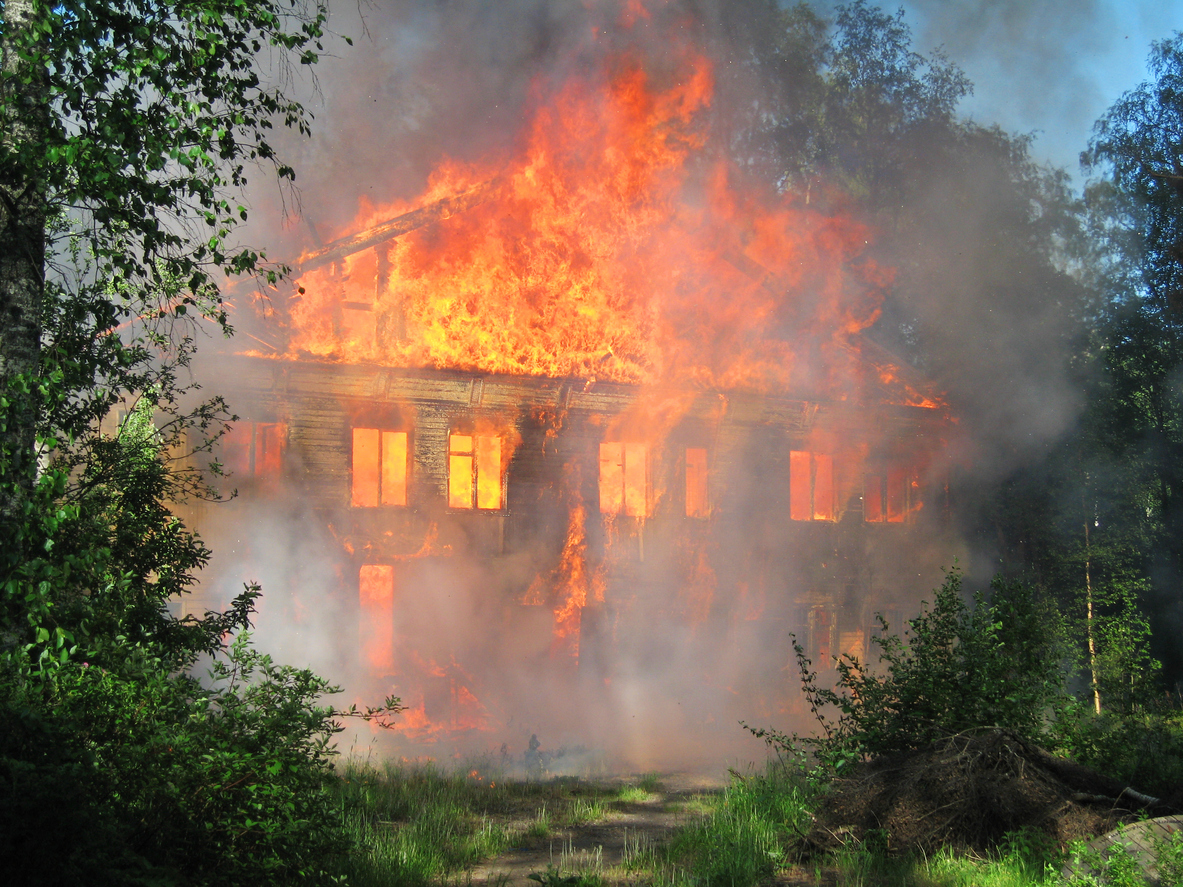
A Mississippi homeowner lost her house to a fire. State Farm paid substantial sums but disputed that the dwelling was a total loss. The policyholder sued, and the federal judge granted summary judgment on her dwelling claim. In a recent unpublished opinion, the Fifth Circuit affirmed. 1 One sentence in that opinion caught my attention because the court said an expert witness was required to establish structural damage to the home.
I am concerned about reading that sentence as a universal rule. In an earlier blog post, “What Constitutes a Total Loss in Mississippi,” I discussed the Mississippi Supreme Court’s practical test for determining a total loss from fire:
“[D]oes a substantial part of the building remain above the foundation that a prudent owner would use in reconstructing it?”
The question is not answered merely by finding some material that survived the fire. Mississippi’s valued-policy law makes the distinction important because, when an insured building is totally destroyed by fire, the insured amount supplies the measure of damages.
There is another Mississippi decision worth putting alongside my earlier post. In Home Insurance Company v. Greene, 2 the Mississippi Supreme Court held that photographs could support a jury’s finding of total fire loss, even though parts of the house remained standing. That does not mean every set of photographs proves a total loss. It does mean I would hesitate before telling a policyholder that a fire loss can never reach a jury without an engineer. Unfortunately, neither the briefs nor the opinions in this case addressed Greene or Mississippi’s valued-policy statute. We therefore do not have the benefit of the Fifth Circuit’s analysis of how those authorities apply to this record.
Now for the practical advice I would give a client. If the insurer says substantial portions of the building can be reused, why gamble on proving otherwise with photographs alone? Hire a qualified expert early enough to inspect what remains, address structural integrity and smoke damage, and explain whether a prudent owner could reasonably use those remnants in reconstruction. Obtain a competent repair estimate as well. An expert is not a substitute for good photographs, eyewitnesses, or an experienced public adjuster. The point is to assemble proof that answers the insurer’s position from every relevant direction. Safe is better than sorry in litigation and claims handling.
The other lesson from Gore is procedural. The policyholder submitted 1,385 pages in opposition to summary judgment, but the courts found that her lawyers had not identified the particular pages supporting the disputed facts. The district court also declined to consider a deposition submitted late without permission. The Fifth Circuit did not affirm solely because of citation defects. It also concluded that the limited evidence properly identified did not establish a claim for additional benefits. Still, I cannot help wondering whether a chance to supply precise citations would have produced a fuller determination on the merits. Federal Rule 56 permits a judge to give a party that opportunity.
I do not say that to fault a judge for enforcing the rules. I worry about technical compliance every time a case lands before a rules-focused judge. A lawyer must know the deadlines, designate the necessary witnesses, and give the court a roadmap to the evidence. Saying “the photographs show it” is no substitute for identifying the photographs, explaining what each shows, and connecting them to the legal test. A judge is not obliged to search a thousand pages for the case counsel intended to make. The policyholder lawyer makes a difference.
I find that this discipline is particularly important in federal court. Federal litigation is often more exacting and expensive. An otherwise substantial claim can falter if counsel is unfamiliar with federal procedural demands. Insurers often seek a federal forum when one is available. I cannot claim to know the motive behind every removal, but insurance defense lawyers generally don’t seek a forum because they believe it makes their clients less likely to win. To be fair, Gore itself was filed in federal court. It was not a case State Farm removed.
My takeaway is neither “photographs are enough” nor “an expert is always legally indispensable.” Mississippi’s total-loss test deserves to be argued under Mississippi law, with the best available evidence of what could actually be reused. If the insurer disputes that evidence, I would ordinarily want the expert, the estimate, and the photographs provided before litigation, with record citations ready before summary judgment arrives.
Thought For The Day
“The Mississippi is well worth reading about. It is not a commonplace river, but on the contrary is in all ways remarkable.”
— Mark Twain, Life on the Mississippi.
1 Gore v. State Farm Fire & Cas. Co., No. 25-60625 (5th Cir. Nov. 10, 2026).