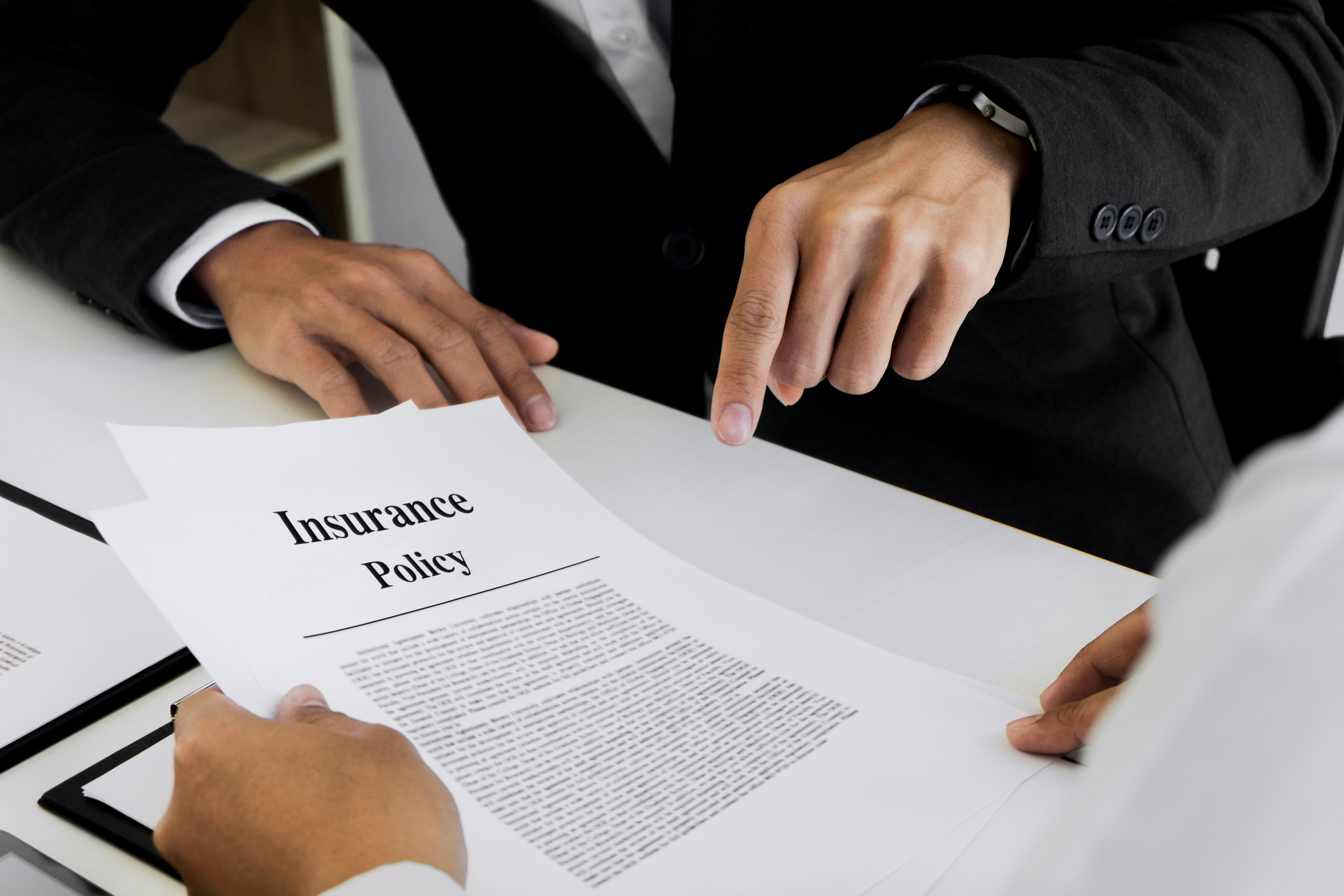
I have written before about Professor Daniel Schwarcz’s important work involving homeowners insurance policies and, more recently, about the research he conducted with Professors Brenda Cude, Kyle Logue, and German Marquez Alcala concerning whether policyholders can actually understand the policies they are expected to read. Their research has now been published in the Virginia Law Review under the wonderfully appropriate title, “Read but Not Understood? An Empirical Analysis of Consumer Comprehension in Homeowners Insurance.” 1
The final published article deserves more attention than a single blog post can give it. So, I am going to discuss it in a three-part series. This first post, “Insurance Experts Can Misread an Insurance Policy: What a Remarkable Virginia Law Review Study Really Shows,” examines the study itself and what changed between the original working paper and the published law review article. The second will be “Courts Have Long Known Insurance Policies Are Hard to Understand: New Research Shows Why.” The third will be “AI Found an Insurance Coverage Issue the Researchers Missed: What That Means for Legal Scholarship.”
Those next two posts are important because the implications of this research extend well beyond whether homeowners read their policies. They implicate some of the most fundamental rules of insurance policy construction, the assumptions regulators make when approving forms, and perhaps even how legal academics should test their own conclusions.
I previously discussed the working paper in Homeowners Cannot Understand Their Policy Even When They Read It, noting its remarkable finding that giving policyholders the actual policy language sometimes made them less accurate rather than more accurate about coverage. Years before that study, I urged insurance regulators, judges, lawmakers, and consumer advocates to pay closer attention to Schwarcz’s research showing that homeowners policies were becoming less standardized and more difficult for consumers to compare in Insurance Regulators and Lawmakers, Judges and Insurance Consumer Advocates Should Study Professor Daniel Schwarcz’s Work.
The newly published Virginia Law Review article adds another layer to that problem. The most important lesson may not be that consumers misunderstand insurance policies. It may be that knowledgeable insurance experts can misunderstand them, too.
The Difference Between Not Reading and Not Understanding
Schwarcz, Cude, Logue, and Marquez Alcala make an important distinction between what they call the “no-reading problem” and the “no-understanding problem.” We have known forever that most people do not sit down after buying homeowners insurance with a cup of coffee and lovingly work their way through every definition, exclusion, exception, condition, endorsement, and cross-reference. Indeed, I assert that nobody always does this. That is the no-reading problem.
The more profound question is what happens if they actually try. Modern insurance contract law rests heavily on the notion that people may be held to contractual language they do not read because they had an opportunity to read it. Even that notion is problematic. The professors point out the logical difficulty with extending that principle to language that ordinary people cannot reasonably understand even after making the effort.
Their experiment was designed to test precisely that issue. Approximately 2,500 homeowners were presented with coverage scenarios. One group answered based on its existing understanding of homeowners insurance. Another group received the relevant language from the 2010 ISO HO-3 policy that supposedly contained the answers.
One would expect the people holding the answer in front of them to perform better. Sometimes they did. Sometimes they did not.
In three of the seven scenarios in the final published study, people who received the policy language were less accurate than those who did not receive it. The deterioration was not trivial. Depending upon the scenario, providing the policy language reduced accuracy by approximately 18 to 33 percentage points. In another scenario, providing the language had no statistically significant effect. Only three of the seven scenarios produced improved accuracy.
These findings should command the attention of everybody, especially insurance regulators and judges who have ever said or written that a policyholder should simply read the policy. But there is a much more fascinating part of the legal research and story.
The Researchers Misread Their Own Coverage Problem
The original January 2025 working paper treated one of the deck-collapse scenarios as a clear coverage case. Under that interpretation, providing the homeowners with the policy language appeared to work remarkably well. Accuracy rose from 40.2 percent among those without the language to 69.7 percent among those who received it—a 29.5 percentage-point improvement.
This was one of the stronger pieces of evidence in the working paper that supplying policy language helped consumers understand their coverage. Except there was a problem. The researchers later determined that their own coverage conclusion was wrong.
While preparing the final article, the authors used several advanced AI systems to check their legal analysis. One of those systems, OpenAI o3, identified a coverage problem the human researchers had not initially recognized.
The issue involved the policy’s collapse language. The authors had initially focused on hidden insect or vermin damage and concluded that the termite-related deck collapse was covered. Upon further analysis, however, they concluded that another portion of the provision required the damage to the deck to result directly from the collapse of a “building or any part of a building.” The policy treated the deck separately, and the authors ultimately concluded that the loss was not covered.
The consequences were dramatic. A vignette that had appeared to demonstrate that policy language improved comprehension by 29.5 percentage points instead became a vignette demonstrating that the policy language made comprehension worse. In the published article, only 20.2 percent of the group receiving the language gave what the researchers now considered the correct answer, compared with 39 percent of the group that did not receive the policy language.
Think about that for a moment. Experienced insurance law academics designed an experiment testing whether ordinary homeowners could understand insurance policy language. They selected the policy provisions. They created the hypothetical facts. They determined what they believed was the legally correct coverage answer. They had the luxury of time, expertise, collaboration, and no catastrophe occurring around them. And they still initially got one of their central coverage questions wrong.
To their considerable credit, the authors did not hide this. Quite the opposite. They expressly acknowledged in the final published article that the co-authors with insurance policy expertise had fallen victim to essentially the same phenomenon they were studying. They reached an initial coverage conclusion and failed to fully appreciate later language inconsistent with it.
In my view, this admission does not weaken this study. I think it makes the study far more important. The researchers accidentally demonstrated their hypothesis on themselves.
Insurance policies are not difficult merely because they contain long words or sentences that score poorly on a readability test. Their structure itself can create misunderstanding. Coverage is granted in one place, taken away somewhere else, restored through an exception, altered through a definition, and perhaps changed again by an endorsement. A reader reaches what seems like an answer and naturally begins processing everything that follows through the lens of that initial conclusion.
The professors call this the “partial-reading or partial-understanding problem.” Their evidence suggests that readers may stop reading carefully once they believe they have found the answer. The final article appropriately describes the explanation as plausible but still speculative.
Kyle Logue emphasized that caution in his recent University of Michigan interview. 2 He said their theory is not proven, but that the evidence appears more consistent with a problem in the structure of policy language than with simply difficult vocabulary. He also made an observation that some policy language helped, some did nothing, and some actually caused people to reach the wrong answer with greater confidence.
This last point bothers me greatly. The policy did not merely confuse some readers. In several situations, having the policy language increased confidence. People could become more certain precisely because they had read language that led them toward the wrong conclusion. The contract provided not merely misunderstanding, but reassurance about the misunderstanding.
Anybody who has handled insurance claims for decades has seen some version of this. A policyholder reads an exclusion quoted in a denial letter and assumes the insurer must be right. Sometimes an adjuster reads the same exclusion and assumes the same thing. Then somebody reads another paragraph, follows a cross-reference, checks a definition, studies an exception, or compares an endorsement and discovers that the answer is considerably different. This is not a failure of human intelligence. It is a feature of how these contracts are constructed.
There is another academic question buried inside this study that deserves serious consideration. Empirical legal research often requires researchers to establish a legally “correct” answer before testing whether subjects can identify it. But legal interpretation is not laboratory chemistry. If the classification against which subjects are being scored is itself difficult enough that experts can initially get it wrong, researchers must be extraordinarily careful about what they characterize as “unambiguous.”
This does not mean the corrected deck-collapse interpretation is wrong. It means the process by which the authors discovered their mistake tells us something profound about claims of obviousness and plain meaning.
Lawyers frequently hear that a policy provision is “clear and unambiguous.” Judges write those words every day. Insurance companies place them in briefs as though the characterization ends the discussion. But clear to whom?
An underwriter? A coverage lawyer? A judge who has read hundreds of insurance cases? A homeowner whose house just burned down? Or four researchers who studied the provision closely enough to design an empirical experiment around it?
The Virginia Law Review article should produce some humility around the words “plain” and “clear.”
This is where the next article in this series will pick up. Courts did not invent rules such as construing ambiguities against the drafter merely because judges wanted to give policyholders a break. Generations of jurists recognized characteristics unique to insurance contracts long before behavioral researchers began measuring consumer comprehension. The new research may help explain empirically why many of those old rules developed.
Then there is the AI issue. The fact that an AI system spotted a coverage issue that sophisticated human researchers missed should not lead anyone to conclude that artificial intelligence should become the judge of insurance coverage. That would substitute one problem for another. But it raises a much more interesting question about whether AI can serve as an adversarial second reader by challenging assumptions, locating overlooked language, and forcing lawyers and scholars to reconsider conclusions they have reached too quickly. That will be the third article.
For now, the lesson is that reading is not the same thing as understanding. Having the policy is not the same as understanding it. Before anybody too confidently says that an insurance provision has only one obvious meaning, this remarkable study provides a useful reminder that sometimes the people who know insurance best need to read it again. Me included.
Thought For The Day
“The current personal-lines insurance marketplace is largely organized around a myth.”
—Daniel Schwarcz
1 Daniel Schwarcz, Brenda J. Cude, Kyle D. Logue & German Marquez Alcala. Read but Not Understood? An Empirical Analysis of Consumer Comprehension in Homeowners Insurance. 114 Virginia L. Rev. 727- 814 (2026).
2 Bob Needham. 5Qs: Logue on New Research Suggesting Many Homeowners Don’t Understand Their Insurance Policy. Univ. of Michigan Law School (Aug. 14, 2026 – News). Available online at https://michigan.law.umich.edu/news/5qs-logue-new-research-suggesting-many-homeowners-dont-understand-their-insurance-policy