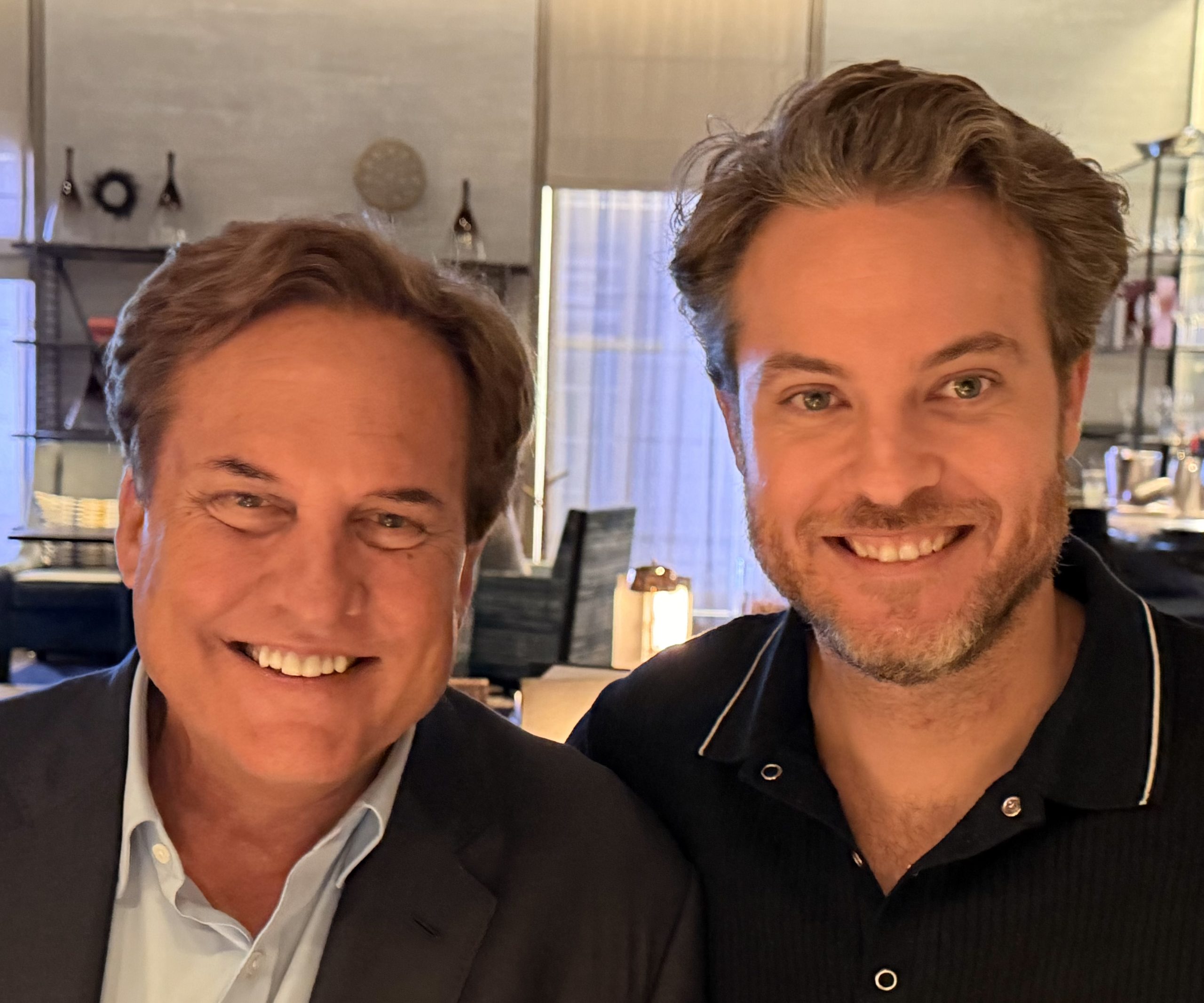
I was trying to have one-on-one time with my 35 year old stablecoin entrepreneur son in Manhattan yesterday afternoon. Can you figure out who Chase Merlin is from Chip Merlin?
One of the hazards of having so many smart friends in the property insurance claims world is that they occasionally ruin a perfectly good Sunday by sending me something that makes me think way too much about a truly novel topic. A respected claims professional and expert, recognized for over 40 years, recently sent me a note about the State Farm hail litigation in Oklahoma and asked that I keep his identity confidential. I will.
His message started with State Farm but quickly raised a much larger question:
If an insurance company is punished for wrongfully underpaying claims, won’t the rest of us eventually pay for it through higher premiums?
His question is considerably harder to answer than deciding whether Jake from State Farm looks better in khakis.
Before going further, State Farm has not been found guilty of running an improper hail claims scheme. Oklahoma Attorney General Gentner Drummond alleges that State Farm used its “Hail Focus Initiative” and undisclosed internal claims practices to reduce roof replacement approvals and claim payments. State Farm strongly denies that characterization and says it evaluates claims individually based upon the facts and coverage purchased. Those are allegations being litigated, not established facts.
My expert claim practice friend was less interested in convicting State Farm than in thinking about what would happen if allegations like these were ever proven against any insurer. He said jurors eventually ask some version of a question, “If we award a lot of money against the insurance company, won’t everybody’s premiums go up?”
He suggested four possible answers: Yes. No. They shouldn’t. And they should. I laughed when he wrote about the possible answers to these questions because they cannot all be right. Or could they?
At first glance, that sounds like somebody trying to answer a multiple-choice question by circling everything. The more I thought about it, however, the more I realized he had identified four different truths hiding inside one very good question.
Yes, insurance prices can ultimately reflect the cost of running an insurance company. Losses, expenses, litigation, catastrophe experience, and many other factors influence what insurers ultimately seek to charge. But a jury verdict does not arrive with a second document titled, “Please divide this amount among our policyholders.” The insurance company pays the judgment.
What management later does in response is another matter. Regulators review rates. Competitors compete for customers. Management can reduce other expenses, accept lower profits or financial results, change underwriting, alter operations, or seek higher rates. Nobody sitting in the jury box decides next year’s homeowners premium. So, the second answer is also “No.” A verdict does not automatically become an insurance-rate surcharge.
Then comes the more interesting answer: “They shouldn’t.” Suppose misconduct is actually proven. Why should a company escape meaningful accountability because it warns that innocent customers might someday bear some of the financial consequences?
Think about another business. If a restaurant repeatedly violated health laws, we would not say, “We better not fine them because hamburgers might become more expensive.” If a car manufacturer knowingly sold defective brakes, we would not excuse the conduct because safer cars might cost more. Why would insurance be different?
My anonymous friend used stronger language. He said it would be a kind of “treachery” if premiums paid to obtain protection were effectively used to build systems that made the promised protection harder to collect. His observation deserves some thought.
Insurance companies receive our money before we know whether we will ever need their product. A policyholder may faithfully pay premiums for twenty years before the roof gets destroyed. The true quality of the insurance product is often discovered only after the loss. Insurance is truly a unique product because it is sold without the consumer knowing how the product performs, and it operates in an unusual marketplace where sellers never have to be judged on performance.
Suppose Company A carefully pays everything it owes. Company B improperly suppresses legitimate claims and therefore has lower claim costs. If those lower costs allow Company B to advertise cheaper insurance, the company providing the worse product could actually gain customers because consumers cannot see the defect when they buy it.
Nobody shops for homeowners insurance by asking, “How collectible will this policy be after my house is hit by hail seven years from now?”
That brings us to my friend’s fourth answer: Maybe premiums should go up. Not because innocent policyholders deserve punishment. They certainly do not.
But if misconduct makes an insurer more expensive to operate, perhaps that cost should become a competitive disadvantage. A company that repeatedly harms its customers should not necessarily enjoy the same cost structure as a competitor that does things correctly. There is an obvious problem with that answer. Homeowners insurance is not always a free and easy marketplace. In wildfire areas of California, hurricane country in Florida, and hail country in Oklahoma, policyholders may have few choices. People cannot necessarily walk across the street and buy comparable insurance from somebody else.
That is why there is no perfect answer. But there is an important lesson for claims professionals.
The Oklahoma allegations repeatedly use words such as “quality,” “accuracy,” and “improvement.” Those are wonderful goals. Every claims organization should want accurate claims decisions. The question is how accuracy is measured.
If accuracy means determining the damage, reading the insurance contract correctly, and paying exactly what is owed, there should be no controversy. But if a claims department starts measuring success primarily by reducing average claim payments, reducing the percentage of total roof replacements, increasing the number of claims closed without payment, or producing “indemnity savings,” something very different may be happening.
Paying less is not the same thing as paying accurately. Paying more is not proof of accuracy either. The correct number is what the insurance company owes. The hard part is keeping a large claims organization focused on that principle when spreadsheets, budgets, consultants, algorithms, bonuses, and management goals start competing for “attention.” I am intentionally being nice with that word because everybody knows how the flavor of the claims directive can dictate what management really wants the claims organization to do.
Ethical claims professionals should pay particular attention to what their companies celebrate. People learn very quickly what management truly values. Corporate culture is not merely what appears on the wall beneath the company logo. Corporate culture is what gets measured on Monday morning. If managers constantly praise lower severity and lower indemnity without equally asking whether policyholders received everything owed, employees get the message. If managers celebrate accurate investigations, timely payments, correction of mistakes, and fair treatment, they get a different message.
That is why the Oklahoma and California litigation deserves attention even before anybody knows who ultimately wins. The allegations raise a question every claims organization should ask itself today rather than after a regulator, attorney general, or jury asks it later: Are we measuring whether we are paying claims correctly, or are we measuring whether we are paying less?
Sometimes those results may overlap. They are not the same goal.
If wrongful conduct is ultimately proven, society still faces my friend’s wonderfully uncomfortable question about accountability. Who should bear the consequences? Should it be the injured policyholders, other customers, the company, its executives, or some combination of these?
But “don’t punish wrongdoing because the wrongdoer might pass the bill to somebody else” cannot be the answer either.
Please read my previous blog on this topic: Jake, Call the Lawyers! Los Angeles County Alleges a State Farm “Good Neighbor” Claims Scandal.
Thought For The Day
“Uh … khakis.”
—Jake from State Farm, State Farm’s “State of Unrest/Back in the Office” advertisement