I have been following the Shamrock Hills case from the beginning because it raises a question that comes up almost every day following hailstorms, hurricanes, wildfires, and other property losses: Where does the legitimate work of a restoration contractor end and the work of a public insurance adjuster begin?
I first discussed the lawsuit in Roofing Contractor Challenges Iowa’s Public Adjusting Laws on Constitutional Grounds, where I noted that the case could have implications far beyond Iowa. After the federal district court ruled for Iowa, I followed with When Roofers Become Adjusters: Iowa Court Says “Not So Fast”. I then wrote What Can Roofers and Restoration Contractors Do That Does Not Constitute Public Adjusting, because I thought the most useful question for people actually handling losses was not constitutional theory but the far more practical question restoration contractors kept asking me: “Chip, what exactly can we do?”
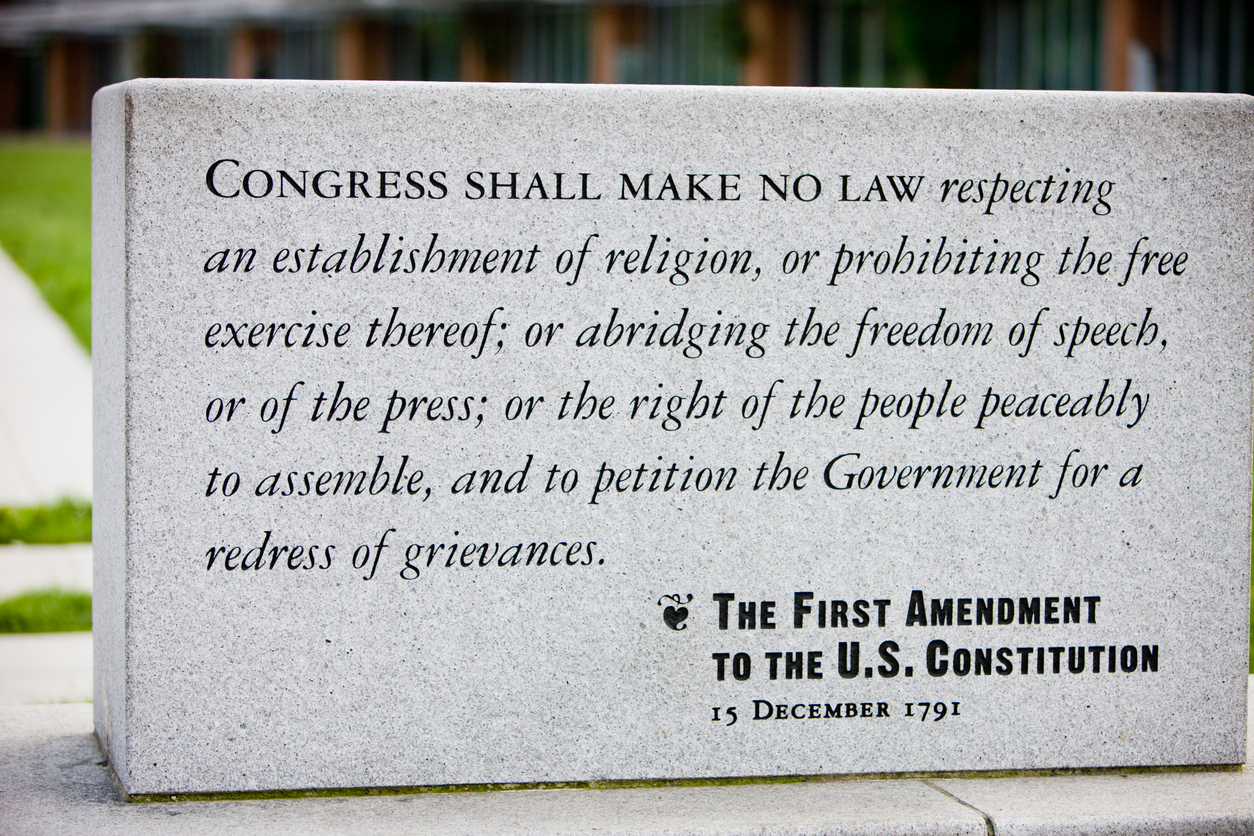
Earlier this year, as Shamrock’s appeal headed toward argument, I wrote The First Amendment Meets the Roofline: Shamrock’s Appeal Puts Public Adjusting Under the Microscope. I suggested then that the outcome might depend on how the judges viewed what Iowa was actually regulating. If Iowa was merely prohibiting an unlicensed contractor from becoming the policyholder’s representative and negotiating an insurance claim, Iowa had a strong case. If Iowa was making ordinary conversations about insurance claims unlawful, the constitutional analysis became very different.
This week, the Eighth Circuit answered that question. 1 Everybody involved with property insurance restoration, property insurance claims, and insurance regulation should pay attention. This is an important case, but I do not want public adjusters, contractors, or insurance regulators to stop reading because the opinion discusses the First Amendment, strict scrutiny, facial challenges, as-applied challenges, professional speech, and enough constitutional terminology to put a normal person to sleep. The practical lesson is much simpler.
Iowa can regulate public adjusting. Iowa can require public adjusters to be licensed. Iowa can prohibit a restoration contractor from serving as the policyholder’s public adjuster on the same job. But Iowa cannot simply label every conversation that helps a policyholder as “public adjusting” and make that conversation illegal.
What the Court Actually Decided
Shamrock did not win everything. The Eighth Circuit held that Iowa’s public adjusting statutes are not unconstitutional on their face. It also rejected Shamrock’s argument that the statutes are unconstitutionally vague. In other words, public adjusting remains a regulated profession in Iowa, and this decision is not some judicial declaration that contractors may now become unlicensed public adjusters.
But Shamrock won a very important part of the appeal. The district court had essentially reasoned that Iowa was regulating professional conduct and that any effect on speech was incidental. The Eighth Circuit said that analysis was insufficient.
The appellate court looked at what Iowa’s regulators were actually telling Shamrock it could not say. Among the statements Iowa targeted were representations that Shamrock would “assist” homeowners with the claims process, help them “navigate the insurance red tape,” assist with insurance claims, and walk homeowners through insurance reimbursement. The Eighth Circuit held that when Iowa applied its statutes to prohibit those statements, Iowa was regulating “speech as speech.” The court further held that those applications trigger “strict scrutiny.”
You do not need to become a constitutional lawyer to understand what that means. It means the government cannot say, “We regulate public adjusters, therefore anything we label public adjusting is outside the First Amendment.” The State has to justify restricting the speech itself. It must do so under a very demanding constitutional standard.
Contractors Still Cannot Become Public Adjusters Without Following Public Adjuster Laws
Some contractors may read headlines about this decision and celebrate too quickly. I would not.
The court expressly upheld the statutes against Shamrock’s facial attack. It found numerous legitimate activities within the business of public adjusting that government may regulate. Public adjusting involves far more than simply talking. There is a professional relationship with the policyholder. There can be investigation of the claim, evaluation of coverage, preparation and presentation of claim materials, negotiation, settlement activity, and acting for the insured in dealings with the insurance company. The court recognized that at least some of this is conduct rather than constitutionally protected speech.
A contractor cannot read Shamrock as permission to tell a homeowner, “Sign my roofing agreement and I will become your claims representative, interpret your insurance policy, negotiate your coverage dispute, and obtain your settlement.” In Iowa, the contractor-public adjuster conflict remains particularly clear. A residential contractor cannot simply occupy both positions on the same project. The Eighth Circuit expressly recognized Iowa’s rule prohibiting a contractor from serving as both contractor and public adjuster on the same job.
So, restoration contractors should not treat this decision as a license to adjust claims. It is a decision recognizing their right to communicate. Those are very different things.
Contractors Have to Be Allowed to Be Contractors
This is where the practical problem has always bothered me. A good restoration contractor knows construction. That contractor should know why a roofing system cannot be properly repaired in the manner suggested by an insurance company estimate. A contractor should know current labor and material costs, building code requirements, sequencing, safety requirements, whether matching materials are available, and what work is necessary to put a building back together properly.
Insurance company adjusters need that information. Policyholders need that information. The claim cannot be properly adjusted if knowledgeable people are afraid to talk.
Iowa itself has long recognized this distinction. Its published guidance says contractors may solicit repair work, give opinions about whether damage was possibly caused by wind, hail, or another event normally covered by insurance, prepare estimates and scopes of work, discuss those estimates with the customer, recommend filing an insurance claim, attend the insurer’s inspection, and answer questions about their estimates.
I made this point in “What Can Roofers and Restoration Contractors Do That Does Not Constitute Public Adjusting?” Merely exchanging factual information about construction costs, repair methods, damage, and scope is not the same thing as becoming the insured’s public adjuster. The Shamrock opinion makes that distinction even more important.
A roofer saying, “The insurer’s estimate leaves out flashing required to install this roof properly,” is communicating construction expertise. A restoration contractor explaining, “You cannot perform this repair for the amount shown on this estimate,” is communicating about its work and price. Attending an inspection and explaining observed damage is part of being a competent contractor. Answering an adjuster’s questions about an estimate is not some nefarious invasion of the public adjusting profession.
The legal danger increases substantially when the contractor stops talking about its construction work and starts acting for the policyholder in the adjustment and settlement of the insurance claim. That is the lane contractors need to understand.
Public Adjusters Should Not View This Decision as an Attack on Their Profession
The National Association of Public Insurance Adjusters appeared in the appeal as an amicus supporting the appellees. That participation demonstrates how significant this case is to the public adjusting profession. Yet I do not view this decision as a defeat for legitimate public adjusting—quite the opposite.
The Eighth Circuit upheld Iowa’s authority to regulate public adjusting. Licensing remains constitutional. The distinction between a contractor and a public adjuster remains meaningful. A contractor cannot simply assume the public adjuster’s representative role because the contractor would prefer to control the insurance proceeds that will eventually pay for construction. Public adjusters should want that distinction maintained.
But public adjusters should also be careful about arguing that virtually every useful conversation a contractor has about an insurance loss constitutes unauthorized public adjusting. That position is not necessary to protect the profession, and Shamrock demonstrates the constitutional problems it creates.
Public adjusters add value because they represent policyholders in the insurance adjustment process. They investigate, prepare, document, present, and negotiate claims on behalf of insureds. Their expertise is claims adjustment. Contractors add value because they understand how damaged buildings are repaired and what those repairs cost.
Those roles overlap in factual areas because property insurance claims are about damaged property. Overlap does not mean the professions are identical.
Public adjusters should protect the substance of their profession rather than trying to claim ownership over every conversation involving insurance.
Insurance Regulators Should Study the Warning Letters More Than the Constitutional Cases
There is an important lesson here for insurance regulators and those trying to enforce insurance consumer protection and professional licensing laws. The problem for Iowa was not that it licensed public adjusters. The problem was the breadth of some of its enforcement positions.
Iowa’s current contractor guidance identifies numerous statements that it considers evidence of unauthorized public adjusting, including claims of being an “insurance claim expert,” promising to advocate for homeowners, and saying the contractor will assist a policyholder with the claims process. At the same time, the same guidance expressly recognizes a substantial category of permissible contractor communications and activities.
After Shamrock, regulators should be very careful about treating particular words as automatic violations. The better enforcement question is not simply, “What did the contractor say?” The better question is, “What role was the contractor actually undertaking?”
Was the contractor merely explaining its estimate? Was it describing damage? Was it explaining why a certain repair method would not work? Was it providing factual information requested by the insurance adjuster?
Or had it assumed authority to represent the insured, interpret insurance rights, pursue coverage arguments, negotiate settlement, or otherwise function as the policyholder’s claims representative? Those are very different situations. Good regulation requires drawing that distinction.
There are excellent reasons to regulate public adjusting. Consumers deserve competent representatives. Conflicts of interest matter. Licensing, education, financial responsibility, ethical rules, and enforcement against those pretending to be something they are not all serve legitimate consumer-protection purposes. Iowa continues to impose licensing and professional requirements on public adjusters.
But consumer protection does not improve when legitimate participants in the claims process are frightened into silence. Regulators should police unauthorized public adjusting without creating a regulatory moat around ordinary information.
There Is Also a Line Contractors Should Never Forget: Insurance Coverage Advice Can Become Legal Advice
There is another boundary that is sometimes lost in this debate. Public adjusting laws are not the only rules contractors should worry about. Insurance policies are contracts. Advising somebody about legal rights under an insurance contract can eventually cross into the practice of law.
A contractor can explain construction. A contractor can explain why a certain method of repair is needed. A contractor can explain its estimate. A contractor can document what it observed.
That does not mean the contractor should start giving legal opinions about policy interpretation, contractual duties, bad faith, statutes of limitation, appraisal rights, coverage litigation, or what a policy provision legally requires. The Shamrock decision should not become an excuse for everyone in the restoration industry to become amateur insurance coverage lawyers.
Everybody has a lane. The best claims outcomes often occur when competent contractors, professional public adjusters, knowledgeable attorneys, engineers, accountants, and other experts each contribute the expertise they actually possess.
Stonewater Is Still Important, But Shamrock Adds an Important Warning
I have repeatedly compared Shamrock with the Texas Supreme Court’s Stonewater 2 decision. Stonewater upheld Texas’s regulation because the Texas Supreme Court viewed the heart of public adjusting as assuming a representative or agency role for the insured. Shamrock argued that Iowa had gone further and was regulating speech itself.
The Eighth Circuit did something particularly interesting with Stonewater. It acknowledged that the agency rationale could be relevant, but expressed skepticism about allowing the government to avoid the First Amendment merely by describing communicative activity as an agency relationship. The court warned that this begins looking too much like the old concept that “professional speech” receives diminished constitutional protection. This discussion will be studied well beyond Iowa.
The lesson is that regulators should focus on the actual regulated relationship and conduct rather than simply attaching a professional label to speech.
What Happens Next?
The case is not over. The Eighth Circuit affirmed part of the district court’s judgment, reversed the dismissal of Shamrock’s as-applied First Amendment claim, and sent the case back for further proceedings. Shamrock still has to prove its case.
Iowa also has a legitimate and powerful interest in regulating public adjusting. The appellate court expressly acknowledged that interest. But Iowa now has a much more difficult job regarding those applications of its law the appellate court identified as restrictions on speech. The question will no longer simply be whether public adjusting may be regulated. We know it can.
The question becomes whether Iowa needs to prohibit these particular communications to accomplish its consumer-protection goal and whether it has drawn the restriction narrowly enough. If I had to make a prediction, I think Shamrock has the stronger position on that issue in this particular case, but maybe not in the future since insurance regulators have more guidance.
Iowa has many tools available to stop actual unauthorized public adjusting without prohibiting legitimate claims-related conversations. It can prohibit unlicensed representation. It can prohibit actual settlement negotiations by those who are not authorized to conduct them. It can punish fraud and deceptive advertising. It can enforce conflict-of-interest rules. It can regulate public adjuster contracts and require licenses.
There is also a procedural issue worth watching. Judge Jane Kelly dissented from the majority only on the decision to reach the as-applied claim. She believed Shamrock had not sufficiently developed that particular argument on appeal and would not have ordered the remand. Iowa may try to use that point in seeking rehearing.
So, I will continue watching the case.
The Bottom Line
Shamrock is not a decision allowing contractors to practice public adjusting without a license. It is not a decision eliminating public adjuster licensing. It is not a decision saying conflicts between contractors and public adjusters do not matter.
It is a decision telling regulators something important. You may regulate the profession, but you cannot regulate every conversation around the profession merely by giving the conversation a regulatory label.
For restoration contractors, the lesson is to know construction, communicate construction facts, explain your estimates, document damage, attend inspections, and stay out of the business of becoming the insured’s claims representative unless you are legally authorized to do so.
For public adjusters, the lesson is to protect the meaningful professional work of public adjusting rather than trying to turn ordinary contractor communications into unauthorized practice.
For regulators, the lesson is to enforce conduct rather than vocabulary. Look at what the contractor is actually doing for the policyholder, not merely whether somebody used the words “help” or “assist.”
The property insurance claims process works best when competent people are allowed to communicate openly while remaining accountable for the professional roles they undertake. That may ultimately be the most important lesson from Shamrock.
Thought For The Day
“Everybody in Iowa has time to talk.”
—Bill Bryson
1 Shamrock Hills, LLC v. Iowa, No. 25-2991 (8th Cir. Aug. 12, 2026). See Shamrock Initial Brief, Iowa Answer Brief, Shamrock Reply Brief, and NAPIA’s Amicus Brief.
2 Texas Dep’t of Ins. v. Stonewater Roofing, 695 S.W.3d 646 (Tex. 2024).