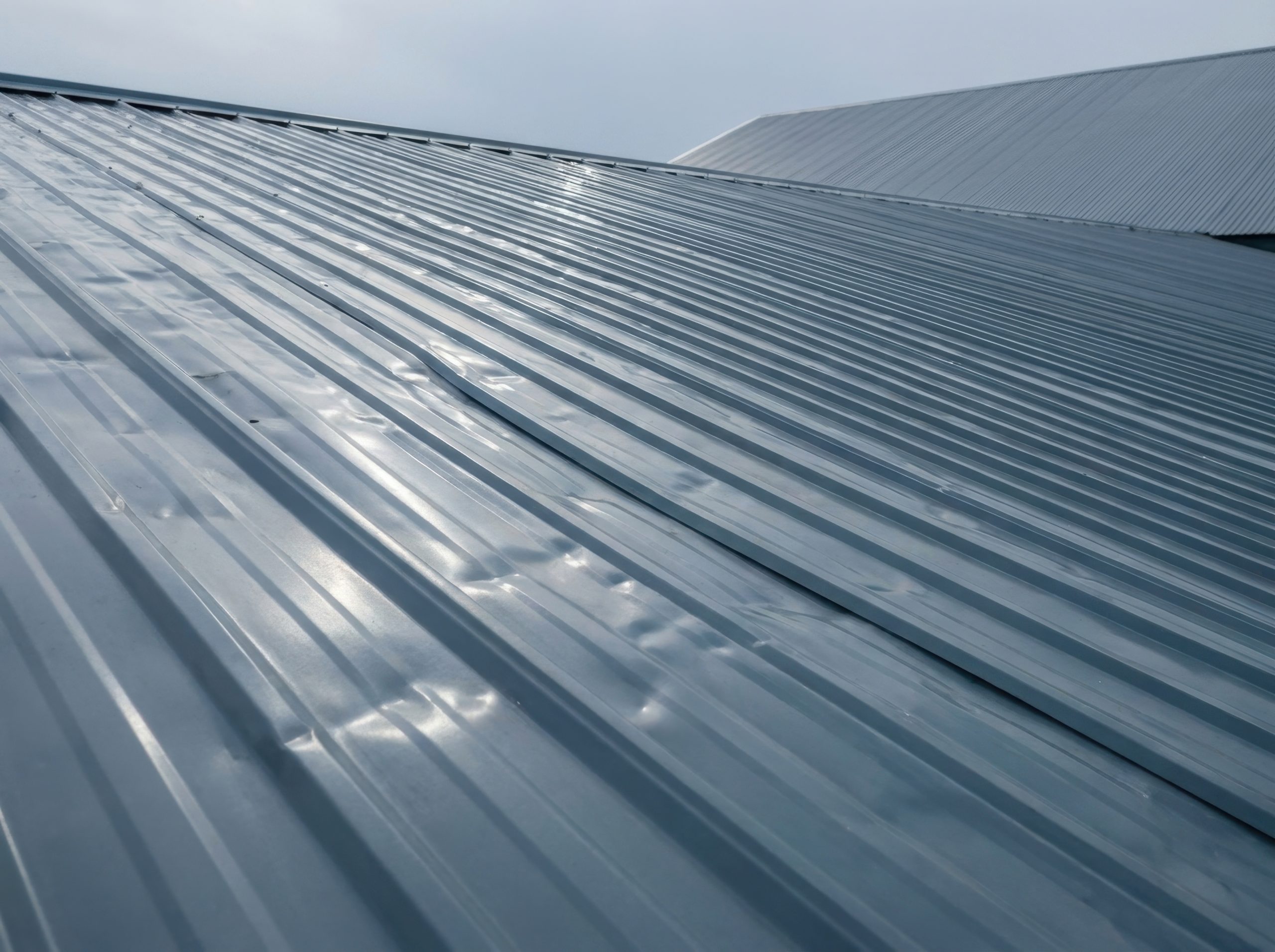

Every once in a while, an insurance bad faith lawsuit produces documents that give the public a rare opportunity to look behind the curtain and see how an insurance company actually operates. I have spent more than four decades reading internal insurance company documents, and I can assure you that what insurance companies say publicly about their claims practices is not always the same as what their executives discuss privately. A recently filed motion in the Oklahoma State Farm hail litigation provides one of those opportunities. 1 I want to encourage every roofer, public adjuster, insurance agent, policyholder, and property claims professional to read it.
On October 27, 2026, attorneys representing Billy and Lacy Hursh filed a motion asking Oklahoma County Judge Amy Palumbo to enforce her order requiring State Farm CEO Jon Farney to submit to a deposition. Attached to that motion is a collection of internal State Farm materials, including an October 26, 2021, memorandum titled “P&C Claims | Fire Claims Roofs – Quality & Service,” prepared for a Senior Executive Offsite. The materials include emails, draft versions, proposed changes, internal criticisms, and redactions. You can read the entire motion and its exhibits here. I especially encourage readers to study Exhibit 133, which begins on page 13 of the PDF, and compare the different versions of the memorandum.
Why am I making such a fuss about a corporate memorandum written five years ago? Because these are the kinds of documents I routinely examine in insurance bad faith litigation, but the public rarely gets to see them. Insurance companies frequently produce internal claims manuals, executive presentations, financial analyses, and management communications under protective orders restricting their disclosure. Other documents become the subject of attorney-client privilege disputes or are filed under seal. Lawyers representing policyholders like me may be permitted to study and use these materials in litigation without being allowed to share them publicly. Without a bad faith lawsuit and determined attorneys willing to pursue this discovery, much of this information never sees the light of day.
In this instance, the documents have become part of a public court filing. Judge Palumbo also rejected State Farm’s attorney-client privilege and work-product claims concerning this particular document family, as reflected in the October 26 court minute attached to the motion. Accordingly, this is an unusual opportunity for people outside the insurance industry to see how claims executives discuss their business, how claims procedures are developed, and how others within the company question and edit what claims employees are told.
One thing I have learned from reading thousands of pages of these materials is that insurance companies spend an enormous amount of time studying whether they are paying too much on claims. They examine severity, payment frequency, repair costs, replacement decisions, and opportunities to reduce expenses. There is nothing inherently wrong with trying to eliminate overpayments or improve accuracy. What troubles me is how rarely I encounter an internal corporate initiative expressing alarm that the company may be systematically underpaying legitimate claims. I would love to see more executive presentations celebrating the discovery that policyholders were owed additional money and explaining how the company intends to correct that problem.
The State Farm documents deserve careful reading because they reveal concerns coming from within State Farm’s own organization. The memorandum discusses complaints from agents and customers about wind and hail claims, including situations where other insurance companies were replacing neighboring roofs while State Farm was not. It acknowledges that some agents believed State Farm should replace roofs rather than repair them because of the value of the insurance product they had sold and the potential loss of customers resulting from disputed roofing decisions. It also discusses situations where initial roofing decisions were overturned or the scope of damage changed following engineering investigations or appraisal. Those are not simply complaints from disgruntled roofers or public adjusters. They are concerns State Farm was hearing from its own agents and leadership.
Readers should also understand what the document means by “Market Areas” and “Market Area Claims.” State Farm operates through geographic market regions with senior leadership, including regional vice presidents and claims executives, responsible for business performance, profitability, customer relationships, and claims operations. These are people who must balance the financial performance of the company with the promises made to customers. The memorandum describes discussions with market area leadership and extensive communications with agents across the country. That tells me the concerns were not limited to one unhappy policyholder or one troublesome roofing contractor. State Farm’s own distribution and management organization was raising questions about how roofing claims were being handled.
Another important part of the document describes how wind and hail claims practices were initially developed through a six-month approach in Texas before being implemented in January 2021 across other states. One procedure required claim team manager approval for certain full-roof replacements involving smaller hail or lighter winds. That is worth examining because supervision can certainly improve claims quality, but it can also become a mechanism for discouraging legitimate payments if the wrong objectives are being measured.
This is where the editing of this document becomes especially interesting. Someone reviewing the draft cautioned that State Farm’s “adversaries” could argue that requiring management approval placed pressure on frontline adjusters not to replace roofs. I suspect those adversaries include policyholder attorneys like me who investigate and litigate bad faith claims, along with others who challenge questionable claims practices. I find the terminology interesting. We are not adversaries of accurate claims adjusting. We become adversaries when we believe an insurance company is failing to honor its contractual obligations. Without those disputes and the discovery that follows, the public would seldom know these internal conversations occurred.
Perhaps the most revealing portions concern how State Farm was measuring success. The memorandum discusses reductions in the ratio of total-roof replacements to partial-roof repairs and increases in claims closed without payment. But somebody reviewing the document raised a very important objection. That person questioned whether lower roof-replacement numbers actually demonstrated greater accuracy and warned that the presentation could create the impression State Farm was intentionally reducing indemnity payments and celebrating more claims closed without payment.
I have previously raised this issue about insurance company performance measurements. Accuracy is not demonstrated merely because an insurance company pays less money. If a roof legitimately requires replacement, paying to repair only part of it is not more accurate. Likewise, closing more claims without payment is not necessarily a sign of better adjusting. A truly accurate claims organization should be just as pleased to discover it has underpaid a claim as it is to discover an overpayment, because correcting either mistake is what quality claims handling should mean.
What makes Exhibit 133 particularly fascinating is that we can see people editing, questioning, and reconsidering how these results are presented. There are highlighted passages, deleted language, comments, and differently redacted versions of the same material. One internal critique expressly warns that quality improvement should not be measured simply by reducing the number of roof replacements. The Hursh attorneys are understandably interested in what happened to these criticisms as the document was revised and whether important qualifications were omitted from the version ultimately presented to senior management. The available drafts raise that question, although they do not by themselves establish exactly what the executives ultimately received or how they responded.
To be fair, the documents also discuss training, reinspection, estimate accuracy, customer communication, and other legitimate quality-control activities. State Farm maintains that its claims practices are intended to improve accuracy and that individual claims are evaluated according to their facts and policy coverage. Those explanations deserve consideration. But they do not eliminate the need to examine whether management was measuring genuine accuracy or simply treating lower payments as evidence of success.
There are many different ways to analyze these materials, and I intend to return to them in subsequent articles. We will look more closely at the financial measurements, the concerns raised by State Farm’s own agents and market area leadership, the role of management approvals, the significance of the internal editorial comments, and what the different versions of the memorandum may reveal about the message being delivered to senior executives.
For today, however, I am not asking readers and my nerdy insurance coverage friends to accept my conclusions. I am asking you to read the documents and think about what they mean. Pay attention to the language that was changed, the questions that were raised, and the measurements State Farm used to describe improvement. Ask yourself whether the same enthusiasm shown for reducing claim payments would have been shown if the company’s analysis revealed that policyholders were routinely entitled to more money.
Every insurance company should be asking these same questions, not just State Farm.
I believe the public benefits when these internal claims documents become available for examination. They help policyholders understand how decisions affecting their homes and businesses may be influenced by corporate policies developed far away from the individual loss. They also remind claims professionals that the ultimate measure of quality should never be how little an insurance company pays, but whether it pays what it owes.
There is much more to discuss about Exhibit 133. For now, please read it. The documents themselves are the best place to start, and I suspect many of you will notice things worth discussing that deserve further investigation.
Thought For The Day
“Sunlight is said to be the best of disinfectants; electric light the most efficient policeman.”
— Louis D. Brandeis
1 Motion to Enforce, Hursh v. State Farm Fire & Cas. Co., No. CJ-2025-2626 (Okla. Dist. Ct. filed Oct. 27, 2026).