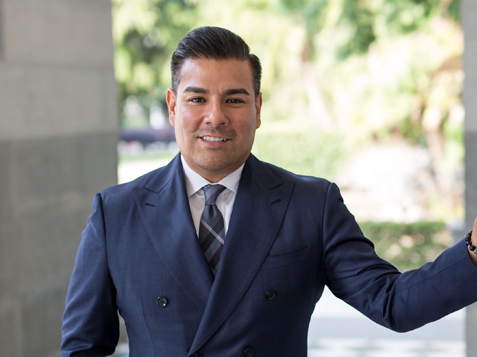
A recent E&E News article 1 caught my eye because it put a spotlight on a fight most California policyholders probably do not know is happening. The article reported that California Insurance Commissioner Ricardo Lara is seeking to change the rules governing consumer intervenors, with the practical effect of making it harder for Consumer Watchdog to recover fees when it challenges insurance rate filings. The timing is what makes this important. California homeowners are being asked to accept a new insurance world of higher rates, catastrophe models, reinsurance costs, and insurer promises of future availability. At that very moment, the state is also considering putting a shorter leash on the watchdog most likely to challenge the insurance industry’s math.
California’s insurance crisis is real. Nobody serious should pretend otherwise. Insurers have restricted writing policies, the FAIR Plan has grown, wildfires have become more destructive, and many homeowners are rightfully scared they will either lose coverage or be priced out of it. Commissioner Lara’s Sustainable Insurance Strategy is built around a bargain that lets insurers use modern tools, including catastrophe modeling and reinsurance costs, in exchange for commitments to write more coverage in wildfire-distressed areas and reduce reliance on the FAIR Plan.
Policyholders should be very wary when the proposed cure is faster rate hikes and fewer watchdogs. The issue is not whether Consumer Watchdog is perfect. Nobody is. The issue is whether California wants a real adversarial process, or a polite administrative hallway where insurers bring the math, regulators review it, and policyholders receive the bill.
Proposition 103 was not some accidental nuisance. It gave policyholders and consumer representatives the right to participate in rate proceedings. California law expressly provides that any person may initiate or intervene in these proceedings, challenge the commissioner’s actions, and recover reasonable advocacy and witness fees when the person represents consumer interests and makes a substantial contribution to the result. Obviously, the insurance lobby hates this hands-on consumer protection approach.
Commissioner Lara says the reforms to this system are needed to create increased transparency, accountability, and efficiency. He argues that consumer interest fee compensation must be earned, documented, and tied to meaningful contributions. Fair enough. Nobody should be paid for wasting time, duplicating work, or tossing sand in the gears merely to slow down the machine. If fees are unreasonable, audit them. If work is not useful, deny payment. If a proceeding is being abused, call it out.
But do not confuse fee policing with muzzling the only serious consumer-side participant in the room. The fee numbers are minuscule compared to the dollars at stake. The Department of Insurance itself lists $1.47 million in intervenor fees awarded in 2025, while also stating that its rate review saved Californians $6.6 billion from 2019 through 2025. E&E News reported that Consumer Watchdog says it saved property and auto insurance policyholders $2.35 billion in premiums last year alone. One can debate the exact savings figure. But the order of magnitude matters. We are talking about a fee mouse standing next to a rate-hike elephant.
This is why policyholders should not let the debate be framed as a scandal over consumer advocate fees. The better question is “Who gets to test the insurance company’s math before homeowners are asked to pay more?”
The ability for insurance consumers to meaningfully question insurance requests for rate change matters even more now because the “math” is changing. Catastrophe models are not simple arithmetic. Reinsurance costs are not easy for the average homeowner to understand. FAIR Plan costs and market-stabilization promises are not kitchen-table concepts. These are technical issues loaded with judgment calls, assumptions, actuarial science and financial consequences. If insurers get more tools to justify higher rates, policyholders need more scrutiny, not less.
The most important part of Lara’s bargain is not the rate increase. It is the promised return of coverage. If homeowners are being asked to pay more, the state should require proof that they are getting something real in return. Are insurers actually writing more policies in wildfire areas? Are they reducing FAIR Plan dependency? Are they offering meaningful coverage at prices people can afford? Are the promised improvements being measured by carrier, ZIP code, deductible, coverage form, nonrenewal activity, and actual policy count? The Department says success will be measured by increased availability and reduced FAIR Plan reliance. Good. Then show the receipts in a way the public can understand.
Texas and Florida do not have anything like California’s meaningful consumer intervenor system. That is not a virtue. In Texas, the debate continues in a far more insurer-friendly file-and-use environment where insurers generally do not need prior approval before rate changes take effect. Texas is exactly the kind of world the insurance lobby usually prefers, where insurers file, regulators review, and policyholders complain after the premium notice arrives.
California should not copy that model. The fact that California is in crisis does not mean every consumer protection caused the crisis. Sometimes a market can be stressed because the risk is changing, the climate is changing, rebuilding costs are changing, reinsurance markets are changing, and insurers are changing their appetite all at once. The solution is not to take the policyholder’s lawyer out of the rate cost hearing.
I understand Commissioner Lara’s pressure. He wants insurers back in the market because homeowners need coverage. A dead market helps nobody. But the insurance industry has always been very good at turning “availability” into the magic word that unlocks the policyholder’s wallet. Pay more now, they say, and coverage may come later. That is not a bargain, but a promise. Promises need verification.
A watchdog on a leash may still bark. But it cannot protect homeowners if it is kept too far from the fight.
California homeowners may have to pay more for insurance because of wildfires, climate, rebuilding costs, and modern risk. But if policyholders are going to pay more, they deserve more transparency, more proof, and more independent scrutiny. Not less.
Thought For The Day
“Homeowners are struggling to stay insured all over the country.”
—Amy Bach, Executive Director of United Policyholders
1 Saqib Rahim. “A consumer group that blocks insurance hikes now faces state attack.” E&E News [Politico]. July 10, 2026. Available online at https://www.eenews.net/articles/a-consumer-group-that-blocks-insurance-hikes-now-faces-state-attack/.