A California appellate court recently handed down an important water loss opinion that all property insurance adjusters should read closely. In Nargizyan v. State Farm, 1 the California Court of Appeal reversed summary judgment for State Farm and sent a clear message that an insurer does not get to win a “continuous or repeated seepage or leakage” case without proving how long the water was actually leaking.
The facts are familiar to anyone practicing in this space. A homeowner discovers a leak in a hot water pipe under the kitchen floor. There is evidence of spraying water, damage to insulation and flooring, and immediate remediation. State Farm denies the claim, relying on the now well-known seepage and leakage exclusion. The trial court bought that argument, but the appellate court did not.
The appellate court shifted the focus away from engineering speculation about how the pipe failed and back to what actually matters under the policy wording. There must be an analysis of how long the water was escaping and causing damage. The insurer’s expert could not say. That alone created a triable issue of fact.
In practice, many of these water loss denials routinely made by State Farm and other insurers are built on exactly what the court rejected. Those insurers make assumptions that a pinhole leak must have existed “over time,” without evidence of duration, without water usage analysis, and without physical indicators consistent with long-term leakage, such as mold, rot, or corrosion.
The court compared this case with other cases that involved clear evidence of prolonged leakage over months or even years and with classic markers of long-term damage. Here, there was none.
The decision is important because court effectively acknowledged that these seepage exclusion losses have a temporal component. It applies to damage that occurs over time. That may sound like a simple proposition, but it directly undercuts a growing trend of arguments by some insurers, led by State Farm, that any leak, no matter how sudden the damage, can be swept into the exclusion. It cannot, without proof.
The opinion also keeps alive claims for bad faith and punitive damages, which should get every claims professional’s attention. The court pointed to evidence suggesting that State Farm may have failed to fully investigate the duration of the leak, relied on an expert who never analyzed that issue, and ignored contrary indicators of a sudden loss. This case is not just a coverage problem. It is a claims handling problem.
I have written before about State Farm’s water loss procedures in California and how these claims are often evaluated through a lens that seems to start with the exclusion and work backward to fit the facts. The issues raised in this case echo those concerns I raised in State Farm’s Water Protocol.
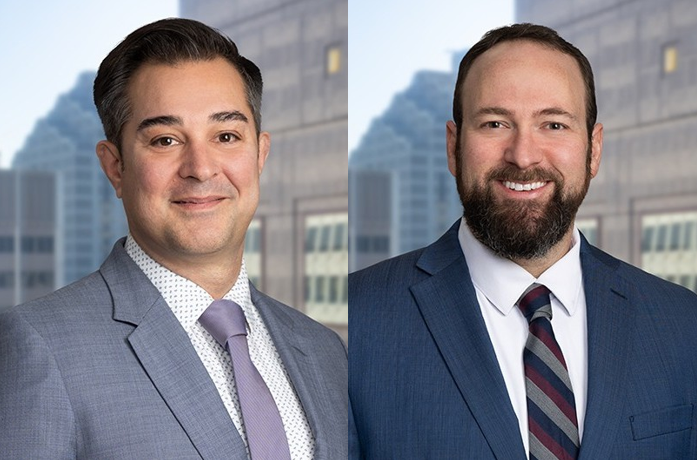
One of the most important aspects of this case, however, is not just the opinion. It is the advocacy that helped shape it. United Policyholders filed an amicus brief in support of the policyholder. The brief was the product of voluntary efforts largely by two lawyers from Merlin Law Group, Dan Veroff and Victor Jacobellis. Their work focused on a critical point that the court ultimately embraced in part: the seepage exclusion is not a catch-all for every water loss. It is meant to address gradual, long-term damage, not sudden events that policyholders reasonably expect to be covered.
That kind of advocacy matters. It helps courts see beyond the framing of the parties and understand how these provisions operate in the real world, across thousands of claims.
Thought For The Day
“In California, the only thing that is constant is change.”
— Barbara Boxer
1 Nargizyan v. State Farm Gen. Ins. Co., No. B342340 (Cal. App. Apr. 15, 2026). See also, United Policyholder’s amicus brief.