A federal appellate opinion recently issued a short but important opinion regarding hail damage loss in Cutchall v. Chubb Lloyds Insurance Company of Texas. 1 The case did not change Texas law. It did reinforce a fundamental claims consideration that if you cannot prove when the loss happened, you may never get to argue anything else.
The Cutchalls claimed their Houston home suffered interior water damage after a hailstorm breached the roof. Hail is unquestionably a covered peril. The case should have been about causation, scope of damage, and whether Chubb properly adjusted the claim. Instead, it became about one basic question: When did the storm occur? That question unraveled the entire lawsuit.
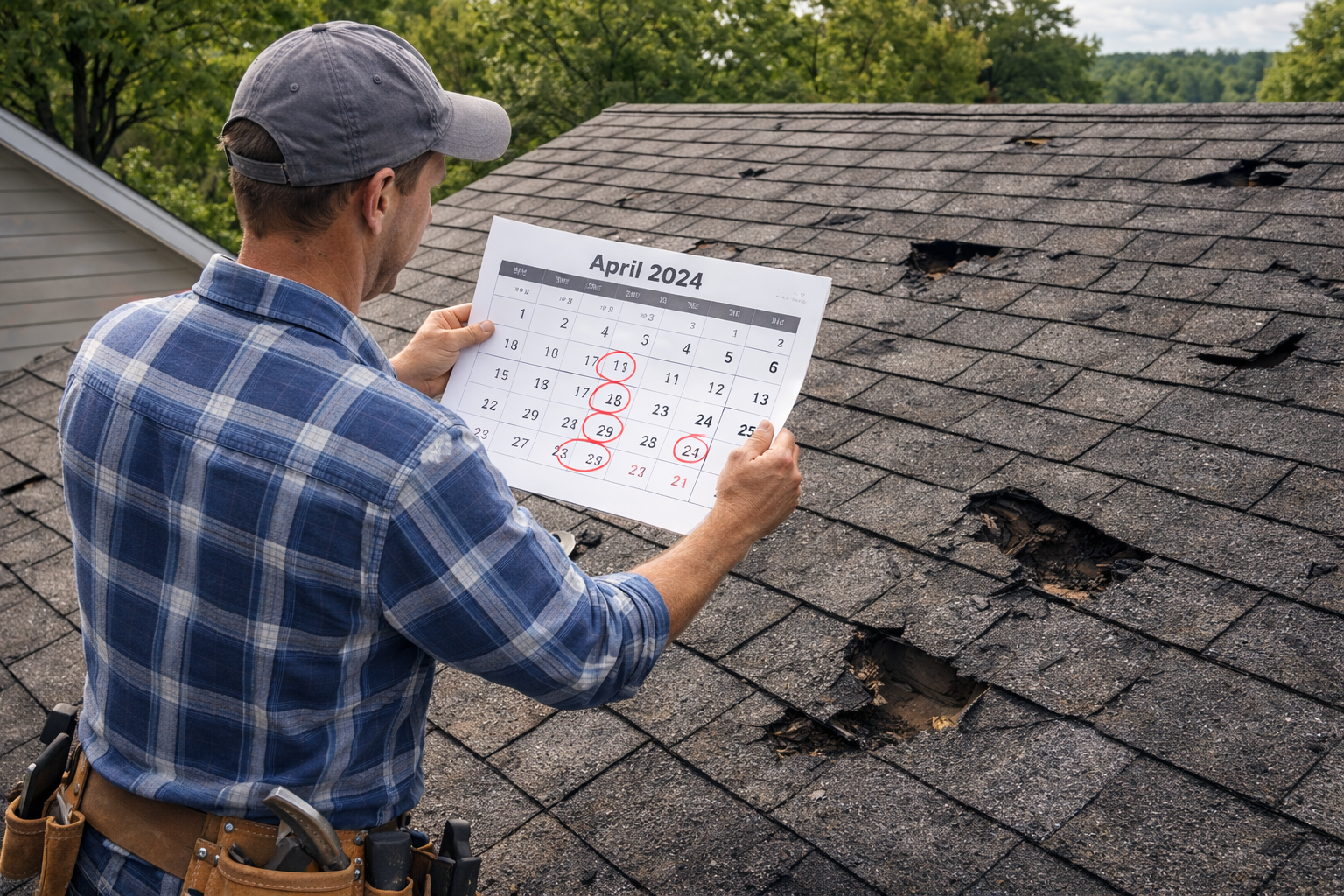
Over the course of the claim and litigation, multiple potential storm dates were identified. The insureds referenced March or April 2021. The original petition alleged September 7, 2021. One expert referenced May 18, 2021. Another expert at one point identified April 29, 2023. Yet another report focused on August 16, 2021. Later, in response to summary judgment, a new affidavit asserted June 15, 2021, as the operative date based on weather database research.
The problem was not simply that there were different dates. The problem was that there was no stable, supported, defensible theory of loss tied to a specific event at the insured property during the policy period.
Chubb presented a meteorologist who opined there were no reports of hail in the area on certain claimed dates. The trial court granted summary judgment, concluding that the insureds failed to raise a genuine issue of material fact that a hailstorm capable of causing the alleged damage affected their neighborhood during the policy period.
On appeal, the Fifth Circuit affirmed the trial court ruling in favor of Chubb. Importantly, the appellate court did not even reach the concurrent causation arguments. It did not analyze wear and tear versus storm damage. It did not evaluate segregation of damages. It did not delve into bad faith.
Why? Because under Texas law, the insured bears the initial burden to prove a covered loss occurred during the policy period. If that threshold showing fails, the case ends there.
The court also upheld the trial court’s enforcement of scheduling deadlines when it refused to consider a late-filed affidavit asserting yet another storm date. Litigation is not a moving target exercise. You do not get infinite chances to identify the right storm after summary judgment is filed.
There are several hard lessons here. First, a hail case begins with meteorology. A case should not be filed until there is competent, property-specific weather data tying damage to a specific storm within a specific policy period.
Second, experts must be aligned before suit is filed. If your adjuster, engineer, and meteorologist are pointing to different dates or disclaiming certainty about the date or cause of loss, you have a “theory of loss” problem. That problem will not fix itself in litigation.
Third, pleadings matter. The petition in this case alleged a specific date. The evidence later shifted. Courts notice that. Juries notice that. Opposing counsel and insurance company claims managers certainly notice that.
Fourth, you cannot reach concurrent causation if you cannot first establish coverage. Too often, litigants rush into allocation debates before the basic insuring agreement is satisfied. The Fifth Circuit’s opinion is a reminder that coverage analysis is sequential.
This case was built on a theory of loss that was a sandcastle as the tide was coming in. I previously wrote about the case after the trial court ruling in three blog posts: Policyholders and Public Adjusters Often Need to Hire Their Own Experts, Policyholders and Public Adjusters Often Need to Hire Their Own Experts—Part Two, and Want to Win a Hailstorm Damage Lawsuit? Hire The Right Experts and Establish a Theory of Loss Before Filing a Lawsuit, where I stated:
In hailstorm damage cases, the policyholders should generally be prepared to hire competent experts who are fully provided with as much information as possible to determine the date and cause of loss as well as the amount of damages. Accordingly, there is usually an expert meteorologist regarding the wind and hail damage and confirming when those occurred, as well as a structural engineer or roofing expert with deep experience in hail-related damages to roofs and associated water leaks to the inside of the structure. Finally, there needs to be expert testimony on replacement cost and actual cash value damages.
The societal promise of insurance depends on courts enforcing contracts fairly. But fairness requires proof. When policyholders meet their burden with credible, well-supported evidence, they win. When they cannot identify the loss event with reasonable certainty, courts will not allow speculation to carry the day.
Thought For The Day
“Facts do not cease to exist because they are ignored.”
— Aldous Huxley
1 Cutchall v. Chubb Lloyds Ins. Co. of Texas, No. 25-20024, 2026 WL 625633 (5th Cir. Mar. 5, 2026). See also, Cutchall brief and Chubb Lloyds brief.