Federal crop insurance is a strange animal for most property insurance professionals. It looks like insurance, smells like insurance, and is sold by private insurers, but it is not governed by state insurance law. It is a federal program, created by statute, administered by a federal agency, and ultimately judged under administrative law principles rather than traditional insurance coverage doctrines. A recent Fifth Circuit decision, Derick Miller v. Federal Crop Insurance Corporation, 1 provides a lesson in how that difference can determine the outcome of a claim.
To understand the case, you have to start with how the federal crop insurance program works. Congress created the Federal Crop Insurance Act to stabilize agriculture by protecting farmers from unavoidable losses caused by weather and other natural events. The government does not sell policies directly. Instead, it licenses private insurance companies to issue standardized policies that are written and reinsured by the federal government through the Federal Crop Insurance Corporation and administered by the USDA’s Risk Management Agency.
Those policies insure against certain named causes of loss, such as drought, excess rainfall, wind, hail, and heat. But there is a critical exclusion baked into the statute and the policy. Losses caused by a failure to follow “good farming practices” are not covered. Good farming practices are defined as production methods generally recognized by agricultural experts for the area. In other words, the program does not insure poor farming decisions.
That sounds simple enough until you see how it plays out in practice.
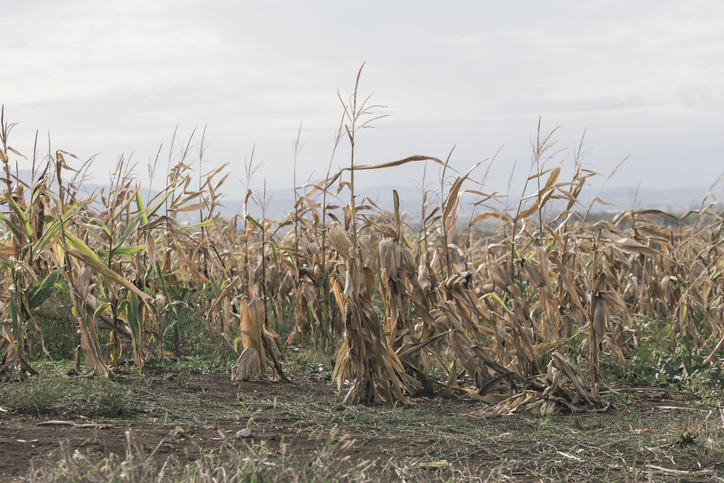
Derick Miller is a Texas farmer who insured his cotton and peanut crops for the 2021 crop year. That year was a rough one in West Texas. According to Miller, the area experienced drought, excessive rain, high winds, and heat. Many farmers in his counties received crop insurance payments for weather-related losses. Miller reported losses as well, pointing in particular to wind damage and weather impacts that interfered with irrigation and weed control.
His claim was denied. Not because the insurer said the weather did not occur, but because the Risk Management Agency determined that Miller had not followed good farming practices. The agency concluded that his peanut and cotton losses were primarily the result of management failures, not insured weather events. Those alleged failures included inadequate weed control, insufficient irrigation at critical times, a peanut seeding rate below recommended levels, and crop rotation practices inconsistent with Texas peanut production guidance.
Miller challenged that determination. His argument will sound familiar to anyone who handles property insurance disputes. He said he did what reasonable farmers in his area do. He pointed to county extension agents and an agronomist who supported his practices. He relied on growing season inspection reports showing that his crops were comparable to those of others in the area. He further argued that even if there were problems with irrigation or weed control, those problems were caused by insured weather events, such as high winds flipping irrigation pivots and excessive rain that delayed herbicide applications.
The district court rejected his arguments, and the Fifth Circuit affirmed. The appellate court’s opinion made clear that this case was not about whether it agreed with Miller’s farming decisions or even whether it might have weighed the evidence differently. The only question was whether the USDA’s decision was arbitrary or capricious under the Administrative Procedure Act. That is a highly deferential standard.
The court walked through the agency’s reasoning and found enough in the record to uphold it. The Risk Management Agency did not ignore Miller’s evidence. It acknowledged the opinions of his experts and the growing season inspections. But it explained why it found other evidence more persuasive, including photographic and observational evidence of weed infestation, published Texas agricultural guidance on seeding rates and rotation, and analyses of rainfall and irrigation suggesting that water was not applied when and how the crop needed it.
Importantly, the court emphasized that Miller did not show that the agency fabricated evidence or relied on plainly erroneous data. He essentially argued that his experts should have been believed over the agency’s experts. Under administrative law, that is usually a losing argument. Agencies are allowed to choose between competing expert opinions as long as they explain their choice.
The court also downplayed the growing season inspection reports that Miller relied on. Those reports were limited in scope, internally mixed, and did not clearly support the conclusion that the crops were likely to meet their production guarantees. They were not enough to override the agency’s later, more detailed good farming practices determination. The Fifth Circuit concluded that the agency articulated a rational connection between the facts it found and the decision it made.
There are several important lessons in this decision, especially for policyholders who insure under the federal crop program and for claims professionals dealing with crop claims. First, this is not state-law insurance. Traditional doctrines like construing ambiguities in favor of coverage or giving special weight to the policyholder’s reasonable expectations do not apply. Once a dispute reaches federal court, it is filtered through administrative law, where deference to the agency is the rule, not the exception.
Second, good farming practices determinations are often the real coverage battleground. If an agency concludes that losses are primarily due to management decisions rather than weather, coverage can disappear even in a year when the weather was objectively bad. The question becomes not whether weather occurred, but whether it was the most limiting factor compared to farming practices.
Third, the administrative record is everything. By the time a case gets to court, no new evidence is coming in. Farmers, their advisors, and public adjusters in the field must build a detailed, contemporaneous record during the growing season and claim process. Logs of planting rates, irrigation schedules, equipment failures, repair delays, weather events, photographs, and local expert input matter far more than after-the-fact explanations.
Fourth, expert opinions need to be specific, local, and evidence-driven. Credentials alone are not enough. Experts must directly engage with the data the agency relies on, explain why local conditions justify deviations from general guidance, and document how insured weather events interfered with otherwise reasonable practices.
Every so often, I get a call from a public adjuster asking about a crop claim. From my legal perspective, I stress the need for vigilance, documentation, and early advocacy when dealing with federal crop insurance claims. You cannot provide the evidence later if a denial takes place. This decision does not mean farmers cannot win disputes over good farming practices. In this program, winning coverage often depends less on what ultimately happened to the crop and more on how well the story of farming practices, weather, and causation is documented before the agency ever makes its call.
Thought For The Day
“In matters of conscience, the law of the majority has no place.”
—Mahatma Gandhi
1 Miller v. Federal Crop Ins. Corp., No. 24-10929, 2026 WL 64291 (5TH Cir. Jan. 8, 2026). (See also, Appellee’s Brief and Appellant’s Reply Brief).