
I have tried and litigated property insurance cases across the country. While every jurisdiction has its quirks, Texas continues to distinguish itself as increasingly unforgiving where detail is increasingly important. Texas property insurance cases are being decided less on “what happened” and more on whether the policyholder’s team dotted every procedural “i” and crossed every evidentiary “t.”
The recent Fifth Circuit decision in H5R LLC v. Scottsdale Insurance Company is another textbook example of this trend. 1 It is not a case where the court definitively found there was no hail damage. It is not even a case where the court concluded the insurer’s causation theory was necessarily correct. Instead, it is a case in which the policyholder lost due to pleading choices, expert-proof gaps, and timing mismatches that proved fatal under Texas and Fifth Circuit procedural rules.
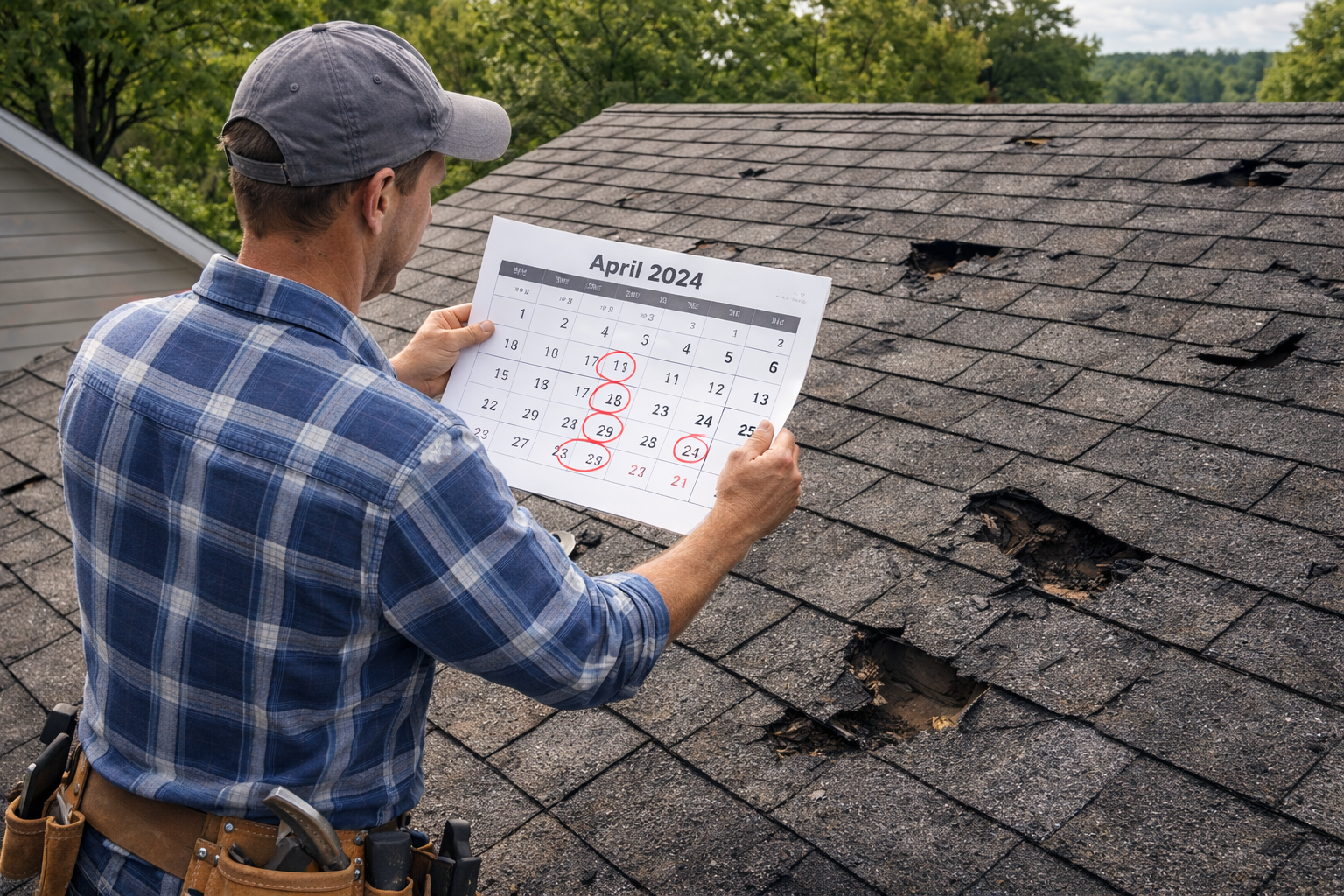
H5R owned a home that had been insured by Scottsdale under a series of annual renewal policies beginning in late 2018. A claim for roof damage was eventually made in 2021. Scottsdale acknowledged hail damage existed, but denied the claim on the grounds that the damage predated the reported loss and policy period.
On appeal, H5R argued that hail had occurred during earlier Scottsdale policy periods and that summary judgment should never have been granted. The Fifth Circuit disagreed and affirmed judgment for the insurer. But the court’s reasoning is what should command attention.
One of the decisive factors in the case was not weather data or roof photographs. It was the policyholder’s pleading. H5R’s complaint alleged breach of a specific renewal policy beginning in December 2020. Yet much of the hail evidence relied upon by the policyholder pointed to hail events in 2019 and 2020, before that renewal period began.
Under Texas law, each renewal policy is treated as a separate and distinct contract. That doctrinal rule, combined with federal procedural law, proved decisive. The Fifth Circuit held that a policyholder cannot effectively introduce new breach of contract claims for earlier policy periods at the summary judgment stage if those claims were never pleaded.
In other words, evidence of hail during earlier years did not matter because the pleaded contract claim did not cover those years. This is not a “gotcha” rule invented by the court. It is well-established Texas law. But H5R serves as an example of how unforgiving courts have become in applying it, and the need to be exacting when reviewing a theory of coverage with dates of coverage properly raised.
If a Texas property insurance case involves multiple renewals, and most do, policyholder counsel and public adjusters must raise those in writing early on or risk losing otherwise valid claims on purely procedural grounds.
The second major lesson from H5R concerns expert testimony and causation. Texas courts increasingly demand that causation opinions do more than say, “This damage looks like hail.” Experts must be able to tie the damage to a specific storm or storms that occurred during the operative policy period. They must be able to exclude other plausible time frames.
In H5R, even assuming the policyholder’s expert testimony had been admitted in full, the expert could not say when the hail damage occurred. He conceded it could have happened years earlier. That concession alone doomed the causation element.
This reflects a broader pattern in Texas property insurance litigation. Courts expect policyholders and public adjusters to prove not only causation but also temporal causation, precisely aligned with coverage periods. Generalized opinions about “hail damage over time” are no longer sufficient. Courts want dates, storms, weather data, and exclusion of non-covered periods.
H5R also highlights another recurring trap requiring expert designation and disclosure compliance. The policyholder’s expert was excluded, in part, because he was not properly designated to testify about when hail damage occurred. The Fifth Circuit upheld that ruling and emphasized that, even if exclusion were error, it was harmless because the expert still could not establish timing within the policy period.
Texas federal courts strictly enforce expert disclosure rules, and appellate courts are reluctant to reverse those rulings absent clear prejudice. Policyholder attorneys must assume that every designation, report, and opinion will be scrutinized for technical compliance and that courts will not rescue parties from sloppy or incomplete disclosures.
Extra-Contractual Claims Are Only as Strong as the Contract Claim
Once the breach of contract claim failed, H5R’s extra-contractual claims fell with it. That result is consistent with Texas jurisprudence, which increasingly requires a viable claim for policy benefits as a prerequisite to most bad faith and statutory claims.
This reinforces a practical truth: in Texas, extra-contractual claims are not safety nets. They are extensions of the contract claim. If coverage fails, they usually fail too.
Why Public Adjusters Should Care Deeply About This Case
Public adjusters in Texas should read H5R carefully and take it seriously. Public adjusters are often the first professionals to shape a claim’s narrative. If storm dates are not identified early, if meteorological support is not obtained, and if damage is not correlated to specific policy periods, the claim may be fatally weakened before litigation ever begins. Texas claims increasingly require meteorologists, engineers, and consultants who can identify specific storm events, match damage patterns to those events, exclude non-covered time periods, align findings with the exact policy period at issue, and support proofs of loss that match the coverage periods.
This is not academic. Claims are being lost on these details.
H5R v. Scottsdale is part of a larger trend. Texas property insurance litigation has become a precision practice. Pleadings, expert opinions, disclosures, and timelines must all align perfectly. This does not mean policyholders cannot win in Texas. It does mean that Texas demands a level of procedural discipline that exceeds many other jurisdictions. Lawyers and public adjusters who fail to respect that reality do so at their clients’ peril.
Insurance companies understand these rules very well. Policyholders must match that sophistication or risk losing cases that might otherwise have been won on the merits.
Thought For The Day
“The difference between something good and something great is attention to detail.”
— Charles R. Swindoll
1 H5R, L.L.C. v. Scottsdale Ins. Co., No 25-10533, 2026 WL 252653 (5th Cir. Jan. 30, 2026). See also, brief of H5R and brief of Scottsdale Insurance.