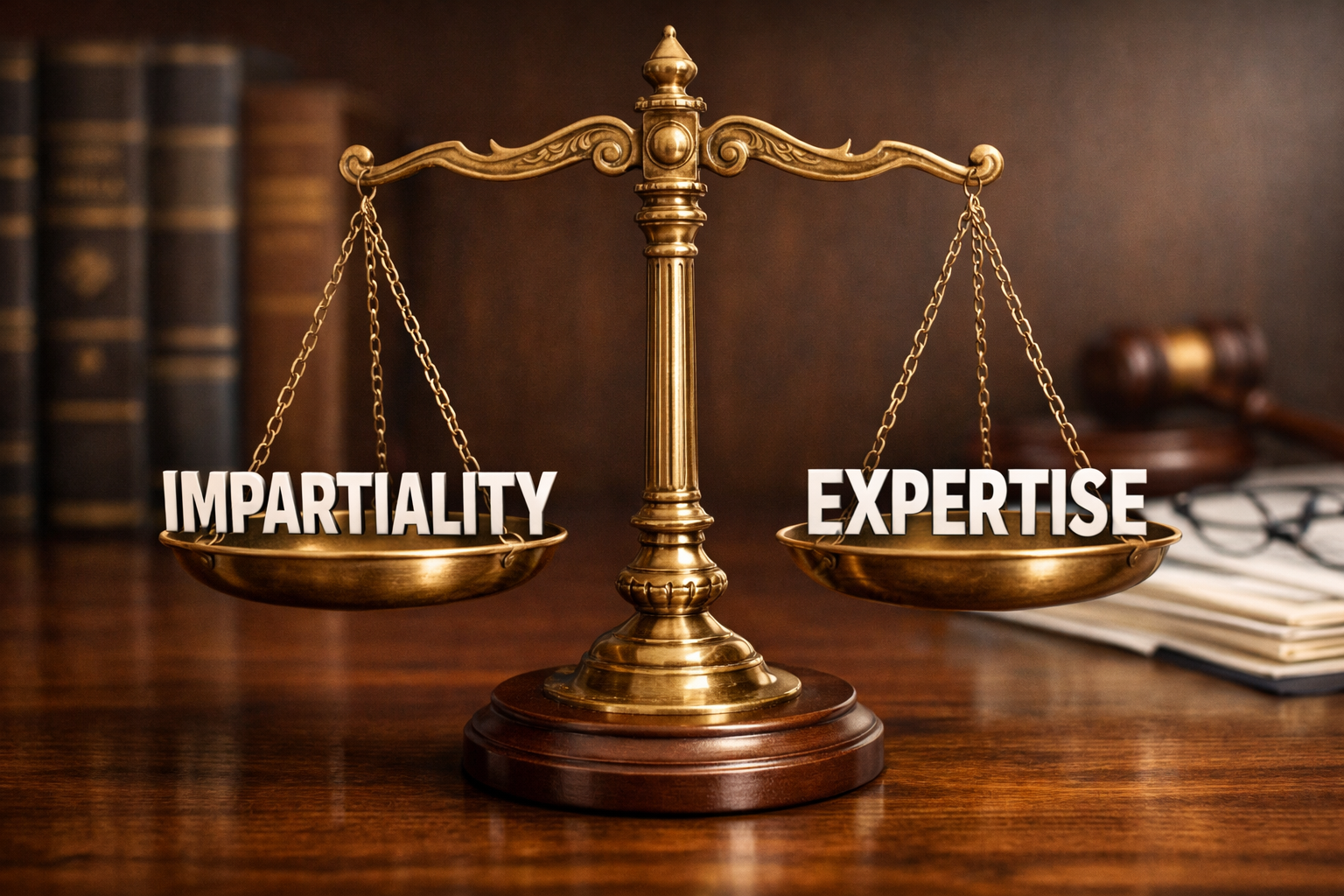
Policyholders and their advocates often assume that when a court is asked to appoint an appraisal umpire, the judge will naturally select the person with the most technical experience in construction, estimating, or insurance claims. In practice, that assumption is frequently wrong. A recent Arizona federal court dispute over the selection of an appraisal umpire shows that judges often prioritize perceived neutrality and decision-making credibility over industry expertise. 1
The dispute arose in a property insurance appraisal of a storm loss, with the central disagreement over whether the insured’s roof required replacement or could be repaired. That type of issue naturally leads policyholders to believe the umpire should have deep construction or roofing expertise. The policyholder therefore proposed several candidates with extensive backgrounds in construction, adjusting, and appraisal work. The reasoning was intuitive. If the dispute centers on whether a roof can be repaired or must be replaced, it seems logical to appoint an umpire who understands roofs.
The insurer took a different approach. Rather than focusing on technical qualifications, it emphasized impartiality. The insurer argued that many of the proposed industry candidates were routinely retained in insurance disputes and therefore raised concerns about neutrality. It also highlighted what it characterized as an inconsistency in the policyholder’s argument. On one hand, the policyholder criticized candidates who worked for insurers as adjusters or appraisers, while on the other hand, proposed candidates who themselves had similar industry roles.
The insurer suggested that if the parties could not agree on industry professionals because each side questioned their neutrality, the court should appoint a “true neutral.” The insurer then proposed candidates who were not primarily industry adjusters or construction consultants but rather professional mediators, arbitrators, or former judicial officers who had served as neutral decision-makers in numerous disputes.
Courts frequently view the role of the umpire not as a third appraiser who independently evaluates the loss from a technical standpoint but as a neutral decision-maker who resolves disagreements between the two appointed appraisers. Under that model, the appraisers bring the technical expertise to the table while the umpire evaluates competing positions and makes a final determination when the appraisers cannot agree. When judges adopt that perspective, the qualifications that matter most change dramatically. Instead of asking who understands roofs or construction best, the court may focus on who appears most impartial and who has the credibility and experience to resolve disputes fairly.
That is likely what happened in this case. The court ultimately appointed a candidate whose background emphasized experience as a mediator, arbitrator, and former judicial officer. While the policyholder argued that this individual lacked sufficient technical expertise in roofing and construction, the court was persuaded that the candidate had served as an umpire in multiple appraisal disputes and had an undisputed reputation as a respected neutral.
This result reflects a pattern I have discussed in earlier articles about how judges select appraisal umpires. In many cases, judges choose individuals they know, trust, or recognize as credible neutrals rather than selecting industry experts with specialized technical backgrounds. Judges often place significant weight on reputational neutrality because they understand that their appointment effectively endorses the umpire’s integrity. For those interested in this topic, I would suggest reading Why Did a Judge Select the Policyholder’s Umpire Over State Farm’s Nominees, Let’s Play “Guess the Umpire!” and How Do Judges Select Umpires? Some Just Select a Person They Know and Respect.
There is a practical judicial concern at play. When a judge appoints an umpire who is deeply embedded in the appraisal or insurance consulting industry, the losing party may later argue that the umpire had undisclosed relationships or biases. A professional mediator, arbitrator, or former judge can appear to present fewer of those concerns. From the court’s perspective, appointing a well-known neutral may reduce the likelihood of future disputes about the umpire’s impartiality.
For those involved in appraisal disputes, the lesson is clear. When presenting candidates for court appointment as an umpire, the argument cannot simply be that the person understands construction or insurance claims. The more effective approach often emphasizes neutrality, fairness, reputation, and the ability to serve as a credible decision-maker in a contested dispute.
Based on the cases I have studied on this topic, judges tend to select the person they believe will best protect the integrity of the process. At the P.L.A.N. appraisal conference last week in New Orleans, I discussed how integrity is the key reputational attribute needed for umpires individually and for safeguarding the appraisal as a valid dispute resolution process.
Thought For The Day
“Character is much easier kept than recovered.”
— Thomas Paine
1 Chew v. Homesite Ins. Co., No. 2:25-CV-00818 (D. Ariz. Jan. 13, 20206). See also, Plaintiff’s Motion to Appoint Umpire, Homesite’s Response to Motion, Plaintiff’s Reply in Support of Motion, and Homesite’s Sur-Reply to Motion.