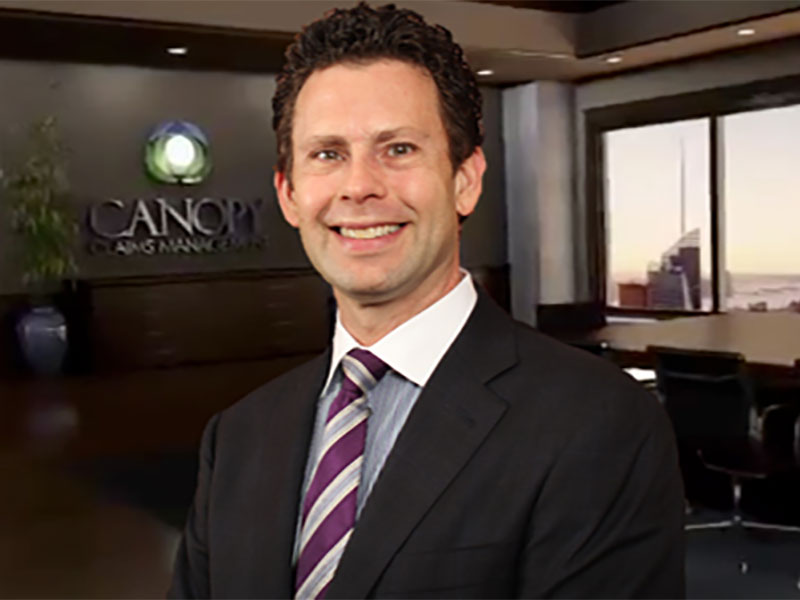

The TWA Hotel at JFK was built during an era when people looked at aviation and imagined the future. It was an appropriate place for the New York Public Adjusters Association to hold its annual conference and for public adjusters to consider the future of their own trade and profession. I had the privilege of speaking Friday morning on “Mastery Is the Key to a Lasting Public Adjusting Business, Quality Work, & Happy Clients.” My message was straightforward: Mastery is doing the right things so often that they become second nature.
Mastery is not a title somebody gives you. It isn’t measured by how loudly you promote yourself, how many followers you have, or how large a claim you advertise. It is earned through discipline, teamwork, study, preparation, honesty, experience, and the courage to keep improving.
Mastery produces quality work. Quality work produces trust. Trust produces happy clients, referrals, and a business that can thrive for generations. Mastery also creates resilience when things inevitably do not go as planned.
Brian Evans and Jade Bentz followed my presentation. Their discussion reinforced an important point that raising standards of competence and ethical conduct is not an obstacle to business success. It is one of the foundations of sustainable success. A successful profession is one whose members understand their roles, follow reliable practices, communicate honestly, and share a commitment to excellence.
In my speech, I used stories from my competitive sailing experience to demonstrate why mastery and high standards are so important to success and survival. The best sailing crews I have raced with didn’t succeed because one person could do everything. They succeeded because everyone knew the objective, understood a specific responsibility, and had practiced until the proper response became instinctive. When something broke, there was no panic and no argument about who was supposed to act. There was movement.
Public adjusting firms need the same discipline. Mastery matters most when everything is breaking. This is one reason Jeffrey S. Major’s recently published Public Adjuster Code of Professional Conduct deserves serious attention. The Code turns the familiar demand to “raise the bar” into specific expectations involving competence, supervision, client communication, claim support, conflicts of interest, professional conduct, and accountability.
A written code cannot create mastery by itself. It cannot enforce itself, and it will not transform an unethical person into an honorable one. Adoption, education, mentoring, measurement, and fair enforcement must follow.
Still, individuals, teams, and entire professions cannot consistently meet standards that have never been clearly stated. Without written expectations, training becomes folklore. New adjusters learn whatever the person beside them happens to do, whether that practice is excellent, mediocre, or simply wrong.
Standards give teams a common language. They tell leaders what must be taught, team members what is expected, and policyholders what they have a right to receive.
Higher standards also strengthen the entire public adjusting community. Legislators, regulators, insurers, media, and the public rarely separate every excellent public adjuster from every bad actor. The misconduct of a few is often used to attack the legitimacy of the whole trade. That may be unfair, but pretending it does not happen is not a strategy.
The strongest response is a community of public adjusters able to demonstrate that ethical conduct, continuing education, technical competence, meaningful supervision, and accountability are not merely aspirations. They are normal professional expectations which are enforced.
Public adjusters should not fear standards requiring competence and ethical behavior. The best public adjusters already practice much of what Major’s Code demands and what Evans and Bentz argued for in their presentation. Stronger standards help distinguish those professionals and create a path for others who sincerely want to improve. They also make the trade more resilient. A profession grounded in competence and public service is much harder to marginalize than one unwilling to examine or police itself.
Jonathan Wilkofsky and the NYPAA leadership, officers, staff, sponsors, speakers, and volunteers deserve congratulations for producing a fun and successful event. The program combined technical education, training, ethical instruction, professional fellowship, and honest discussion about the future of public adjusting. It was the type of event that is precisely what a professional association should provide.
The TWA Hotel celebrates an age when people believed bold thinking could accomplish what once seemed impossible. Public adjusting needs that same spirit. Every public adjusting leader should embrace the concept and high calling of mastery. The future belongs to public adjusters who choose mastery over mediocrity. Better individual adjusters will build better teams. Better teams will create happier policyholders and stronger businesses. Collectively, they will build a more respected and resilient profession.
Mastery never has a finish line. It is the standard a successful professional chooses to strive for every day.
Thought For The Day
“Eternal vigilance is the price of progress in any field of activity.”
—William Goodman, “The Public Adjuster,” Best’s Insurance News, February 1951