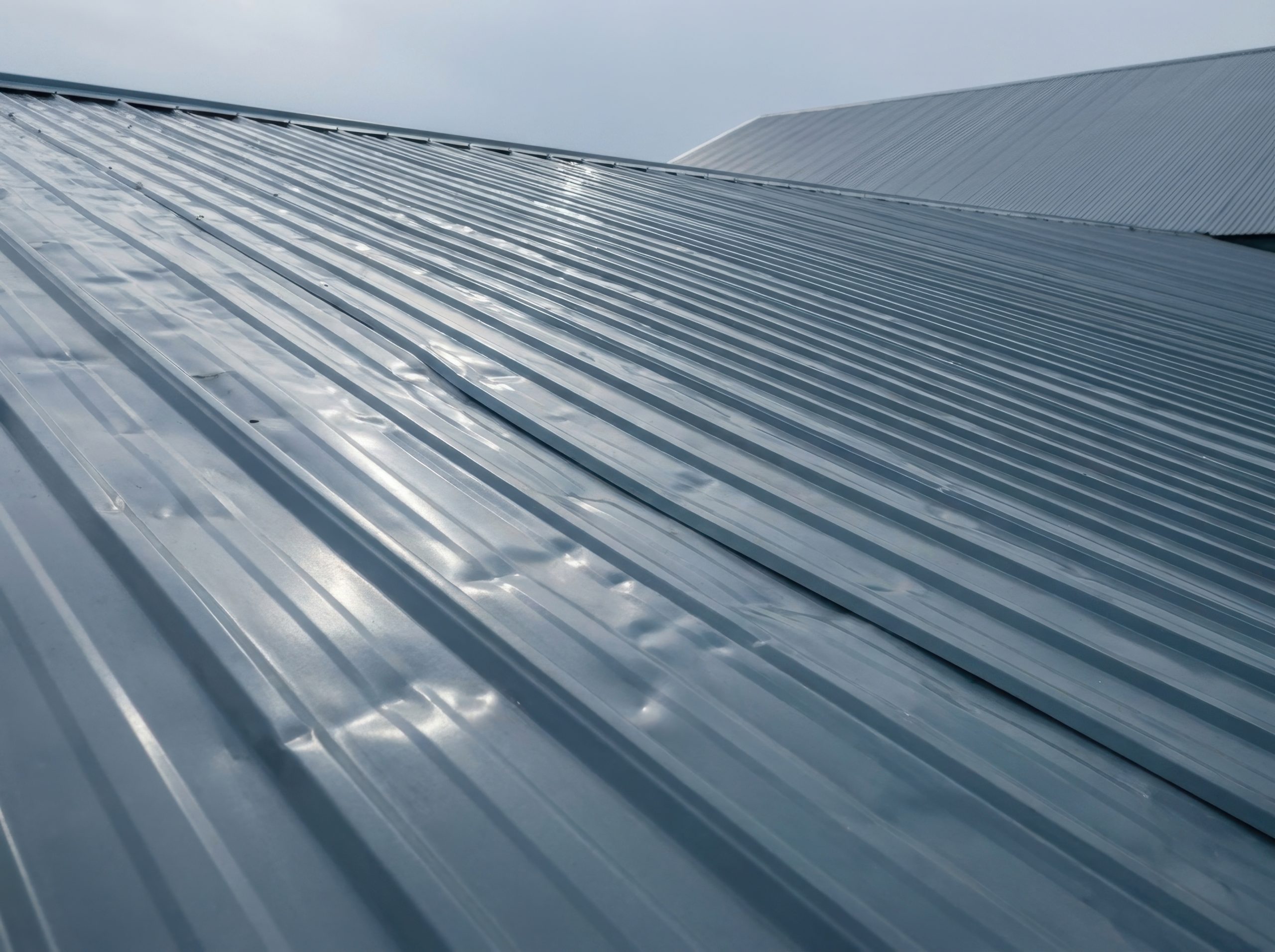
Cosmetic damage exclusions are showing up more often in property insurance policies, particularly in hail country. They sound innocent enough. After all, if hail merely makes a piece of metal a little less pretty while everything still works perfectly, many policyholders might understand why an insurer would want to limit that exposure. The difficulty comes when the word “cosmetic” becomes the label applied to physical damage before anyone has carefully determined whether the damaged component can still perform its job.
A recent Oklahoma decision is a good reminder that policyholders, public adjusters, contractors, experts, and their attorneys need to pay very close attention to these provisions. In Craig Combs v. CSAA General Insurance Company, 1 the policyholder claimed wind and hail damage to his roof. CSAA’s inspection found hail damage to various metals, including the valley metal, but ultimately declined to pay for replacement of that valley metal under a cosmetic damage exclusion. The policyholder challenged that decision, and the dispute eventually reached summary judgment.
Here is the actual policy language quoted by the court:
Cosmetic loss or damage means damage that only alters the physical appearance of the metal roof covering but does not result in damage that allows the penetration of water through the roof covering or does not result in the failure of the roof covering to perform its intended function, to keep out elements over an extended period of time.
Metal roof covering means the metal roofing material exposed to the weather, the underlayments applied for moisture protection, and all flashings required in the replacement of a metal roof covering.
We do not cover cosmetic loss or damage to metal roof coverings caused by the peril of hail.
Those words deserve to be read slowly. This is not simply an exclusion saying, “We do not pay for dents.” The policy itself tells us what separates excluded cosmetic damage from damage that is not merely cosmetic. Water penetration matters. More importantly, whether the roof covering can continue performing its intended function over an extended period of time matters.
The policyholder made an interesting argument. His roof was an impact-resistant shingle roof, not a metal roof. His attorneys argued that an exclusion addressing “metal roof covering” should not apply to valley metal installed as part of a shingle roof. The opposition emphasized that the policy defined metal roof covering to include metal roofing material and flashing required in replacing a metal roof covering. The argument was essentially that CSAA had taken an exclusion designed for a metal roof and stretched it onto a shingle roof.
The judge rejected that interpretation. The court ruled that the exclusion applied to roof coverings that are metal and was not limited to buildings having what we commonly call a “metal roof.” That ruling is important, but it is not the most important lesson from the case.
The bigger problem was proof. The policyholder also argued that the damage to the valley metal was not cosmetic. That was exactly the argument that needed to be made. But according to the court, there was no evidence supporting it. The judge wrote: “Plaintiff, however, has not presented any evidence to support this assertion.”
Those are painful words to read in a summary judgment order because that problem is usually preventable. The policyholder had plenty to say about CSAA’s investigation. CSAA’s own inspector had identified hail damage to the valley metal. The original scope included it. The claim materials reflected “hail dings.” The policyholder also argued that CSAA never determined whether the valley metal could continue performing its intended function. In fact, the opposition specifically noted that the claim file contained no analysis about whether the damaged valley metal continued to perform its job of channeling water.
Those facts may be important to a bad faith investigation. But there is a significant difference between proving that the insurance company failed to investigate whether something still functions and proving that the damaged thing actually does not function as intended. This distinction appears to have sunk this hail damage case.
Monday morning quarterbacking litigation is easy, and I have been tackled enough times in insurance coverage cases to know that lawyers rarely have every piece of evidence they wish they had. I do not view this decision as an opportunity to criticize the policyholder or his attorneys. I view it as a teaching case because we are all going to see more of these cosmetic exclusions.
The lesson starts the moment somebody reads the policy and discovers one. Do not merely document that hail struck the metal. Do not stop with photographs showing dents. Do not assume that because an insurance company calls something “cosmetic,” the label proves anything one way or another. Read the definition of cosmetic damage word for word and then develop evidence addressing every portion of that definition.
If the policy says damage is cosmetic only when it does not affect the component’s ability to perform its intended function over an extended period of time, somebody knowledgeable should investigate that issue. What is the intended function of the valley metal? Has its geometry changed? Does deformation affect drainage? Are seams, laps, fasteners, coatings, or adjoining materials compromised? Does the damage increase the likelihood of corrosion or premature failure? Can the material still shed water in the manner contemplated by its design? Has its useful service life been reduced? What do the manufacturer, roofing standards, installation instructions, or qualified roofing professionals say? Those questions should be answered with evidence rather than argument.
Sometimes that may require a knowledgeable roofer. Sometimes it may require an engineer, metallurgist, building consultant, or other expert. The particular professional matters less than getting competent testimony from somebody qualified to explain what the damage physically did and why it matters. Photographs are wonderful evidence, but a photograph of a dent does not necessarily explain to a judge why that dent affects the long-term performance of a roofing component.
There is another practical point for public adjusters. A proof of loss or estimate stating that valley metal needs replacement is not necessarily enough when the insurer invokes a cosmetic exclusion. The estimate establishes what you say should be replaced and what it costs. It may not establish why the exclusion does not apply. Once the insurer raises the exclusion, the claim investigation should pivot toward the words of that exclusion.
I would also be careful about allowing the dispute to become nothing more than a battle over labels. “Functional damage” and “cosmetic damage” are conclusions. The facts underneath those conclusions win cases. A bent valley, damaged coating, distorted seam, fractured finish, compromised fastener, altered drainage path, or shortened service life is evidence somebody can explain. Simply repeating that damage is “functional” is much less useful.
The policyholder in this case had some facts that certainly made me want to know more. CSAA’s field inspector had initially included the valley metal. The desk adjuster removed it, noting that the valley metals were “only cosmetically damaged.” The opposition also raised questions about the insurer’s reconsideration, its refusal to reinspect, and how quickly the supervisory review occurred. Yet once the judge found the exclusion applicable and found no evidence demonstrating that the valley-metal damage was anything other than cosmetic, the contract claim failed. The bad faith claim then fell with it.
Cosmetic damage exclusions are not going away. If anything, I expect insurance companies will continue trying to define more hail damage as cosmetic and shift that portion of the risk back to policyholders. That makes understanding the precise policy language and what is needed for proof increasingly important.
For policyholders and those helping them, the answer is not to complain about the exclusion. It is to study it. If the policy makes functionality the dividing line between covered and excluded damage, investigate functionality. Photograph it. Test it where appropriate. Research the component. Get qualified people involved. Preserve the evidence. Explain what happened physically and what those physical changes mean over the expected life of the roof.
Insurance coverage cases are often won or lost long before anybody walks into a courtroom. They are won when somebody asks the right question at the damaged property and then takes the time to prove the answer.
Thought For The Day
“It’s what you learn after you know it all that counts.”
— John Wooden
1 Combs v. CSAA General Ins. Co., No. CIV-25-805 (W.D. Okla. Sept. 15, 2026). See Plaintiff’s Response in Opposition to Defendant’s Motion for Summary Judgment.