I often give speeches to audiences where people thank me afterward and tell me all kinds of nice things. Then I go home and wonder whether the message caused any positive change or inspired anybody to commit to action. Applause is pleasant, but action is the real test.
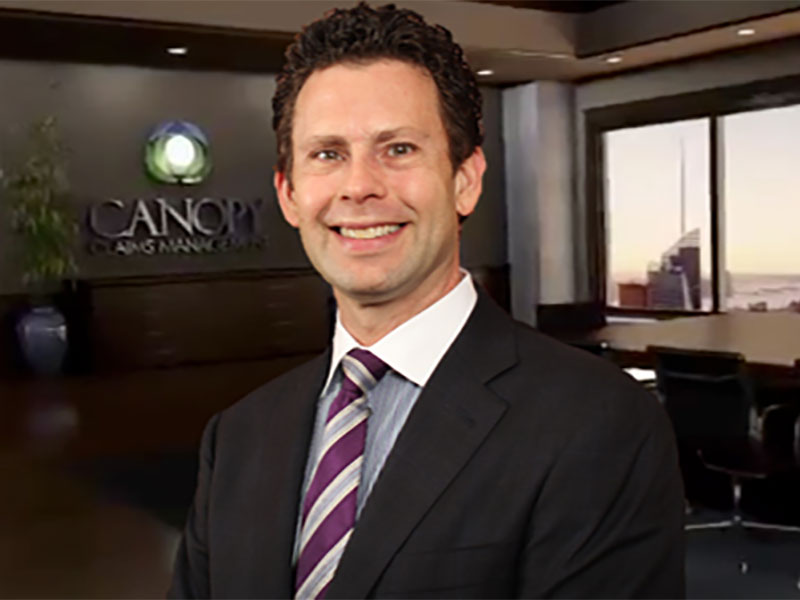
On Wednesday, I received the following email from public adjuster Jeffrey S. Major:
All,
Tomorrow marks the one year anniversary of a dinner in San Diego where there was a thoughtful discussion about the then current, and future state of public adjusters and public adjusting industry. The discussion ranged from the industry itself being attacked legislatively to the clear and obvious need for the public adjusting profession to step up its game. There was discussion about the appearance of more bad public adjusters than good ones in the eyes of some, and the need for the good ones to separate themselves from the bad. There was discussion about continued education sessions on both the state and national levels always seeming to give the message “PAs need to raise the bar.” There were statements that PAs need to step up and control their own destiny, or the industry will do it for them, and that PAs need to distinguish themselves as true professionals advocating for insureds, earning the respect of insurance departments and legislators. Discussion about showing lawmakers that public adjusters are raising the bar and have higher standards than some lobbyists were portraying them to have was discussed. And as the evening went on, all roads led to the question that was ultimately asked/directed.
“Why don’t you do something about it?” asked Chip Merlin.
That night was the beginning of this year long effort. The ultimately formed coalition of professionals working on, contributing to and commenting on the codes include public adjusters, subject matter experts, both plaintiff and defense attorneys, and leaders in the non profit consumer advocacy space. The call for industry comment yielded thoughtful and valuable feedback from state public adjusting groups, individual public adjusters and lawyers, a group of carriers, a public health advocate, a couple of non profits, and a law professor. With all of your help, their input and comments, hundreds of hours, countless revisions, additions, subtractions, modifications and edits, we have completed the first ever Public Adjuster Code of Professional Conduct (attached).
You all have contributed substantially. I was privileged to work with each one of you in this effort.
Thank you.
Attached is the latest and hopefully final version of the PA COPC V26.9. The code will be rolled out on a website and marketed to the industry. There were interesting comments regarding the code and how any violations will be dealt with, and what the future of the codes are. Shortly, we will coordinate a Zoom to discuss where it is and where it will be going. A what now discussion…
“Never doubt that a small group of thoughtful, committed citizens can change the world. Indeed, it is the only thing that ever has.” Margaret Mead
Apparently, Jeff took my question seriously.
A year ago, we were not discussing whether public adjusters are necessary. They are. Insurance policies are complicated, losses can be overwhelming, and the insurance company arrives with trained representatives, experts, vendors, lawyers, and increasingly sophisticated technology. Policyholders often need a qualified professional standing on their side of the loss.
The difficult question is whether public adjusting is simply a licensed trade or whether it is prepared to meet the responsibilities of a true profession. A license grants permission to perform certain work. It does not, by itself, prove competence, judgment, ethics, or mastery. A license should be the starting line rather than the finish line.
For years, I have said that public adjusters must raise their own standards before legislators, regulators, and insurance-industry lobbyists impose standards upon them. The public adjusting community cannot demand respect while tolerating conduct that gives its critics ammunition. It cannot criticize poor insurance-company claims practices while ignoring poor work, conflicts of interest, unsupported estimates, aggressive solicitation, inadequate supervision, and questionable fee arrangements within its own ranks.
Good public adjusters should want clear standards because clear standards help distinguish professionals from pretenders.
Jeff Major did more than nod politely at dinner and then return to business as usual. He gathered a broad coalition, asked for criticism, listened to competing viewpoints, endured countless revisions, and kept working. The participants included public adjusters, policyholder and insurance defense attorneys, subject-matter experts, consumer advocates, a law professor, state public-adjuster organizations, nonprofit groups, a public health advocate, and insurance company representatives.
Getting that group to agree on anything may qualify as a small miracle.
The resulting Public Adjuster Code of Professional Conduct is attached to this post. The coalition has also launched a new website at PACOPC.org, where the Code and the continuing work surrounding it will be presented to the public adjusting community.
There is much to like in the proposal. It does not merely tell public adjusters to be honest, ethical, and professional. Those words sound wonderful, but they mean little unless translated into identifiable conduct.
The Code requires public adjusters to possess the knowledge, experience, skill, thoroughness, and preparation reasonably necessary for the claims they accept. It requires adequate supervision of employees and continuing education concerning policy interpretation, applicable law, ethics, construction, valuation, claim practices, and industry standards. Those are the expectations of a profession rather than a sales organization.
The Code also addresses aggressive solicitation, misleading statements, artificial urgency, deductible schemes, unsupported claims of damage, conflicts involving contractors and restoration companies, undisclosed referral compensation, and participation in the repair work. It requires reasonable evidentiary support for estimates, inventories, and claim calculations. It prohibits a public adjuster from obtaining a fee interest in a claim when the adjuster’s real role is merely to refer the matter to somebody else.
The last provision deserves particular attention. Public adjusters should be paid for public adjusting. A contract should not become a tollbooth through which the policyholder’s claim must pass before reaching the professional who will actually perform the work.
The Code also requires professional liability insurance, client communication, consent before settlement, civility, good faith, and fair dealing. It contemplates a complaint process and the referral of appropriate matters to insurance regulators, law enforcement, or other authorities.
Those provisions have substance. Some will make certain public adjusters uncomfortable. That is not a defect. A meaningful professional standard should require something more than whatever conduct happens to be legal, profitable, or customary.
I have questions about several provisions, how the Code will be administered, who will be bound by it, how complaints will be evaluated, what procedural protections will exist, and what consequences will follow a proven violation. Those questions are not criticism of the effort. They are the questions that must be answered if the Code is to become a living professional standard rather than another framed statement hanging on an office wall.
I will publish a follow-up post comparing this proposal with existing public-adjuster codes, licensing standards, and regulatory requirements. I also intend to interview Jeff Major about the project, his personal views concerning the public adjusting profession, what he learned from the comments and criticism, and where he believes this effort should go next.
For now, I want to introduce the Code, encourage public adjusters and other claim professionals to read it, and give Jeff the credit he has earned. He cares deeply about public adjusting and the policyholders public adjusters are supposed to serve. More importantly, he converted that concern into action.
His work and the manner in which he has gone about it is what leadership looks like. It is easy to complain that standards are too low. It is much harder to write better standards, invite others to challenge them, revise the work repeatedly, and then place the result before the public.
I support this effort. I hope it produces a stronger, better-educated, more ethical, and more respected public adjusting community. That will be good for the public adjusting trade, but the ultimate beneficiaries should be policyholders. They are the people these standards must protect and serve.
Jeff Major was asked, “Why don’t you do something about it?” He did.
Thought for the Day
“The standard you walk past is the standard you accept.”
—Lieutenant General David Morrison, former Chief of the Australian Army, from his 2013 address on professional conduct