
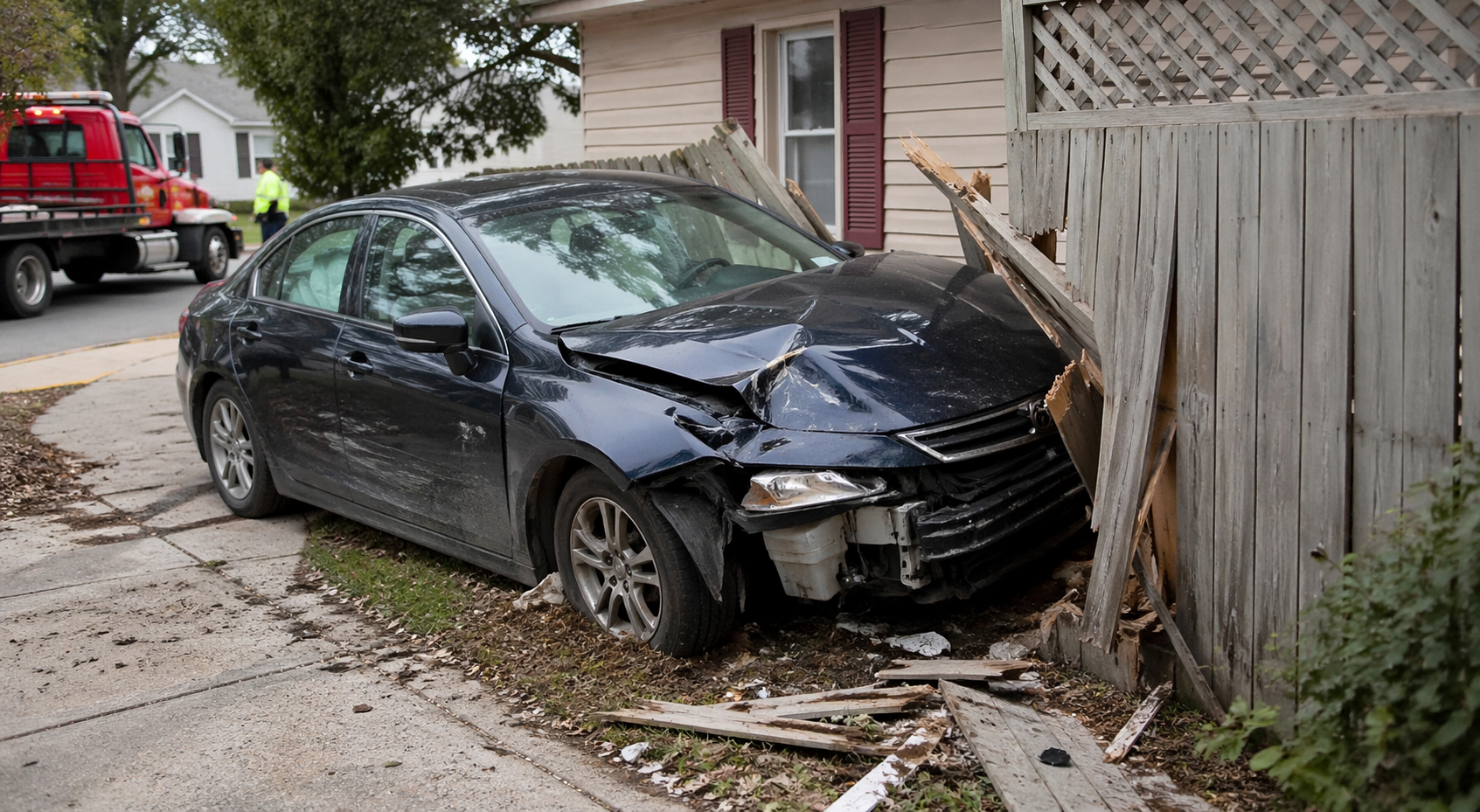
In Anytime Restoration Services of Florida, Inc. v. Citizens Property Insurance Corp., 1 Florida’s Third District Court of Appeal delivered a strong reminder: carriers cannot artificially reclassify damage to limit coverage when the policy language says otherwise.
After a vehicle crashed into a home, damaging an iron fence attached to the dwelling, the insurer denied coverage, arguing that the damage fell under Coverage B (Other Structures) and that Coverage B was excluded under the policy. The trial court agreed—but the appellate court reversed.
The core dispute in the appeal arises out of different interpretations of two very clear policy provisions separating “dwelling” and “other structures” coverages. The subject policy provides, in part, as follows:
A. Coverage A – Dwelling
1. We cover:
a. The dwelling on the ‘residence premises’ shown in the Declarations, including structures attached to the dwelling; andb. Materials and supplies located on or next to the ‘residence premises’ used to construct, alter or repair the dwelling or other structures on the ‘residence premises.’
This coverage is limited to the ‘principal building’ for the peril of ‘catastrophic ground cover collapse.’
B. Coverage B – Other Structures
1. We cover, other structures on the ‘residence premises’ set apart from the dwelling by clear space. This includes structures connected to the dwelling by only a fence, utility line, or similar connection.
In addition to the very important policy language above, the court held:
We find there is no genuine dispute of material fact in this record that the fence is an iron fence that is attached to the dwelling . . . By its plain language, therefore, the policy establishes that ‘structures attached to the dwelling,’ such as the fence here, are covered under Coverage A. See Taurus Holdings, Inc., 913 So. 2d at 532 (‘[I]nsurance contracts must be construed in accordance with the plain language of the policy.’); Castillo, 829 So. 2d at 244 (‘If the language employed in the policy is clear and unambiguous, there is no occasion for construction or the exercise of a choice of interpretations.’) (citation omitted).
While insurers continue to advance increasingly strained interpretations of policy language to deny or limit coverage, the argument presented here is a prime example. Citizens contended that the fence qualified as an “other structure” because it was allegedly “connected to the dwelling by only a fence.” The Third District squarely rejected this reasoning, explaining:
Contrary to this assertion, the fence is NOT a structure ‘connected to the dwelling by only a fence’—the connected structure IS a fence. Importantly, there is no genuine issue of material fact in this record that the iron fence is attached to the dwelling. Indeed, it is a ‘structure[ ] attached to the dwelling,’ which falls squarely under Coverage A.
When a policy makes the clear distinction between Coverage A (the dwelling, including structures attached to the dwelling) and Coverage B (other structures set apart from the dwelling by clear space), a structure physically attached to the dwelling such as a fence, pool enclosure, pavers, etc. may very well be treated in a policy and by courts as Coverage A regardless of how a carrier tries to categorize it to limit and/or deny coverage.
This holding reinforces a fundamental principle often overlooked throughout the life of a claim: when a policy clearly distinguishes between Coverage A (the dwelling, including structures attached to it) and Coverage B (structures set apart from the dwelling by clear space), that distinction must be honored. The insurance contract must be honored. Structures physically attached to the dwelling—such as fences, pool enclosures, or similar—cannot be recharacterized to fit within Coverage B merely to restrict coverage, especially when the Policy unequivocally states otherwise. Courts will look to the policy and the actual relationship of the structure to the dwelling, not the insurer’s post-loss characterization.
Quote of the Day:
“The truth is incontrovertible. Malice may attack it, ignorance may deride it, but in the end, there it is.” — Winston Churchill
1 Anytime Restoration Services of Fla., Inc. v. Citizens Prop. Ins. Corp., 405 So. 3d 462 (Fla. 3d DCA 2025).