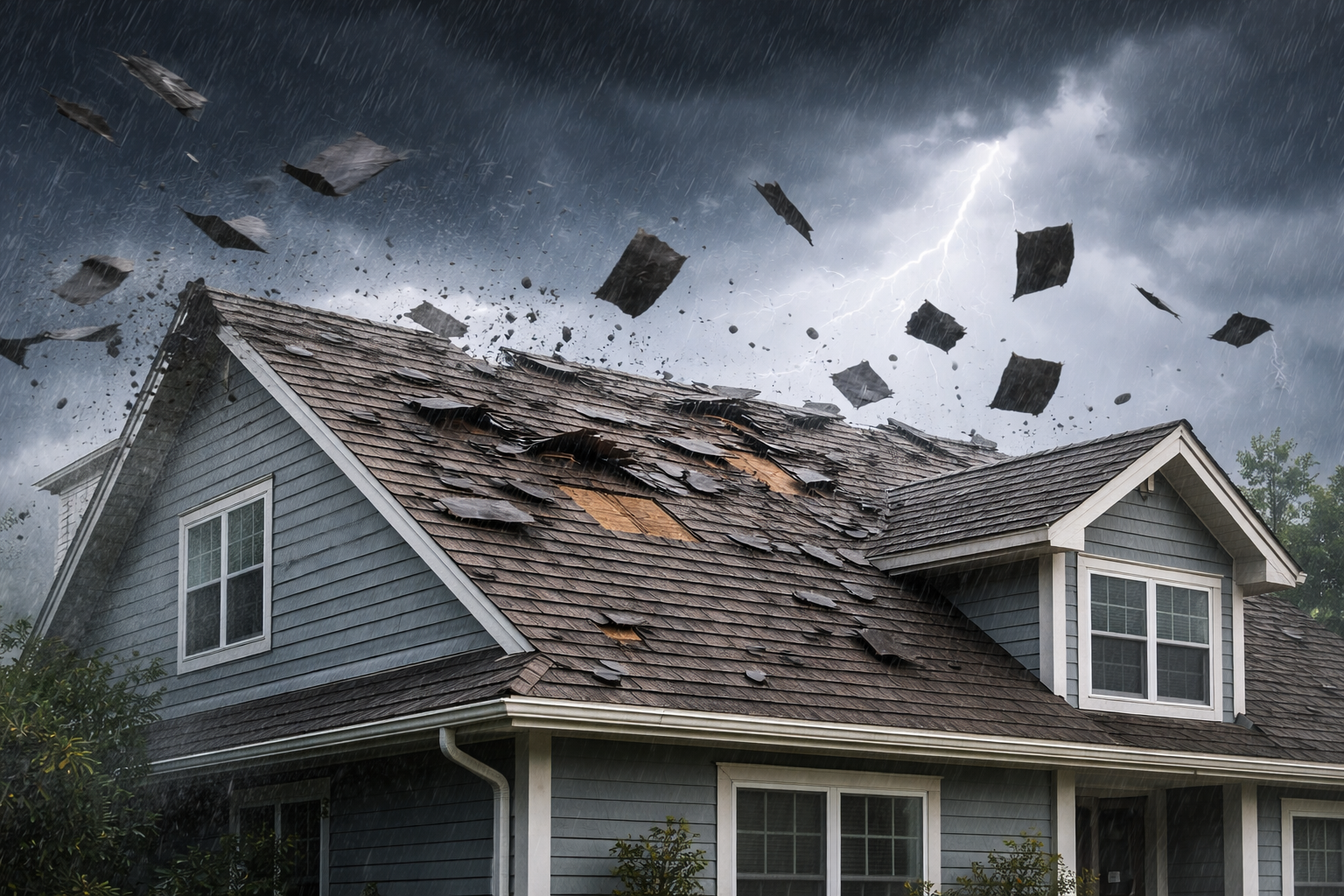
When courts talk about “wind-driven rain,” something subtle but important has already gone wrong. The phrase sounds authoritative. It feels like a defined peril. It rolls easily off the tongue. But in the vast majority of commercial property policies, including the one at issue here, “wind-driven rain” does not appear anywhere in the contract. It is neither defined nor excluded. The term is insurance lingo and a shortcut for what the policy actually says. Shortcuts have consequences.
The policy in this case did not exclude “wind-driven rain.” What it did was impose a sequencing requirement for interior water damage. Rain damage to the interior is covered only if a Covered Cause of Loss first damages the roof or walls in a manner that allows the rain to enter. That is not a peril-based exclusion. It is a conditional coverage limitation. Those two things are often conflated, and when they are, policyholders usually lose.
Why does the distinction matter so much? Because framing drives coverage outcomes. When property adjusters, lawyers, and experts start using the phrase “wind-driven rain,” the analysis quietly shifts away from what the policy actually requires. The real question is no longer whether the storm caused water damage inside the building. The question becomes whether the insured can prove, with competent evidence, that wind caused a physical opening to the building envelope and that this damage created the pathway through which the water entered. If that gateway fact is not proven, the claim fails regardless of how violent the storm was or how real the interior damage may be.
In the recent Opinion and Order that prompted this discussion, 1 the policyholder’s expert repeatedly used the phrase “wind-driven rain.” That language may be common in insurance and with some engineers, but it is not policy language. Courts do not decide coverage based on insurance and engineering shorthand. They decide coverage based on contract terms.
The expert’s report acknowledged that no wind damage was observed to the roofing surface. Once that sentence appeared in the record, the insurer had a straight line to summary judgment. An affidavit filed later, which tried to explain how water can be driven through seams or components without visible membrane damage, was treated as speculation rather than proof tied to this specific building. Courts are wary of after-the-fact explanations that attempt to fill gaps left by the original report. This one was no exception.
This is where public adjusters and policyholder counsel need to pause and reflect. If interior water damage is being claimed under a policy that requires a storm-created opening, the file must contain evidence of that opening. Not theoretical explanations nor general statements about what hurricanes can do. Actual, building-specific evidence showing where the roof or wall was damaged by wind and how that damage allowed water to enter. Photographs, contemporaneous observations, testimony from those who saw the damage before repairs, and expert opinions that identify the precise failure point matter. Without that, the phrase “wind-driven rain” becomes a trap.
The case also offers a painful but necessary lesson on valuation. The public adjusters submitted an estimate in which the replacement cost value and actual cash value were identical because depreciation was listed as zero. Many courts have made clear that simply labeling a number “ACV” does not make it so. Actual cash value, as most policies and courts understand it, is replacement cost minus depreciation. Unless the building is truly brand new or the adjuster can explain, with evidence, why depreciation is legitimately zero, RCV and ACV should not be the same value.
That mistake alone can doom a claim. Under most policies, insurers are required to pay ACV first. If the only estimate provided shows no depreciation and mirrors RCV, courts increasingly treat it as an RCV-only estimate, even if an ACV column appears on the page. Later attempts to fix the problem with a new estimate prepared after suit is filed may come too late. If the file did not contain a proper ACV dispute in the first estimate, summary judgment becomes very hard to avoid.
None of this means the insurer was “right” in some moral or industry sense. It means the policyholder did not meet the evidentiary burden imposed by the contract and the procedural rules. Insurance coverage cases are won and lost not just on what happened, but on how clearly and precisely coverage is proven within the four corners of the policy. Words and labels matter.
For public adjusters, the lesson is simple but unforgiving. Do not collapse policy requirements into convenient phrases. Do not assume a claim adjuster will translate industry shorthand into coverage language. Document the storm-created opening. Separate ACV from RCV with real depreciation analysis. Build the file to show a coverage story that meets the policy terms.
This is a very important cause of loss that property insurance adjusters need to study. I suggest reading Shaun Marker’s Wind-Driven Rain Versus Wind-Created Opening in a Building and Potential Coverage Implications. I also suggest Contractor Testimony About Wind Causing Damage Allowing Rain to Enter a Building Is Important, Wind-Driven Rain: What Is It and Does Your Insurance Cover It, and A Hard Lesson About Proving Wind-Caused Openings When Water Enters a Building.
Thought For The Day
“Water is the driving force of all nature.”
Leonardo da Vinci
1 Mulas v. Westchester Surplus Lines Ins. Co., No 2:24-cv-534 (M.D. Fla. Jan. 30, 2026). See also, Defendant’s Motion for Summary Judgment and Plaintiff’s Response in Opposition to the Motion for Summary Judgment.