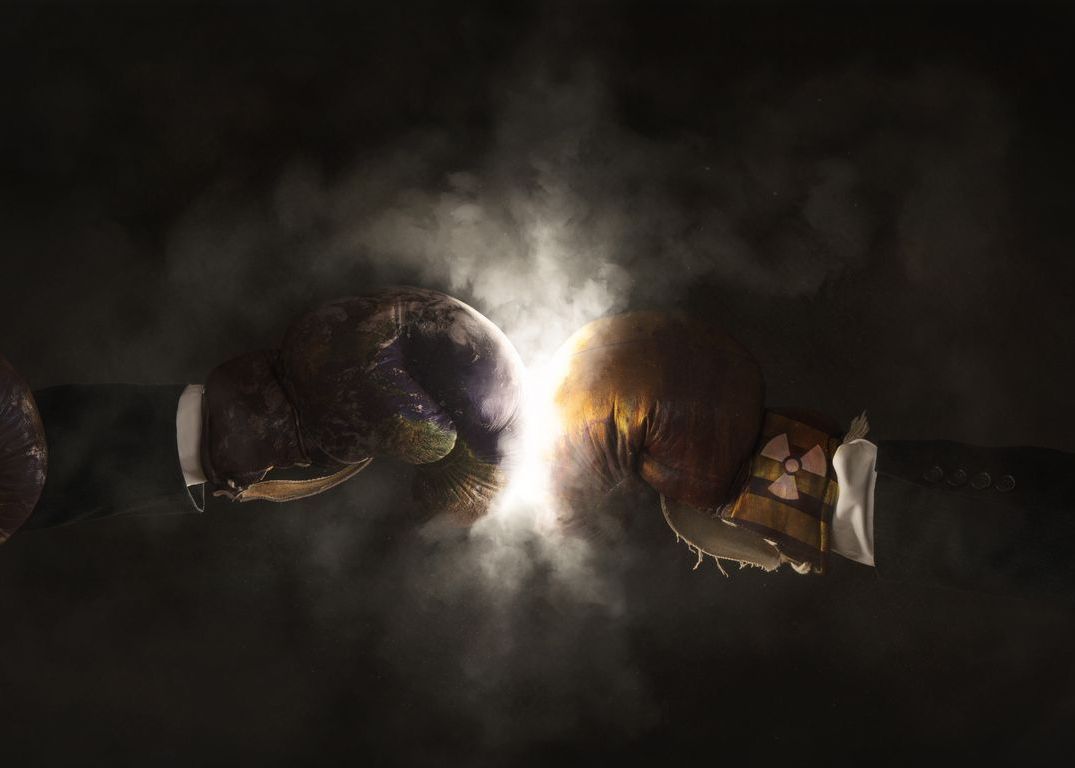
Dan Odess wrote an excellent article, Public Adjusters and Insurers: Time to End the Cold War, in Claims Magazine. His premise was simple and professional:
For far too long, insurance carriers have viewed public adjusters as opponents rather than as potential allies. I believe the time has come to end this “cold war” and recognize that insurers, independent adjusters, and public adjusters all share a similar goal—fast, efficient, and accurate claims resolution. By taking a team approach, we can collectively do a better job of servicing policyholders who have suffered a serious loss to their homes, businesses, or commercial properties.
Taking a unified approach would be an important step toward bringing the insurance industry more fully into the 21st century, by both improving transparency for the public, and reducing costly inefficiencies for the insurer. Today, many carriers are seeking to control as much of the claim process as possible, often delaying or minimizing settlement offers. I strongly believe that such behavior is shortsighted and ultimately harms our industry.
Many of the responding comments from the insurance community were extraordinarily harsh. Here are a few:
This article is one sided, and doesn’t address the vast majority of public adjusters that 1) commit fraud 2) takes the attitude that "everything is covered" despite what the policy states 3) do a poor job educating insured’s on their policy and coverages and finally 4) the only way a public adjuster can justify their fee is to make sure the claim is overpaid, thus over indemnifying the insured. People wonder why the cost of insurance is so expensive. Just ask your friend or neighbor who hired a public adjuster for roof leaks that occurred 5 years prior to their policy was in force, but PA is requesting $67,000.00 to repair the damages. You should watch Fox News, try and be fair and balanced next time.
I’m sorry, but this article is ridiculous. In the last fifteen years, I’ve met (maybe) two honest public adjusters. Possibly the bad feelings which are causing the “cold war,” arise from that fact that practically every p/a claim is estimated at three to five times the actual loss amount, so they can get policy limits and charge my insured’s higher fees. If they’re all such professionals, with only the insured’s best interests in mind, why do most states require that p/a’s have (in some cases huge) bonds, where captive and independent adjuster’s mostly have none? If this site is just going to push the “p/a and restoration services line,” I don’t need to receive it anymore…I face that kind of corruption in the field all of the time, and I don’t want to receive it in my emails as well.
In a perfect world, this article may apply. The problem is that it is based on a false premise…that public adjusters want "accurate claims resolution." Unfortunately for not only the insurance industry but also for the consumer, public adjusters are very rarely interested in an accurate settlement of a claim. Perhaps the author should consider re-writing the article based on an accurate premise, such as "fast, efficient, and grossly inflated and fraudulent claims resolution." To suggest that anything else is the "way it is" is simply ignoring the truth.
Cold War? You bet. Maybe its the fact that the job of a PA is to inflate the claim to a higher amount to earn more commission. A closed claim is a good claim. however, that doesn’t mean you give the stars when the damage is consistent with the moon. Sure, there are issues with independent adjusters who miss damage, inaccurate contents evaluation(typically from information provided by the insured), and issues with coverage. I think insurance companies do their best to accurately evaluate the damages. The last thing I want to to hear damage was missed. PA’s are out for themselves. Essentially, they remind me of some roofers. There are roofers right now knocking doors, telling the insured they have lots of damage, and then meeting with the field adjuster. Sure, there are plenty that have damage which we pay for. There are the other insureds that the roofers pit against my company, and blame us like we don’t pay. If only they knew how many hundreds of thousands of dollars our field adjusters have paid for roofs. No, PA’s brought it on themselves. and filing the claim for them.
Dogs and cats. Oil and water. I predict the civility Dan Odess suggests in his article will not be acknowledged by many on the insurer side simply because it came from a public adjuster. For adjusters with a pre-determined attitude, no matter what the truth may be, their mind is already made up.
For public adjusters and everybody in the claims business, I suggest you contemplate Randy Goodman’s comments that I noted in last week’s post, Randy Goodman NAPIA Person of the Year:
Those of us who practice this wonderful profession – the profession of public adjusting – know how unique it is, how challenging it is, and how rewarding it can be on so many levels. As a group we elevate our profession in many ways:
By becoming more knowledgeable through expanded education.
By practicing sound ethics every day.
By providing a service to the consumer that adds significant value to the results they achieve after suffering a loss.
By showing respect every day for others who participate in the insurance adjusting industry, we receive recognized and well earned respect in return.
Amen.