Basic Claim Step Advice For Hurricane Earl Policyholders

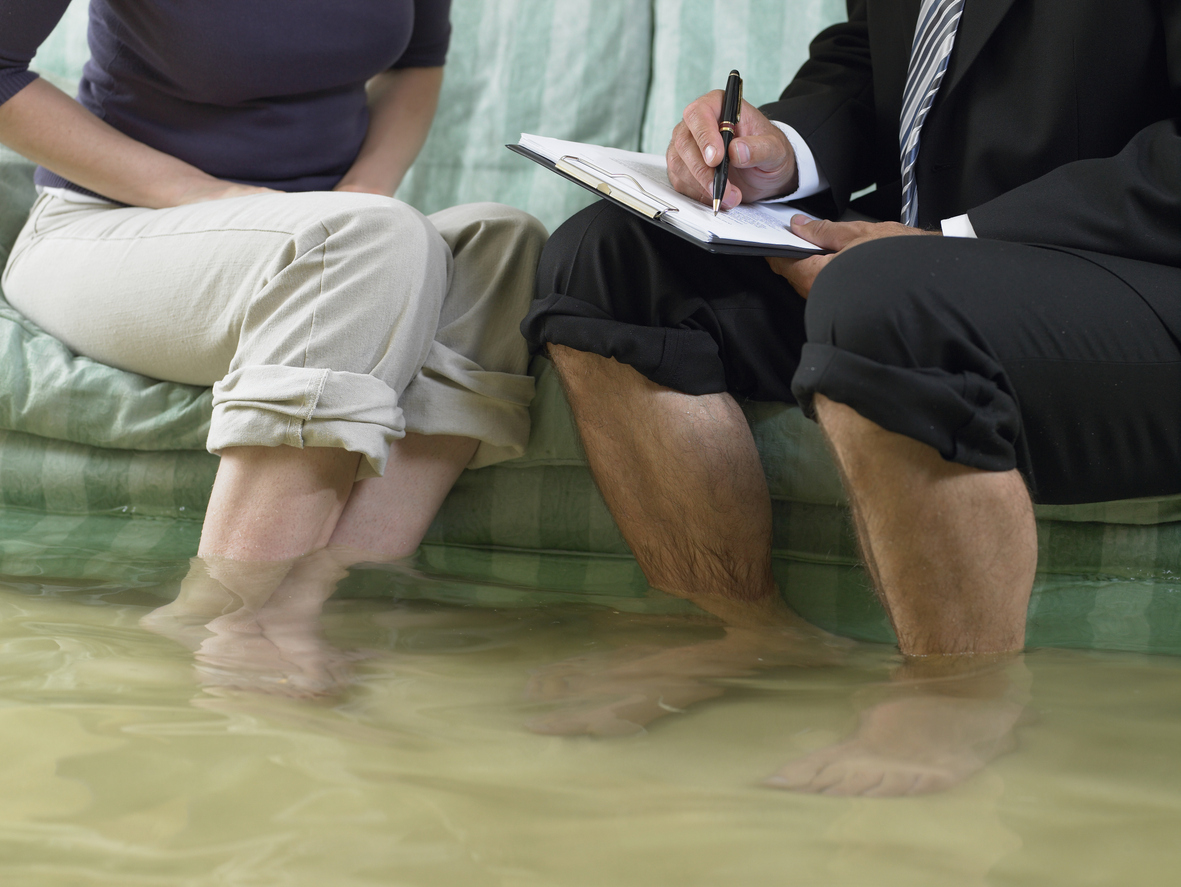
Tina Nicholson is based in our Houston office. She wrote a very basic article "Steps For Handling an Insurance Claim" for the Hotel World Network. With Hurricane Earl winds beating the mid-Atlantic coast, her tips may be helpful for many policyholders:

Continue Reading...

Sinkholes Remain in the News While Eyes are on Hurricane Earl

Since 2004, the majority of our law firm's large insurance battles have focused on hurricane loss insurance disputes. It is not surprising that we are getting phone calls from people asking whether our firm will open offices somewhere between North Carolina and Boston as Hurricane Earl is projected to hit that area. I was surprised by a recent newspaper article that indicated our firm "specializes" in sinkhole losses.

Continue Reading...

Is Mold Covered Under my Texas Homeowners Policy?

Oftentimes after a windstorm, flood, or plumbing leak, mold develops in a home. There are several standard insurance policies issued in Texas, and they all have some language that deals with mold. For example, a standard Texas Dwelling Policy—Form 3 specifically excludes mold damage, but covers an “ensuing loss” caused by water damage. These clauses seemingly contradict one another: how can there be no coverage for mold damage if it is an “ensuing loss” caused by water damage? In 2004, the U.S. District Court for the Eastern District of Texas discussed this issue in Malley v. Allstate Texas Lloyds.

Continue Reading...

Hurricane Losses and the Statute of Limitations

Chip brought up the five year anniversary of Hurricane Katrina in his post last week titled, “The Hurricane Katrina Five Year Anniversary is Noted as New Hurricanes Lurk in the Atlantic Ocean.” The anniversary of Katrina will have special meaning to all who were affected by it, but this five year anniversary also has a practical importance to anyone in Florida that is still attempting to put the pieces back together after Katrina, thanks to Florida’s five year statute of limitations on contract lawsuits. Fla. Stat. § 95.11(2)(b) requires that “[a] legal or equitable action on a contract, obligation, or liability founded on a written instrument…” must be commenced within five years.

Continue Reading...

Public Adjusters Make the News in Jacksonville and FAPIA Responds

This month, a letter to the editor by Guy Marvin was published in the Florida Times Union.

Marvin is the President of the Florida Insurance Council (“FIC”). The FIC is based out of Tallahassee, but Marvin has ties to Jacksonville from his former work as general counsel at Independent Life Insurance Company.

Continue Reading...

Louisiana Citizens Property Insurance Loses Overhead & Profit Case

Louisiana Citizens Property Insurance Company has settled a state class action case, Press v. Louisiana Citizens Fair Plan Property Insurance Corp., for failing to fully pay overhead and profit to insureds. The proposed settlement, for $23 million, covers claims from Hurricanes Katrina and Rita.

Continue Reading...

Overcoming Work Product Objections that Relate to an Insurer's Claims Investigation

Last week's post, The Big Picture in Discovery of Insurer Claims Practices, discussed a case from the Supreme Court of Kentucky that provided an overview of how Courts tie together various principles of discovery that are generally raised in the discovery of bad faith cases. General rules of bad faith discovery vary between states and the types controversies at issue. An Indiana federal court decision, Harper v. Auto-Owners Ins. Co., 138 F.R.D. 655 (S.D. Ind. 1991), is a classic example.

Continue Reading...

Sinkhole Investigation Started By Office of Insurance Regulation

The Insurance Commissioner has apparently decided to start calling some of my clients. According to the St. Petersburg Times, his office is trying to find statistical information regarding sinkholes reported between 2006 and 2009. We'll call and try to find out more information so we can help them get accurate answers, but, in "Florida Regulators Investigate Rash of Sinkhole Claims" reporter Jeff Harrington found the following:

Florida Insurance Commissioner Kevin McCarty said Wednesday that he has issued a "data call" to commercial and residential property insurers to collect sinkhole claims information.

Specifically, regulators are seeking details about claims opened anywhere in the state from 2006 to 2010. Included in the report will be the types of claims, testing procedures to determine legitimacy, costs of inspections, locations of claims, legal fees and public adjuster fees, and amount of structural loss.

Continue Reading...

Flood Adjustment Methods Discovered in Qui Tam Case

Slabbed has been dogged regarding its reporting on the Mississippi qui tam litigation involving State Farm. A recent post, Rigsbys file “Motion to Reconsider Scope of Proceedings in Light of Evidence Adduced in Discovery” – ask Court for additional time to conduct Discovery into “the Scheme,” provides some insight regarding the flood adjustment techniques required by National Flood versus how flood adjusters in the field actually do their job.

Continue Reading...

Wanna Have Some Fun and Learn Cutting Edge Law? Go to the Bad Faith Insurance Summit in Vegas This Weekend

What happens in Vegas stays in Vegas--unless you learn something you can use to make yourself a better attorney. The 360 Advocacy Institute is hosting a national summit on insurance bad faith law and techniques. The speakers are some of the most cutting edge participants in this area of the law. Learning and having fun usually do not go together, but this event is different.

Continue Reading...

The Hurricane Katrina Five Year Anniversary is Noted as New Hurricanes Lurk in the Atlantic Ocean

The media is trying to scoop each other on the five year anniversary of Hurricane Katrina. In State Farm's hometown of Bloomington, Illinois, the Pantagraph ran a story about State Farm's Hurricane Katrina litigation. A massive and unfinished novel could be written on that subject. I found the article by Ryan Denhem, How State Farm Fought Through the Second Storm, to be far too light an analysis of some of the most important insurance coverage litigation ever waged.

Continue Reading...

Court Reduces Continuing Charges and Expenses From Net Profits When a Business Resumed Partial Operations After a Loss - Understanding Business Interruption Claims, Part 35

The Fifth Circuit Court of Appeals recently issued a 21-page opinion in the case of Consolidated Companies, Inc. v. Lexington Insurance Company, No. 09-30178, ___ F. 3d ___ (5th Cir. August 17, 2010). The opinion is dense, to say the least, but it resolves an issue that sometimes can make or break a settlement in business interruption claims.

Continue Reading...

Tropical Waves off Africa Indicate a Need for Concern

The water is warm, the wind sheer is declining, and it is late August. For those along the southern coastal areas, it is important to monitor waves of weather off the African coast for the next six weeks. The most active part of hurricane season is upon us. There is reason to be concerned.

Continue Reading...

The Work of a Public Insurance Adjuster Can Be Crucial When Time Is of the Essence

The amount of time one has to bring a lawsuit is limited by the law. Each state has established statues which define the amount of time provided to file suit for particular causes of actions based on particular circumstances. Recently, I learned more about how important and valuable the pre-litigation correspondence file can be when the insurance company appeals a case based on the allegation that the lawsuit was filed too late.

Continue Reading...

A Curious Finding that a "Reasonable" Liberty Mutual Fire Claims Investigation Took Place

I wonder if the Liberty Mutual Fire Insurance Company would want to advertise how proud they are of their case investigations that result in lawsuits. Yet, wrongful claims practice cases sometimes result in decisions by trial judges that seem wrong to those who practice in this area. The case of Luse v. Liberty Mutual Fire Insurance Company, No. 09-1221, 2010 WL 2698342 (M.D. Pa. July 7, 2010), is a recent example.

Continue Reading...

Sinkhole Issues in the News

Sinkholes won’t go away. While policyholders, insurance companies and governmental leaders fantasize that this peril would sink into oblivion, nobody’s magic wand will make this a reality. Hurricanes and sinkholes will happen in Florida because of the geography and geology. As more people who live and work in Florida, more losses will result.

Continue Reading...

Comments on Unauthorized Public Adjusting

A post earlier this week, Greenspan Public Adjuster Interviewed About Unauthorized Public Adjusting, generated a number of comments and questions, both public and private. Many well meaning individuals probably overstep bounds and violate the law. Some are simply scamming.

Continue Reading...

Claims Deadlines Set for Coral Insurance Company

Coral Insurance Company has been placed in receivership. One aspect of handling claims where the insurer is in receivership is that a statutory time limit exists to file a lawsuit. However, for adjusters and policyholders, before a lawsuit can be filed, a "claim deadline" must first be met. We often get requests shortly before the lawsuit deadline only to find the claim deadline had not been met.

Continue Reading...

How Interest Applies to Damages Awarded in Texas Insurance Cases

Texas law allows for interest to be awarded to a policyholder as a penalty for the insurer delaying payment of a claim, in addition to the amount of the claim. Section 542.060 of the Texas Insurance Code states:

If an insurer that is liable for a claim under an insurance policy is not in compliance with [Chapter 542, Subchapter B – Prompt Payment of Claims], the insurer is liable to pay the holder of the policy, in addition to the amount of the claim, interest on the amount of the claim at the rate of 18 percent a year as damages… .

Continue Reading...

Wrongful Claims Practice and Bad Faith Pleading Requirements are Getting Tougher in Federal Court

Insurance company coverage counsel certainly will do everything in their power to dismiss claims that their clients breached obligations of good faith when those cases are in federal court. Last week's post, Networking and Sharing Information Can Help Win Cases and Prevent Losses: A Liberty Mutual Example, is followed by another case with a very similar point in Johnson v. Liberty Mut. Ins. Co., No. 10-494, 2010 WL 2560489 (D. N.J. June 24, 2010). The important observation is that it is becoming a lot more difficult to get by motions to dismiss in federal court since civil procedure case law changed, starting in 2007. Bad faith lawsuits are often "sitting ducks" because all the facts and motives giving rise to the bad faith activities are generally not known until after discovery reveals exactly how, what and why the insurance company failed to pay or pay timely.

Continue Reading...

Greenspan Public Adjuster Interviewed About Unauthorized Public Adjusting

Amy Bach, the Executive Director of United Policyholders recently interviewed public adjuster Masood Khan. In United Policyholders' summer newsletter, Khan, a vice president of The Greenspan Company Adjusters International, was interviewed regarding a number of important topics. One of the more controversial comments he made will be of concern with accounting firms, consultants and contractors. Masood Khan correctly noted that in most states, those determining, presenting, negotiating and adjusting losses for policyholders without a public adjuster license are illegally practicing public adjusting. In most of the states, it is a crime to do so.

Continue Reading...

The Importance of Experts

I recently represented a client at a court hearing on a motion to compel appraisal to determine the amount of roof damage from Hurricane Wilma. The insurance company’s attorney opposed appraisal, so the judge asked him who other than appraisers should determine the amount of damage from Wilma. “I’m not getting on that roof!” exclaimed the judge. “Are you getting on the roof?” he asked the insurance company’s attorney before looking at me and asking me the same question. As much as I wished I were qualified to differentiate between hurricane damage and wear and tear, I admitted that such a decision should be left to the experts. That experience led me to ponder on the subject of experts.

Continue Reading...

Mitigation Efforts Are Recoverable as Extra Expenses Outside the Period of Interruption - Understanding Business Interruption Claims, Part 34

In a business interruption claim the insured has an obligation to mitigate its losses by reasonable means, but, as illustrated in Insured’s Duty to Mitigate – Understanding Business Interruption Claims Part 30, insureds should not be required to go out on a limb to protect the insurer and then get a hand slap in response.

Continue Reading...

Insureds in Pennsylvania Win the Late Notice Battle but Bad Faith is Denied.

Usually, I write about cases involving public adjusters, but here is an interesting case where the insurance company’s adjuster helped the insureds.

Recently, a frequent allegation raised by the insurance companies seems to be “too little…too late.” Insurance policies typically include a condition that requires losses to be promptly reported.

Jeremy Tyler and Shaun Marker have addressed late reporting and late notice issues in great detail in their posts about hurricane losses. This week, I came across a case where the insureds were successful in overcoming the late notice/late discovery defense raised in a water damage claim in Pennsylvania. After reading the case, I reached out to some of the public adjusters in Pennsylvania and I learned a little more.

Continue Reading...

Lawsuits Against "Lloyd's of London" are Often Wrongly "Named"

Matt Litsky represents certain underwriters and syndicates from Lloyd's. I have talked with Matt and written others explaining that many policyholder counsel incorrectly file suit against Lloyd's. Failing to properly name and serve Lloyd's can lead to dismissed legal actions and possible malpractice claims against counsel who make these mistakes.

Continue Reading...

Save the Whales...and Salmon...By a Kinder and Gentler National Flood Program

Every now and then, a headline has me wondering “what is this?” I love whales and watching them. I love salmon in a very different way and usually only watch them on my dinner plate. So, when the Insurance Journal listed a headline, Flood Program Must Consider Salmon and Whales, my curiosity was piqued.

Continue Reading...

Networking and Sharing Information Can Help Win Cases and Prevent Losses: A Liberty Mutual Example

Sometimes cases are lost because the policyholder attorney lacks information about an insurance company. I was recently thinking about this when our firm's Knowledge Manager, Ruck DeMinico, sent a property insurance opinion involving a claim with Liberty Mutual to our firm's attorneys. The opinion, Delfrate v. Liberty Mutual Fire Ins. Co., ___ F. Supp. 2d ___, 2010 WL 3023866 (M.D. Fla. July 16, 2010), demonstrates these perceptions.

Continue Reading...

According To Florida Statute, An Insurer Cannot Apply A Policy Hurricane Deductible More Than Once During A Calendar Year For Personal Lines Residential Claims

As many people are aware, property insurance policies often have a large deductible for hurricane losses. In Florida, the hurricane deductible can be a percentage of the dwelling policy limit: 2%, 5%, or even 10%. These percentage deductibles can be very large on personal lines residential claims where a policyholder’s house may be insured for several hundred thousand dollars. Policyholders must be aware that the Florida legislature has created a statute prohibiting an insurance carrier from applying a policy hurricane deductible more than once during a calendar year for personal lines residential claims.

Continue Reading...

Public Adjusting in Tennessee

Severe rain and flooding swept through Tennessee last May, causing catastrophic damage which made the headlines around the globe. Lives were lost, people were separated, drinking water was rationed and the homes and businesses many residents were severely damaged.


 A house is surrounded by floodwater Tuesday, May 4, 2010, in Nashville, Tennessee. (AP Photo/Jeff Roberson)

Continue Reading...

For Property Adjusters Working on Friday as "Miller Time" Approaches

Every now and then, I check Hurricane Harbor just to see what this hurricane prognosticator is predicting. Her rather bizarre Blog reads the way a few of my friends will sound a little later tonight:

Continue Reading...

Florida Insurance Council Taps Cecil Pearce as its New Leader

The insurance industry never rests when it comes to lobbying and politics. The Florida Insurance Council has a new leader who used to be its old leader. Insurance lobbyist Cecil Pearce has taken over the reigns from Guy Marvin. Here is a little about Pearce from the press release:

Continue Reading...

Texas Supreme Court Retreats From Its Previous Broad Mold Exclusion Ruling

The Texas Supreme Court released an interesting ruling recently. Many were intrigued by it because it appeared to be counterintuitive at first glance. In State Farm Lloyds et al. v. Page, No. 08-0799, 2010 WL 2331460 (Tex. June 11, 2010), the Court decided that mold damage to a woman’s personal property was covered in a standard homeowner’s insurance policy, but damage to her home was not.

Continue Reading...

Policyholder Representatives Who Refuse to Consider Insurance Industry Positions are Ignorant and Foolish

Virtue is to be admired and praised, even in one’s enemies
--Niccoló Machiavelli,
The Discourses

Slabbed is a blog that grates on those in the insurance industry, its legal counsel and proponents. My impression is that because those from the insurance industry do not like the criticism, positions and strong rhetoric, they stop reading Slabbed and read only those that criticize policyholder advocates, policyholders, and others who pander to the insurance industry. Nobody likes to be criticized or cast in the role of the villain. That is human nature. Yet, I agree with comedian Chris Rock, who stated that "anyone who makes up their mind before hearing the issue is a ... fool."

Continue Reading...

An Insurer's Participation in Appraisal and Payment of Appraisal Award Does Not Necessarily Preclude a Statutory Bad Faith Claim

Just a few weeks ago, the Fort Myers Division of the United States District Court for the Middle District of Florida handed down its memorandum opinion on the insurer’s motion for summary judgment in Royal Marco Point I Condo. Ass’n, Inc. v. QBE Ins. Corp., No. 3:07 CV 16, 2010 WL 2757240 (M.D. Fla. July 13, 2010). Among other things, the insurer, QBE Insurance Corporation, argued that its participation in appraisal and timely payment of the appraisal award precluded an action against it on bad faith.

Continue Reading...

A Mentor of Mine, Eugene Anderson, Has Died

"If it is OK for Gene to say it, then why can't I?" was the question I asked Mary Fortson nearly ten years ago as we discussed a number of legal issues for a brief we were filing in federal court. I loved Eugene Anderson. He was free to say what he knew was the truth regarding insurance. We had a bond.

Continue Reading...

Experienced Claims Adjusters May Make Better Insurance Claims Experts Than Attorneys

Practicing law and practicing adjustment are two different things. Some attorneys arrogantly think they know more about insurance because they understand insurance law. They often have no clue what they are talking about or understand what is going on in the insurance claims office. One significant part of understanding insurance and insurance claims handling for attorneys, whether policyholder or insurance company counsel, is to understand the training, management and day to day activities of adjusters. Thinking that an attorney is skilled in insurance because he can read, write and understand insurance cases and statutes is akin to thinking that an attorney can be skilled in surgery because he can read, write and understand medical malpractice cases.

Continue Reading...

Public Adjusters and Sinkhole Claims

On Tuesday, July 27, 2010, The SunCoast News ran an article by Carl Orth titled: “Fasano Aide Brings Ideas Back from Sinkhole Conference.” According to the article, issues regarding public adjusters, sinkhole losses, fraud, the rise in sinkhole claims in the downturned economy, and the value of Florida’s Neutral Evaluation program were discussed at the conference.

Continue Reading...

Insurance Industry and Taylor Not Interested in Compromise Flood Insurance Legislation

The attempts by Mississippi's Gene Taylor to craft an insurance product that fully covers hurricane losses seems to be having trouble, but not because Gene Taylor is not trying. While the House of Representatives passed a bill supported by Taylor which includes coverage for the perils of wind and storm surge into one policy, one Republican Senator offered a compromise bill which does not accomplish that but merely proposes a different method of dispute resolution. As reported in the National Underwriter, both Taylor and the insurance industry think the compromise legislation does not work.

Continue Reading...

Plaintiffs are Entitled to the Claims File in a Bad Faith Lawsuit

Over the last few weeks, the Friday blog post has addressed the different approaches that can be used by plaintiff’s attorneys when battling evasive discovery tactics used by insurers in bad faith cases. We discussed the fact that, in a bad faith lawsuit, an insured is entitled to a plethora of information that might not otherwise be discoverable. We’ve also mentioned claims files quite a bit, but I realized that we had not really discussed in detail what should be in an insurer’s claims file, how it can help you in your bad faith lawsuit, and why you may be entitled to it. So, here goes…

Continue Reading...

Public Adjusters Investigated While Insurance Industry Leader Acknowledges He Only Knows Public Adjusters That are Honest and Hardworking

Florida's Third District Court of Appeal, which sits in Miami-Dade County, ruled yesterday that a public adjuster constitutional challenge to the public adjuster fee limitation and solicitation restrictions that was filed in Miami-Dade County should have been filed in Leon County. As noted in Sink Appeals Public Adjuster Suit: Delay Possible For Miami-Dade County Public Adjuster Lawsuit, this venue dispute slowed this lawsuit significantly. In the interim, a similar suit was not ruled on favorably by a Leon County judge, as noted in Public Adjusters Lose 48 Hour Solicitation Ban Case.

Continue Reading...

Waiver of Right to an Appraisal in Texas: Additional Arguments

I have previously written about how an insurance company can waive its right to appraisal by taking too long to invoke it, but are there other ways an insurance company can waive its right to an appraisal? For example, does an insurance company waive its right to appraisal when it recognizes some but not all of the damages claimed by the insured? What if the insurer anticipatorily breaches the insurance contract? The United States District Court for the Southern District of Texas recently weighed in on this issue in Boone v. Safeco Ins. Co. of Indiana, No. H-09-1613, 2010 WL 2303311 (S.D. Tex. June 7, 2010).

Continue Reading...

Insurance Agents Should Not Adjust Claims and Public Adjusters are Not Insurance Agents -- But They Need to Listen to One Another

Scott Johnson is an excellent leader for the Florida Association of Insurance Agents (FAIA). His father was President of the FAIA for 37 years. Scott Johnson has a keen and unique perspective on insurance in Florida. His views regarding the insurance landscape should be considered and not dismissed without analysis, even by those in strong disagreement.

Continue Reading...

Hurricane Law Tip - A Picture Is Worth A Thousand Words

Following the passage of a hurricane or tropical storm, policyholders should photograph or video record hurricane-related damage to insured property as soon as possible. The more detail the better. Photographs of the condition of the roof system immediately after a hurricane can be particularly helpful in the insurance claim for damages. The photographs can capture the condition of the damaged property immediately after the storm’s passage and can be used to potentially refute arguments that the hurricane was not the cause of the damage. The importance of the photographic evidence ties in with the discussions that Jeremy Tyler and I have had over the last several weeks in the “Late Notice of the Claim” postings.

Continue Reading...

The Lesser Legacy: Advocacy for Insureds and the Public Adjusting Profession

The year was 1944. The average price of gas was 15 cents a gallon. The median home price was less than $4,000.00. George Lucas was born. Coppertone Suntan Creme was invented in an attempt to shield the soldiers fighting in the Second World War from harmful rays. This was also the year that Alfred A. Lesser (“Al”) began public insurance adjusting in Florida.

Continue Reading...

Hurricane Watching on the Internet

Guessing where a hurricane is heading is not an exact science. Those predictions are much better today than in the past due to better hurricane modeling. Via television, everybody can get constant updates on The Weather Channel. As Tropical Storm Bonnie approaches the oil drenched areas of the Gulf of Mexico, I wanted to share a few Internet sites I visit to quickly get an idea about what is going on and, if I have time, some fun.

Continue Reading...

Reserves Are Important in Insurance Coverage and Bad Faith Claim Disputes

Most of you are familiar with the concept of reserves. How many of you are familiar with the role of reserves in a bad faith case? Is this type of information even discoverable? Although it might not sound terribly significant, it is an important factor that should be evaluated and which many attorneys may overlook.

Continue Reading...

Texas Insurance Causation Doctrine "Is What It Is" And It Needs to Be Changed

While writing last week's post, Texas Windstorm Insurer Settles 2,400 Hurricane Ike Slab Claims, I almost quoted Texas attorney Steve Mostyn, who explained that Texas law really left no other rational choice. Burdens of proof are crucial when it comes to close cases, and Texas places a unique and difficult coverage burden on policyholders. An article in the Houston Chronicle titled Windstorm Insurer to Settle Some Ike Cases quoted Mostyn:

Continue Reading...

Does an Insurance Policy Cover Only "Loss" or "Damage" to Property?

Property insurance policies are written in complex language. The fact that there are so many different interpretations and disputes about the language by some very bright people is probably enough evidence to prove that point. David Rossmiller wrote a post, Corban v. USAA: A few (more) words about anti-concurrent causation, which had me thinking about words used in an insurance policy and what a policy covers. He stated:

Continue Reading...

Will Flood Insurance Insurers Lose AntiConcurrent Cause Language?

Mississippi Representative Gene Taylor successfully placed language into House Bill H.R. 1264—“the Multiple Peril Insurance Act”— which would require "Write Your Own" insurers participating in the National Flood Program to remove anti-concurrent causation language from their all risk insurance policies. Taylor's house was destroyed in Hurricane Katrina. Many of his neighbors’ insurance claims were denied based on the continuing wind versus flood insurance coverage controversy which I noted recently in Texas Windstorm Insurer Settles 2,400 Hurricane Ike Slab Claims.

Continue Reading...

Safe is Better than Sorry When Predicting Texas Statute of Limitations

The Statute of Limitations is defined as the time period within which you must file a lawsuit. Unsurprisingly, there appears to be some confusion over when the statute of limitations runs out against the victims of Hurricane Ike, and public adjusters are not the only ones confused – many lawyers are unsure as well. There is one thing that lawyers are sure about, though: it’s better to be safe rather than sorry!

Continue Reading...

Adding Insult To a Policyholder's Loss

The tone policyholder attorneys use to explain issues and facts to others is important. Insurance coverage issues can be complex and difficult to understand by those of us who work in this business on a full time basis. The longer I do this, the better I understand that attorneys do not have license to talk down or demean anybody. Attorneys are fortunate to be of service to others and sometimes get paid handsomely for it.

Continue Reading...

Late Notice of the Claim, Part 6: When does the clock start ticking for prompt notice?

I hesitated to write more on late notice of claims, but the issue just keeps coming up. In my research this week, I came across a recent case from the United States District Court for the Southern District of Florida that I thought I would share: Vision I Homeowners Ass'n, Inc. v. Aspen Specialty Ins. Co., 674 F. Supp. 2d 1333 (S.D. Fla. 2009).

Continue Reading...

The Insured's Duty to Mitigate - Understanding Business Interruption Claims, Part 30

The insured’s duty to mitigate its damages after a loss is a well-recognized principle in property insurance law. In business interruption claims insureds are required to take affirmative steps to reduce their loss of earnings after a loss. While an actual business loss occurs only where the insured is unable to reduce or eliminate lost profits, insureds are not necessarily required to engage in super-heroic-acts to mitigate their business interruption loss.

Continue Reading...

Texas Windstorm Insurer Settles 2,400 Hurricane Ike Slab Claims

The Galveston Island and Bolivar Peninsula slab cases are settling. There was an agreement between the Texas attorneys that nothing would come out in the press until the clients signed the agreements. Since even the Texas Windstorm Insurance Association (TWIA) participated with a press release, I assume that the gentlemen's confidentiality agreement to wait on telling everybody publicly that a settlement has been reached, even before clients have signed the releases, no longer applies. The vast majority of my clients have only received letters from our firm, and I am awaiting final figures from TWIA so that we can consummate the deal. I hope everybody is not optimistically jumping the gun.

Continue Reading...

How to Prepare for the Hurricane Season and Avoid Being Underinsured for Business Interruption Coverage

*(Note: Bob Glasser is a managing director at BDO Consulting, a division of BDO and Seidman, LLP, in the New York office. Mr. Glasser is a certified public accountant, a certified fraud examiner and a certified insolvency reorganization accountant, with more than thirty years of diverse financial management and accounting experience at public and private companies. Mr. Glasser leads the firm’s New York Insurance Claim Services practice).

Most CFOs and risk managers have an understanding of their property and liability insurance needs and dollar limits and are comfortable purchasing coverage that protects their companies from a loss due to an insured peril. However, it has been my experience that their comfort level drops dramatically when it comes to business interruption coverage and limits. The uncertainty surrounding business interruption coverage, extensions of coverage and respective limits of that coverage consistently results in many middle-market organizations finding themselves underinsured and short of cash when faced with a major loss. Even the fortunate CFOs and risk managers who have not experienced a major loss may eventually discover that they have been significantly overinsured for business interruption losses and paying unnecessarily higher premiums for their coverage. Of course, the more devastating situation is finding out after a shutdown of operations from a loss that company management has not mitigated the company’s risk of lost profits and now has insufficient coverage to protect profits and cash flow during a potentially long period of restoration.

Continue Reading...

Texas Insurance Law: Entrustment and Theft

Last week I wrote about insurance policies concerning vandalism and theft. In a similar vein, this week I discuss another case involving theft; only this time the thief was no stranger to the insured.

Continue Reading...

Timing of Examinations Under Oath and a Practical Tip to Speed the Claims Process

Insurance adjusters and their attorneys should demand examinations under oath on a timely basis. Prompt adjustment requires it. However, the current technique and growing practice by many insurers is to request an examination months and even years after the loss. Sometimes, the demands are made after suit has been filed. This is a wrongful delay tactic that needs to stop.

Continue Reading...

Late Notice Of The Claim Part 5 - In Florida, Different Presumptions Arise Depending On Whether We Are Discussing A Policy Notice Provision Or A Policy Cooperation Clause

As previously noted in the first four posts of the Hurricane Law series discussing Late Notice of Claims, in Florida, if a policyholder does not timely report an insurance claim to the insurance carrier, prejudice to the insurer will be presumed. This presumption may be rebutted by a showing that the insurer was not prejudiced by the late notice. Bankers Ins. Co. v. Macias, 475 So.2d 1216 (Fla. 1985). If an insurance carrier claims a policyholder breached a cooperation clause however, the insurance carrier “must show a material failure to cooperate which substantially prejudiced the insurer.”

Continue Reading...

Bracing for the Worst - Understanding Business Interruption Claims, Part 29

Yesterday, Rocco Calaci posted a blog entry announcing that La Niña conditions are already being observed. While I dare not attempt to explain the mechanics of these conditions, it is generally understood that La Niña is a climate phenomenon that is marked by an unusual cooling of the sea surface in the Pacific Ocean, which in turn affects wind and weather patterns globally. It is also generally said that these conditions foster more frequent and stronger storms in the Atlantic Ocean and the Gulf of Mexico. As a result, NOAA has forecasted 14 to 23 named storms, of which 8 to 14 are expected to be hurricanes and 3 to 7 major hurricanes during this season.

Continue Reading...

Public Adjusting in Massachusetts

This week, I had the opportunity to discuss trends in public adjusting with a very seasoned and humble second-generation public adjuster located in Massachusetts. His public adjusting firm employs seven public adjusters, who adjust claims in Massachusetts, Connecticut, Rhode Island, Vermont, Maine, New Hampshire, Texas, Louisiana, Mississippi, Florida, North Carolina, South Carolina, Minnesota and Michigan.

Continue Reading...

Rocco Calaci's Tropical Update - July 2010

(*Chip Merlin's Note--Rocco Calaci has been a noted meteorology expert witness in the Katrina Legal Wars. Click here to read his previous guest blogs)

In late April and May 2010, I wrote about the La Niña situation in the eastern Pacific Ocean, how it would develop, and its impact on the 2010 Atlantic hurricane season. One reason the forecast numbers for potential hurricanes is above average is due to the expected La Niña.

Continue Reading...

The Fifth Circuit Court of Appeals Restricts the Definition of Property in a Business Interruption Claim - Understanding Business Interruption Claims, Part 28

The Fifth Circuit Court of Appeals recently issued an opinion in the case of WMS Industries v. Federal Insurance Co., affirming the U.S District Court for the Southern District of Mississippi’s ruling in favor of the carrier in a business interruption/extra expense coverage dispute that arose in the aftermath of Hurricane Katrina, which struck the Mississippi Gulf Coast on August 29, 2005.

Continue Reading...

The History of Public Adjusting. Understanding the Past Will Help Guide the Future, Part I

Public adjusting is considerably a young occupation in the United States. Last week, I had the opportunity to meet with Norman Lesser, a public adjuster who has one of the original public adjusting licenses in Florida. His public adjusting firm was established in 1958. The information Mr. Lesser shared with me was priceless for so many reasons. One reason is what I like to call the History Channel effect. I am sure most of you reading this are familiar with the History Channel. You either have a favorite program on it, find yourself watching it without intention because it draws you in, or you never have to change the channel because it is all you watch! Sure, “History” may have been boring for most in school, but the stories and the history behind something you are attached to or vested in is often very fascinating and helpful

Continue Reading...

"Going Through the Motions" Part II

This week, I have another example of how a properly drafted Motion to Compel can make a world of a difference in the progress of your case. In a case against Safeco, a plaintiff’s attorney included the following argument in his motion:

These discovery requests seek documents aimed at Safeco’s attempts to institutionally turn claim handling practices into profit producers….The discovery requests also seek the personnel files of the claim handlers involved in the handling of the claims at issue in this case. These files should reveal, among other things, the training of the various claim handlers and whether they received incentives or reprimands for their claims handling.

Continue Reading...

Guest Blog: It's Not Necessary to Be a Geek to Learn How Wind Power Works

(Chip’s Note: With hurricane season only a month old and one hurricane making landfall, this guest post is a reminder that wind isn't always damaging; it can be harnessed for good purpose as an alternative energy source. Wind energy is more relevant and necessary now, in light of the environmental catastrophe caused by BP's Gulf Oil spill. The following is a guest post by Mary Jones).

It's Not Necessary to be a Geek to Learn How Wind Power Works

Wind is caused by the uneven heating of the Earth by the sun and the fact temperatures are always trying to reach an equilibrium (heat is definitely moving to a cooler area). With the rising price of energy and the damage to the environment from non-renewable fuels, it has become cost efficient to harvest this renewable resource.

Continue Reading...

FIGA is the New Slow Paying and Litigation Threatening "Insurer" in the Florida Property Insurance Claims Game

A number of policyholder attorneys have asked me why FIGA is being so difficult lately. At one time, it was not that way. There has obviously been a change of the guard because nobody should expect quick resolution of any claim from FIGA based on recent complaints and the developing case law helps demonstrate this point.

Continue Reading...

Proper Presentation of Claims Involves Appreciating the Role of the Insurance Company or Independent Adjuster

The Florida Association of Public Insurance Adjusters (FAPIA) is holding its annual convention. I have put together a unique panel of attorneys and public adjusters who once worked for insurance companies in various capacities. This panel discussion, "Learning From Those on the Other Side of Claims Presentation: Persuasive, Professional and Ethical Techniques of Claims Adjustment for the Policyholder," is the type of practical discussion and analysis which should become much more common at public adjuster seminars and conventions rather than lawyers telling public adjusters what the law is on any given coverage topic.

Continue Reading...

Louisiana Insurance Commissioner and Risk & Insurance White Wash Poor BP Oil Spill Claims Handling

The best way to ignore or cover up improper and incompetent claims practice activity would be to ask only the guilty party, right? That is exactly what Louisiana Insurance Commissioner James Donelon and Risk & Insurance appear to have done. It seems that Donelon is not only in bed with the insurance industry, but also with the BP oil spill claims adjusters. Everybody in the business knows that most BP oil spill adjusters need a great deal of accounting help, which they are not getting.

Continue Reading...

Public Adjusters and Continuing Education: The Education Pays Off

This is the continuation of my Saturday guest blog series. I like to share the stories of public adjusters and try to focus the topic of my blogs to current topics and issues public adjusters are facing in the field.

As I write this, I am preparing for the Florida Association of Public Insurance Adjusters (FAPIA) Summer Conference in Fort Lauderdale. I always look forward to conferences like FAPIA because I get a chance to hear my colleagues and public adjusters speak on topics directly affecting the industry. I get to meet new people and see old friends. I always learn something new and gain new perspective on what is happening in the legislature, in various courts, and in the field.

Continue Reading...

As Oil Destroying Our Gulf Becomes Normal--How About Adding Tropical Storm Alex to Mix Things Up?

Jeff Masters' post, Act I, Scene I, Tropical Depression One of the Hurricane Season of 2010, indicated that a tropical depression was forming in the Western Caribbean. The National Hurricane Center has now confirmed this prediction and designated the storm Alex. In the discussion this morning was a note I did not like at all:

THE GFDL...SHIPS...AND LGEM
MODELS FORECAST ALEX TO BE A HURRICANE OVER THE GULF OF MEXICO.
THE INTENSITY FORECAST WILL NOT YET DO THAT...BUT WILL CALL FOR
MORE STRENGTHENING OVER THE GULF THAN THE PREVIOUS FORECAST.

Continue Reading...

Rates are the "Elephant in the Room" with Government Sponsored Property Insurance Programs

One of my TWIA slab case clients was very happy about the proposed resolution of her claim. Her tone changed when she mentioned that TWIA raising rates five percent. I have often felt that our elected leaders are in a no-win situation when the people electing them to office hold a noose over their neck when it comes to government sponsored insurance. Voters want lower rates, even if that means the government charges absurdly low rates and unfairly competes with private enterprise.

Continue Reading...

Mid-Day Update on Flood Insurance--Senators Need to Work and Get This Done

The United States House of Representatives has unanimously passed a bill reinstating and extending the National Flood Insurance Program until September 30, 2010, according to an article in the National Underwriter, New NFIP Extension Bill Passes House; Senate Action Uncertain. The bill (H.R. 5569) will be sent to the Senate for further action. My suggestion in Flood Insurance is Harder to Find and Politics is One Reason was to call all Congressmen. Now we are down to just the Senators that need to get their act together.

Continue Reading...

Flood Insurance is Harder to Find and Politics is One Reason

In a local television news report in New Orleans and one yesterday in Tampa, I explained the need for policyholders in coastal areas to purchase flood insurance. The problem is that flood insurance is getting harder to find and more expensive to purchase.

Continue Reading...

Getting the Inside Scoop on Insurance Company Claims Practices

(Note: This guest blog is by Vivian Persand, an attorney with Merlin Law Group in the Coral Gables office).

Last week, I wrote about some of the things you can expect to see, and not see, when Insurers like Safeco and Liberty Mutual respond to discovery requests. This week, I want to explain one of the steps you can take to combat these evasive discovery tactics. Some of the most effective and successful methods have been used across the country by large and small firms alike. What makes these plaintiffs’ law firms stand out is not the type of claim they pursue, the amount of the claim or the kind of insured they represent, but their commitment to not letting insurers get away with stonewalling discovery tactics. These attorneys go the extra mile, invest wisely, and do their homework. Sure, it might take some time; it’s going to take extra effort, and, naturally, nothing is free. But in the end, plaintiffs’ attorneys who obtain adjuster’s diaries, employee training manuals, and documents showing incentives for employees to put money into their own pockets instead of the insureds’ pockets, are going to go a long way in proving how their insured’s claim was improperly handled by the insurer from day one. This type of evidence can show your judge how the insurer never really intended to pay anything near a fair amount on your insured’s perfectly legitimate claim, if anything at all.

Continue Reading...

Policyholders Do Not Always Win or Settle for Big Bucks

The oil spill attorneys advertising for a mass of clients and recent advertisements in Texas regarding Hurricane Ike claims, seem to indicate that all my colleagues always win, and win big. Nothing could be further from the truth. The truth is that if you are going to trial or push for what should fully be paid, at least one party to the litigation will lose and, sometimes, lose after a lot of money is offered to settle. Everybody loves to talk about their wins. Losses happen, and I am reminded of that bitterness and horrible feeling of injustice every now and then.

Continue Reading...

Oil and Hurricanes: Here Comes the One Two Punch

Could there be a worse time to have a hurricane or tropical storm than the summer and fall of 2010? Given the extraordinary warmth of water this early in the hurricane season and the ongoing BP oil spill catastrophe, policyholders and public officials need to start taking immediate steps to prepare for two catastrophes which are greater than their sum. Jeff Masters, of WunderBlog, is discussing the possibility that a tropical depression is currently forming in the Atlantic. Those in the Gulf Coast have one eye out for the increasing probability of a hurricane while also watching for the spread of oil.

Continue Reading...

Late Notice Of The Claim Part 1 -- Contrary to The Popular Belief of Insurance Carriers in Florida, Late Notice Is Not Necessarily An Absolute Coverage Defense

A frequent issue that lawyers, adjusters and other insurance industry experts address in Florida involves policyholders’ failure to timely report their Hurricane Wilma claims to the insurance carriers. Often times, a policyholder is unaware of his or her rights and obligations under the policy and Florida law, and is unfamiliar with finding and determining damages to property. Also, policyholders have often heard horror stories of insurers canceling policies after one claim. Some policyholders try to make repairs themselves to avoid the headache of presenting a claim and going through the claim process. When the problem re-presents itself and the policyholder decides to file an insurance claim, a significant amount of time has passed since the date of loss.

Continue Reading...

California Insurance Commissioner Race Demonstrates Electorate Tired of Politicians

When considering the selection of an insurance commissioner, why not vote for somebody that knows about insurance laws and regulations rather than a politician? The race for California's Insurance Commissioner had a stunning result demonstrating that the Republican electorate might make such a selection. Brian FitzGerald, an insurance enforcement attorney in the California Department of Insurance with virtually no political campaign other than a Facebook website holds a small lead for the Republican nomination for California's insurance commissioner.

Continue Reading...

A Sorta Day of Rest from Insurance Coverage Cases and Oil Spill Matters

My last work Friday night, other than checking the eleven o’clock news -- hoping BP had found a miracle to contain the oil spill, was to read emails from Texas attorney Steve Mostyn and Javier Delgado, of our firm about coinsurance coverage issues. I woke up this morning thinking about yesterday. My wife, Kim, noticed that my cell phone's power was depleted, and she asked whether I wanted it recharged. I thought some more about yesterday. "No" was the answer.

Continue Reading...
Tags:

Is BP Hiring Ignorant Claims Handlers with Little Dollar Authority to Pay Claims?

Dimechimes ClaimSmentor had an interesting post on its blog which partially supports my opinion that the BP claims process has an insufficient number of qualified people attempting to figure out and pay the full amount owed to those damaged by BP. An Open Letter to Admiral Thad Allen, President Obama, White House News Correspondents, ESIS Insurance, and All involved in the BP Oil Response- We Can Help Address Your Claims Concerns- Lead, Follow, or Get the Heck out of our Way!!!! stated this:

Continue Reading...

Professional Conduct and Public Adjusters

The last thing public adjusters need is another class on the unauthorized practice of law as a substitute discussion for professional behavior. On Thursday, I will present a speech regarding professionalism at the National Association of Public Adjusters Annual Meeting. The title, "Fantastic Adjustment Results through Professionalism and Ethical Conduct: Tips from the Masters and Lessons from the School of Hard Knocks" fairly explains what I think is the most important issue facing the public adjusting industry in the long term.

Continue Reading...

Public Adjusting Case stories

This is a new series devoted to public adjusters. The purpose is to share your stories and to tell others about your cases and clients. I want to make this a place where information can be shared and the industry examined for the benefit of field advocates fighting for policyholders.

Continue Reading...

My Friend Pat Catania: A Fighter Rests

Colorful and strong willed people make the world more interesting. Every meeting and phone call I had with Pat Catania was filled with colorful debate. He was a fighter and always made me rethink issues, methods of adjustment and coverage because he never accepted conventional thinking. When he learned he had liver cancer, he fought the conventional grim prognosis to the bitter end. I would have expected nothing less from him.

Continue Reading...

Examinations Under Oath, Part III

(Note: This guest blog is by Nicole Vinson, an attorney with Merlin Law Group in the Tampa, Florida, office. This is part of a series she is writing on Examinations Under Oath and Public Adjusters).

“Remember the bottom line is to help the client”

Everyday, I talk with various people about insurance claims. I meet with public adjusters, consult with clients, discuss cases with my colleagues, talk with defense counsel, and, often, take testimony of witnesses or experts concerning insurance claims. My focus in all of these communications is to find a way to help the client and solve the problem. Many times this is easier said than done.

Continue Reading...

Texas Insurance Law: When an Appraiser is Deemed Biased

In Texas, courts have long held that the qualifications required of appraisers are that they be competent and independent. Similarly, the appraisal provision of most insurance policies typically contains language requiring an appraiser to be competent, knowledgeable, impartial, disinterested, etc. Although both Texas courts and most insurance policies require that appraisers be – in some form or fashion – competent and independent, it is not always clear how someone should interpret such language. Fortunately, Texas courts have shed some light on this topic.

Continue Reading...

Insurance Lobby Made Property Insurance Bill Which is Awaiting Veto--or No Veto

Today is the day Governor Crist decides the fate of the pending property insurance bill by choosing whether to exercise his veto. Yesterday, investigative journalist Paige St. John's article, Lobby Had a Hand in Insurance Bill, was on the front page of the Sarasota Herald-Tribune. While I was unsuccessfully advocating for policyholders this past legislative session, I observed the insurance lobby, with an army of insurance lawyer lobbyists, seemingly writing most of the proposed laws that eventually passed. Indeed, I have not found one quote from a Florida representative claiming to have stopped any insurance industry sponsored law.

Continue Reading...

Examination Under Oath Language Changes in Citizens Policy, Part II

(Note: This guest blog is by Nicole Vinson, an attorney with Merlin Law Group in the Tampa, Florida, office. This is part of a series she is writing on Examinations Under Oath and Public Adjusters).

In my post last week, I explained the new provision in Citizens’ homeowners policy and received many comments that address great issues.

In Part I of this series, I posed several questions for discussion:

  1. What happens if the Public Adjuster refuses to sit for an EUO?
  2. Is the Public Adjuster always required to give an EUO?
  3. Can the Public Adjuster fill the shoes of the policyholder and give the only EUO?
  4. How can the statements given by the Public Adjuster during an EUO change a claim decision?

I want continue evaluating these questions and pose a few more. How each of the questions can be answered depends on many factors. Discussing this policy change is important because it can change the way a claim is presented and the obligations of those involved.

Continue Reading...

Merlin Law Group Publishes Condominium Insurance Law Blog

The Merlin Law Group has started a legal blog about the insurance issues that arise with Condominiums. Condominium law is an area where a little experience leads to the conclusion that there is a lot more to learn. Condominiums have unique insurance issues which we felt could better be addressed in a separate blog.

Continue Reading...

Time to Buy Flood Insurance Coverage

Insurance agents should use two recent events to encourage their clients to purchase flood coverage. The recent Nashville Flood is one example of how quick generally unaffected areas can be swamped from rain. The other is the upcoming 2010 hurricane season, which meteorologists seem to predict as a windstorm Armageddon.

Continue Reading...

Examination Under Oath Language Changes in Citizens Policy, Part I

(Note: This guest blog is by Nicole Vinson, an attorney with Merlin Law Group in the Tampa, Florida, office. She will be writing a guest blog series on Examinations Under Oath and Public Adjusters).

After taking a look at the new Citizens Property Insurance Corporation policy, which potentially requires a non-party to sit for an examination under oath, lots of discussion has started and some of the same main themes keep coming up.

Continue Reading...

Back on the Texas Ranch-Hurricane Litigation and Settlement Discussions are Raging

The Texas hurricane insurance coverage disputes caused by Hurricane Dolly and Hurricane Ike are fully engaged. Texas’ two year statutes of limitation are approaching. New law suits are being filed, pending lawsuits are being set for trial, settlement conferences are causing great frustration, and the discovery battles between insurance counsel and policyholder counsel are considerable and contentious. Sadly, this is a pretty normal state of affairs on a two year anniversary following a major catastrophe.

Continue Reading...

New Citizens Policy Language Raises Questions About the Obligations of Policyholders and Public Adjusters

(Note: This guest blog is by Nicole Vinson, an attorney with Merlin Law Group in the Tampa, Florida, office. She will be writing a guest blog series on Examinations Under Oath and Public Adjusters).

The new language in Citizens Property Insurance Corporation’s 2010 policy has spurred debate and questions about the obligations of both policyholders and public adjusters in Florida.

Continue Reading...

A Texas Longhorn Joins the Merlin Law Group Houston Office

Sergio Leal has joined the Merlin Law Group in Houston. As he is a proud University of Texas graduate, football seasons will be more debatable in our office. Texans do not concede that the best football is played in states a little further east.

Continue Reading...

Broken Tile Claims, Oil Spill Issues and Internet Problems

I receive a fair amount of private emails regarding certain posts. Yesterday, I received about fifty saying that this Blog was “down.” Thanks. This blog is hosted by LexBlog and this was their explanation:

The issue, arising out of the software interfacing with our cloud server environment was identified, and repaired. We do not expect any continuing service disruptions. Your blog content was not at risk during this down time nor is it at risk at anytime. All of your work is completely backed up.

Your blogs on the LexBlog Network are hosted in a cloud environment developed and operated by LexBlog on the Amazon Elastic Compute Cloud (Amazon EC2). Amazon EC2 is widely recognized as a highly reliable environment and allows LexBlog to provide you with 99.99% uptime.

Every “cloud” has a little rain, and LexBlog has been an excellent service for us and our readers. So, I do not expect this to happen with any frequency. Sorry for the frustration.

Continue Reading...

Accountants and Business Interruption Experts Will Play an Important Role Recovering BP Oil Spill Income Loss Claims

The tragedy of loss of human life and damage to the environment when discussing the BP Oil Spill cannot be overstated. The important role that accountants and business interruption experts will play helping prove financial loss cannot be overstated either. Experienced professionals like Bob Glasser, noted in yesterday’s Are Lawyers Pandering for BP Oil Spill Clients Going to Get Sued for Malpractice in Follow-up Class Actions? A Guest Blog Regarding Business Claims By Bob Glasser Explains and Guest Blogger Bruce Smith, who wrote The Forensic Accountant's Role In Business Interruption And Business Income Claims, should be in high demand from businesses and entities that lose revenue and income as a result of this oil spill. Attorneys presenting these lost income claims should consider hiring such individuals as consultants and financial expert witnesses.

Continue Reading...

Are Lawyers Pandering for BP Oil Spill Clients Going to Get Sued for Malpractice in Follow-up Class Actions? A Guest Blog Regarding Business Claims By Bob Glasser Explains

There has been a disgraceful amount of pandering by potentially incompetent lawyers to sign up BP Spill Victims. Many of these lawyers are experienced only in personal injury cases, and many are not licensed in the affected states and are using the internet to lure clients. One attorney from California, who is not licensed in Florida, gave a seminar this week in Destin, Florida, about his services. Many of these attorneys have no intention of providing sound disaster recovery advice that accountants and other experienced attorneys can provide. The "elephant in the room" is that they do not have the experience or resources to give competent legal advice but are banking on contingent percentage contracts that obligate clients to sums far in excess of what is reasonable. These attorneys do not have the competence or experience to discuss business interruption concepts because they have never practiced in this area of the law. Many attorneys are advertising and signing up clients without then doing anything that is reasonably required under the circumstances.

Continue Reading...

BP's "Cascade of Failures" Began Before the Oil Spill

During the Congressional hearings, Senator Jeff Bingaman, Chairman of the Energy and Natural Resources Committee, said:

If this is like other catastrophic failures of technological systems in modern history, whether it was the sinking of the Titanic, Three Mile Island, or the loss of the Challenger, we will likely discover that there was a cascade of failures and technical and human and regulatory errors.

Continue Reading...

Public Adjusters Arrested in Broken Tile Insurance Fraud Scheme

Several public adjusters with Global Adjusters were arrested in a broken tile fraud claim scheme. Wrong is wrong. Everybody is entitled to a presumption of innocence. Yet, the statement in the arrest warrant alleges what so many others have been complaining privately to me, and then publicly in the past legislative session---there are far too many broken tile claims occurring with the same public adjusters in South Florida for all to be legitimate.
 

Continue Reading...

Liberty Mutual Claims Documents Ordered Produced

Vivian Persand is making headway against Safeco and Liberty Mutual Insurance Company. Sharing information and networking with similarly situated policyholders who are litigating issues involving the companies’ claims management practices and underpayment of claims is important. Attorneys who do share information reduce the cost of litigation for their clients, show that the insurance defense attorneys generally are not truthful in their disclosures of incriminating information, and generally win more cases. As a result of a Hurricane Ike insurance dispute involving a medical complex insured by Safeco and problems involved with opposing counsel and Safeco in that matter, I have become involved in organizing the policyholder's bar so that we can more effectively litigate the claims practices of Safeco and Liberty Mutual.

Continue Reading...

Tragedy in Quebec Fuels Sinkhole Fears

(Note: This Guest Blog is by Kristin Demers-Crowell, an attorney with Merlin Law Group in the Tampa, Florida, office. This is part of a series that she and fellow attorney Donna DeVaney are writing on sinkhole issues).

Although infrequent, yesterday’s tragedy in Saint-Jude, Quebec, is a startling reminder that catastrophic sinkholes do happen.

Continue Reading...

Public Adjuster Lawsuits Move to Appellate Courts

Frederick Kortum vs. Alex Sink has been appealed to the First District Court of Appeals. I reported on this case in Public Adjusters Lose 48 Hour Solicitation Ban Case. The appeal was expected. We will post the briefs and keep readers abreast of that case as it develops.
Continue Reading...

Gulf Coast Insurance Coverage Update

This morning I am in Dallas at the Windstorm Symposium. Steve Pate and I will be giving a presentation about the most significant property insurance cases from the states of Alabama, Mississippi, Lousiana and Texas over the past year.

Continue Reading...

Oil Spill Insurance Claims Will Be Messy and is Oil a Pollutant?

This morning's edition of Business Insurance has an article, Claims Could Get Messy After Huge, Costly Oil Spill, which explains that insurance claims are going to be complex and that the cost will certainly be in the billions. My reading of a FC&S discussion on the issue of "pollution" exclusions in homeowners policies indicates the same thing. Indeed, given the definition of a "pollutant" in the standard form policies, one may question whether oil escaping in a natural form would be a "pollutant."

Continue Reading...

What if Code Upgrades Delay the Time to Complete Repairs? - Understanding Business Interruption Claims, Part 20

(Note: This Guest Blog is by Michelle Claverol, an attorney with Merlin Law Group in the Coral Gables, Florida, office. This is the part of a series she is writing on business interruption claims).

Complying with code upgrades often extends the period of time it takes to repair or replace the property after a loss. Depending on the type and nature of the code requirements, repairs could be extended for several months and depending on the type of policy this time delay may not be covered. Depending on the size of the business, this could translate into significant unrecoverable losses.

Continue Reading...

Tennessee Floods and the Emotion of Disaster

Nashville is a mess. My wife asked me to turn on the news and we watched a tractor trailer floating down a street. "Oh, my God!" was my response as I watched.

Continue Reading...

First Party Property Coverage for the Oil Spill to Shoreline Owners

First party property coverage may exist under some common form property insurance policies for losses caused by the oil spill. While I have been rather pessimistic regarding the possibility of first party insurance companies sending legions of claims adjusters to help oil catastrophe policyholders, there appears to be some coverage available, and possibly, a lot more, depending on what the cause of the loss is eventually determined to be. These facts are important. Each coverage form is important as well and must be reviewed in detail.

Continue Reading...

Now is a Good Time to Check Your Insurance Policy for Sinkhole Coverage

(Note: this Guest Blog is by Donna DeVaney, an attorney with Merlin Law Group in the Tampa, Florida, office. This is a series that she and fellow attorney Kristin Demers-Crowell are writing on sinkhole issues). 

Senate Bill No. 742 was approved by the Governor on June 16, 2009, and took effect on January 1, 2010, as an amendment to Florida Statute 627.706. This amendment is important to note because it allows an insurer to non-renew an insurance policy which contains sinkhole coverage in Pasco County or Hernando County and instead offer coverage which only includes catastrophic ground cover collapse coverage. In other words, it is now the insurer’s option to remove the coverage in Pasco and Hernando counties.

Continue Reading...

Passing the Accounting Bill - Understanding Business Interruption Claims, Part 19

(Note: This Guest Blog is by Michelle Claverol, an attorney with Merlin Law Group in the Coral Gables, Florida, office. This is the part of a series she is writing on business interruption claims).

Many policyholders are not familiar with the documents or income accounting records required to present a business interruption claim. To comply with the requests from an insurance carrier, policyholders are often forced to retain accountants to accumulate the data and provide a report to the company, but such services are rarely free.

Continue Reading...

BP Oil Spill Could Be Worse Than Any Hurricane Damage and Much More Widespread--Even the East Coast of Florida Could Be Impacted

I hate to make doomsday predictions, but there is a possibility that the BP Oil Spill could be worse than any hurricane or catastrophe that I have been involved with. I spent yesterday speaking with others about the current situation. Indeed, my father teaches those in the oil industry how to recover and react to oil spills. Unless the source of the oil is stopped or slows down soon, oil is going to be all over the northern Gulf Coast and Florida. If the spill cannot be contained or slowed in the near future, it will significantly impact our economy.

Continue Reading...

Oil Spill Damages and Claims Will Be Significant

A number of former and current clients have called our offices about the recent oil spill in the Gulf of Mexico. They have expressed fear about damages to their business and property, as well as actions that they can take take to protect themselves from the consequences of this disaster. We have already been retained for business losses as customers of clients are cancelling plans for travel to the Gulf Coast. If something does not change soon, this disaster will likely be much worse than most hurricanes. It has the potential to be worse than any of them.

Continue Reading...

Some Interesting Views From Merlin Law Group's Newest Coverage Counsel Nicole Vinson

Nicole Vinson has just joined Merlin Law Group. Nicole’s first party insurance advocacy began in Jacksonville, and now she will be handling claims throughout Florida from our Tampa office.

Continue Reading...

Volcanic Activity May Be Covered Under a Property Policy--But What Does That Include and How Does it Work?

Many property insurance policies cover "Volcanic Action." In Volcano Fiasco - Understanding Business Interruption Claims, Part 17 and Possible Coverage to Obtain Recovery from Volcanic Activity - Understanding Business Interruption Claims, Part 18, Michelle Claverol wrote regarding the possibility of collecting for business loss caused by volcanic ash. My friend, Mark Nation, wrote about travel coverage in Travel Insurance Claims Expected As a Result of Volcano Eruption.

Continue Reading...

How neutral are the "neutral" evaluators certified by the DFS?

(Note: this Guest Blog is part of a series on sinkhole issues).

Have any of you been involved in a neutral evaluation where the neutral evaluator appointed by the Department of Financial Services is an engineer or geologist that you have worked against many times? This begs the question – how “neutral” is neutral evaluation? Depending on the situation, you can wind up with a not-so-neutral evaluator or, worse yet, an evaluator who you have an adversarial relationship with from past claims. I have a few tips that can help you get more information about whether your prospective or appointed neutral evaluator is “neutral.”

Continue Reading...

Selling Property Insurance as "Replacement Cost Insurance" Should Only Be Allowed If Replacement Value is Paid Immediately

Policyholders know when they have been "ripped off" by the fine print of an insurance policy. The most common "rip off" is when insurance companies sell replacement cost insurance and then do not immediately pay replacement cost value. A number of insurance companies, like Chubb and AMICA do not play this "bait and switch" game in other jurisdictions. However, the insurance industry wants to change Florida law to make it legal in Florida.

Continue Reading...

Title to Property Does Not Determine Insurable Interest

An excellent post by Brandon McWherter, of the Tennessee Insurance Litigation Blog, correctly noted an important point regarding insurable interest and title. The general rule is that title is not necessary to establish an insurable interest in property.

Continue Reading...

Reminder to Register for Windstorm Insurance Network Symposium in Dallas

Tempus fugit. Two weeks to go before the Windstorm Insurance Network holds its Dallas Symposium.

Continue Reading...

Possible Coverage to Obtain Recovery from Volcanic Activity - Understanding Business Interruption Claims, Part 18

(Note: This Guest Blog is by Michelle Claverol, an attorney with Merlin Law Group in the Coral Gables, Florida, office. This is the part of a series she is writing on business interruption claims). 

Yesterday, I wrote about how swiftly the insurance industry has decided to shut down the possibility of recovery on business interruption claims resulting from the recent volcano eruption in Iceland. As reported, it is estimated that having to close Europe’s busiest airports may cost the airline industry in excess of $2 billion. While the insurance companies’ message of non-recovery was heard loud and clear, coverage fights will likely ensue, depending on the language of each individual policy.

Continue Reading...

Volcano Fiasco - Understanding Business Interruption Claims, Part 17

(Note: This Guest Blog is by Michelle Claverol, an attorney with Merlin Law Group in the Coral Gables, Florida, office. This is the part of a series she is writing on business interruption claims). 

On April 14, 2010, a volcano that was silent for almost 200 years spewed a massive plume of ash thousands of feet into the Icelandic sky. The volcanic ash quickly spread throughout Europe’s atmosphere, forcing the cancellation of 81,000 flights and the closure of airports in U.K., France, Germany and Scandinavia. Millions of passengers were stranded and flights did not resume until almost a week after. The International Air Transport Association and the Centre for Asia Pacific Aviation estimated that the disruption may cost the airline industry in excess of $2 billion.

Continue Reading...

Property Insurance Bill Pulled In Florida Senate

The Associated Press reported today that Senate Bill 2044 and House Bill 447 have stalled in the Florida legislature.

The article, published at Insurancenewsnet.com, states:

Continue Reading...

Property Insurance Legislation on Florida Senate Floor Today

Florida legislators will be debating insurance on the Senate floor today. The Senators are likely to have significant debate because recent indications are that there is extraordinary controversy about how to “fix" all of Florida's property insurance problems.

Continue Reading...

Something is Rotten in the State of Denmark, I mean, Florida - Problems with the Proposed Sinkhole Legislation

(Note: This Guest Blog is by Kristin Demers-Crowell, an attorney with Merlin Law Group in the Tampa, Florida, office. This is part of a series that she and fellow attorney Donna DeVaney are writing on sinkhole issues).

I haven’t seen a ghost, but the new insurance legislation pending in the Florida legislature is almost as scary. There has been a flurry of activity in the Florida House this week regarding HB 447. The Florida Senate is considering a similar bill, SB 2108. It is helpful to review the Florida Senate Bill Analysis and Fiscal Impact Statement for an overview of the major reforms.

Continue Reading...

State Farm Claims Handling Standards

State Farm has a First Party Coverage Seminar which sets forth the claims handling standards that are fairly standard throughout the insurance industry. The instructor's manual to this seminar should be studied by insurance coverage counsel. It sets forth very explicit claims adjustment standards and even explains the purpose for many of them. I will be going over these claims standards because they are extremely important in understanding how an adjuster is supposed to go about handling a first party insurance claim.

Continue Reading...

State Farm Agrees With Chip Merlin Regarding Claims Handling Obligations

I have been in a networking seminar regarding Safeco and Liberty Mutual insurance companies all day. One of my colleagues provided me some materials from State Farm. I am posting a couple of them for your review.

Continue Reading...

The Duane Reade Saga -- Understanding Business Interruption Claims, Part 16

(Note: This Guest Blog is by Michelle Claverol, an attorney with Merlin Law Group in the Coral Gables, Florida, office. This is the part of a series she is writing on business interruption claims). 

New York-based drugstore chain, Duane Reade, must feel like it is Ground Hog Day every time their attorneys call to give status on their case against St. Paul Fire and Marine Insurance Company. Duane Reade, recently acquired by Walgreens, owns and operates 200 drugstores in and around New York City, including 124 in Manhattan. Duane Reade has been battling its carrier for almost 8 years in a protracted insurance coverage dispute arising from the September 11, 2001, destruction of its single most profitable store, formerly located on the main concourse of the World Trade Center. After a bench trial, four Federal District Court opinions, an appraisal and two appeals, the business interruption saga finally came to an end.

Continue Reading...

The Cooperation Clause and Document Production: A Condominium Association's Difficult Task

(Note: This Guest Blog is by Corey Harris, an attorney with Merlin Law Group in the Tampa, Florida, office. This is part of a series he is writing on post-loss duties). 

One of the most daunting tasks in submitting an insurance claim is the production of documents. Most insurance policies have language similar to the following:

The insured, as often as may be reasonably required, shall produce for examination all writing, books of account, bills, invoices and other vouchers or certified copies thereof if originals be lost, at such reasonable time and place as may be designated by the company or its representatives, and shall permit extracts and copies thereof to be made.

Continue Reading...

Rocco Calaci Contemplates the 2010 Hurricane Season

(*Chip Merlin's Note--Rocco Calaci has been a noted meteorology expert witness in the Katrina Legal Wars. Click here to read his previous guest blogs)

In about six weeks, the 2010 hurricane season will begin. As most of you already know, the National Hurricane Center and Dr. William Gray are predicting an "above average" year for hurricane activity. This was similar to last year's forecast for the 2009 hurricane season and we had a very quiet year. This year should be different.

Continue Reading...

All Risk Policies and Burdens of Proof In Sinkhole Cases

(Note: this Guest Blog is by Donna DeVaney, an attorney with Merlin Law Group in the Tampa, Florida, office. This is a series that she and fellow attorney Kristin Demers-Crowell will be writing on sinkhole issues). 

Most homeowner policies in Florida are "all risk" policies, which means the peril that caused the damage is covered unless specifically excluded in the policy. Generally, to defeat coverage under an "all risk" policy, an insurance company must prove that a specifically excluded peril caused all of the damage.

Continue Reading...

A Special Client Gets Special Recognition Calling for Government Transparency

Have you ever become so frustrated with government red tape that you simply lost your composure? Most of us have. While many swear they will do something legally about the governmental problem, most never follow up. The old phrase, “you cannot fight City Hall,” does not apply to a few of us who fight, and then fight some more. It does not apply to a special client of mine, Suzanne Harris, who brought Okaloosa County to its knees in legal proceedings and has garnered national recognition for her successful efforts. Her work underscores the importance of open public records, and our efforts for policyholder requests of those records from Departments of Insurance.

Continue Reading...
Tags:

TWIA Texas Slab Depositions Get Started Today

Today’s deposition of Professor William Spelman starts a series of depositions in the Texas slab cases involving TWIA. Several weeks ago, policyholder attorneys, including myself, met in Galveston to organize a series of depositions and decide upon the work assignments for these cases. This will be the first of many depositions and discovery attempts by policyholder attorneys to gain additional recovery for those individuals who suffered the most devastation caused by Hurricane Ike.

Continue Reading...

Anticoncurrent Causation Clause Explained in Relation to Hurricane Losses

Law Reviews are where the academic discussions of law are openly published. While in law school, I was fortunate to serve as the Executive Editor on the University of Florida Law Review. The experience enabled me to research, correct and debate with law professors and scholars about points of law and how they should be framed for public review. Last week, the Mississippi Law Journal published an article, William F. “Chip” Merlin, Jr., Corban v. USAA: A Case Providing Far Too Little Because It Was Rendered Far Too Late, 79 MISS. L.J. MISSING SOURCES 129 (2010), which I humbly suggest may help many understand the issues related to the anticoncurrent clause in cases involving storm surge. I strongly urge you to read it if you are an attorney representing policyholders. For everybody else, it is another example of how I can make sleep potions better than anything you can find at the pharmacy.

Continue Reading...

Learning from Other's Mistakes -- Understanding Business Interruption Claims, Part 15

(Note: This Guest Blog is by Michelle Claverol, an attorney with Merlin Law Group in the Coral Gables, Florida, office. This is the part of a series she is writing on business interruption claims). 

“Experience is the name everyone gives to their mistakes” – Oscar Wilde

I picked up a couple of pointers worth sharing in an article published by the University Risk Management and Insurance Association titled, "Case Study-Business Interruption: An Exposure by Many Names," by William Austin, et al., (2005). The article examined a case study similar to what some academic institutions near the Gulf Coast experienced in the aftermath of Hurricane Katrina. The business interruption case study, however, was analyzed in a scenario where a catastrophic fire damaged a state of the art research facility at a higher education institution that thrived on revenue from its prestigious research and development programs.

Continue Reading...

The Limits Of An Insured's Obligations To Cooperate

(Note: This Guest Blog is by Corey Harris, an attorney with Merlin Law Group in the Tampa, Florida, office. This is part of a series he is writing on post-loss duties).

These days it is hard to find a topic on property insurance law that has not been previously discussed in some way on this blog. However, many new people join our blog each day, so I feel it is important to bring up previous posts in order to learn and build on what has been said before. In a previous blog, (Cooperation Clause Does Not Require Policyholder’s Slavish Obedience), Chip discussed the growing trend of insurers’ threatening letters to policyholders stating that a failure to comply with every single request could void coverage under the cooperation clause.

Continue Reading...

Safeco and Liberty Mutual Wrongful Claims Practices Montitored Full Time By Vivian Persand

Safeco and Liberty Mutual Insurance Company claims practices impact the lives of millions of claimants. Over the past several months, we have been coordinating efforts with others to learn why so many of the claims are paid slowly or not for the amounts which claimants have demanded. This has been a national effort and a relatively enormous project for any one person with other matters to attend. Some prior posts have alluded to this effort we have initiated:

Safeco and Liberty Mutual Claims Practices Questioned on a National Basis: Policyholders Organize Against Wrongful Claims Practices

Should Liberty Mutual and Safeco Insurance Company Customers Expect Great Rates for Poor and Wrongful Claims Performance?

Continue Reading...

Appraisal Ordered Where Insurer's Demand Found Timely---And No Appraisal if No Adjustment

Sandy Burnette won an appeal and had a matter remanded for appraisal. In American Capital Assurance Corp v. Courtney Meadows Apartment, 35 Fla. L. Weekly D802a (Fla. 1st DCA  April 7, 2010), the court held:

[T]here is no language in the policy that requires appraisal to be invoked, if at all, within any set time from receiving or waiving the sworn proof of loss. Thus, under the terms of the instant policy, the insurer's demand for appraisal was not untimely. Furthermore, the insurer has not waived its right to appraisal as it has not acted inconsistently with that right from the time of demand...

Accordingly, because the insurance contract provided for appraisal, the insurer's demand for such was not untimely, and the insurer did not waive its right to appraisal, the trial court erred in partially denying the motion to compel appraisal.

Continue Reading...

A Picture is Worth a Thousand Words - Sinkhole Damage and the Florida Legislature


These are actual photographs of damage to the ceiling and walls of one of my client’s homes. A carrier denied this sinkhole claim based on a report from an engineering firm that opined that the damage wasn’t caused by sinkhole activity. In addition to the numerous 2-4” wide openings to the walls and floors of the home, the floor elevation survey revealed a 7.25 inch floor elevation differential. Note that these photos show only a fraction of the actual damage to the house. Indeed, several veteran attorneys on both sides of the case and a well-respected retired judge who mediated the case all agreed that this was one of the worst sinkhole damage cases that they had come across.

Continue Reading...

Waiver and Estoppel - Insurance Companies Must Assert Their Applicable Exclusion or Limitation When the Insured Makes the Claim

(Note: This Guest Blog is by Javier Delgado, an attorney with Merlin Law Group in the Houston, Texas, office. This is the eighth in a series he and fellow attorney Tina Nicholson will be writing on Texas property insurance issues).

Often times, an insurance adjuster fails to properly investigate the damages to the insured risk and does not properly evaluate the obvious insurance exclusions for many reasons. After suffering a loss, the insured a business owner is making decisions to get the business up and running as soon as possible, and many of those decisions are based upon the representations of the adjuster, or the lack of information given by the adjuster. The business decisions of whether to move to new location, lease more of the building to offset the additional costs or debt, replace or repair the improvements and betterments installed by a tenant, hire security to protect the premises, purchase a new policy that will cover theft and vandalism on a vacant building thought to be insured under the existing policy, etc., have a significant impact on the amount of money the insured will pay out of pocket and may never recover under the policy.

Continue Reading...

Catching Up on Insurance Coverage Posts and Florida Insurance Politics

This Property Insurance Coverage Blog set record visits last month. Thank you! I noticed a significant drop as the Easter weekend started. The Florida legislature took a well deserved breather last week as well. So, it seems like it is a good time to get caught back up.

Continue Reading...

Post-Loss Market Earnings Ignored in Mississippi - Understanding Business Interruption Claims, Part 14

(Note: This Guest Blog is by Michelle Claverol, an attorney with Merlin Law Group in the Coral Gables, Florida, office. This is the part of a series she is writing on business interruption claims).  

Several weeks ago, in a blog titled To Consider the Economy, or Not to? ‘That is the Question’, I examined two diverging legal views regarding the use of post-loss market conduct in business interruption claims. In that blog, I borrowed information from an article published in the July/August 2009 issue of Coverage titled “Measuring Business Interruption Loss in Wide-Impact Catastrophes: Insurance Against Catastrophes or Only Against Insured Damage from Catastrophes?” by Richard Chattman and Gregory Miller and I explained that:

Continue Reading...

The Cooperation Clause: Adjusting the Loss With An Insured

(Note: This Guest Blog is by Corey Harris, an attorney with Merlin Law Group in the Tampa, Florida, office. This is part of a series he is writing on post-loss duties).

“In the event of loss or damage, we will adjust the loss with you.” This is a common phrase in property insurance policies, but an important phrase nonetheless. The key word in this sentence is the word with. The insurer will adjust the loss with an insured, not the insurer will adjust the loss for the insured. While the word with may not seem too important at first glance, this phrase can play a very important role in determining whether an insurer or insured may have breached the policy.

Continue Reading...

Chinese Drywall Claims May Be Covered Under Homeowners Policy--Favorable Developments in Louisiana

First party insurance claims involving Chinese drywall have been given some hope from recent Louisiana trial court rulings. Two trial court rulings in Simon Finger and Rebecca Finger vs. Audubon Insurance Company, No. 09-8071 (Civil District Court for the Parish of Orleans, March 22, 2010), struck three affirmative defenses of the homeowners’ insurance company that denied the insurance claim to a home with Chinese drywall. The three significant exclusionary provisions of the policy struck were cited as follows:

Continue Reading...

"Do Insurers Funnel Florida Funds to Parent Companies While Claiming Need to Raise Rates?"

The question posed in this title was the headline to a post by the St. Petersburg Times columnist, Robert Trigaux. It was pretty harsh against some of our elected representatives who are neither running the insurance companies nor conducting these actions. Still, here are some of the significant observations in his post:

Continue Reading...

Three Palms Pointe Helps Policyholders Get Appraisal Awards Paid Again

David Pettinato won a motion to have an appraisal award confirmed yesterday. His case, Nationwide Mutual Fire Insurance Company vs. John Francisco, No. 2:08-cv-277 (Fla. MD March 30, 2010), relied extensively on another case we argued and won at the trial level and Eleventh Circuit Court of Appeal, Three Palms Pointe, Inc. v. State Farm Fire and Casualty Co., 250 F. Supp. 2d 1357 (M.D. Fla. 2003), aff’d 362 F.3d 1316 (11th Cir. 2004). David's recent case and Three Palms Pointe, which I started working on a decade ago, are instructional about many of the appraisal coverage issues which routinely arise.

Continue Reading...

Merlin Law Group Opens West Palm Beach Office

David Pettinato and I were having a discussion about our law firm yesterday afternoon. The one thing that I promised him was that change would be constant as we strive to do our jobs better and improve our service. In February, David Pettinato suggested that I contact policyholder attorney Shaun Marker, since I indicated we needed to provide better service to clients and referral sources in the Palm Beach County area. Following a Press Release, I am proud to announce that the Merlin Law Group has opened an office in West Palm Beach with Shaun Marker.

Continue Reading...

Following Up on the "Noble" Business of Claims Adjusting and Educational Experience for Adjusters

Following yesterday’s post, Claims Jobs are Disappearing and One Suggestion for Insurance Career Safety, I received a number of private emails concerning my note that insurance adjusting was a “noble” business. I also had a number of public adjusters asking about and reminding me of the certifications offered by NAPIA for public adjusters. These private emails deserve some attention and highlights.

Continue Reading...

Claims Jobs are Disappearing and One Suggestion for Insurance Career Safety

The economic slowdown has many concerned about job security. This is also happening in the insurance claims business. Bob Hartwig, President of the Insurance Information Institute, gave a speech at the Property Insurance Loss Research Bureau Annual Claims Conference explaining that there has been a sharp decline in the amount of claims positions, as indicated in a published story by Claims Magazine, Claim Adjusters Hit Hardest by P&C Employment Drop:

Continue Reading...

Consequential Loss Exclusions - Understanding Business Interruption Claims, Part 13

(Note: This Guest Blog is by Michelle Claverol, an attorney with Merlin Law Group in the Coral Gables, Florida, office. This is the part of a series she is writing on business interruption claims).  

In general, business interruption insurance is intended to return to the insured's business the amount of profit it would have earned, had there been no interruption of the business or suspension of its operations. However, business interruption coverage ought not be used to put the insured in a better position than it would have occupied without the interruption. Most policies will therefore typically exclude coverage for any consequential (or remote) losses, delay, loss of use or loss of market, which do not directly flow from a covered loss.

Continue Reading...

Failure To Keep A Record Of Repair Expenses May Lead To Failure of Your Supplemental Claim

(Note: This Guest Blog is by Corey Harris, an attorney with Merlin Law Group in the Tampa, Florida, office. This is part of a series he is writing on post-loss duties). 

I have been getting numerous calls from homeowners and public adjusters regarding supplemental claims from Hurricane Wilma. While many of these claims are getting paid promptly and properly, many are not. There are a variety of reasons that these claims are being denied, but the predominate problem I run across is that the insured does not have a record of the repair expenses for work previously performed.

Continue Reading...

No New National Flood Insurance Policies Can Be Written Until April 12

Stupidity is what will kill this country. Financed real estate transactions cannot occur in some parts of the country without flood insurance being purchased on the structure. Such insurance is difficult to find in the private market. As a result, the National Flood Program exists. But, it can only exist if Congress allows it, and Congress has left for its Easter vacation without passing legislation allowing the National Flood Program to operate.

Continue Reading...

Breaking News on Florida Public Adjuster Regulation

The Florida House of Representatives appears to be following the lead of the Florida Senate regarding public adjusting. As noted last week in Amended Florida Public Adjuster Bill Passes in Florida Senate Banking and Insurance Committee, significant amendments to the original language of proposed legislation regulating public adjusters is moving through the Florida Senate. These amendments and proposed laws appear to be approved by committee action yesterday afternoon in the Florida House of Representatives. In my view, public adjusters should be prepared for these significant changes to become law because similar language is running simultaneously in both chambers of the Florida legislature.

Continue Reading...

Thoughts Following the Insurance Insolvency & Reinsurance Roundtable

Peter Thomas is one of those people that have the unique ability to think deeply about a wide variety of subjects, figure out how they interplay and then how that information impacts various people and entities in the future so he can make money in his business. It is no wonder he has been long successful in reinsurance and is a Managing Director of Willis Re. He was our moderator for the panel discussion, "The Legal Threats," I mentioned in my post yesterday, Insurance Insolvency & Reinsurance Roundtable Annual Seminar.

Continue Reading...

What Qualifies as "Structural Damage" in Sinkhole Losses

(Note: this Guest Blog is by Donna DeVaney, an attorney with Merlin Law Group in the Tampa, Florida, office. This is a series that she and fellow attorney Kristin Demers-Crowell are writing on sinkhole issues). 

Insurance companies have come up with a whole new excuse not to pay covered sinkhole claims. The recent trend has been to deny payment on confirmed sinkhole losses by arguing the damage is not "structural" damage as defined by Florida Statute 627.706.

Continue Reading...

Insurance Insolvency & Reinsurance Roundtable Annual Seminar

The 17th Annual Insurance Insolvency & Reinsurance Roundtable invited me to participate on a panel discussion today in Scottsdale, Arizona. The panel is advertised to discuss "The Legal Threats." I suppose I am on the panel, which usually consists of insurance company attorneys, because somebody has to be the token policyholder attorney who actually files the lawsuits that may impose reinsurance demands or insolvency. While I am hopeful that the clients who trust their insurance disputes to the Merlin Law Group may have claims against carriers that have reinsurance, insolvency is the last thing we ever wish for an insurer. It's bad for everybody's business.

Continue Reading...

Preparation For TWIA Depositions Are Underway

A recent order from Galveston County regarding the TWIA litigation specifically names the TWIA representatives who will be deposed and the manner in which the depositions will take place. Suffice it to say that it is no easy challenge preparing for these depositions (see attached order). As members of the Plaintiff’s Ike committee, the members of our firm have read and catalogued thousands of TWIA documents, emails, correspondence and forms in preparation for these depositions. We are expecting more as the depositions start.

Continue Reading...

Texas Slab Cases and Discovery Moving

The Texas policyholder bar representing Texas "Slabbers" met yesterday in Galveston. The bottom line for those with the most significantly destroyed buildings is that these cases and the litigation discovery is being coordinated and will be moving much quicker.

Continue Reading...

The Ethics of Insurance Industry Lobbying is Raised in the Insurance Industry Press

I have long found it odd that insurance companies, especially policyholder owned companies such as State Farm, allow their lobbyists to lobby against the interests of their policyholders. A recent article, Does Industry Lobbying Pose Ethical Challenges?, by Dr. Peter R. Kensicki, CPCU, raises this issue. Kensicki is an insurance professor and has been in a leadership position on the ethics committee of the Society of CPCU and has written many insurance ethics articles.

Continue Reading...

Loss Payable Clauses and Standard Mortgagee Clauses: Know the Basic Rule and Difference

With the unfortunate increase in foreclosures that have occurred because of the poor economy, it is important to understand the two basic clauses protecting lienholders. It is also important to appreciate the significant protections provided to those lienholders holding the loss payable clause known as the "standard" or "New York" loss payable clause.

Continue Reading...

Strategies for Claim Resolution -- Understanding Business Interruption Coverage, Part 12

(Note: This Guest Blog is by Michelle Claverol, an attorney with Merlin Law Group in the Coral Gables, Florida, office. This is the part of a series she is writing on business interruption claims).  

In this business, everyone has their own style of “working a claim.” There are, however, healthy techniques of claim presentation that practitioners should follow to effectively present a business interruption claim.

Continue Reading...

Proper Training Can Help Avoid Many Problems

(Note: This Guest Blog is by Corey Harris, an attorney with Merlin Law Group in the Tampa, Florida, office. This is part of a series he is writing on post-loss duties). 

Over the past few weeks I have written about the necessity of mitigation and the potential consequences of not doing so. Two weeks ago in Consequences of a Policyholder's Faiiure to Mitigate, I wrote that it was important for policyholders to obtain help from experienced professionals in the event of a large loss. While my list of potential professionals was not intended to be all-inclusive, a comment reminded me that I failed to mention that policyholders could call their agent or carrier directly if they had any questions about what was required under the policy.

Continue Reading...

Chip Merlin Makes Fifty-One Years

There are two great things about making fifty-one. First, I do not think I am any longer going to hear, "so, you made it to the BIG FIVE-O!" Second, it beats the alternative.

Continue Reading...
Tags:

AAPIA Defends Rights of Public Insurance Adjusters in Pennsylvania Legislature

The American Association of Public Insurance Adjusters (AAPIA) testified and presented an amendment to a proposed bill before the Pennsylvania House Insurance Committee yesterday. The bill was tabled to consider the proposed amendment. Gene Veno President of AAPIA made the presentation before the committee and reported that he:

Continue Reading...

Policyholders Should Not be Forced to Accept Cheap Repairs That Do Not Work

Amy Boggs wrote a post yesterday, Sinkhole Repairs: Where's the Grout?, that was followed by a story, Florida Sinkhole Reappears after Rain, which demonstrates that she is right--grout is not the proper method to fix most sinkholes:

A 20-foot sinkhole in Clermont, Fla., opened up this Monday between two homes, and the recent heavy rains could be to blame.

In 2001, a sinkhole appeared in the same spot and was filled with cement. It has now reopened and is causing some concern.

Continue Reading...

Sinkhole Repairs: Where's the Grout?

(Note: this Guest Blog is part of a series on sinkhole issues).

We are seeing an increasing number of cases involving the ineffective repair of sinkholes. I had a recent case where the homeowner repaired the property pursuant to the carrier’s recommended repair method, which called for grouting only. When the grouting failed to correct the problem, the carrier re-tested the property at our request. After drilling 65 feet below the surface, they found no evidence of the 270 cubic yards (27 truck-loads) of grout that they had previously pumped under the house. The homeowner and I were left asking: Where’s the grout? After the testing, the carrier re-thought its initial position that the repairs had been effective.

Continue Reading...

"Take the Stairs" is a Fantastic Book by the Auto-Owners Insurance Former CEO Roger Looyenga

Many in my office laugh at my collection of insurance company memorabilia. We have old insurance advertising records, magazine advertisements dating back to the 1920's, shirts, hats, coffee mugs, decks of cards, and a long hallway covered with old insurance advertising signs. Our library has insurance books written by and about insurance companies and the insurance industry. Many of these are a century old.

Continue Reading...

Breaking News Story: Florida Insurers Hide Profits While Claiming Losses to Get Rates Raised

The Sarasota Herald-Tribune conducted a year long investigation into the manner Florida insurance companies diverted premiums and monies as expenses and losses to hide actual profits. This revelation is probably shocking to many who have been told repeatedly that the Florida insurance industry is losing money as a result of "unfair" rates and for other claims related reasons.

Continue Reading...

Insurance Agents, Brokers and Risk Managers Have to Spend Enough Time Studying the Specifics of Coverage to Prevent Uninsured Losses

Gaps in coverage and uninsured losses occur for a number of reasons. Most policyholders are not in the insurance business. They have a very limited understanding of the product they are buying and how risks they face may be insured. In Property Insurance Resolutions for 2010, which follows Concerns and Resolutions for Property Risk Management in 2009, published in the IRMI.comWilliam Austin makes the following observations:

Continue Reading...

In Tough Economic Times, Extra Expense Coverage Should Survive Budget Cuts - Understanding Business Interruption Claims, Part 11

(Note: This Guest Blog is by Michelle Claverol, an attorney with Merlin Law Group in the Coral Gables, Florida, office. This is the part of a series she is writing on business interruption claims). 

In these tough economic times, many businesses are looking to cut expenses and trim their budgets. While it is tempting to reduce insurance coverage to minimize operating costs, business owners should not skimp on insurance protection to trim budgets, particularly when it comes to additional coverages like Extra Expense Coverage.

Continue Reading...

An Insurer's Actions May Excuse Mitigation Requirements

(Note: This Guest Blog is by Corey Harris, an attorney with Merlin Law Group in the Tampa, Florida, office. This is part of a series he is writing on post-loss duties). 

I recently took the deposition of an independent adjuster who worked on behalf of one of the larger insurers in the state. While most of the deposition was pretty standard, I was shocked when the adjuster said that he had advised the homeowners to stop making temporary repairs to their home. When I asked him to explain why he did not think it was a good idea for temporary repairs to the roof and exterior of the building to be completed, he answered that coverage had not been established yet and he did not think the repairs should be made until it was.

Continue Reading...

Can an Insured Recover Under a Flood Policy and an All Risk Homeowners Policy for the Same Damage?

In Louisiana, the answer is probably “yes.” The FC&S pondered this question in its March 2010 Dec Page report titled, “Recovery Under Flood Policy and Homeowners Policy?” The highlighted case was Lightell v. State Farm Fire & Cas. Co., 2009 WL 4505942 (E.D.La. 2009). The article noted the significant facts and issues as follows:

The insured suffered property damage due to the wind and flood caused by Hurricane Katrina. They collected partial payment of their policy limits from both the homeowners and flood insurance policies. Believing that the payments were not indicative of the extent of the actual damage to the home, the insured filed a lawsuit against the insurers. State Farm, the homeowners insurer, filed a motion for summary judgment.

State Farm asserted that the insured is estopped from recovery related to wind claims because he previously alleged that he was entitled to flood policy limits due to the total destruction of the property. And, the insurer said that the insured has the burden of proving the damage was caused by wind (a covered loss) as opposed to flood (not covered).

Continue Reading...

Are Florida Insurance Companies Really Losing Money? Are Investors Using Management Companies To Take Profits and Leave Little Surplus for Policyholder Claims?

An Order by the Office of Insurance Regulation shows one method some Florida insurers may use to “poor mouth” losses to the public and our legislators in Tallahassee while taking millions home through shell accounting techniques. Many of the smaller insurers operate as three corporations--the insurer, a managing general agent, and a holding company. It does not take a financial genius to figure out that investors and managers can siphon off profits by simply charging excessive fees through the managing general agent. The insurance part of the jointly owned enterprise then claims it cannot make any money for various reasons which we have been hearing about in the press and from some insurance lobbyists looking to raise rates and reduce benefits to policyholders.

Continue Reading...

Down and Dirty with Neutral Evaluation of Sinkhole Claims

(Note: This Guest Blog is by Kristin Demers-Crowell, an attorney with Merlin Law Group in the Tampa, Florida, office. This is part of a series that she and fellow attorney Donna DeVaney are writing on sinkhole issues).

Two weeks ago I wrote on the three ring circus that Florida’s statutory neutral evaluation of sinkhole claims has become. Fla. Stat. 627.7074. This follow up blog focuses on the “down and dirty” reasons why the process is unfair to policyholders.

Continue Reading...

An Interesting Day in Tallahassee and Thoughts on the Pending Replacement Cost Coverage Legislation

The Florida legislature is a difficult place to navigate. The place is an adult maze, and it takes effort to find the right room. Possibly, the logistics are a warning to novice citizens such as me that actually try to have some small input regarding the laws we agree to abide.

Continue Reading...

Policyholder Advocate Matt Gaetz Picks Up Endorsement From Jeb Bush

Matt Gaetz is running for a seat in the Florida House of Representatives. His chances of getting elected have become better since former Governor Jeb Bush provided his endorsement to Gaetz. Here is Gaetz commenting on the endorsement:


Continue Reading...

A Confusing Oral Argument in QBE vs. Chalfonte Baffles the Florida Supreme Court Regarding First Party Bad Faith

Florida Supreme Court justices seemed as bewildered as I when policyholder's counsel explained last Thursday that he was not arguing a "bad faith" case. I will be the first to say that a "bad faith" case is really a lack of "good faith" case since the standard is whether the insurance company breached the obligation of good faith and fair dealing. While I understand what the very accomplished appellate attorney, Bruce Rogow, was trying to argue, I wish his argument had been more simple and to the point because he confused me. I am afraid he may have alienated the Court with his very esoteric argument about a good faith breach of contract issue in a first party insurance situation.

Continue Reading...

Sinkhole Proposed Law Only Pays Policyholder 25% of Available Coverage--Lessons of How the Insurance Lobby Spins a Message

The poor policyholders whose homes cracked, popped, and dipped as a result of sinkholes induced by citrus farmers spraying their crops to prevent freezing damage should be happy it happened to them this year. Newly proposed anti-consumer sinkhole legislation would limit policyholders to 25% of their coverage limits for the most common sinkhole problems.

Continue Reading...

Senators Mike Fasano and Rhonda Storms Come to the Rescue of Policyholders

The Florida Senate Banking and Insurance Committee has a number of very intelligent and very well meaning members. Two of them, Senator Rhonda Storms and Mike Fasano stood up yesterday to the insurance lobbyists who know little about insurance, but a lot about propaganda and politics. Full time and professional insurance lobbyists have one agenda--achieve their clients agenda. They have an army of lawyers, a ton of money, and their message is "spin" at its finest. No wonder so many public servants can get snowed by the misinformation and insurance industry proposed laws.

Continue Reading...

Complete Disclosure Is Necessary When Applying For Insurance; Otherwise, You May Pay A Lot For Nothing

(Note: this Guest Blog is by Donna DeVaney, an attorney with Merlin Law Group in the Tampa, Florida, office. This is a series that she and fellow attorney Kristin Demers-Crowell are writing on sinkhole issues). 

The last time I wrote, I stressed the importance of maintaining sinkhole coverage on property located in Florida and I explained the very restrictive application of catastrophic ground cover collapse coverage. Now, I want to stress the importance of properly completing the insurance application.

Continue Reading...

Texas Windstorm Insurance Network Symposium Set May 11 in Dallas

Texas is where "the game" is being played regarding insurance coverage disputes in 2010. The Windstorm Insurance Network will hold its second Texas Insurance Symposium on May 11, 2010, in Dallas, Texas, where many of the issues related to windstorm coverage will be discussed. Certainly, the coverage issues raised by Hurricane Ike litigation will be highlighted.

Continue Reading...

Proposed New Senate Bill Filed: Policyholders Lose Prompt Replacement Cost Payments and Older Roof Insurance Coverage

If you are a policyholder, don’t expect prompt payment of replacement cost benefits and payments for damage to older roofs if Florida Senate proposed legislation passes. A proposed bill filed as a substitute that will be heard in the Florida Senate and Banking & Insurance this Wednesday was just released this afternoon. I have not had an opportunity to review it in detail, but a number of anti-consumer provisions are contained within this proposed legislation.

Continue Reading...

How Profitable and Common is Not Finding Damage and Claim Delay by Insurers?

Departments of Insurance throughout the United States regularly conduct examinations of insurance company claim files. These are known as Market Conduct Examinations. The Claims Spot recently noted in 5 Claims Issues Cited for Non-compliance on Market Conduct Exams & 3 Tools to Avoid Them, recurrent wrongful claims practices by insurance companies since 2006 that are not being corrected by the insurance industry. Those highlighted wrongful practices were listed and then explained to be correctable with "basic" action:

1. Failure to acknowledge, pay or deny claims within specified time frames
2. Failure to pay claims properly (sales, tax, loss of use)
3. Improper documentation of claim files
4. Failure to communicate a delay in the settlement of claims in writing
5. Use of unlicensed claims adjusters or appraisers

All of these findings could have been avoided with enforcement of best practices and an internal review process. With some basic actions, a company can minimize or eliminate their risk of being out of compliance.

Continue Reading...

The Period of Restoration Does Not End When the Business Is Sold or Operations Cease

Michelle Claverol has been writing a weekly post every Sunday regarding business interruption and extra expense issues. I can tell that weekend posts are not read as often as those published during the workweek. I encourage those involved with commercial claims to go back and review her discussions of this important commercial coverage. She went home to visit with her family this weekend, and her leave provides me an opportunity to address a business income question that is asked of me on a fairly frequent basis:

What happens in the valuation of a business income claim when the business closes or is sold after the loss?

Continue Reading...

Tiger Woods Scandal Highlights Insurance Protection Needs for Brands, Intellectual Property, and Events

Risk managers involved with analyzing a corporation's enterprise risk have a myriad of perils to be concerned about. A risk sometimes overlooked from an insurance perspective is brand value and expenses associated with the investment of brand marketing and advertising. An article in the New York Times, Insuring Endorsements Against Athletes’ Scandals, noted that just seven companies that had endorsements from Tiger Woods lost over $12 billion in market value during the month following the announcement of Woods’ troubles.

Continue Reading...

Mitigating a Costly Loss: Who Pays the Bill?

(Note: This Guest Blog is by Corey Harris, an attorney with Merlin Law Group in the Tampa, Florida, office. This is part of a series he is writing on post-loss duties).

Since an insured has an obligation to mitigate any damages that occur, one question is who should pay for these efforts? In many instances, there will be specific policy language which states that the insured will be entitled to reimbursement for any temporary repairs or other mitigation efforts which he/she incurs as a result of a covered loss. Similarly, most policies will state whether these expenses will be added against the policy limit or are considered additional coverages. It is important to read and understand the particular language of the policy in order to make this determination, especially with a large loss where the costs to protect the property from future harm can be very expensive.

Continue Reading...

The Florida Insurance Lobby Currently Controls the Rhetoric Regarding Public Adjusting in Florida

Julie Patel of the Sun-Sentinel published Battle Brewing Over Public Insurance Adjusters which was preceded by Florida Cabinet Tables Insurance Fee for Hurricane Claims: Fraud Suspected and a St. Petersburg Times article "State Delays Bond Sale for Hurricane Wilma Claims.” In each of these, the message from the insurance industry was clear:

The Florida Insurance Council, Property Casualty Insurers Association of America and the Florida Property Casualty Association issued statements Wednesday backing bills filed this week by Sen. Mike Bennett, R-Bradenton, and Rep. Janet Long, D-Seminole. They say public adjusters -- who represent homeowners in claims disputes with their insurer -- inflate claims, driving up costs for all policyholders.

Continue Reading...

Everyone Must Participate In The Political Process

(*Chip Merlin's Note: This guest blog is by Frank Artiles, candidate for the Florida State House of Representatives)

“Determine never to be idle…It is wonderful how much may be done if we are always doing.”
      -Thomas Jefferson  

Thank you for hosting a Forum that informs and educates so many regarding insurance industry trends and concerns. I feel privileged to work in a part of the insurance industry dedicated to helping people. I am humbled that you have asked me to write about a topic that is so important and that I feel strongly about.

Continue Reading...

Tiger Woods Affair Highlights the Impact of Separation or Divorce on Insurance

Whenever adult relationships end and separation of families begin, insurance contracts may be impacted. These are always sad revelations, but the impact can be even worse when property is damaged and insurance coverage disputes arise because nobody thought about how property insurance is affected. As a practice pointer for those attorneys practicing family or divorce law, insurance issues should be addressed right away and insurance agents consulted immediately regarding how separation or divorce can affect coverage. Insurance agents and brokers should always be aware of and inquire about the family relationship and who is living where because of coverage implications. Unfortunately and understandably, insurance coverage is often the last item on anybody's mind during such emotional turmoil.

Continue Reading...

Policyholders and Public Adjusting Under Attack in the Florida House of Representatives

Some public adjusters were calling me asking about the recent proposed legislation of Florida House Bill 1181. This extraordinarily anti-consumer legislation was filed by a Democrat, Janet C. Long. My impression is that this legislation is a potential nuclear bomb for policyholders and public adjusters.

Continue Reading...

Neutral Evaluation of Sinkhole Claims: A Three-Ring Circus

(Note: this Guest Blog is by Kristin Demers-Crowell, an attorney with Merlin Law Group in the Tampa, Florida, office. This is part of a series that she and fellow attorney Donna DeVaney are writing on sinkhole issues).

Step right up! Step right up! Come one, come all! In our center ring, presenting Florida’s legislative contortionists . . .

There is nothing that irks a policyholder counsel more than when the legislature monkeys with the Rules of Evidence and due process regarding the ability of an insured to collect benefits. The “neutral” evaluation scheme incorporated into Florida’s sinkhole statute, §627.7074, does just that.

Continue Reading...

What to Do When You have a Possible Insurance Claim

(Note: This Guest Blog is by Tina Nicholson, an attorney with Merlin Law Group in the Houston, Texas, office. This is part of a series she and fellow attorney Javier Delgado will be writing on Texas property insurance issues).

Everyone knows what to do when disaster looms. When the disaster is a hurricane, you gas up the car and buy batteries. When it’s a tornado, you get in the closet with a flashlight and a radio. When a winter storm approaches, you buy food and firewood.

Continue Reading...

Wrongful Claims Practices Provide Cheating Insurers with a Short Term Market Advantage

I gave a presentation last week at the American Conference Institute’s 20th National Advanced Forum on Bad Faith Litigation, regarding mediation of claims practice lawsuits. Many of my points were covered in Effective Endgame Communications and Influence And Persuasion, Part 2. A question came up about the effectiveness of insurance company representatives providing apologies. As part of a rambling response, I remarked that from my experience, such apologies are not genuine because many of the wrongful claims practices will not stop. My impression is that the insurance industry is so competitive that many have an incentive to cheat and not fully act in good faith because of competitive reasons. I sometimes view my role of obtaining a bad faith settlement from the insurer as a cop giving a cheap speeding ticket to one out of ten thousand speeders and the driving is not getting any slower. I am certain that my clients view their slow or non-paying insurers as thieves.

Continue Reading...

Failure to Have Specific Written Claims Standards is Bad Faith

An insurance claims blog, The Claims Spot, sponsored by an insurer claims consulting firm, Lanzko Consulting, made a point that the failure to have specific written claims standards could lead to a claim of bad faith. This is the same finding I suggested in Should Insurance Companies Have Claims Manuals Explaining Procedures and Standards for Adjustment?:

From a policyholder's advocate viewpoint, I think an insurer would be crazy not to have a claims manual or claims procedure guidelines. Most state unfair claims trade practice laws generally require insurers to adopt and implement those standards and procedures.

Continue Reading...

To Consider the Economy, or Not To? 'That is the Question' -- Understanding Business Interruption Claims, Part 9

(Note: This Guest Blog is by Michelle Claverol, an attorney with Merlin Law Group in the Coral Gables, Florida, office. This is the part of a series she is writing on business interruption claims).

Most insurance claims practitioners adhere to the general rule of presenting evidence of past business performance to predict the measure of recovery in a business interruption claim. In some cases, however, practitioners should evaluate the business’ post-loss performance to formulate a more precise measure of covered recovery.

Continue Reading...

What Should I Do After A Loss? One Insurer's Tips Shed Light On Post Loss Obligations

(Note: This Guest Blog is by Corey Harris, an attorney with Merlin Law Group in the Tampa, Florida, office. This is part of a series he is writing on post-loss duties).

One question that generally arises after a loss is what repairs should be made and who will be responsible for paying them. Since most policyholders are not well versed in construction or insurance issues, this question is constantly being asked of adjusters and attorneys alike.

Continue Reading...

Pets and Insurance

The Westminster Dog Show was this week. I started thinking about pets and policyholder insurance. There is actually coverage for pets, which many people may wish to consider purchasing.

Continue Reading...

Snow is Causing Roofs to Fall -- Is There Coverage After the Insurer's Engineer Says the Roof was of Faulty Design?

Snow is falling all over the United States. So much that roofs are falling from the weight of snow and ice. Can you imagine the policyholder outrage if the insurance company's engineer says the roof was designed wrong and coverage is denied on that basis?

Continue Reading...

Are Insurers Stacking the Deck Against Florida Policyholders With Sinkhole Claims?

(Note: this Guest Blog is part of a series on sinkhole issues).

Carriers seem to be using the 2005 changes to sinkhole legislation to stack the deck against policyholders who are seeking adequate repairs for their property. There are two statutes at play that have emboldened carriers to force inadequate repairs on the policyholders.

Continue Reading...

Empowering the Insured - United Policyholders Website Provides Claims Handling Tips

United Policyholders has a wonderful website. I strongly encourage others to sign up for its emails and newsletters. For example, United Policyholders sends a monthly "Claims Tips" via email which contains useful tips for policyholders.

Continue Reading...

Can Telephone Calls Qualify as Fulfilling a Proof of Loss Requirement?

The answer to this proof of loss question by most adjusters will probably be “no.” But, not so fast my claims handling friends. While I used to say Louisiana was the most liberal state in the Union concerning the requirements of a policyholder to submit a proof of loss, the Supreme Court of Oregon has made a move farther than most experienced adjusters would venture to claim as facts satisfying the post loss requirements for a proof of loss.

Continue Reading...

Invoices: A Practice Tip for Policyholder Counsel and Public Insurance Adjusters -- A Warning to Otherwise Honest Policyholders

An insurance company adjuster's request for invoices of personal property items can be a trap for otherwise honest policyholders. I have been thinking about this topic as a result of Corey Harris' post, Notifying the Police in the Case of a Theft Loss, and the weekly highlighted fraud case in Claims Magazine, "Fraud of the Week: Suit Yourself." The basic rule for policyholders to remember is that you are under no obligation to give an insurance company what you do not have and never make up a document because the insurance adjuster says you need it to get paid. For policyholder counsel and public adjusters, protect your client and make certain they are not doing this.

Continue Reading...

The Overhead Fight -- Understanding Business Interruption Claims, Part 8

(Note: This Guest Blog is by Michelle Claverol, an attorney with Merlin Law Group in the Coral Gables, Florida, office. This is the part of a series she is writing on business interruption claims).

Accountants usually define “overhead” as operation costs that are incidental to the production process. Generally, there are three categories of “overhead:”

(1) those directly associated with plant operations such as power, lease costs and insurance;

(2) general selling and administrative costs attendant to the production, sales and delivery of a product; and

(3) costs incurred for the benefit of multiple operating units, including debt service executive management compensation, investor relations costs and corporate advertising (usually larger corporations with individual units or operating entities). 

Continue Reading...

Life's Lessons Impact My View on Insurance Law and Policyholder Advocacy: Correcting Friday's Blog and Giving Credit

As you read this post, consider these life lessons:

You can’t always get what you want
But if you try sometimes, well,
You just might find you get what you need

and

DON QUIXOTE
Hand over that golden helmet!

BARBER
But this is a shaving basin!

DON QUIXOTE
Shaving basin! Know thou not what this really is?
The Golden Helmet of Mambrino!
When worn by one of noble heart, it renders
him invulnerable to all wounds!
(to the Barber whacking the barrel with his sword)
Hand it over!

Thou Golden Helmet of Mambrino,
With so illustrious a past,
Too long hast thou been lost to glory,
Th'art rediscovered now at last!
Golden Helmet of Mambrino
There can be no hat like thee!
Thou and I now, ere I die now,
Will make golden history!

BARBER
(aside to Sancho)
I can hear the cuckoo singing
In the cuckooberry tree...

Continue Reading...

Duties After Loss: Duty to Make Reasonable Repairs in Order to Protect the Property

(Note: This Guest Blog is by Corey Harris, an attorney with Merlin Law Group in the Tampa, Florida, office. This is part of a series he is writing on post-loss duties).

Over the past few weeks I have posted on the duty to notify the insurer that a loss has occurred. Having sufficiently beaten that horse into the ground, for the next few weeks I will post on what is generally considered to be the second obligation under a policy: the duty to protect the property from further damages.

Continue Reading...

Amy Bach and United Policyholders Supports Mississippi Insurance Protections

Amy Bach and others with United Policyholders provide a longtime and steadfast consumer protection organization devoted solely to the interests of policyholders. With extensive experience and appreciation of how much legislation can impact insurance coverage and claims, Bach provides a unique perspective with expertise on a national level concerning insurance policy and insurance regulation. Policyholders need more Amy Bachs to counteract the extraordinary coordinated efforts by insurers to make laws and regulations one sided in the insurers favor.

Continue Reading...

Tina Nicholson Gets a Well Deserved Note in Slabbed

The Hurricane Katrina insurance coverage litigation along the Mississippi Coast was a once in a lifetime event for most attorneys. For me, it was obvious from the first day we landed at Stennis airport that this was where the Super Bowl of insurance coverage litigation was going to be waged for the next several years. With a lot of help from Florida panhandle trial attorneys Larry Keefe and Sparky Lovelace (Sparky quickly left our venture and started work with his long time friend, Dickie Scruggs), we decided to build two law offices--one in Bay St. Louis and the other in Gulfport. Teenage friends of mine who were local attorneys without law offices as a result of Katrina, Randy SantaCruz and William Weatherly, agreed to sign on with our efforts after Cindy Cady recruited them. With insurance claim denials and low payments running rampant, we were overworked with cases and clients. We already had transferred Jason Ciofalo from Tampa to work full time in Mississippi, and Deborah Trotter was working full time with Randy Santa Cruz out of the Bay St. Louis office.

Continue Reading...

Sinkhole and Catastrophic Ground Cover Collapse Insurance in Florida

(Note: this Guest Blog is by Donna DeVaney, an attorney with Merlin Law Group in the Tampa, Florida, office. This is a series that she and fellow attorney Kristin Demers-Crowell are writing on sinkhole issues).

In 2009, the Florida legislature passed a law allowing Florida residents to opt-out of sinkhole coverage. The purpose of the law was to help insureds lower their yearly insurance premiums. The practical effect, however, has been that we now have many in this state who have insurance policies that effectively cover nothing in the event of sinkhole damage.

Continue Reading...

The Art of Adjusting First Party Property Losses - Part 3, Inspections and Re-inspections

(Note: This Guest Blog is by Javier Delgado, an attorney with Merlin Law Group in the Houston, Texas, office. This is the eighth in a series he and fellow attorney Tina Nicholson will be writing on Texas property insurance issues).

The ideal inspection process would have both the carrier’s adjuster and the public adjuster respect each others responsibilities and agree to jointly inspect and evaluate the damages resulting in a fair and equitable estimate documenting the damages resulting from a covered peril under the subject insurance policy, but many times this is not the case.

Continue Reading...

When the Saints Go Marching In -- Finally!!

September 1970 was a time of big personal change for me. We were living outside Washington, D.C. and my father had just received orders to the National Data Buoy Project at NASA’s Mississippi Test Facility, now known as the Stennis Space Center. My mother, who grew up in Philadelphia, Pennsylvania, was in tears wondering how her children were ever going to get an education in Hancock County, Mississippi. Three years later, she was crying as we left for Southern California. Rather than follow my father right away, we stayed an extra year, using an excuse that my father would be gone for nine months on a Coast Guard icebreaker. The best education and lessons I have ever had were from brothers of the Sacred Heart at Saint Stanislaus during seventh and eighth grades. Drew Brees had it right when he spoke of how much the New Orleans Saints football team means to New Orleans and the Mississippi Gulf Coast Region.

Continue Reading...

Sink Appeals Public Adjuster Suit: Delay Possible For Miami-Dade County Public Adjuster Lawsuit

There are two active lawsuits with very good attorneys representing public adjusters who are challenging the 48 hour solicitation ban and the fee caps. The first one was filed in Miami-Dade County, as I reported in Florida Public Adjusters File Lawsuit to Overturn 48 Hour Solicitation Ban and Fee Caps. The second lawsuit challenging only the solicitation ban was filed in Leon County, as I reported in Second Public Adjuster Constitutional Solicitation Ban Challenge Filed. The later filed lawsuit seems to be moving along quicker; the first lawsuit has been delayed by a fight about venue.

Continue Reading...

Oh My Cheese! What Can Dairy Farmers Teach Us About Contingent Business Coverage? -- Understanding Business Interruption Claims, Part 7

(Note: This Guest Blog is by Michelle Claverol, an attorney with Merlin Law Group in the Coral Gables, Florida, office. This is the seventh part in a series she is writing on business interruption claims).

The Saputo Cheese USA Plant in Hinesburg, Vermont, was a successful mozzarella cheese enterprise until a catastrophic fire destroyed its facility. According to claimsjournal.com, Saputo Cheese was receiving about a million pounds of milk a day from 88 dairy farmers in Vermont and New York, which totaled 10-12 percent of Vermont’s entire milk production. Each of the 88 dairy farmers, on average, supplied Saputo Cheese with more than 11,300 pounds of milk every day. Saputo Cheese announced its closure about a month after the fire; the 88 dairy farmers were frantic to say the least. Unless alternate buyers could be found, the dairy farmers would lose a major source of income for months. The dairy farmers were at a loss.

Continue Reading...

Notifying the Police in the Case of a Theft Loss

(Note: This Guest Blog is by Corey Harris, an attorney with Merlin Law Group in the Tampa, Florida, office. This is the seventh part in a series he is writing on post-loss duties).

Most policies have specific conditions that apply to theft losses. The most common is the duty of a policyholder to notify the police, as well as the insurer, of the theft. While this may seem like common sense, there may be a variety of instances where the policyholder fails to notify the police, and this could cause problems in getting the claim paid.

Continue Reading...

Sewer Back Up Losses: A Stinking Coverage Issue for Policyholders

Every now and then, bizarre losses are reported in the news that start me wondering whether there is any insurance coverage for the poor souls suffering through a disaster. An article, "What One Homeowner Learned from 15,000 Gallons of Raw Sewage" points out just how illusory the hope of "full coverage" is under the modern all risk insurance policy.

Continue Reading...

The Hospitality Industry Has Significant Insurance Coverage Issues: Lessons Taught at the 2010 Hospitality Law Conference

I represented a Houston based hotel management company last spring regarding Hurricane Ike insurance claim disputes with eleven hotels they owned or managed in Texas. Some cases simply go right, and this one settled after two months. My client’s owners went out of their way to call to my attention that managers in the hospitality and real estate management business needed to be taught about the insurance claim game. The next thing I knew, they were putting a phone to my ear and I was talking to Stephen Barth of HospitalityLawyer.com.

Continue Reading...

A Man of His Word: Unlike Other Flip Flop Politicians on Insurance Rates, Crist Sticks to His Promise

The Florida legislator is full of "flip flop" legislators that are reversing laws made in 2005 and 2006 which supported lower insurance rates and protected insurance consumers from unscrupulous insurers. Governor Charlie Crist ran on a platform of helping Floridians keep insurance rates down and he is sticking to that promise even as other politicians who once voted for such laws are now firmly supporting the opposite measures. These "flip flop" politicians are filing laws that would allow rates to go as high as the insurance industry can make them and laws that take benefits away from consumers following disaster. Crist seems to be standing tall against the insurance industry and for the people, unlike other politicians who are currently getting their responses and "speaking points" from insurance lobbyists.

Continue Reading...

Sinkhole Claim Denial Blaming Organics or Clay? Dig Deeper . . .

(Note: this Guest Blog is by Kristin Demers-Crowell, an attorney with Merlin Law Group in the Tampa, Florida, office. This is a series that she and fellow attorney Donna DeVaney will be writing on sinkhole issues).

When I took Geology to satisfy my science requirement in college I never dreamed a future legal career would lead me to spend so much time on the subject. Anyone with the misfortune of having a sinkhole claim soon learns that “Rocks for Jocks” is not as straightforward as that moniker suggests.

Continue Reading...

Sinkhole Coverage Analysis Every Wednesday and Dimechimes is a Good Blog for Adjusters to Follow

Sinkhole loss and coverage issues are commonplace in areas of karst activity. We are plagued with it in many areas of Florida. Today we are beginning a series of sinkhole posts detailing many complex issues. The sinkhole posts will be released each Wednesday for the next several weeks. Kristin Demers-Crowell,and Donna DeVaney will author these posts starting later today.

Continue Reading...

FC&S Warns Agents and Policyholders to Watch the Vacancy Exclusionary Clause

Vacancy problems are becoming widespread as the economy and real estate market deteriorate. The FC&S Bulletin recently published an article, Active Occupancy: Elucidating the Vacancy Exclusion, which ran in the January edition of Claims Magazine. The article discussed this troubling clause which is becoming more commonplace. I suggest that all claims and coverage professionals subscribe to these publications because they usually have relevant discussions of claims issues such as this exclusionary clause.

Continue Reading...

Recent Court Decision in Texas Regarding Appraisal

(Note: This Guest Blog is by Tina Nicholson, an attorney with Merlin Law Group in the Houston, Texas, office. This is the seventh in a series she and fellow attorney Javier Delgado will be writing on Texas property insurance issues).

Since the Texas Supreme Court rendered its opinion in last summer’s landmark decision regarding insurance appraisals --- State Farm Lloyds v. Johnson --- the appraisal process has been in the legal spotlight. Last week, the United States District Court for the Southern District of Texas (Houston Division), interpreting Texas law, issued an opinion which outlined the factors that should be considered when deciding whether an insurer has waived its right to demand appraisal. In the case of Sanchez v. Property and Casualty Insurance Company of Hartford, 2010 U.S.Dist. LEXIS 6295 (Jan.27, 2010), the homeowner opposed the insurer’s invocation of the appraisal clause, asserting that the insurer had waived its right to appraisal.

Continue Reading...

Should Insurance Companies Have Claims Manuals Explaining Procedures and Standards for Adjustment?

This question was the topic of an article in Claims Magazine, Putting Procedures in Writing: Is a Claim Manual an Asset or a Liability?  From a policyholder's advocate viewpoint, I think an insurer would be crazy not to have a claims manual or claims procedure guidelines. Most state unfair claims trade practice laws generally require insurers to adopt and implement those standards and procedures. Still, I can appreciate an insurer's claims management wondering whether such procedures, if violated or followed, could give rise to liability. I found the article to be thought provoking and worth consideration by many of the readers of this blog who represent insurer interests.

Continue Reading...

Consumer Advocates Call "Insurance Choice" Legislation Misleading

Three consumer advocates published a letter, Property Insurance Deregulation Too Costly, which claims that currently proposed Florida legislation calling for no regulation of insurance rates is bad for Floridians "because the average consumer does not have the resources or information to determine when a rate is excessive, the opportunity for the [insurance] company to abuse consumers exists." I agree, and for many more reasons than just that.

Continue Reading...

Understanding Business Interruption Claims, Part 6: Competent Proof

(Note: This Guest Blog is by Michelle Claverol, an attorney with Merlin Law Group in the Coral Gables, Florida, office. This is the sixth part in a series she is writing on business interruption claims).

A very insightful reader posted this comment to my blog last week, Understanding Business Interruption Claims, Part 5:

I'd guess that many small businesses, such as mom and pop stores, independent contractors, sales agents etc might not be able to benefit from this ruling if they don't project forward. Many small business owners are not trained in business management, and might not be aware of techniques they can use to plan their business success. 

Could the small business owner therefore have difficulty making a claim for projected earnings and expenses if they don't have a business plan?

Continue Reading...

Failure to Give Timely Notice: The Role of Prejudice in Florida

(Note: This Guest Blog is by Corey Harris, an attorney with Merlin Law Group in the Tampa, Florida, office. This is the sixth part in a series he is writing on post-loss duties).

In Florida, as in other states, failure to give an insurer timely notice of a loss can provide an insurer with a potential basis for denying a valid claim. Ideal Mut. Ins. Co. v. Waldrep, 400 So.2d 782, 785 (Fla. 3d DCA 1981). This can be a harsh result for policyholders, but, as I mentioned last week, some jurisdictions such as Florida hold that the late notice must prejudice the insurer as well.

Continue Reading...

Large Complex Losses Invariably Suggest that the Policyholder Hire Licensed Professionals

Risk & Insurance® recently ran an article, Paving the Potholes of Big Property Claims (updated), about large losses indicating that the claims process is anything other than perfect. Harvey Goodman, a public adjuster I mentioned in this morning's post, was quoted in that article. I first met Harvey Goodman at the Annual Convention of the National Association of Public Insurance Adjusters (NAPIA) at Carmel, California in 1985. I gave a speech about Proofs of Loss and Examinations Under Oath. Harvey is one of those people in the audience who raises his hand, often. He asks the tough questions with unique facts that are often situations he faces. Harvey is a past president of NAPIA and one of the finest public adjusters.

Continue Reading...

Zalma Provides A View Shared by Others Regarding Appraisal and a Warning About the Unauthorized Practice of Law

My post, Appraiser Disinterest and Impartiality California Style, lead to a number of comments and opinions about the topic. Yesterday morning Terry Butler, Senior Legal Counsel to the Florida Insurance Consumer Advocate, reported on the various views concerning appraisal at the final session of the Windstorm Conference. Butler sat next to me at the January 6 Alternative Dispute Resolution Roundtable. I previously posted on that meeting in Impressions Following the Alternative Dispute Resolution Roundtable.

Continue Reading...

Practical Points From Gulf Coast Case Law Update

Adjusters hate to listen to lawyers pontificate about case law. I know because of surveys we have done asking adjusters what they want to get out of presentations and how they best can learn. Instead, adjusters want lawyers that are making presentations to explain the practical implications of how they can better do their job.

Continue Reading...

Engineer Bruce Holmes Calls Out Fellow Engineers

The Windstorm Conference is in full swing. I was introduced to an engineer, Bruce Holmes. He told me that he was very upset with his colleagues and others in the insurance industry. He asked if I could refer others to his website where he has a proposal for change and action.

Continue Reading...

The Art of Adjusting First Party Property Losses - Part 2, Letters to your Adversary

(Note: This Guest Blog is by Javier Delgado, an attorney with Merlin Law Group in the Houston, Texas, office. This is the sixth in a series he and fellow attorney Tina Nicholson will be writing on Texas property insurance issues).

Insurance adjusters will never tell you that

[p]roperty damage estimates may look very rigorous, systematic, and scientific, yet these estimates reflect assumptions about how much labor time and expense is required to do certain work and how much material will cost. These assumptions can be wrong or inappropriate in any given case.

James J. Markham, Kevin M. Quinley & Layne S. Thompson, The Claims Environment, 1st ed. (Insurance institute of America, 1993) p. 176.

However, adjusters are trained to acknowledge this and are encouraged to work with the homeowner or homeowner’s representative to adjust the loss.

Continue Reading...

Insuring to Value and Proper Appraisal: Suggestions to Citizens Proposals

(*Chip Merlin's Note:  This guest blog is by John Nixon, President and founder of Asperta, Ltd., an independent consulting firm focused on improving the quality of property insurance decisions by policy holders, agents, brokers, underwriters, reinsurers and investors.)

I’d like to offer your audience my perspective on Citizens’ proposed changes to their appraisal standards, which were released last week. These important changes are intended to address an increase in quality issues identified when appraisals are submitted as supporting documentation in underwriting applications. These proposed changes are in the consumers’ best interest.

Continue Reading...

Tornadoes are Windstorms and Often Have Subtle Damages Which Can Be Significant and Easily Overlooked

Winter and early spring storms often bring violent tornadoes into the south. A recent article highlighted how even insurance company adjusters know that many damages from tornadoes are often overlooked.

Continue Reading...

Admissibility of Business Records--Understanding Business Interruption Claims, Part 5

(Note: This Guest Blog is by Michelle Claverol, an attorney with Merlin Law Group in the Coral Gables, Florida, office. This is the fifth part in a series she is writing on business interruption claims).

As a matter of general practice in business interruption claims, the insured's books and records are admissible and its accounting practices are to be considered in determining the actual loss sustained. However, the “books” are not necessarily controlling in the valuation determination. The valuation should be determined in a practical way, with regard to the nature of the business and the methods employed in its operation, giving practical effect to the intentions of the parties and the purpose of the insurance as evidenced by the terms, conditions, and provisions of the policy. AmJur Insurance, § 1533 (2010).

Continue Reading...

Insurance Conference Updates and the Importance of Learning From Colleagues

The Windstorm Conference starts tomorrow in Jacksonville. If you represent policyholders or insurers with hurricane claims, you have to be there, since hurricanes are the largest windstorms. It provides an opportunity to learn from those actively engaged in all aspects of the hurricane insurance claim experience.

Continue Reading...

What Exactly is "Timely Notice"?

(Note: This Guest Blog is by Corey Harris, an attorney with Merlin Law Group in the Tampa, Florida, office. This is the fifth part in a series he is writing on post-loss duties).

With the prevalence of supplemental claims, especially in Florida, one issue that has been coming up recently is the requirement that the insurer receive timely notice of a loss. Many times, these supplemental claims are made years after the occurrence (Hurricane Wilma for instance), and some insurers are denying coverage for the damages and refusing to participate in the appraisal process. Their argument is that they did not receive timely notice of the damages and the length of time has substantially prejudiced their investigation of the claim.

Continue Reading...

Earth Movement and Earthquake Coverage Should Be Reviewed Warns FC&S

The FC&S Bulletins should be subscribed to by all insurance adjusters and agents. It recently issued a strong suggestion that insurance agents, brokers and risk managers review Earth Movement and Earthquake insurance clauses.

Continue Reading...

Water Damage From Pipe Breaks Is a Significant Peril Which Needs to Be Insured and Prevented

Water pipe breaks arise from all kinds of situations. Following Hurricane Hugo in South Carolina, I represented a number of hotels that were being repaired and then had significant water damage caused by a freeze before the heat could be restored. This winter's cold weather reminded me of these losses, and I came across a couple of articles explaining the severity of them and suggestions to prevent the occurrence.

Continue Reading...

Fundraising Event for a Policyholder Advocate Frank Artiles

The Merlin Law Group will host a fundraising event next Tuesday night to help Frank Artiles in his campaign for a seat in Florida’s House of Representatives. The fundraising reception will be held at the Hyatt Regency Jacksonville Riverfront Presidential Suite 1830 from 10:30 P.M. to 1:30 A.M. It is intended to be after the Windstorm Conference events and dinner, when some may be looking for late night fun.

Continue Reading...

Hurricane Anticoncurrent Causation Case and Policyholder Wins! Endorsement Trumps Exclusion

A Hurricane Ivan claim that involved flood and sewer back up was not excluded because of the anticoncurrent causation clause in Bishops, Inc. v. Penn National Ins., Case Nos. 2275 WDA 2007, 35 WDA 2008 (Pa. Super. Nov. 24, 2009). The important aspect of this case is how an endorsement purchased to cover sewer back up rendered the anticoncurrent cause clause ineffective for sewer back up as well as income and extra expense coverage. Some decisions are quite easy to analyze, while others make you read portions of a court's reasoning two or three times. This case is the latter. My tip for policyholders from this case is to always review your endorsements to see if additional coverage is provided.

Continue Reading...

QBE Wins Again!!

Bill Berk called me yesterday regarding the upcoming Windstorm Conference next week. During our discussion, he mentioned that his partner, Evelyn Mercahant, won a trial for QBE against a condominium association represented by a very good trial attorney, Daniel Rosenbaum. The Association was seeking millions, but the jury awarded zero.

Continue Reading...

QBE Lawsuits are Unilaterally Redefining Property Insurance Law Coverage Cases in Florida

QBE Insurance Company is becoming quite prevalent in the news and legal case decisions in Florida. While reviewing other blogs, I came across Dennis Wall’s two blogs, Insurance Claims Issues and Insurance Claims Bad Faith, to which I suggest that many readers of my blog subscribe. While my feeling is that much of what he writes is a viewpoint of insurance that slightly favors excuses for denials and delay of claims, it is an excellent source worthy of reflection. His recent post, Collateral Source Rule Held No Bar to "Other Insurance" Policy Evidence, helps demonstrate both points.

Continue Reading...

A Day to Celebrate Pioneers: Insurance Agent Ernesta Procope

Dr. Martin Luther King, Jr., is one of my modern-day heroes. I can still remember the night of his death when we lived outside of Washington, D.C. My father returned home early from Coast Guard headquarters and remarked that the burning and riots in downtown were exactly the opposite of what Dr. King stood for. His leadership of significant social change in such a courageous manner is why, in part, we celebrate today.

Continue Reading...
Tags:

Don't Fail to Prepare for the Coming Earthquake: What Insurance Agents, Adjusters and Policyholders Can Learn From the Haitian Earthquake Disaster

Imagine the same magnitude earthquake that pummeled Haiti striking greater Los Angeles, San Francisco, Portland or Seattle. Are enough people insured for this event? Are there enough skilled adjusters ready for the valuation issues specific to earthquake damage? While there is almost no private insurance in Haiti providing a financial buffer from its earthquake disaster, many along our Western coast do not appear willing to insure for this peril.

Continue Reading...

The Concept of Mutual Dependency in a Business Interruption Claim. Understanding Business Interruption Claims, Part 4

(Note: This Guest Blog is by Michelle Claverol, an attorney with Merlin Law Group in the Coral Gables, Florida, office. This is the fourth part in a series she is writing on business interruption claims).

Assume you own a hotel at a fabulous location on South Beach. The hotel has two suite-towers and a swanky three-star Michelin restaurant in the hotel lobby. One day, the fine restaurant was consumed in flames and the hotel sustained a significant decrease in room occupancy after the fire. Can the hotel claim business interruption benefits as a result of the fire in the restaurant? Maybe.

Continue Reading...

The Basics of Agency as It Relates to Waiver and Estoppel

(Note: This Guest Blog is by Corey Harris, an attorney with Merlin Law Group in the Tampa, Florida, office. This is the fourth part in a series he is writing on post-loss duties).

Last week, I received a great question regarding my post, Who Can Accept My Notice of Loss. The entire question and my response are rather long to re-post, but the gist of the question was:

Continue Reading...

Mediation May Not be the Answer to a Best Alternative Insurance Claim Resolution Process Because it is Subject to Abuse

I appreciate all the comments to posts from readers with various perspectives on insurance coverage and the insurance claims industry. I read them all, try to respond when I can, and honestly consider the viewpoint of those writing. This morning, I came across a comment worthy of consideration by all of us regarding mediation and alternative approaches to insurance claims dispute resolution.

Continue Reading...

Insurance Agents and Brokers Have Duties to Prevent Policy Gaps and Gaffs

I love insurance agents. In my view, along with a good banker, lawyer, accountant and doctor, the next trusted person for business and personal matters that one should have a long term relationship with is an insurance agent. Unfortunately, many insurance company cost cutters, probably the types I mentioned yesterday in Don't Forget Visa at the Winter Olympics and Expect it, Rather Than Cash, From Your Insurer, want to save on agent costs and now suggest customers shop and learn about insurance purely online. This method of insurance selection is akin to representing yourself in court or self diagnosis of major medical symptoms with just as devastating financial and personal consequences. Learn about insurance on the internet, but buy through a knowledgeable and reputable insurance agent is my strong advice.

Continue Reading...

Don't Forget Visa at the Winter Olympics and Expect it, Rather Than Cash, From Your Insurer

I wonder whether the water fountains at some insurance companies are spiked. Certainly, it must be some pretty potent stuff where the employees who came up with this cost saving gimmick work. I mention this because of a story, P&C Insurers Can Pay Claims With Prepaid Visa, N.Y. Rules, in the National Underwriter which noted:

Continue Reading...

Windstorm Conference January 25-28

The 2010 Windstorm Conference is quickly approaching. I noted in my earlier post, The 2010 Windstorm Insurance Conference, the following:

Continue Reading...

The Art of Adjusting First Party Property Losses - What Public Adjusters Should Know About Their Adversary and the Real World Results of the Public Adjuster's Claim Handling Decisions

(Note: This Guest Blog is by Javier Delgado, an attorney with Merlin Law Group in the Houston, Texas, office. This is the fifth in a series he and fellow attorney Tina Nicholson will be writing on Texas property insurance issues).

Yesterday, Michelle Claverol and I had the honor and privilege to speak before a large crowd of public adjusters at the Florida Association of Public Insurance Adjusters (FAPIA) Winter Conference. As Michelle and I were preparing for the presentation, “Tales From the Dark Side,” it occurred to me how difficult and challenging the job of an insurance adjuster is, whether representing the insurance company or the insured. I had felt this way before, about 15 years ago, while sitting in my cubicle working as an adjuster for Crawford & Company out of the Miami office. It’s been nine years now that I have been practicing law as both a defense and plaintiffs attorney, and in those nine years, I had not taken the time to reflect on my life as an adjuster until three days ago.

Continue Reading...

Sean Shaw is a Refreshing and Intelligent Advocate for Floridians--We Deserve This Type of Representation

Why do so many of our politicians play to the lobbyists and support laws that harm the average person and voter? This is exactly what has happened with important laws sponsored by the insurance industry lobbyists and then proposed by Florida Senator Mike Bennett of Bradenton and Representative Bill Proctor of St. Augustine. These politicians and other Florida political leaders have sponsored a law that would allow insurance companies to raise the rates of Florida policyholders as much as they want. Indeed, the law they support allows for insurance companies to collude with each other, since it calls for the complete deregulation of rates. As the insurance industry is exempt from anti-trust regulation, based on a bargain it made with the federal government in which it agreed to state regulation of rates, the insurers would be legally exempt from all regulation. Is this stupid or what? Do the Florida political leaders supporting this law think people will be happy when their rates go up 100% in a couple of years, or is this just a payback to the insurance industry and their lobbyists funding certain political action committee dollars? Or, giving them the benefit of the doubt, do they really understand the issue?

Continue Reading...

Understanding Business Interruption Claims, Part 3

(Note: This Guest Blog is by Michelle Claverol, an attorney with Merlin Law Group in the Coral Gables, Florida, office. This is the third part in a series she is writing on business interruption claims).

In simple terms, business interruption insurance is intended to return to the insured's business the amount of profit it would have earned, had there been no interruption of the business or suspension of its operations as a result of a covered loss. However, as with all property insurance claims, causation is a crucial element of the claim and all coverage issues should be addressed at the outset.

Continue Reading...

Policyholders Who Do Not Obtain Professional Claim Assistance Following a Loss May Be Foolish

The Florida Association of Public Insurance Adjusters’ (FAPIA) winter conference starts today. On its website is a link to a summary judgment motion filed in a lawsuit I noted in Second Public Adjuster Constitutional Solicitation Ban Challenge Filed. In the summary judgment was an amazing statistic that, if true, would certainly indicate that policyholders need professional help when dealing with their insurance claims:

Continue Reading...

Slabbed Gets It and So Do I: What About All the Other More Brilliant People Regarding Concepts of Concurrent Causation?

The editors of Slabbed deserve some type of honor. What do they get for all the education about events of the day they provide? My hat is off to them. All of us are the better for it.

Continue Reading...

Who Can Accept My Notice of Loss?

(Note: This Guest Blog is by Corey Harris, an attorney with Merlin Law Group in the Tampa, Florida, office. This is the third part in a series he is writing on post-loss duties).

While speaking to a potential client about a agent negligence claim, she told me that the individual she believed to be her agent for the past three years had turned out to be the real agent’s secretary. This struck me as extremely odd, especially since the woman had referred to the secretary as her agent in the secretary’s presence and had never been corrected. While this situation likely seldom arises, it does highlight a very important point, mainly, that most individuals are not very familiar with their insurance company and the hierarchy of employees and agents.

Continue Reading...

Appraiser Disinterest and Impartiality California Style

Barry Zalma writes some interesting and worthwhile property insurance coverage articles. While most of his work centers on insurance fraud, his recent article, "When is An Appraiser Disinterested?" has implications for consideration in Florida as well.

Continue Reading...

Burdens of Proof Differ for Named Peril Coverage Versus All Risk Coverage: A Vandalism Claim Example

The Fire Casualty, & Surety Bulletins (FC&S Bulletins) had a simple vandalism claim that highlights a major difference between all risk coverage versus named peril coverage. Here is the coverage question posted with the significant language of the question bolded:

Continue Reading...

Impressions Following the Alternative Dispute Resolution Roundtable

There are times when I am troubled about what I write on this blog. This is one of them. I know that many people are going to read this who have very different viewpoints. When a number of people tell you in advance that they look forward to what you are going to write, there is some tendency to write for the readers rather than having the courage to just place what is in your heart on paper. There is no way I can write about all my thoughts, but I will share points.

Continue Reading...

Public Adjuster Lawsuit Challenging State's Cap on Fees and Solicitation Ban Survives Venue Change

In a widely read previous post, Florida Public Adjusters File Lawsuit to Overturn 48 Hour Solicitation Ban and Fee Caps, I noted how a lawsuit in Miami-Dade County challenged the fee cap and solicitation ban on public adjusters. The State challenged venue, and in a recent order, the trial court denied the change of venue.

Continue Reading...

A Method for Keeping the Appraisal Clause in Property Insurance Policies Which Will Satisfy All Concerns

The appraisal clause should not be removed from Florida insurance policies. The concerns of insurers and policyholders can be addressed if we simply do two things:

1.  Mandate that the appraisal clause remain in all property insurance policies.

2.  Pass legislation which provides the safeguards for a fair procedure while allowing the parties to make the process as formal as they need to insure due process and still reflect the desire to avoid the time and expense of litigation.

Continue Reading...

The Texas Prompt Payment Statute Protects Policyholders

(Note: This Guest Blog is by Tina Nicholson, an attorney with Merlin Law Group in the Houston, Texas, office. This is the fourth in a series she and fellow attorney Javier Delgado will be writing on Texas property insurance issues).

Most Texas policyholders do not know what the law requires of insurance companies in regard to responding to a claim. The “Prompt Payment of Insurance Claims” statute in Chapter 542 of the Texas Insurance Code imposes certain deadlines on insurers for responding to, investigating, and accepting or rejecting claims. An insurer that violates the statute must pay, in addition to the amount owed on the claim, the insured’s attorney fees as well as “damages” of 18% per annum. In order to recover attorney fees and the 18% interest, the policyholder must show that (1) the policyholder had a claim under the policy; (2) the insurer is liable for the claim; and (3) the insurer failed to comply with a requirement of the statute. The purpose of the statute is to “promote the prompt payment of insurance claims pursuant to policies of insurance.” Tex. Ins. Code Ann. §542.054.

Continue Reading...

Florida Roundtable Appraisal Agenda Set

This Wednesday will be the Roundtable discussion regarding appraisal. It will be significant and I urge anybody with an opinion or interest to write to Sean Shaw, the Insurance Consumer Advocate. You can also watch the roundtable at WFSU Florida Channel and call into the conference at 1-888-808-6959 Code: 4132880.

Continue Reading...

Making 2010 A Fantastic Year For Everybody in the Insurance Claim and Coverage Business

Gary Rowland made a comment to my post, The End of a Year, an Eight Year Bad Faith Case and People Whose Lives We Touch, which made me appreciate that some of what we write is helpful to others. Frankly, I am fairly certain that we get a lot more out of what we learn from writing than what you may gain from reading. I am often in awe of the number of very bright and very capable people in this business that have unique expertise on some very isolated issues. The learning never stops.

Continue Reading...
Tags:

Is the Loss Adjustment Process Factored in a Period of Restoration? Understanding Business Interruption Claims, Part 2

(Note: This Guest Blog is by Michelle Claverol, an attorney with Merlin Law Group in the Coral Gables, Florida, office. This is the second part in a series she is writing on business interruption claims).

If you are reading this entry, you are probably familiar with the loss adjustment process of a claim. It is the period of time an insurance carrier has to investigate a claim, make a coverage determination, set its reserves and value the claim that was presented by its policyholder. The loss adjustment process is a necessary evil. The world would certainly be a happier place if insurance companies wrote checks for the full amount claimed immediately after a loss. However, I would not be writing this entry today, and insurance companies would not be executing their fiduciary and statutory duty of investigating claims to prevent wasteful spending of their premiums.

Continue Reading...

Notice of Loss: Who May Submit It?

(Note: This Guest Blog is by Corey Harris, an attorney with Merlin Law Group in the Tampa, Florida, office. This is the second part in a series he is writing on post-loss duties).

Normally, the first post-loss obligation that a policyholder encounters is the duty to provide an insurer with notice that a loss has occurred. While policies and the statutes of the particular jurisdiction vary, both tend to spell out the procedure by which notice should be delivered. Both are important sources of information and it is necessary to read and understand them.

Continue Reading...

Happy New Year!!

Insurance advertisements have never been more entertaining. While perusing the net for information regarding Safeco and Liberty Mutual, I came across a number of insurance company television advertisements. We often use ad firms to find and pull the ads of some of our opponent insurers. It can be done cheaply through YouTube.

Continue Reading...

The End of a Year, an Eight Year Bad Faith Case and People Whose Lives We Touch

I am writing this flying back to Tampa from Indianapolis following an arduously long and contentious bad faith case that our firm has been involved in for eight years. It is cold and snowing in Indianapolis as we leave. Our clients, co-counsel, opposing counsel, judge, special master, and opposing insurance claims managers are all smiling despite one side paying more than what could have settled the matter long ago and our side wondering if we settled for far too little. Such is the nature of insurance bad faith lawsuit resolution.

Continue Reading...

Exodus of Appraisal Continues

Dan Luby of the Florida Insurance News forwarded an article to me, "United Property & Casualty Insurance Company Appraisal Clause." Dan does a fantastic job on relevant insurance news events in Florida and his piece today demonstrates the ongoing trend of appraisal clauses being removed from property insurance policies.

Continue Reading...

Florida Court Rules in Favor of Homeowner on Burden of Proof in Sinkhole Claim

Warfel v. Universal Ins. Co. of North America
No. 2D08-3134, 2009 WL 4640882
(Fla. 2d DCA, December 9, 2009)

The issue in this case was whether the amended sections of Florida Statute sections 627.7065, 627.7072, and 627.7073 (2005), which affected database information, testing standards, and reporting requirements for sinkhole claims, created a presumption that shifted the burden of proof to the homeowner to disprove an insurer’s expert’s opinion that damage was not caused by a sinkhole or whether it created a presumption that vanished once a homeowner produced evidence that a sinkhole damaged his or her property.

Continue Reading...

Sean Shaw Has Full 2010 Legislative Agenda--Including Public Adjuster Issues

Miami Herald reporter, Bea Garcia, wrote a very important story, Tackling Contentious Insurance Issues, concerning Insurance Consumer Advocate Sean Shaw. It appears the Roundtable meeting I wrote about in Alternative Resolution Roundtable: Appraisal is the Hot Topic and Is There Any Chance that Appraisal Will Stay the Same in Florida?, is going to be an important last meeting before Shaw takes stances on how Florida legislators should deal with current insurance consumer issues:

Continue Reading...

How does the Period of Restoration Affect the Valuation of a Business Interruption Claim? Florida Valuation Issues, Part 10

(Note: This Guest Blog is by Michelle Claverol, an attorney with Merlin Law Group in the Coral Gables, Florida, office. This is the tenth and final part in a series she is writing on valued policy laws).

In general, business interruption coverage is supposed to provide the capital needed to sustain a business while its operations are suspended as a result of damage caused by a covered peril.

Continue Reading...

A Policyholder's Duty to Cooperate

(Note: This Guest Blog is by Corey Harris, an attorney with Merlin Law Group in the Tampa, Florida, office. This is the first part of a serieshe is writing on post-loss duties).

When dealing with insurance claims, it is important for there to be ongoing communication and cooperation between the policyholder and the insurer. This relationship is generally to share and obtain information necessary for the insurer to make a fair and prompt determination of whether coverage exists. In the context of a first party claim, the insurer needs information relating to the circumstances of the loss as well as the amount claimed. Similarly, the policyholder needs to know the status of the claim and what he or she could do to help the insurer’s investigation. There are a number of post-loss duties which are necessary to foster this cooperation between the insurer and policyholder.

Continue Reading...

Should Liberty Mutual and Safeco Insurance Company Customers Expect Great Rates for Poor and Wrongful Claims Performance?

Imagine if you were a corporate Risk Manager that selected Liberty Mutual or Safeco and the insurer did not pay fully or promptly on a claim. What would you say to your CEO after that happened? Your job should be at risk if you could not answer that question.

Continue Reading...

Does Citizens Management Think of Itself as a Private Insurer Rather Than a Governmental Entity?

A governmental entity is fictional in the sense it is a creature created by law. Corporations are similar, but they may act for personal gain, whereas governmental entities are supposed to act "for the people." Citizens Property Insurance Corporation appears to claim in court arguments that it is a governmental entity. Yet, when it comes to acting as an insurer, it certainly wants to be free of governmental constraints.

Continue Reading...

State Farm's Regulatory Resolutions and Concessions

In a post last September, State Farm Agents are Fighting State Farm for Economic Survival, I wrote:

"Again, for many different reasons, I hope McCarty and State Farm can work out a deal."

Continue Reading...

Is There Any Chance that Appraisal Will Stay the Same in Florida?

Over the past several weeks I have had a number of public and private discussions with attorneys and public adjusters about the appraisal process. My post last week, Alternative Resolution Roundtable: Appraisal is the Hot Topic, had a comment from Mike Rump that I thought was worth sharing as this debate rages on:

Continue Reading...

How Should Matching Parts of a Damaged Building Be Valued? Florida Valuation Issues, Part 9

(Note: This Guest Blog is by Michelle Claverol, an attorney with Merlin Law Group in the Coral Gables, Florida, office. This is the ninth in a series she is writing on valued policy laws).

Sometimes, if not most of the time, a covered peril will only cause partial damage to a structure. For example, let’s pretend an insured inadvertently drops an object on his tile floor and the object cracks a single tile. For the sake of argument, let’s assume that the policyholder has continuous tile throughout the house, and that due to the age and style of construction, a matching tile is no longer available on the market.

Continue Reading...

Common Mistakes and Suggestions in Dealing with a Proof of Loss

(Note: This Guest Blog is by Corey Harris, an attorney with Merlin Law Group in the Tampa, Florida, office. This is the twelfth of a twelve part series he is writing on proof of loss).

Over the last twelve weeks I have covered many of the issues regarding Proofs of Loss, and I wanted to end the series by covering some of the common mistakes and thoughts for avoiding them.

Continue Reading...

Citizens Property Insurance Corporation is Shielded by Sovereign Immunity from Bad Faith Claims

In a blow to policyholders, Florida’s Fifth District Court of Appeals found that Citizens is not subject to bad faith lawsuits. The Court concluded:

In summary, we hold that Citizens is immune from first-party bad faith claims pursuant to section 627.351(6)(r)1. Likewise, we hold that Citizens is not subject to bad faith liability under section 624.155(1)(b)(1), as that statute is not applicable to it.

Continue Reading...

Alternative Resolution Roundtable: Appraisal is the Hot Topic

I have been asked to participate in a roundtable discussion regarding alternative dispute resolution processes by Sean Shaw, the Florida Consumer Advocate.

Continue Reading...

Typical Questions Asked During an Examination or Sworn Statement Under Oath of a Disputed Structural or Personal Property Valuation Claim Suspected of Being Inflated, Exaggerated or Made Up

(Note: This Guest Blog is by Robert Reynolds, an attorney with Merlin Law Group in the Coral Gables, Florida, office. This is the thirteenth of a thirteen part series he is writing on examination under oath).

“You know the insurance company is going to cut the estimate in half, so you have to pump it up.”

I can’t tell you how many public adjusters have expounded this philosophy to me. As I tell them all: do not go down that road, as it is a slippery slope. First, if the estimate is significantly higher than the carrier’s evaluation of the claim, SIU (Special Investigative Unit, the fraud division) becomes involved. This will now offer your client the unique opportunity to undergo a fraud investigation. What will this entail? Well, the policyholder is guaranteed to be asked to sit for examination under oath and all of the fun that goes along with that endeavor. So, this begs the question: what may the policyholder expect at the EUO of a suspected inflated claim?

Continue Reading...

Depositions of TWIA's Top Three Managers Scheduled to Last Weeks!

(Note: This Guest Blog is by Javier Delgado, an attorney with Merlin Law Group in the Houston, Texas, office. This is the third in a series he and fellow attorney Tina Nicholson will be writing on Texas property insurance issues).

In the last blog I posted regarding our litigation against Texas Windstorm Insurance Association (TWIA) and the exchange of documents, Current Status of TWIA Discovery for Hurricane Ike Claims in Galveston County, I briefly explained the discovery process in a first party litigation case. In the usual order of discovery, documents are exchanged and then the attorneys take depositions of each party. Due to the thousands of cases filed against TWIA, it was necessary to coordinate these depositions much in the same way that it was necessary to exchange discovery documents.

Continue Reading...

Residency Requirement for Public Adjusters Unconstitutional

Why should any United States citizen be deprived of the ability to work any where in the Union? Our founding fathers asked the same question and made such state laws unconstitutional.

Continue Reading...

Functional Replacement Cost Coverage and Its Practical Usefulness: Florida Valuation Issues, Part 8

(Note: This Guest Blog is by Michelle Claverol, an attorney with Merlin Law Group in the Coral Gables, Florida, office. This is the eighth in a series she is writing on valued policy laws).

Whether selling a commercial, homeowner, marine or other insurance rider, most insurance agents spend their days advocating the importance of insuring property with replacement cost coverage. Although this type of coverage is at times pricier than its “market value” counter part, replacement cost coverage will protect the property’s value against the dreaded depreciation due to the passage of time. However, sometimes the replacement cost option (new for old) is not the best choice for certain types of property.

Continue Reading...

Filing a Proof of Loss When It is Not Required

(Note: This Guest Blog is by Corey Harris, an attorney with Merlin Law Group in the Tampa, Florida, office. This is the eleventh of a twelve part series he is writing on proof of loss).

Recently, I was handling a case where I felt the insurer had waived its right to a Proof of Loss. In this particular case, the insurer initially demanded a Proof but when the policyholder contacted the adjuster to inquire about the specific requirements, the adjuster specifically told the client the obligation was being waived. Furthermore, the insurer had made a partial payment before the Proof was requested (which can be considered waiver under Florida law), and continued to negotiate the claim after the timeframe for filing the Proof expired.

Continue Reading...

More Chinese Drywall Claim Coverage News

Charles Miller is a respected insurance claims expert whom I have retained as a consultant and testifying expert on various matters over the past decade. I enjoy debating and discussing various insurance claims and coverage issues with him.

Continue Reading...

Do Florida Legislators Think We Are Stupid?

Floridians currently have legislators that are in the pockets of and doing business for insurance companies. Virtually all states regulate insurance rates because insurance companies have been historically notorious for over charging customers following losses, as well as for under charging customers before declaring bankruptcy.

Continue Reading...

Typical Questions Asked During an EUO of a Suspicious Theft Loss

(Note: This Guest Blog is by Robert Reynolds, an attorney with Merlin Law Group in the Coral Gables, Florida, office. This is the twelfth of a thirteen part series he is writing on examination under oath).

Yesterday I had a meeting with a public adjuster who was referring me a theft loss. As we discussed the claim’s facts and circumstances, I became very skeptical. According to the PA, the policyholder had some health issues and went to the hospital for a few days only to return home to find he had been burglarized. Unfortunately, a good portion of the tale did not make a whole lot of sense. The insured claimed that the thieves stole furniture and power tools, but not the cases for the power tools. This just does not add up. That is, most burglars are petty criminals or drug addicts looking to pilfer items they can fence for quick cash: jewelry, electronics, etc. What is a filch going to do with a table and chairs? Trust me, furniture is not readily pawned; nor, for that matter, is it easily and stealthily removed from a residence. As it turned out, the policyholder did not show up for the meeting, so I did not have the opportunity to ask questions. This begs the questions: what should an attorney or PA ask the potential client about a suspicious theft loss and what should they expect at the examination under oath (EUO), which will inevitably be requested by the insurance company?

Continue Reading...

Five Basic Rules for a Successful Insurance Claim

Note: This Guest Blog is by Tina Nicholson, an attorney with Merlin Law Group in the Houston, Texas, office. This is the second in a series she and fellow attorney Javier Delgado will be writing on Texas property insurance issues).

“You have to learn the rules of the game. Then you have to play better than anyone else.”
--- Albert Einstein

There are, obviously, many more than five rules for achieving success when representing a policyholder on an insurance claim. Dedicated insurance professionals, such as the lawyers in our firm, can spend their entire careers learning this area of the law.

Sometimes, however, people become consumed in the details and neglect essential principles. It is a good idea, from time to time, to check that we have touched all the bases. Accordingly, here is a quick review of five important principles.

Continue Reading...

Ensuing or Resulting Loss, and the Burden of Proving Causation Explained Simply

I am always looking for "an edge." Just something to get a better chance of winning for my client--like all good litigators. This morning's post, Chinese Drywall Losses Covered Under First Party Property Insurance Policy, mentioned how going to a NAPIA Conference can give a policyholder's advocate that type of "edge." Let me explain how a few lessons by Ed Eshoo's lecture can help everybody making arguments for disputed coverage claims.

Continue Reading...

Chinese Drywall Losses Covered Under First Party Property Insurance Policy

A guest lecturer at the National Association of Public Insurance Adjusters Mid-Year Meeting last Friday predicted that courts will find at least some of the damage caused by Chinese drywall to be covered under a first party property insurance policy. Ed Eshoo gave the lecture, "First Party Property Insurance--Chinese Drywall Claims."

Continue Reading...

Understanding Code Upgrade Coverage Under Coverage A: Florida Valuation Issues, Part 7

(Note: This Guest Blog is by Michelle Claverol, an attorney with Merlin Law Group in the Coral Gables, Florida, office. This is the seventh in a series she is writing on valued policy laws).

When a building has been damaged or destroyed by a covered peril, a policyholder may face an additional loss because building laws and ordinances governing the repair, reconstruction, or demolition of the insured property can significantly increase the costs. In most instances, these laws and ordinances will require that the repairs or reconstruction of a damaged structure comply with current building codes.

Continue Reading...

Can an Insurer Reject My Proof of Loss?

(Note: This Guest Blog is by Corey Harris, an attorney with Merlin Law Group in the Tampa, Florida, office. This is the tenth of a twelve part series he is writing on proof of loss).

As discussed briefly in my previous blog, (What Happens if a Proof of Loss is not Submitted, is Incomplete, or is Inadequate?), when an insurer receives a Proof of Loss it must either accept or reject the Proof. Initially, the insurer has the right to review a submitted Proof of Loss and make its own determination as to the submission’s sufficiency under the policy. However if the sufficiency is disputed, the final determination will be a question for the court to decide. It is important to note, however, that the insurer should only reject a Proof of Loss for technical reasons and not simply because it disagrees with the amounts being claimed. These technical errors usually include failing to sign or notarize the Proof and/or failing to provide proper supporting documentation.

Continue Reading...

Insurance Advertising Trivia Challenge

Our firm is currently running a survey of all Liberty Mutual advertising in Texas since Hurricane Ike struck as part of litigation we have against it and Safeco. Modern insurance companies compete for customers through advertising. Many make some pretty bold statements in the advertisements to win our hearts and minds.

Continue Reading...

Typical Questions Asked During an EUO of an Arson or Suspicious Fire Case

(Note: This Guest Blog is by Robert Reynolds, an attorney with Merlin Law Group in the Coral Gables, Florida, office. This is the eleventh of a thirteen part series he is writing on examination under oath).

Back in the days of yore when, in true Gunga Din fashion, I hauled the man’s water defending insurance companies I was a fraud specialist. Every claim I handled had some indicia of fraud. And, believe me, if you or your client walked into the room for an examination under oath and I was conducting that day’s EUO, you were in for a long, difficult ordeal. I would move heaven and Earth to prove the fraud. But on the occasion when the facts bore out that there either was no fraud or there was no evidence to prove the fraud by clear and convincing evidence (the burden the carrier must establish in court to uphold a fraud denial, which is a higher standard than the normal preponderance of the evidence in civil court) I would actually tell the carrier to –please be seated before reading this next line— PAY THE CLAIM. Imagine that. Unfortunately, in today’s climate all too often when a claim comes across the inside examiner’s desk it seems the only tool provided by the carrier to evaluate the claim is a rubber stamp with the word “DENIED” and a red ink pad. With that being said, what should public adjusters expect when a claim is being investigated for fraud? Specifically, carriers love to shake the fraud stick at fire claims. What questions may be anticipated at an examination under oath of a suspicious fire claim?

Continue Reading...

Current Status of TWIA Discovery for Hurricane Ike Claims in Galveston County

(Note: This Guest Blog is by Javier Delgado, an attorney with Merlin Law Group in the Houston, Texas, office. This is the first in a series he and fellow attorney Tina Nicholson will be writing on Texas property insurance issues).

“WHAT DO YOU MEAN YOU CAN’T TELL ME EVERYTHING THAT YOU HAVE LEARNED ABOUT TWIA?”

No, this is not a typographical error. There are many things that we have learned about Texas Windstorm Insurance Association (TWIA) and many things that we cannot openly discuss.

Continue Reading...

John Pappas Explains the Importance of Preparation in Insurance Coverage Cases

I have known John Pappas since 1980. We were classmates in law school. I think I helped get him the job at the 100-plus person insurance defense law firm that now bears his name. Because we have been bitter adversaries on a number of cases, most people find it surprising that he was the best man at my marriage.

Continue Reading...

Replacement Cost Value Coverage After a Claim Denial: Florida Valuation Issues, Part 6

(Note: This Guest Blog is by Michelle Claverol, an attorney with Merlin Law Group in the Coral Gables, Florida, office. This is the sixth in a series she is writing on valued policy laws).

Recently, Chip shared some insightful practice pointers on this blog about how to maximize replacement cost benefits. The blog made me wonder whether an insured would be entitled to replacement cost benefits if his claim is denied and the insured cannot afford to repair or replace to comply with the replacement cost provision?

Continue Reading...

Taking a Look at a Common Proof of Loss Form

(Note: This Guest Blog is by Corey Harris, an attorney with Merlin Law Group in the Tampa, Florida, office. This is the ninth of a twelve part series he is writing on proof of loss).

I have spent the last few weeks writing about everything from what a Proof of Loss is to when one must be filed. As I was deciding on a topic for this week, I realized that while I had spent weeks talking about Proofs, I had yet to post an example. Since a picture is worth a thousand words, this week I am posting an example of a common Proof of Loss form.

Continue Reading...

Functional Replacement Cost and Items of Unusual Value

Adjusters sometimes mistakenly undervalue unique or high value items by placing a "functional equivalent" value rather than a replacement value upon the item. The most common situation is paying the lower cost of drywall when the interior of a structure is made from plaster. Absent a special statute, state law, or policy provision, the policyholder is ordinarily entitled to the replacement cost, less depreciation, as an actual cash value payment. Some state statutes and some policy forms require payment for the replacement cost immediately.

Continue Reading...

The Examination Under Oath is Over: What Now?

(Note: This Guest Blog is by Robert Reynolds, an attorney with Merlin Law Group in the Coral Gables, Florida, office. This is the tenth of a thirteen part series he is writing on examination under oath). 

 “How did I do?” and “What happens next?” are the two predominant questions posed to me after my clients finish examinations under oath. Both are very good questions. In fact, what does happen with the claim after an EUO? What actions should policyholders and public adjusters take after an EUO? First, oftentimes during the examination, information such as the names and numbers of handymen or documentation, like an invoice for a handyman, is brought up for the first time. In that case, the public adjuster’s and policyholder's task is the same: gather the information or documents and forward to defense counsel immediately! And I can not stress this enough: PAs should consider it one of their primary responsibilities to navigate through the post-loss obligations as quickly as possible. For in order to get a claim paid, invoke appraisal, or file a lawsuit, there must be an adequate exchange of information through the post-loss obligations for the carrier to make an independent assessment of the loss. Hence, wading through the quagmire of post-loss requirements is of utmost importance.

Continue Reading...

Chip Merlin's Thanksgiving 2009 Message

Tags:

Practical Practice Pointers Regarding Three Valuation Cases Recently Discussed on This Blog

While reading Michelle Claverol’s post yesterday, Understanding Replacement Cost Coverage: Valuation Issues in Florida, Part 5, I had some personal thoughts on two cases she discussed. I also want to emphasize a very significant case we noted last week in Court Finds State Farm Cannot Withhold Money After Appraisal Award for Sinkhole Remediation. There are some very practical practice pointers for all involved in insurance coverage from these three cases.

Continue Reading...

Understanding Replacement Cost Coverage: Valuation Issues in Florida, Part 5

(Note: This Guest Blog is by Michelle Claverol, an attorney with Merlin Law Group in the Coral Gables, Florida, office. This is the fifth in a series she is writing on valued policy laws).

 Let’s pretend you own a widget and that your widget is insured. Unfortunately, your widget was destroyed in a catastrophic fire. Let’s also pretend that your widget was worth $1,000.00, that it had a 10 year “life expectancy,” and that you owned it for 5 years before the fire. As discussed last week, under the Actual Cash Value (ACV) computation, an insurance carrier will pay you $500 and it will hold back the depreciation value ($500) until you send an invoice showing that you replaced the widget. The insurance carrier will then pay the out of pocket expenses you incurred to replace the widget--up to the amount held back. Do note that under an ACV computation, the replacement or repair must take place in order to trigger entitlement to payment of the withheld depreciation.

Continue Reading...

Proofs of Loss and the Standard Flood Policy

(Note: This Guest Blog is by Corey Harris, an attorney with Merlin Law Group in the Tampa, Florida, office. This is the eigth of a twelve part series he is writing on proof of loss).

Normally I have steered away from giving certain answers when it comes to the requirements of submitting a Proof of Loss. Most of the topics I have discussed thus far have a myriad of exceptions which might provide coverage even if the terms of the policy have not been completely complied with. While these possibilities do exist in many homeowners policies, the one place you can count on a mistake serving as a basis for denying your claim is when you are dealing with s National Flood Insurance Policy. The requirements of the Standard Flood Policy are pretty clear and failing to follow them to the letter can be devastating.

Continue Reading...

While State Farm May Stay in Florida, Appraisals May Go

Julie Patel, of the Sun Sentinel, reported that Florida officials and State Farm appear to be working towards a mutual solution to keep State Farm selling property insurance in Florida:

Insurance Commissioner Kevin McCarty told the Florida Cabinet Tuesday that State Farm may not leave the state's property insurance market as planned and the state is developing a report card on insurers to help consumers and increase competition.

“We’d like them to be a good neighbor so long as they are a fair neighbor," Gov. Charlie Crist said about McCarty's prediction that State Farm will stay in Florida in a smaller form.

Continue Reading...

Court Finds State Farm Cannot Withhold Money After Appraisal Award for Sinkhole Remediation

State Farm Ins. Co. v. Nichols
No. 5D08-2873, 2009 WL 3674569
(Fla. 5th DCA, Nov. 6, 2009)

In this case, several policyholders brought suit after State Farm refused to pay damages awarded for subsurface sinkhole repairs. The policyholders each received appraisal awards that separately listed the amount of above ground and subsurface damages caused by sinkholes. State Farm promptly paid the amounts designated for above ground damage but withheld the amounts designated for subsurface damage, arguing that Florida Statute 627.707(5)(b) (2007) authorized it to withhold the funds until the homeowners had contracted for the repairs.

Continue Reading...

What Public Adjusters Need to Tell Their Clients About Examinations Under Oath and Why Public Adjusters Need to Be Careful About Giving Legal Advice

(Note: This Guest Blog is by Robert Reynolds, an attorney with Merlin Law Group in the Coral Gables, Florida, office. This is the ninth of a thirteen part series he is writing on examination under oath).  

What should I say to a client before an EUO?

This question is often posed to me by public adjusters. First, I always tell them to have the policyholder hire an attorney, as I can not stress enough that an examination under oath is a very critical point in the proceedings. Insureds may be easily tripped up by a savvy defense attorney, placing their claim in jeopardy. With that being said, there are several forms of review by which a PA may assist his/her policyholder in preparing for an EUO.

Continue Reading...

Allstate Loses Claims Core Process Redesign Trial

Allstate Insurance Company lost a bench trial involving the claims practices employed in its Claims Core Process Redesign program first implemented in the 1990’s. The findings by the trial court are significant because the Court indicated that those claims practices violate standards which are routinely violative of unfair trade and claims practices in most of the states. The findings indicate these were done as a general business practice.

Continue Reading...

Good News for State Farm--Maybe

While taking the deposition last week of a Pilot Catastrophe flood adjuster that was a former State Farm claims representative, I was thinking about some recent good news for State Farm. The first had to do with a Palm Beach Post report concerning State Farm possibly continuing to write insurance in Florida. The second had to do with a Hurricane Katrina jury verdict in Gulfport, Mississippi.

Continue Reading...

Valuation Issues in Florida, Part 4: Actual Cash Value and The Broad Evidence Rule

(Note: This Guest Blog is by Michelle Claverol, an attorney with Merlin Law Group in the Coral Gables, Florida, office. This is the fourth in a series she is writing on valued policy laws).

“Actual Cash Value = Replacement Cost – Depreciation” is one of the most common insurance valuation mantras. However, when dealing with Actual Cash Value (ACV) provisions, insurance professionals should keep in mind that that, in Florida, this formula is more fluid and lenient than it sounds.

Continue Reading...

Proof of Loss: Waiver Part III

(Note: This Guest Blog is by Corey Harris, an attorney with Merlin Law Group in the Tampa, Florida, office. This is the seventh of a twelve part series he is writing on proof of loss).

The last two weeks I have discussed some of the basic aspects of an insurer’s ability to expressly or impliedly waive its right to a Proof of Loss. While it is important to note that an insured’s post loss obligations can be waived, it is equally important to know and understand who has the authority to bind the insurer with their words and/or actions. Therefore, I will finish up my discussion of waiver by discussing some of the individuals who may have the ability to waive the Proof requirement. Please note that in this post when I refer to an insurer’s “agent” I am not necessarily referring to an “insurance agent.” Instead I am referring to anyone who is acting on behalf of the insurer in dealing with the claim. 

Continue Reading...

Court Opinion Highlights Importance of Policy Language

Landmark American Ins. Co. v. Moulton Properties, Inc.
Docket No. 3:05cv401, ___ F. Supp. ___
(N.D. Fla., September 22, 2009)

This case came before the United States District Court for the Northern District of Florida on a motion for summary judgment on the pleadings. Therefore, the Court did not weigh the evidence to determine the truth of the matter; the Court simply determined whether there were genuine issues of fact for trial. This decision was fact-specific, so a detailed explanation of the facts is necessary.

Continue Reading...

TWIA Receives Litigation, Media and Regulatory Critical Analysis for the Manner it Treats Customers During Adjustment

Does anybody think that TWIA is doing a "good job" of adjusting hurricane claims other than the private member insurance companies on TWIA's Board of Directors? In a prior post, TWIA Insurance Claims Under Investigation by Regulators and Media, I noted that the Texas Department of Insurance attorneys are conducting an investigation into activities of TWIA's claims conduct. The Houston Chronicle’s Purva Patel has been doing her own outstanding investigative reporting which is providing shocking and needed transparency into the real world activities that have gone on in the field concerning TWIA's claims conduct and the motives behind it.

Continue Reading...

How to Prepare for an Examination or Sworn Statement Under Oath if You are a Policyholder or Public Adjuster

(Note: This Guest Blog is by Robert Reynolds, an attorney with Merlin Law Group in the Coral Gables, Florida, office. This is the eighth of a thirteen part series he is writing on examination under oath).  

“I’ve never taken a deposition, what kinds of questions are they going to ask me?”

This is a question posed to me most often by policyholders when they receive that dreaded notice for an examination under oath. As most people have never had the pleasure of sitting under a bare bulb being browbeaten by an overzealous insurance defense attorney, insureds usually have no idea what is in store for them at an EUO. First, as I usually explain EUOs are NOT depositions. As the court distinguished in Goldman vs. State Farm, 660 So2d 300 ( Fla. 4th DCA 1995), depositions are products of law suits, inherently adversarial, while EUOs are part of the policy’s post-loss obligations, where the policyholder has a duty to cooperate and assist the insurer in their investigation and evaluation of the claim. Therefore, as the insured has a duty to cooperate, yet most have never been involved in the EUO process, how should a policyholder prepare for an EUO? 


Continue Reading...

A Recent Florida Court Decision on Subrogation

On Target, Inc. v. Allstate Floridian Ins. Co., as Subrogee of Anthony and Nancy Podorski
No. 2D08-4887, ___ So. 3d ___
(Fla. 3rd DCA October 30, 2009)

Nancy and Anthony Podorski hired On Target, Inc., a leak detection service, to locate a leak under the floor of their home. The On Target technician who responded presented Mr. Podorski with a two-page form titled “Customer Information Card and authorization to proceed with the work.” The Customer Information Card authorized On Target to find the leak, provided general information about the nature and extent of the services provided by On Target, and the indemnification provision at issue in this case:

Continue Reading...

Hurricane Ida and the Unpredictable Weather

No hurricanes all summer. The water is cooling. People are preparing for Thanksgiving and muttering about retail shops putting up holiday lights in the first week of November. And out of the blue comes Hurricane Ida.

Continue Reading...

Florida's Valued Policy Law and the "Total Loss" Conundrum in Multiple Causation Losses

(Note: This Guest Blog is by Michelle Claverol, an attorney with Merlin Law Group in the Coral Gables, Florida, office. This is the third in a series she is writing on valued policy laws).

Valued Policy Laws (VPLs) are relatively easy to define as those that require payment of policy limits in the event of a “total loss” caused by a covered peril, even though the insurance carrier could rebuild the property for less. To therefore speak in terms of a VPL, the loss in question must be deemed total.

Continue Reading...

Proof of Loss: Wavier Part II

(Note: This Guest Blog is by Corey Harris, an attorney with Merlin Law Group in the Tampa, Florida, office. This is the sixth of a twelve part series he is writing on proof of loss).

As was discussed in my last post, Proof of Loss: Waiver, Part I, if possible you should file a Proof of Loss in the applicable timeframe. Not doing so can cause a myriad of problems and under some policies, National Flood Insurance, for example, can provide the insurer an excuse for denying the claim all together. As previously discussed, however, there are some circumstances in which an insurer may waive the requirement of filing a Proof of Loss. Last week we discussed that express waiver occurs when an insurer explicitly states, either orally or in writing, that the filing of a Proof will not be required. This week we will focus on implied waiver, or waiver which occurs as a result of the actions and/or conduct of the insurer.

Continue Reading...

Antitrust Implications for Insurance Trade Organizations that Promote Inter-Company Networking

Lately, there has been quite a bit of discussion about insurance industry immunity under the antitrust laws. The most recent discussion has been about health insurance. I have mentioned it somewhat in a past post, Where is the Antitrust Enforcement Anyway?

Continue Reading...

Overhead and Profit Ike Cases in Class Action Status and Gaining Media Attention

Houston Chronicle reporter, Purva Patel, filed an article, "They Want ‘Profits' of Ike," noting that Hurricane Ike policyholders who have wrongfully been denied payments for expected costs of general contractor overhead and profit are bringing their actions in class action lawsuits. Our law firm has filed some of these cases with Javier Delgado taking the lead. Javier was noted in the article:

Continue Reading...

What is the Impact of a Wrong Answer at an Examination Under Oath? Do all Incorrect Answers Lead to Denial?

(Note: This Guest Blog is by Robert Reynolds, an attorney with Merlin Law Group in the Coral Gables, Florida, office. This is the seventh of a thirteen part series he is writing on examination under oath). 

Two weeks ago the issue of a policyholder refusing to answer questions was discussed in this blog. Hand-in-hand with that topic is: What if an insured renders an inaccurate answer during an examination under oath? This analysis should begin with the policy language. Every insurance policy I have ever read includes a fraud, misrepresentation, and concealment provision. Fraud is the willful intent to deceive. Misrepresentation is the willful act of presenting knowingly incorrect information. Concealment is the willful act of hiding facts or circumstances. The one common thread to this unholy trinity is that all three acts must be willful. That is, the policyholder must be participating in these acts intentionally. To be clear, over time just about everyone’s memory tends to fade. Hurricane Wilma occurred just over 4 years ago, and I’m quite sure a policyholder misremembering some of the facts of a claim that happened over 4 years ago will not lead to denial.

Continue Reading...

Slabbers Finally Learn How They All Have Exactly 11.2% Damage

The Bolivar Peninsula TWIA policyholders have had the most frustrating insurance claim experience of any group in recent memory. While we have been having success with other Hurricane Ike claims, the Slabbers claims resolutions have proven difficult. They have not just back and taken this abuse either as I noted in Texas Windstorm "Slabbers" and Policyholders March on Austin.

Continue Reading...

Florida Rates Are Rising--Not So Fast!

Last week, I made a statement in my post, Are Wind Mititgation Credits Killing Profits of Florida Insurers, that everybody is predicting insurance rates are going up . Then, the St. Petersburg Times ran a story, Citizens Property Rates Headed Up, or Maybe Down, Depending on Where You Live.

Continue Reading...

Valuation Issues in Florida, Part 2: The Current Florida Valued Policy Law

(Note: This Guest Blog is by Michelle Claverol, an attorney with Merlin Law Group in the Coral Gables, Florida, office. This is the second in a series she is writing on valued policy laws).

Floridians are very lucky. They have great weather, beautiful beaches and a Valued Policy Law (VPL) that requires insurers to pay the face value of a policy in the event of a total loss, without regard to the value of the property at the time of the loss. Only a third of the States have VPLs in effect, and many of those VPLs are only applicable to fire losses. In Florida, the provisions of its Valued Policy Law will be triggered in the event of a total loss caused by any covered peril, including hurricanes.

Continue Reading...

Proof of Loss: Waiver, Part I

(Note: This Guest Blog is by Corey Harris, an attorney with Merlin Law Group in the Tampa, Florida, office. This is the fifth of a twelve part series he is writing on proof of loss).

Let me begin here by saying that this is only intended to be a general overview of some of the instances where an insurance company may have waived its Proof of Loss requirement. Determining whether a waiver has indeed occurred is usually very fact specific and can vary in different jurisdictions. Proof of Loss requirements under the National Flood Insurance Program, for instance, are very strict and allow waiver only in very limited circumstances. Thus, any waiver questions should be viewed and analyzed on a case by case basis.

Continue Reading...

Safeco and Liberty Mutual Claims Practices Questioned on a National Basis: Policyholders Organize Against Wrongful Claims Practices

Suppose you knew that your insurance company had started a new claims practice program called “Quantum Leap” to increase corporate practices by making certain no claim was overpaid—would you buy that insurance? Would you feel peace of mine if you knew that secret program was in place and had such a claims philosophy?

Continue Reading...

Uninsured Loss Recovery for Policyholders and Subrogation Opportunities for Insurers: True Win/Win Claims Scenarios

Ever get a job assignment you wish went to anybody other than you? The First Party Claims Conference had one speaker drop out of a presentation, Subrogation Opportunities Do's and Don'ts, for which Jean Niven of our firm was the co-panelist. I had not prepared materials for a presentation nor given a public speech on subrogation topics since 1984, when I was still with Paul Butler representing insurers. While the novel issues concerning my presentation on The Science of Roof Damage Claims excited me, the truth is that claim issues of subrogation can be tedious for all adjusters. It is often an overlooked area of claims handling-especially from the policyholder's perspective.

Continue Reading...

Are Wind Mitigation Credits Killing Profits of Florida Insurers?

It is hard to imagine any Florida property insurers not making a killing in 2009. With no hurricanes or significant tropical storms, the most financially devastating peril was eliminated. Yet, over 100 Florida residential property insurers reported losses.

Continue Reading...

The Practical Reasons Insurers Take Examinations Under Oath and Why Policyholders Need Representation By Legal Counsel

(Note: This Guest Blog is by Robert Reynolds, an attorney with Merlin Law Group in the Coral Gables, Florida, office. This is the sixth of a thirteen part series he is writing on examination under oath). 

“We are here today for your examination under oath. It is being taken subject to the policy’s terms and conditions to illuminate all facts and circumstances surrounding your claim so the insurer may make an informed decision about your claim.” This is the little speech I would give before taking a policyholder’s examination under oath back in the days when I carried the insurers’ water like Gunga Din. Of course, today I often make light of such statements. That is, it seems like the only reasons insurers demand an EUO are: claim delay, intimidation of the policyholder, and looking for reasons to deny the claim. But where does the truth lie? What are the practical reasons insurers demand an examination under oath?

Continue Reading...

Senator Fasano Defends His View Regarding Opting Out of Sinkhole Coverages

I wonder how our clients, the Leeds, would feel if they had purchased only catastrophic sinkhole coverage or no sinkhole coverage, rather than the normal sinkhole coverage required when they purchased their "all-risk" insurance policy. Their home slowly but surely cracked, drooped, and sank over several years before it was condemned. If they "saved" money on their premium as Florida Senator Mike Fasano successfully pushed for in legislation, they would have lost the entire investment on their home. They would also still owe money on the mortgage, possibly causing bankruptcy.

Continue Reading...

The Science of Roof Damage Claims Caused by Wind

The inaugural First Party Claims Conference in Providence, Rhode Island, has been a success. Over 200 hundred registrants discussing various aspects of first party property insurance claims have made for a very educational adjusting and legal seminar. Since I have been involved in so many disputes involving damage to roofs following hurricanes and tornados, I thought it would be a good learning experience for me to teach a course on the topic, along with an engineer.

Continue Reading...

Business Interruption and Extra Expense Insurance are the Most Important Commercial Coverages--and Often the Most Overlooked at Point of Sale and Adjustment

Insurance agents need to do a better job convincing commercial policyholders to purchase business interruption and extra expense coverage. Insurance claims executives need to do a far better job paying those benefits much quicker than they typically do. These two activities would help many more commercial establishments remain in business following a catastrophe.

Continue Reading...

Valuation Issues in Florida, Part I: The Historical Purpose of Valued Policy Laws

(Note: This Guest Blog is by Michelle Claverol, an attorney with Merlin Law Group in the Coral Gables, Florida, office. This is the first in a series she is writing on valued policy laws).

It’s football season and, despite the generous attempts of my friends to make me understand and enjoy the game, I have found that my brain is simply not wired for it. Instead of giving it one more shot this year, I’ve decided to think and write about insurance valuation issues on Chip’s blog. I will begin my series with a synopsis of the historical purpose of Valued Policy Laws (VPLs), to gradually develop a discussion on modern insurance valuation trends and disputes. Please join me over the next several Sundays to discuss these insurance topics of interest.

Continue Reading...

Mortgage Company Protections When an Insured Fails to Submit a Proof of Loss

(Note: This Guest Blog is by Corey Harris, an attorney with Merlin Law Group in the Tampa, Florida, office. This is the fourth of a twelve part series he is writing on proof of loss).

As I was watching one of the countless news reports detailing the current mortgage crisis and its effects on homeowners, I began to think of the insurance consequences of homeowners being forced to give up and hand over the keys to their houses. What would happen, I wondered, if a homeowner was to have a covered loss but fail to submit a proof of loss because of a pending foreclosure?

Continue Reading...

Do State Farm Customers Really Hate State Farm as State Farm's Attorneys Publicly Argue They Do?

Can you imagine a business that is afraid of its own customers? Imagine a business on trial in front of it own customers who were going to judge its products or services and that business was certain those customers would not judge them favorably. What kind of product or service would you think that business produced? Pretty bad, right?

Continue Reading...

"At War With The Weather" is a Must Read for Those Involved in the Debate of the Florida Property Insurance Market

My appointment by Florida's Governor Charlie Crist to the Citizens Mission Review Task Force afforded me the opportunity to learn about and have a small voice in the Florida insurance marketplace. At War With the Weather: Managing Large-Scale Risks in a New Era of Catastrophes is a significant academic work which our regulators and legislators must read and understand to fully appreciate the complexity of the property insurance issues in Florida and elsewhere. I wish it had been published while I was serving on that Committee. The historic lessons and current conclusions contained in this book are important to everybody living and working along Coastal areas.

Continue Reading...

Associated Industries and Private Insurers Want Florida Policyholders to Pay as Much as Possible for Property Insurance

Florida Senator Mike Fasano, a public servant ever vigilant about consumers of regulated industries getting ripped by the amounts they have to pay for mandated services and products, forwarded a recent news article, “Group Backs Florida Property Insurance Rate Hike.” When the Florida legislators and Governor were concerned about the severe escalation of property insurance premiums following the 2004 and 2005 storm seasons, they froze the rates charged by Citizens Property Insurance Corporation. Governor Charlie Crist ran for elected office on a platform of preventing the severe escalation of such prices. At that time, many of Florida’s legislators ran their political campaigns suggesting they were no friend of the insurance industry that was raising rates in an extraordinary manner. While Governor Crist proved he is a man of his word by vetoing legislation which would have allowed major insurers to charge whatever they want, only a few elected legislators seem to remember the promises they made to their electorate. Associated Industries supports those politicians that are more concerned about insurers profits than the promises to their constituents—except when elections are around the corner.

Continue Reading...

Under What Circumstances Can a Policyholder Refuse to Answer a Question at an Examination Under Oath and Not Lose Policy Benefits?

(Note: This Guest Blog is by Robert Reynolds, an attorney with Merlin Law Group in the Coral Gables, Florida, office. This is the fifth of a thirteen part series he is writing on examination under oath).

“Do I have to answer that?” Occasionally, one of my clients will turn to me during an examination under oath and query that very question. In turn, 999 times out of a 1000, I answer, “Yes,” or have the questioner clarify a poorly-worded question. The reason I usually counsel clients to answer has several elements, but most importantly: if a fight may be easily avoided and you are conferred no benefit by fighting, why fight? That is, I know if the policyholder refuses to answer a question at EUO, defense counsel will immediately suspect fraud, thinking, “Why else would someone refuse to answer questions unless they were hiding something?” But further, and, more importantly, I know defense counsel’s eyes will start rolling around like a slot machine until they land on DENIAL because they believe they have right to ask anything and the insured has to answer, otherwise the policyholder is violating the policy’s duty to cooperate. Is this true? May defense counsel ask the policyholder literally anything at an examination? Must the insured answer or risk violating the cooperation clause?

Continue Reading...

"Physical Damage" as Loss of Function, Value or Use: Perhaps The Reasonable Expectations Doctrine is Not So Dead

Yesterday's post, "A Law Professor Asks: Is The Reasonable Expectations Doctrine Dead?," may have reached a conclusion too quickly. A recent article in the American Bar Association's journal, Coverage, from the Committee on Insurance Coverage Litigation has an excellent article suggesting that the reasonable expectations doctrine still has life.

Continue Reading...

A Law Professor Asks: Is The Reasonable Expectations Doctrine Dead?

Law Professor, Jeffrey E. Thomas, has posed a question that has been in the back of my mind for some time: Is The Reasonable Expectations Doctrine Dead? The topic and question has a very personal impact upon me. In 1982, I wrote my doctoral thesis on this insurance coverage theory. I wrote about "The Innocent Co-Insured: A Calling for Reasonable Expectations." I will see if I can find it somewhere and post it for those who may want to get some deep slumber.

Continue Reading...
Tags:

A Katrina Love Story Involving a Very Talented Young Public Adjuster

Tragedy is sometimes followed by emotional and heartwarming stories overcoming the consequences of the initial disaster. In my line of work, I have seen survivors embrace each other, genuinely surprised each made it through a life threatening disaster. I have witnessed the compassion and caring that otherwise strangers show to their fellow brother and sister in time of need. Yesterday, I attended a wedding of two that only occurred because Hurricane Katrina brought them together.

Continue Reading...

Florida's Third District Rules When a Bad faith Claim Can be Filed Following Appraisal

(Note: This Guest Blog is by Ruck DeMinico, Knowledge Manager with Merlin Law Group).  

In State Farm Florida Ins. Co. v. Seville Place Condominium Ass'n, Inc., No. 3D08-2538, ___ So. 3d ___ (Fla. 3rd DCA, October 14, 2009) Florida’s Third District Court of Appeal held that an insured could amend their complaint to add a bad faith claim after coverage was admitted by the insurer and an appraisal award had been entered, but before final judgment. 

Continue Reading...

Getting Back to the Basics: Who may Submit a Proof of Loss and to Whom may it be Submitted?

(Note: This Guest Blog is by Corey Harris, an attorney with Merlin Law Group in the Tampa, Florida, office. This is the third of a twelve part series he is writing on proof of loss).

As I have stated in past installments, the language and terms of insurance policies can differ in a variety of ways. Therefore, it is extremely important to know and understand the terms of the policy when making a claim. A great example of this is the terms of the policy that control who may submit a Proof of Loss and how that submission must take place.

Continue Reading...

TAPIA is Formed and the Unauthorized Practice of Law is Discussed

The Texas Association of Public Insurance Adjusters (TAPIA) held its first meeting in Houston, Texas, yesterday. I was happy to see that the organization has dedicated itself to a mission of protecting policyholders. I was also happy that Mary Fortson, of our firm, was selected as its General Counsel.

Continue Reading...

Obtaining Full Replacement Cost Benefits Through Replacement at a Different Location--Texas Style

Ever since we opened our Houston office in June 2008, I have been astounded by the nuances of Texas insurance law. Texas insurance law is just a little different than everywhere else which makes me find the subtle twists in it novel and fun. Yesterday’s post, Replacement Cost Implications by Replacing at Another Location: Answering the Question if You Have to Repair or Replace at the Same Premises to Obtain the Holdback of Full Replacement Cost Benefits, has a Texas twist when you consider Fitzhugh 25 Partners v. Kiln Syndicate KLN 501, 261 S.W. 3d 861 (Tex App. 2008).

Continue Reading...

Replacement Cost Implications by Replacing at Another Location: Answering the Question if You Have to Repair or Replace at the Same Premises to Obtain the Holdback of Full Replacement Cost Benefits

Replacement at the same location or repairing the same premises has been a frequent question posed by a number of clients. In many situations, clients of older structures in areas where it is not economically feasible to rebuild wish to replace in another location. They want to know if they can replace or repair with another structure at another location and whether they can obtain the holdback of the replacement cost benefits since the insurer generally pays only the actual cash value until the replacement is incurred. Fortunately, the FC&S Bulletins has the right answer to those questions and a Florida case provides a good example of the general law to this topic.

Continue Reading...

Proofs of Loss and Suit Limitation Periods: A Warning About Delaying the Filing of Proofs of Loss

Corey Harris is writing an excellent series on Proofs of Loss Issues. He is primarily focusing on the basic workings of Proofs of Loss. The point of this post is to remind everybody that there are little exceptions that vary from jurisdiction to jurisdiction regarding the filing of proofs of loss. Any public adjuster, attorney or policyholder faced with preparing and submitting paperwork needed for a proof of loss should be very familiar with the laws in the jurisdiction which is applicable.

Continue Reading...

Can Policyholders Really Have Peace of Mind When Their Insurers Write So Many Exclusions into an All-Risk Insurance Policy? A Case Note Study

The following coverage case note summarizes a decision rendered last week in Florida. Even for a practitioner constantly involved with insurance coverage disputes, it is hard to follow the entire logic of the Court’s reasoning. I doubt those outside the law will find the decision very helpful, unless they want to become brained tired and desire sleep.

What is apparent to one reading all risk policies for nearly three decades is the ever changing language drafted by insurers which increasingly limits coverage through broadening exclusionary language. Early all risk policies would have covered most of Ms. Liebel’s damage. As indicated here, only part of the damage is covered.

Continue Reading...

Why Is the Property Insurance Industry Against Its Own Customers?

The response by Robert Hartwig of the Insurance Information Institute to the landmark Corban decision typifies how executives at many insurance companies feel about their customers. If not, Hartwick would be out of a job. Here is his quote taken from Anita Lee’s article:

Continue Reading...

Getting Back to the Basics: What Happens if a Proof of Loss is not Submitted, is

(Note: This Guest Blog is by Corey Harris, an attorney with Merlin Law Group in the Tampa, Florida, office. This is the second of a twelve part series he is writing on proof of loss).

So here you are, only a short time after your home or business has been destroyed by a hurricane, wildfire, or some other form of Mother Nature’s wrath. You have spent countless hours meeting with your adjuster, insurance company, and various contractors, attempting to pick up the pieces and move forward. Things seemingly could not get any worse, until you received that letter from your insurance company requesting that you submit a Proof of Loss. So what now? Do you really have to put in the time and effort necessary to submit a proper Proof?

Continue Reading...

Second Public Adjuster Constitutional Solicitation Ban Challenge Filed

A lawsuit was filed in Leon County Circuit Court yesterday challenging the 48 hour solicitation ban on public adjusters. Last month, we posted Florida Public Adjusters File Lawsuit to Overturn 48 Hour Solicitation Ban and Fee Caps, reporting on the first of these two similar lawsuits. The second lawsuit is different in that it focuses solely on the 48 Hour Ban on solicitation, where the first challenges the fee caps enacted by the Florida legislature.

Continue Reading...

Corban Part Three: A Win for Policyholders and a Decision Following Rossmiller's Causation Analysis of the Anti-Concurrent Causation Clause

My initial and simple impression posted in Corban Mississippi Supreme Court Case Decided, Part 2 stands. My emotions and thoughts during my three readings of this decision kept reminding me of people I have met, represented, debated and lived out this saga with in Mississippi since the fall of 2005.

Continue Reading...

Corban Mississippi Supreme Court Case Decided, Part 2

My initial impression is that this is a huge win for policyholders because the decision correctly defines the burdens of proof in an all-risk insurance situation. The Court correctly noted what I have been advocating regarding the burden of proof since the date I first landed at Stennis Airport outside Waveland a week after Hurricane Katrina:

Continue Reading...

Corban Mississippi Supreme Court Case Decided

Details in the morning. Here is the decision.

Nationwide Continues its Removal From Florida Property Insurance Marketplace

The exodus of the larger national multiline carriers along coastal areas continues. Nationwide has reportedly filed a plan to non-renew 60,000 property insurance policies in Florida starting next July. Unlike State Farm, however, Nationwide Insurance Company has made arrangements with Tower Hill Insurance Group out of Gainesville, Florida, to accept all 60,000 policies.

Continue Reading...

Who Can Be Compelled to Attend Examinations Under Oath? Do Public Adjusters, Contractors and Employees Have to Attend Examinations Under Oath?

(Note: This Guest Blog is by Robert Reynolds, an attorney with Merlin Law Group in the Coral Gables, Florida, office. This is the fourth of a thirteen part series he is writing on examination under oath).

“The insurance company is demanding that I sit for an EUO. Can they do that Bob?” This is a common question I often hear from Public Adjusters. So what is the answer? To find the answer, we need to look no further than the policy itself...

Continue Reading...

David Pettinato Published in Trial Magazine Regarding the "Loss Payment Clause"

David Pettinato has been having a tremendous professional year. He was elected to national office of the American Association for Justice as an officer of the Insurance Section. He also was re-elected as the Co-Chair of the Bad Faith Litigation Group. In what must be a record “partial” settlement for a sinkhole loss, David received an $8.1 million dollar recovery for a client. The bulk of the amount claimed in that case is still at issue. And, he was recently published in Trial Magazine.

Continue Reading...

The Texas Association of Public Insurance Adjusters (TAPIA) holds it Inaugural Meeting on October 15

Public Adjuster Jim Beneke sent out the following invitation to over four hundred licensed public adjusters in Texas:

Continue Reading...

"InspectAPedia"--An Interesting Reference Website Regarding Building Inspection and Repair Including a Discussion of TWIA

Property insurance coverage law involves more than a thorough understanding of insurance policies and insurance law. To be valuable to the policyholder, the insurance coverage practitioner must understand property construction and repair methodologies as applied to the issue at hand. One reason that I am teaching a seminar, “The Science of Roof Damage Claims” with Tim Marshall at the First Party Claims Conference is to make myself better at the recurrent disputes of roof claims.

Continue Reading...

Matching Lawsuit and Order that Makes the Policyholder's Point

The Minnesota Attorney General had enough of insurance companies failing to live up to the promise of putting policyholders back into the same position they were before the loss. Currently, the situation is the same throughout the nation, where insurers say they will do one thing, but have their attorneys argue out of the bargain based on obscure policy wording. Matching the damaged portion of the structure to the remaining parts of a structure is one such issue, and we literally tracked down this State action by the Minnesota Attorney General because we feel the issue is that important.

Continue Reading...

Getting Back to the Basics: What is a Proof of Loss, and What Purpose Does it Serve?

(Note: This Guest Blog is by Corey Harris, an attorney with Merlin Law Group in the Tampa, Florida, office. This is the first of a twelve part series he is writing on proof of loss).

“You can’t do anything until you learn the basics!” Growing up, I remember countless teachers, coaches, and instructors pounding that phrase into my head. Whether it was a golf instructor desperately hoping that my next swing would send the ball into the fairway and not the neighboring house’s living room, or a wrestling coach wielding a plastic whiffleball bat as a constant reminder to stay in a good stance even when we were exhausted, this lesson has been engrained in me for as long as I can remember. I guess it should come as no surprise then, that when I expressed an interest in having some time on this blog, Chip Merlin, my current coach and mentor, wanted me to write about, what else, the basics! Therefore, for the next twelve weeks, we will be delving into one of the most basic, but important, post-loss obligations: “The Proof of Loss.”

Continue Reading...

Nationwide Insurance Commercial Customers Should Check Their Policies for Dependent Property Lost Income Coverage

Some insurance policies have small print that can provide significant business income benefits under "dependent properties" that usually go unnoticed following a widespread catastrophe. I would encourage Nationwide and Nationwide agents to write, advertise and call their Hurricane Ike and other commercial policyholder customers about these valuable benefits because it is obvious to me that their adjusters have no clue about what this benefit means and are ignorant to advise their own policyholders about it.

Continue Reading...

The 2010 Windstorm Insurance Conference

If you are involved in hurricane claims in any manner, you need to register and go to the 2010 Windstorm Insurance Conference. It will be held from January 25 through 28, at the Hyatt Regency Riverfront in Jacksonville, Florida. It is the only Conference devoted soley to windstorm insurance issues.

Continue Reading...

Florida Insurance News Reports on State Farms Slow March to Leaving

Yesterday, Chad Hemenway, associate editor of BestWeek, reported that State Farm and Florida’s Office of Insurance Regulation jointly moved to delay the administrative hearing that will address State Farm’s move to leave Florida’s property insurance market.  The saga continues....

Continue Reading...

Insurance Agents and Policyholders Need to Communicate and Share Information to Get Coverage Right

A recent Louisiana decision, Isidore Newman School v. J. Everett Eaves Inc., No. 2008-1368, 2009 La. App LEXIS 1469 (La. App. 4 Cir., Aug 5, 2009), underscores the need for insurance agents and policyholders to fully discuss insurance needs when selecting types and amounts of coverage. Insurance agents generally have a duty to exercise reasonable care and competence in obtaining and communicating information to policyholders. Interestingly, this case also demonstrates that business policyholders have a similar duty as well.

Continue Reading...

First Party Claims Conference Three Weeks Away

Claims expert Charles Miller reminded me that the First Party Claims Conference is only three weeks away. Most claims conferences involve third party, worker compensation, medical and automobile claims. Few are devoted to first party property insurance claims and coverage issues.

Continue Reading...

Texas Appraisers are Supposed to be Disinterested, Impartial and Not Biased: I Doubt This is Reality in Texas Appraisals

Texas hurricane claims are being resolved in a number of ways. Simple adjustment, mediation, litigation, and appraisal are the primary means to do so. Any TWIA policyholder thinking of invoking the administrative process should first consult an attorney as we warned in An Example of Why You Need to be Careful in Choosing How To Challenge TWIA. My perception is that many public adjusters are advising their clients (which is probably the unauthorized practice of law) to choose appraisal and entering the unknown post-State Farm v. Johnson era of Texas appraisals, as discussed in Appraisal in Texas is Still Going to be Debated and Part of the Wild West of Insurance Coverage Disputes.

Continue Reading...

Insurance Agents and Policyholders Need to Schedule Jewelry for Better Coverage

Jewelry is something most adults purchase and accumulate and for which the value is far in excess of what standard policies cover. I thought about this after coming across a post, What Does it Mean to "Replace" a Lost Diamond Bracelet Under State Farm's Homeowner's Policy, by Mark Nation. Insurance agents study what their clients may need for insurance purposes. They should strongly urge that most of their clients schedule jewelry items because, chances are, policyholders are otherwise underinsured under most standard forms. Further, the perils to jewelry are extraordinarily limited under the standard form, so agents should be making certain that their clients are aware of and purchase the proper coverage for jewelry items that are valuable and emotionally important.

Continue Reading...

Claims Management by Computer: Analytical Data Mining and Claim Oversight is a Trend

Claims management and operational review for claims efficiency are truly sciences. The study and management of these are becoming increasingly computerized and intertwined with analytical data mining. I had dinner with a public and independent adjuster this week, where we discussed the process of litigation case handling and standards within my own law firm. As we were analyzing my operation, I kept imagining how much more difficult and complicated it would be to manage an insurance claims organization, and how computers were changing the claims organization.

Continue Reading...

Sworn Statements and Examinations Under Oath: National Perspectives of Where the Insurer Can Require the Policyholder to Provide the Statement

Bob Reynolds’ recent post, Where Do and Can Examinations Under Oath Be Held? Does a Policyholder Have to go to Timbuktu? is an excellent discussion on the state of Florida law on the subject. Bob has represented more policyholders in examinations under oath over the past twelve months than any attorney I know. He is also one of the best advocates I know at hearings before judges. I am happy that he is with us rather than doing insurance defense, which he did before he came to our firm.

Continue Reading...

Matt Gaetz is a Policyholder's Advocate Running for Public Office

Imagine if we had truly knowledgeable advocates for insurance consumers in our legislatures. Many politicians advertise they are for policyholders as election day approaches, but they refuse to push any agenda other than the insurance industry’s the rest of the time. In Florida’s past legislative session, Florida Senator Don Gaetz, sponsored three significant pieces of insurance consumer legislation protecting the rights of policyholders regarding the fair treatment of claims. The person helping to write that legislation, his son Matt Gaetz, is now running for the Florida House of Representatives and he deserves support from those who want strong laws protecting Floridians from slow, frustrating, and wrongful insurance claim handling.

Continue Reading...

Sinkhole Case Trial Won For USAA Policyholder

Kelly and Craig Kubiak successfully presented a case to a jury this week involving a dispute with a long time USAA policyholder following a denial of her property insurance claim. The $245,000 jury verdict came after lengthy and contentious litigation with USAA. The opposing counsel and his law firm are one of the most successful in Florida. The most USAA ever offered in settlement to our client was fifty thousand dollars, so our client was thrilled and in tears following the jury’s verdict.

Continue Reading...

Where Do and Can Examinations Under Oath Be Held? Does a Policyholder Have to go to Timbuktu?

(Note: This Guest Blog is by Robert Reynolds, an attorney with Merlin Law Group in the Coral Gables, Florida, office. This is the third of a thirteen part series he is writing on examination under oath).

“Sunshine State hereby requests you to submit to an examination under oath which will be held at the residence premises of the insured.” This is a common request to policyholders by Sunshine State. Of course, as a former insurance defense attorney I know that the carrier’s intention is to turn the EUO into a dog and pony show. That is, they will have the policyholder take defense counsel on a guided tour of the damage to the property, and if the policyholder fails to point out any of the covered loss, the carrier will hold that against the policyholder as if it were an intentional act of concealment.

Continue Reading...

Sheila Birnbaum: The Attorney Behind State Farm's Katrina Scruggs Defense Explains How Major Corporations Can Use the Civil Justice System to Thwart Consumer Rights

I enjoy good lawyering. Corporate America has the best lawyers defending their actions and figuring out how they can be unaccountable for their bad acts. A formidable New York Ivy League trained lawyer, Sheila Birnbaum, is one of those lawyers. I give her, Corporate America, and especially State Farm, all the credit they deserve for showing that they can beat State Farm’s customers and their attorneys in the appellate courts of America. Birnbaum implied that large corporations have greater influence over federal courts of appeal in her webinar with the Washington Legal Foundation last year.

Continue Reading...

Cooperation Clause Does Not Require the Policyholder's Slavish Obedience

It is curious how some insurance company claims managers allow their insurance defense counsel to treat their customers with an arrogant, demeaning tone, along with long requests for largely irrelevant lists of information following a loss. Any objection to the treatment is usually met with a threat the claim will be turned down for a failure to cooperate. The “threat” letter is usually in a similar tone requiring the policyholder to obey…or else. For insurance adjusters that do not act this way or allow their insurance defense counsel to do so, this treatment may shock you. Yet, many policyholder representatives see this as a growing trend in claims treatment following a loss.

Continue Reading...

Florida Insurers Have A Strong Financial Incentive To Delay, Rather Than Deny, Claims

(Note: This Guest Blog is by Ruck DeMinico, Knowledge Manager with Merlin Law Group). 

The recent case of North Pointe Insurance Company v. Tomas, No. 3D08-2245, 2009 Fla. App. LEXIS 12505 (Fla. 3d DCA August 26, 2009), illustrates why many insurers who wrongfully fail to pay a claim choose to unnecessarily delay payment rather than out right deny them.

Continue Reading...

Federated's Claims Handling Problems

(Note: This Guest Blog is by Kelly Kubiak, an attorney with Merlin Law Group in the Tampa, Florida, Office).

Some insurance companies feel that although they may not have investigated a Florida loss promptly during the time period Florida suffered successive hurricanes, the companies have an excuse due to the vast amount of claims.

Continue Reading...

An Example of Why You Need to be Careful in Choosing How To Challenge TWIA

Back in April, an attorney in our Houston, Texas, office, Javier Delgado, wrote a post for this blog warning TWIA policyholders to be careful when choosing how to challenge a TWIA determination of damage to property (Don't Be Fooled By Texas Windstorm Insurance Association's Misleading Letter).

Continue Reading...

State Farm Agents are Fighting State Farm for Economic Survival

State Farm has a tremendous agent organization. Some of the best trained and motivated personal lines agents are found at State Farm. Amy Bach, of United Policyholders, sent a comment to yesterday afternoon's post, McCarty Claims State Farm Trying to Work Out Deal and Expects Property Insurance Rates to Go Up, which asked:

Will more State Farm agents start diverging from the company line a la United Farmers Agents Association?

Continue Reading...

McCarty Claims State Farm Trying to Work Out Deal and Expects Property Insurance Rates to Go Up

I would pay to be a fly on the wall during the discussions the Florida Office of Insurance Regulation is having with State Farm regarding its withdrawal from the Florida property insurance market. As I noted in State Farm Must Love the Clash, many of us suspect that State Farm’s bullying and threatening tactics demonstrate that it does not want to leave Florida, but uses such tactics to get what it wants from Florida’s politicians and regulators.

Continue Reading...

What Happens if A Policyholder Does Not Attend an Examination Under Oath?

(Note: This Guest Blog is by Robert Reynolds, an attorney with Merlin Law Group in the Coral Gables, Florida, office. This is the second of a thirteen part series he is writing on examination under oath).

“I don’t want to sit for an examination under oath…” If I had a nickel for every time a client said that to me, I’d probably own my own plane. For policyholders who have never been involved in a deposition or EUO, the proposition of sitting in a room, swearing an oath to tell the truth, and being questioned by an attorney while a court reporter writes down every word can be very daunting. So this begs the question—“Is it possible to avoid an EUO?”

Continue Reading...

Coverage Issue of "Matching" Roof Tiles or Shingles Shows How to Use the Search Function of this Blog

I received a comment to my post, Cosmetic Damage is "Physical Damage" and Recoverable Under a Property Insurance Policy, asking the following:

What about matching of the roof tiles or shingles?

The new ones are always going to be different. But, the insurance companies are not paying for the entire roof.

In this case the purpose of insurance of "to put the insured in the same position they were before the loss" is not true as long as the insurance companies continue to pay part of the roof.

Your opinion, please.

Thank you.

Continue Reading...

Cosmetic Damage is "Physical Damage" and Recoverable Under a Property Insurance Policy

Yesterday’s post, Physical Damage is Needed to Collect for Loss of Warranty, may lead some to think that property insurance policies require “structural” or a “functional” destruction before coverage is not afforded. This simply is not true. Alterations to the physical appearance of a structure or personal property are covered so long as the cause is a covered peril.

Continue Reading...

Physical Damage is Needed to Collect for Loss of Warranty

I was asked twice on Friday at our seminar in Houston whether a policyholder could collect for the loss of their roof warranty. I felt the questions were valid because Hurricane Ike has caused many to lose warranties on their roofs as a result of wind speeds being in excess of allowable warranty requirements. In essence, policyholders suffer financial damage because they no longer have warranties on roofs due to the physical wind speed event of an act of God, Hurricane Ike.

Continue Reading...

Texas Department of Insurance Actively Seeks Information Regarding TWIA Claims Misconduct

The seminar our firm hosted for public adjusters went extremely well, with very practical information exchanged between adjusters, engineers, and attorneys. The Texas Department of Insurance had an attorney from its enforcement division attend. I felt it was a significant learning experience for her as well. Most people do not understand how complicated evaluating damage and investigating coverage matters can be. I am certain anybody not familiar with claims handling who attends one our claims seminars quickly appreciates that insurance adjusting is a demanding job....if done correctly and ensuring that full benefits are paid promptly.

Continue Reading...

September Issue of Consumer Reports Has Article With Useful Tips On Homeowner Insurance

A Texas Department of Insurance Investigator Will be at Tomorrow's Public Adjuster Seminar

A Texas Department of Insurance (TDI) attorney familiar with the ongoing investigation will be at the Public Adjuster Seminar we are hosting tomorrow in Houston.

Continue Reading...

Umpire and Appraiser Information Sharing

I sometimes get unique ideas from public adjusters. Today, I received one regarding the website, UmpireBook.com, that I want to share with you. Here is the email:

Continue Reading...

An Invitation To Jim Oliver and TWIA To Attend Our Hurricane Ike Seminar This Friday In Houston

As a follow-up to my post on Saturday, TWIA Insurance Claims Under Investigation by Regulators and Media--An Invite to TWIA Claims Executives to a Public Meeting in Houston Next Friday Regarding Those Accusations, where I extended an open invitation to Texas Windstorm Insurance Association (TWIA) executives and claims managers to attend the seminar my firm is presenting this Friday in Houston, I sent a letter to Jim Oliver, General Manager at TWIA.

Continue Reading...

Examinations and Sworn Statements Under Oath: What Are They and Their Relevance to Insurance Coverage From a Historical Study of Older Cases

(Note: This Guest Blog is by Robert Reynolds, an attorney with Merlin Law Group in the Coral Gables, Florida, office. This is the first of a thirteen part series he is writing on examination under oath).

“The insurer has requested that you submit to today’s Examination Under Oath in order to assist them in illuminating all facts and circumstances involved in this claim so that they may make an informed assessment of your loss.”

Before I was struck from my horse by a white light and a booming voice demanding, “Bob! Bob! Why do you persecute the policyholders?” thus facilitating my shift to the path of righteousness, that was the line I used to give policyholders at the beginning of the record for every EUO I’ve ever conducted when I used to represent the insurance companies. Back then I was a fraud specialist, so most claims I handled for the insurers involved the taking of EUOs. But, to be candid, I had never given much thought about the legal basis of EUOs, nor the basis of the carriers’ right to take such examinations.

Continue Reading...

Are There Going to Be Any Hurricanes in 2009?

I get asked that question quite often. Doing what I do for a living, given my last name, and having proven my prognostication prowess (with money backing up my opinion) by opening our Texas office BEFORE the first of two major hurricanes to hit Texas, I can understand why many come to me for that answer rather than professional meteorologists and psychics. I am not betting on any “major” hurricanes this year. El Niño seems to be preventing tropical storms from making the trek across the Atlantic Ocean. Upper level wind shear has been destroying the movement towards the coastal United States and Gulf regions. Let’s hope it stays that way. And, as I suggested in May with a post, Weak El Nino and Cooler Tropical Waters Lead to Predictions of Fewer Hurricanes, who really knows?

Continue Reading...

TWIA and Its Customers Prepare to Go Before the Texas Insurance Commissioner

The Houston Chronicle ran an article by Purva Patel today, See what blew in with Ike: a battle, which explains the lifted shingle issue at the heart of numerous Hurricane Ike Claims. It is not clear at this time how Texas Insurance Commissioner Mike Geeslin will resolve the issue, but consumer advocates hope Geeslin will prove to take a stand for his constituents, as did his counterpart in Florida, Kevin McCarty.

Continue Reading...

A Few Quick Comments on How Policyholders Can Use Their Insurance Coverage Attorneys More Wisely

This post is a result of three different ideas that have been swirling as I imagine different methods to re-invent myself and my law firm’s efficiency. Our seventeen lawyer firm will hold a meeting in early October where these issues will be discussed in depth. First, I have been frustrated by one corporate client simply not using my talents and experience to quickly add value to their situation. Their executives seem to believe they know it all and are better than the hired help. This is not uncommon in some corporate environments. Second, there is one person with a very small claim who obviously wants to be a client of our firm. We keep turning her down or sending her to other firms that take smaller cases but settle for pennies on the dollar rather than fight for maximum value. Third, I keep thinking about a remarkable speech by Barry Schwartz entitled, Talks “Barry Schwartz on Our Loss of Wisdom.” If you think this post does not apply to you, do yourself a favor and click to Schwartz—it is very meaningful. As a matter of fact, to shorten this post, everybody should click on Schwartz and then come back to here.

Continue Reading...

TWIA Insurance Claims Under Investigation by Regulators and Media--An Invite to TWIA Claims Executives to a Public Meeting in Houston Next Friday Regarding Those Accusations!

I have been involved in a lot of disputed property insurance claims in many venues over the past twenty-five years where emotions run high, but the Texas Windstorm Insurance Association (TWIA) is the blue ribbon winner in Texas for policyholders that hate how they have been treated. And, it is not just limited to the customers of TWIA. A number of independent adjusters representing TWIA are ready and willing whistleblowers in lawsuits against TWIA regarding these practices. They are upset as well.

Continue Reading...

Is Your College Kid's Stuff Covered Under a Homeowner's Policy?

Seems like yesterday when my son, Chase, was swinging on jungle gyms. It is hard to imagine that this day is finally here when he is off to college. With all the little odds and ends to take care of, I wondered whether all his electronic gadgets are covered under my homeowner’s policy. After doing some reading, I am calling my agent and reading my policy when I get home from Philadelphia.

As usual, I like to check the FC&S Bulletins for some general information with these practical questions. While I have suggested that all policyholder attorneys and public adjusters subscribe to this publication, insurance agents and brokers can get some great ideas as well because the coverage topics are very “main street” rather than some of the exotic situations my clients bring to our firm.

Continue Reading...

Florida Public Adjusters File Lawsuit to Overturn 48 Hour Solicitation Ban and Fee Caps

A lawsuit was filed by three public adjusting firms seeking to enjoin the State of Florida from enforcing the 48 hour solicitation ban and the fee caps public adjusters may charge to policyholders. The mastermind behind the lawsuit is lawyer turned public adjuster, Pat Catania of East Coast Public Adjusters. The lawsuit is not a surprise. Many public adjusters have been complaining that their business has been significantly impacted by these laws as insurance restoration companies act as surrogate public adjusters since the 48 Hour Ban does not prohibit insurance contractors from actively soliciting work from policyholders immediately after a loss.

Continue Reading...

Texas Association of Public Insurance Adjusters (TAPIA) to Have Introductory Meeting Sept 11 Following Adjusting Seminar

Mary Fortson has been quite busy working with Jim Beneke and Art Jansen reinstating the non-profit and corporate status of TAPIA for the past several months. With that accomplished, there will be an introductory meeting to which all licensed Texas public insurance adjusters are welcome and encouraged to attend immediately following the Merlin Law Group Hurricane Ike--What a Difference a Year Makes Seminar on September 11, 2009.

Continue Reading...

The Examination Under Oath: A Thirteen Part Series on Everything You Need (and Would Ever Want) to Know About Examinations Under Oath and Sworn Statements Under Oath Given Pursuant to a Property Insurance Claim

Starting next Wednesday, Bob Reynolds an attorney in our Coral Gables office will start a weekly series regarding examinations under oath which are sometimes called sworn statements under oath. Reynolds used to represent insurance companies and routinely took examinations under oath while defending the rights of insurance carriers.

Continue Reading...

Matching Coverage Disputes and Disagreements are Routine and Not Going Away--Don't Miss Our September 11 Seminar in Houston Which Covers This Topic

Insurance claim denials and disputes involving “matching” are frequent. I received this recent comment on the topic of matching:

Hey Chip

Back on 5/17/09, Cat adjuster posted a comment regarding matching of aged paneling and tile floors. You advised that maybe the adjusters were relying on Texas Case Law regarding causation. In my experience, the adjusters and appraisers I am dealing with in Texas simply don't feel they owe for match. For instance, I am dealing with an adjuster who agrees that the siding on this Galveston Home was discontinued in the 1930's and is obviously unavailable and can not be matched. He agrees to replacement of the two damaged sides, but insists the carrier does not owe for match of the two remaining sides.

I have argued that failure to replace all 4 sides will not completely indemnify the Insured. He is not moving at all. I have not found any case law or statutes dealing directly with this issue.

Any thoughts??

Continue Reading...

Are Insurance Restoration Contractors Ripping Off Insurers and Policyholders?

Why has there been an explosion of contractors specializing in insurance disasters and losses over the past fifteen years? Most would probably say that the motivation to enter that trade is very profitable. My experience from depositions and discussions of those in the business has been that it is. Often, profits range from forty to fifty percent of the total billed. I have been legal counsel to numerous policyholders caught in the middle where the retained insurance contractor is in a dispute with the insurer over the scope and amount of billing for work allegedly performed. I am concerned about situations where an insurance restoration company is hired without competing bids from other contractors; it is often nothing other than a losing proposition for the insurer and the policyholder.

Continue Reading...

Cutting Edge Thoughts About Insurance Claim Settlement and Trial from Don Bauermeister

When somebody starts talking with you over dinner about which part of the brain makes you worry that something bad may happen to you and talks with sentences that seem to have "cognition" interspersed frequently with "cortex," you know to skip cocktails. The person speaking with me was Alaska attorney, Don Bauermeister. He is a person of study and reflective brilliance. We discussed how the techniques of insurance claim settlement and trial presentation can be studied and implemented for the purpose of helping our policyholder clients.

Continue Reading...

Concurrent Causation Analysis Applied by FC&S---Learning From an Insurance Industry Source

Insurance defense attorneys argue the exclusionary language of the anti-concurrent causation  clause should be broadly interpreted because they have to get their insurance company clients “off the hook” for making wrong coverage interpretations. It is important for those attorneys representing policyholders to have a full library to combat these arguments. One such source is the FC&S publications. Those clever defense counsel are sometimes out of luck, despite their ingenious arguments, when insurance industry sources indicate that they are wrong.

Continue Reading...

Prejudgment Interest Award Following Appraisal

Why do insurance companies get to play the float in some jurisdictions? After all, most regulations and good faith duties require prompt payment. Without penalties or awards of prejudgment interest, rules of promptness become meaningless because there is no accountability for claim delay.

Continue Reading...

Speech Tips Proving Bad Faith Insurance Company Claims Practice and Patterns

After my presentation this morning at the National Institute of Insurance Bad Faith, some attorneys in the audience asked that I publish the "simple steps" I gave them. Here they are for all policyholder attorneys to consider and use to help their clients:

Continue Reading...

The Florida Insurance Industry Flexes Its Muscle

Where are our insurance consumer advocates? Are they publicly wanting to appear one way to get their constituents’ votes, but then voting another way behind closed doors? This is my concern, because otherwise the last bill placed before Governor Crist would never have appeared. My powerful, worthy, much richer, and able State Farm lobbyist, Mark Delegal and other similarly powerful interested insurance industry lawyers show how the insurance industry has already set out its agenda on the insurance consumers of Florida in a recent article:

Continue Reading...

A Worthy Opponent: Insurance Industry Spokesperson Bill Bailey Passes

The longtime spokesperson of the Insurance Information Institute and advocate for the insurance industry, Bill Bailey, recently passed following a fight with cancer. Bill Bailey was a keynote speaker and supporter of the Windstorm Network. He participated in field observations and discussions regarding every major hurricane since Hurricane Andrew. He raised awareness regarding the social importance of insurance and need for better communications between all following major disasters.

Continue Reading...

Insurance Companies Have a Good Faith Obligation to Share Evaluations of Damage and Engineering Reports With Their Customers

Imagine a situation where a butcher sliced some meat you ordered, weighed your cut, and then told you that you owed $43.79—but refused to tell you how he calculated the price. Would you simply agree and pay the butcher? Of course not. But this is what happens all the time when insurers refuse to turn over engineering reports or honestly explain how evaluations of damage were arrived.

Continue Reading...

Total Destruction Caused By Hurricane Wind and Flood May Be Covered Under the Additional Coverage of Collapse: Why Defining a "Hurricane" as a "Windstorm" is Significant

Insurance defense attorneys will not agree with this post. However, they fear the argument enough to falsely argue in some cases that a hurricane is not a “windstorm,” in order to avoid policy language that may provide coverage for total losses where wind and water combine to destroy a structure. As promised in yesterday morning’s post, The Insurance Industry Recognizes Hurricanes are "Windstorms"--An Important Admission, I am providing legal suggestions to help TWIA policyholders and others “slabbed” to obtain full coverage for their losses. Randy Santa Cruz, William Weatherly, and I came up with this idea while working in Mississippi following the devastation of Hurricane Katrina. I've attached a draft memorandum of law so others may use this argument with their own facts and policy language.

Continue Reading...

The Insurance Industry Recognizes Hurricanes are "Windstorms"--An Important Admission

Zurich Insurance Company has a new web site, Zurich HelpPoint Windstorm. Zurich’s risk engineering and claims groups recently unveiled a micro-web site which provides Zurich customers and distributors with tools and information to help them prepare for, and recover from, “windstorm” events in North America. Some insurance company attorneys have been arguing that a “windstorm” is only the “wind” part of a hurricane and not the entire tropical cyclone that has wind, storm surge, and everything else that causes damage from a tropical windstorm. Their clients know better, but it does not prevent defense attorneys from arguing this unsupported bad faith position.

Continue Reading...

Touché! Parks Chastain Responds to the Challenge of a Property Insurer's Obligation to Make "Partial Payments" of Undisputed Amounts Owed

Where would I be if insurance companies paid claims fully and promptly or if those smart insurance defense attorneys were not scheming ways to protect their clients when they failed to do so? That answer this Sunday afternoon is probably with my sailing buddies, and not editing a complaint and researching the concept of “materiality” of insurance contract performance. This question and answer also leads to where would Ali be without Frazier? Namath without the Colts? The Yankees without those loathsome Red Sox? The Parks Chastain’s of the insurance defense world without the Chip Merlin’s of the policyholder world???

Continue Reading...

If Insurers Fail to Timely Pay Actual Cash Value Benefits, Policyholders Should Demand Full Replacement Cost Benefits Even if Replacement Has Not Occurred

Last week’s post, What does a Property Insurance Coverage Policyholder Lawyer Think About the Day After a Def Leppard Concert?, should have had this title. But while writing that blog, I was not focusing as completely as a I should have been on this exciting area of insurance coverage law. Slabbed paid me some compliments in its post, We will not now allow defendant to raise as a defense plaintiff’s failure to perform an act which defendant itself greatly hindered plaintiff from performing…, and suggested that others in Mississippi cite to the cases noted in my post. So, to prove that there is a little more legal support than just two cases and that maybe Mississippi jurists have been a little too lenient letting State Farm and other insurers escape replacement cost obligations through their failure to fully or timely pay actual cash value benefits, I am following up with this post.

Continue Reading...

Flood Insurance Waivers Concerning Proof of Loss are Subject to Judicial Review: A Recent Flood Case that Makes Sense

Imagine a government could make arbitrary decisions about your rights without question. Do you think that would happen in China or the United States? Well, if it involves your national flood insurance policy, it has been happening in the United States for a long time. One federal judge has seen through the unfairness and called a halt to this practice in the recent case of Thomas L. Moffett v. Computer Sciences Corp., et al,. Civil No. 05-1547 (Md. D. Ct., July 6, 2009).

Continue Reading...

Partial and Advance Payments--An Insurance Company Attorney Claims that There is No Legal Obligation to Pay Undisputed Benefits

Why do insurance company attorneys tell their insurance company clients that they can abuse their policyholders with legal immunity? In my opinion, that is exactly what Parks Chastain has done in his post, Advances - Common Misconceptions. In his post, Chastain claims the following:

Continue Reading...

Insurance Companies are a "Strange Breed of Cat"

A recent consumer interest article written by Elizabeth O’Brien in SmartMoneyCould Insurance Reform Lower Your Premium?  highlights another insurance crisis involving the disappearing availability of insurance in disaster prone areas. I recall a lengthy interview with O’Brien. I do not recall the following highlighted quote noted in the article, although I do not deny saying it:

“Although rates have leveled somewhat in recent years, it hasn’t gotten much easier to insure a home in the hurricane zones from Florida to New Jersey. New this year, Florida’s state-owned insurer Citizens is telling some policyholders to make costly repairs to their roofs or to add storm shutters or risk losing coverage. The insurance issues aren’t unique to hurricane-prone states. Homeowners who live along the New Madrid fault that runs through parts of Missouri, Tennessee and other states have trouble securing affordable coverage because of their perceived earthquake risk. “Insurance companies are a strange breed,” says Chip Merlin, an attorney who represents policyholders in Tampa, Fla. “It’s amazing how they try to avoid writing insurance in places where the risk could happen.”

Continue Reading...
Tags:

Influence and Passion Revisted: The Art of Conflict Resolution Even if Insurers are Hard Nosed and In Your View Not Playing Fairly

Following yesterday’s post, What is a Bad Faith Claim? Or, When Does an Insurance Claim Wrongfully Handled Become a Bad Faith Claim?, there were a couple of posts suggesting that class action lawsuits were the answer to wrongful claims practices. Frankly, most policyholders are more successful financially with individual cases than through class action cases in insurance matters. Many class settlements are nothing other than the insurer buying its way out of a bigger mess and paying off attorneys looking for a big payday. Our firm is very selective about class matters because of the “good for the attorney’s pocket versus bad for the client’s pocket” conflict.

Continue Reading...

What is a Bad Faith Claim? Or, When Does an Insurance Claim Wrongfully Handled Become a Bad Faith Claim?

I was asked this question by a public insurance adjuster after a "top secret" settlement conference with a major insurer in Houston last night. It is an excellent question, and I will give some general guidance.

Continue Reading...

How Texas Public Adjusters Can Win Appraisals and Obtain Full Recovery from TWIA and other Texas Insurers: Chip Merlin Hosts a Public Adjuster Seminar on the Eve of Hurricane Ike

Merlin Law Group will host a seminar in Houston, Texas, for public insurance adjusters close to the anniversary of Hurricane Ike. I promise that this will be dedicated to a "lay of the land" regarding tips and strategies for public insurance adjusters to service policyholders with quicker and fuller resolutions. Appraisal and the processes and techniques to obtain a better recovery will be taught and a special analysis regarding TWIA practices will be provided.

Continue Reading...

Umpire Certification for Property Insurance Appraisals and an Umpire Code of Ethics by The Windstorm Insurance Network

One of the more successful professional organizations that I have been involved with over the past decade is the Windstorm Network. Insurance defense attorney, Janet Brown, conceived the idea. It has an Umpire Program that provides classes for certification for the appraisal of property insurance disputes, an Umpire Directory, and a Code of Ethics, which has been approved by the general membership of the Windstorm Network.

Continue Reading...

More News on the Michael Jackson Event Cancellation Insurance Policy and Claim

Michael Jackson’s event cancellation policy has a bit of history and is still very much in play according to a couple of news articles that have been forwarded to me. Last March, The UK Guardian ran a story, Michael Jackson Promoters Struggle to Find Farewell Tour Insurance, depicting problems with Jackson and his promoters finding event cancellation coverage:

AEG Live, the promoters behind the concerts, are "still negotiating" with insurers, they said this week. While AEG were able to insure the initial 10-day run – worth about £80m – insurers are less enthusiastic about covering seven months of dates stretching from July 2009 to February 2010. Fifty concerts would require around £300m in cover.

The insurers' reluctance is easy to understand. The longest O2 arena residency has been taken out by a 50-year-old who has not toured in 12 years, was rumoured to be dying last year, and is nicknamed, well, Wacko Jacko.

But Randy Phillips, chief executive at AEG Live, reassured sceptics. "He's in great shape," Phillips told the Telegraph. "The insurance brokers sent doctors and they spent five hours with him, taking blood tests."

AEG Live are prepared "to self-insure to make up the dates", Phillips emphasised. "It's a risk we're willing to take to bring the King of Pop to his fans."

"He's a vegetarian," Phillips said. "They're healthy, right?"

Continue Reading...

Event Cancellation Insurance and the Michael Jackson Tour

Following up on yesterday’s post, What does a Property Insurance Coverage Policyholder Lawyer Think About the Day After a Def Leppard Concert?, there has been some debate in the insurance press regarding the 2009 Michael Jackson Tour. Phil Gusman has three articles in the National Underwriter Property & Casualty on the topic: Will Insurers Pay For Jackson’s Concerts?; Michael Jackson’s Death Raises Event Cancellation Issues; and Insurers Could Question Jackson Pre-Concert Physical Results. Based on the articles, Jackson would have had a physical examination as a requirement of the insurance.

Continue Reading...

What does a Property Insurance Coverage Policyholder Lawyer Think About the Day After a Def Leppard Concert?

How about, “Where’s the Advil?” My wife commented Friday night that all my “edgy” friends must also enjoy this genre of rock because the concert was sold out. Just as she made that remark, a thunderstorm struck. Being the nerdy insurance coverage lawyer that I am, and even though my thoughts were straying just a little at the time with the rather bizarre visuals that accompany a Def Leppard concert, I thought, “if the power cut off and the concert cancelled, would there somehow be coverage afforded under an insurance policy?”

Continue Reading...

Umpires Following Unfavorable Appraisal Awards May be Subject to Suit

I was forwarded a lawsuit by Art Newman, who is the current president of the Windstorm Network. The suit is regarding activities that Newman conducted as an Umpire to an appraisal. A policyholder that was not pleased with the appraisal award sued Citizens Property Insurance Corporation and Art Newman.

Continue Reading...

A Small Insurance Case May Cost Many Florida Public Adjusters Millions in Class Action Lawsuits

I once told an Allstate Insurance Company adjuster that if forced, I was going to sue over a very small matter, less than a thousand dollars, because it simply was not right that Allstate was taking “betterment” deductions on the adjustment of an automobile comprehensive coverage loss to a friend of mine. This small county court case eventually resulted in a significant class action settlement in Florida in excess of $20 million dollars. I have no idea why some insurance companies do not try to settle earlier and would rather wait until the information uncovered results in a bad situation getting worse. Unfortunately, unless the litigation fortunes of one public adjusting company changes dramatically on appeal, a seven thousand dollar fee dispute could cost many public adjusters millions in class action lawsuits.

Continue Reading...

A Chronology of Public Adjuster Regulations Regarding What Florida Public Adjusters Can Charge

As this is being posted, I am providing an ethics seminar to Florida public adjusters along with Merlin attorneys Bob Reynolds and Michelle Claverol. This follows my earlier posts on the topic, Public Adjusters Sued in Class Action for Wrongful Conduct--Are Unauthorized Practice of Law Class Action Suits Next? and Public Adjusters Targeted by Lawyers for Overcharging Policyholders.

Continue Reading...

Texas Coastal Areas are Still Reeling From Hurricanes Ike and Gustav: Insurance Claim Denials and Delays are Prevalent

I just finished a two day settlement conference of a commercial insurance claim dispute held on the 51st floor of Fulbright & Jaworski in Houston. The view from the conference room was beautiful and in juxtaposition to the manner my client felt the insurance claim was handled. As is becoming customary for many of my cases, the terms of the settlement are confidential. The resolution ended very amicably, although the process was somewhat frustrating. The significant aspect to others is this was a matter whose facts are similar to, and seem repeated in, thousands of other Texas losses, no matter if the loss is small or a complex middle eight figure claim. Insurance claim denials and delays seem commonplace in Texas.

Continue Reading...

Is Florida's Chief Insurance Regulator, Kevin McCarty, at Odds with Florida's Chief Financial Officer and Possible Next Governor?

Dan Luby of the Florida Insurance News forwarded a Blog, Alex Sink's Cold War with the Insurance Commissioner, by Gary Fine regarding a possible “riff” between Alex Sink and Kevin McCarty. I find this curious because the two of them are leading consumer advocates for policyholders. I have never found Bill McCollum, Sink’s opponent for Florida Governor next year to be a supporter of policyholders. He is clearly the insurance industry’s candidate. Yet, the Blog noted:

“Interestingly enough, Attorney General Bill McCollum - and Sink's likely rival for the governor's office in 2010 - praised McCarty's report, saying that Floridians should be "very pleased" with the amount of surplus lines coverage since it has helped decrease the need to have commercial coverage picked up by state-created insurers.”

Continue Reading...

Public Adjusters Targeted by Lawyers for Overcharging Policyholders

A South Florida law firm is apparently looking for cases where a number of public adjusting firms have allegedly overcharged policyholders. I was forwarded an email over the weekend and was then provided a copy of the legal advertisement that literally named a number of public adjusting firms.

Continue Reading...

Insurance Bad Faith and Settlement Institute at Wynn Las Vegas, August 26-28, 2009

I will be attending and speaking at a very interesting seminar for attorneys regarding wrongful insurance claims practice at the Wynn Las Vegas on August 26-28. The 360 Advocacy Institute is sponsoring the "Insurance Bad Faith and Settlement Institute." I agreed to attend after speaking with Richard Slawson about having nationally recognized presenters who will talk about their perceptions of what cutting edge "bad faith" really means to attorneys who deal with insurance companies.

Continue Reading...

Bad Faith Claims of Delayed Payment Can Be an Independent Basis for Bad Faith Even if Partial Denial is Correct

Claim delay and failure to timely pay undisputed benefits are the most frequent complaints of policyholders. Many understand when an insurer cannot pay legitimately disputed amounts following an honest, prompt and thorough good faith investigation. But what happens when portions of a loss can be paid but are not for reasons that are not based on good faith?

Continue Reading...

Protective Safeguard and State Farm Discounts Disappearing: The Fleeting Loyalty of Insurers to Customers

Two significant pieces of information show a continued trend in the property insurance business and suggests that insurance customers should not rely on the loyalty of their insurance companies. An article by Bea Garcia in the Miami Herald, Florida May Gut Discounts for Hurricane Shutters highlights the industry wide issues raised by State Farm’s requests to eliminate discounts and “recalibrate” the terms of previously granted discounts for measures taken to protect structures from hurricane damage.

Continue Reading...

Appraisers, Umpires and Appraisals as Valid Substitutions for the Right to a Jury Trial Depend on Viewpoint

Yesterday’s post, Appraisals Better Be Won Because They are Difficult to Overturn--Even if Unfair in Result or Procedure, generated a comment which I spent considerable time thinking about and responding to last night. I appreciate everyone that takes time to post comments to this blog. Many regular readers are from insurance companies, independent adjusting firms, insurance defense counsel, and those with interests and opinions often opposed to mine . The free exchange of ideas is important. True learning often results from the difficulty of understanding and respecting different views and philosophies.

Continue Reading...

Appraisals Better Be Won Because They are Difficult to Overturn--Even if Unfair in Result or Procedure

Imagine entering into a contract to build a structure to specifications with your fee, the fair value, to be determined at the completion of the project. If a disagreement over the value could not be resolved, each side selected a “competent” person to determine the fair value. If the chosen persons could not agree, a third person enters the evaluation, and an agreement of any two of the three bound you as to the amount you would receive. You have no right to depositions, to testify, to critically analyze the opposing experts or even have experts appear live to explain to the three why you are right and the other side wrong. Sounds crazy, but this is the binding process of appraisal common in the property insurance disputes. Many Courts uphold it as a fair process to resolve differences. My advice to policyholders: WIN THE APPRAISAL ANY LEGAL WAY YOU CAN BECAUSE THERE IS LITTLE LIKELIHOOD OF OVERTURNING A BAD APPRAISAL AWARD.

Continue Reading...

More On Insurance Industry Tactics And The Power Of The Media

As a follow up to Sunday’s blog, Is Property Insurance Propaganda and its Impact on Public Policy Similar to What the Health Insurance Industry Does?, I have linked to an interview Wendell Potter gave to Democracy Now!, that aired on July, 16, 2009. In this fascinating and engaging interview, Potter explains why he decided to become a whistleblower, and he details the media strategies behind some of the health insurance industry’s biggest embarrassments and most publicized tragedies. He also talks about how the health insurance industry is now consolidated in just a few companies, how it rids itself of risky (sick) policyholders, and the scare tactics they use to influence public opinion and maximize profits.

Continue Reading...

Federal Flood Proofs of Loss Due on Friday and a Flood Case Showing How Unfair it Can Be to Fight National Flood in Court

Just a reminder, my post, FEMA Grants An Additional 60 Day Extension For Ike And Gustav Victims To File Flood Proofs Of Loss, indicated that the deadline for having Flood Proofs of Loss in the hands of the flood insurers is on Friday, August 7, 2009. Please check for any changes and bulletins. In another prior post, A Warning Regarding Federal Flood Proofs Of Loss, I indicated:

Continue Reading...

Public Adjusters Have Many Ethical Obligations, Including Not to Practice Law

We are preparing for the August 13 Public Insurance Adjusters Ethics Seminar that I announced in Merlin Law Group Hosting Public Adjuster Ethics Seminar Followed by a Political Fundraiser for a Public Adjuster Running for Public Office. A draft of the presentation makes for some fairly informative reading regarding the limitations and ethical considerations of adjusting in Florida.

Continue Reading...

Is Property Insurance Propaganda and its Impact on Public Policy Similar to What the Health Insurance Industry Does?

I was thinking about the question of property insurance trade associations and lobbying while reading today’s St. Petersburg Times article, At what Cost Care? The article was a question and answer discussion with Wendell Potter, who was a public relations executive for two major health insurers. Potter has given an inside view into the political and social power of the health insurance industry in a manner most Americans probably deplore. I wonder if property insurers are different? I doubt it.

Continue Reading...

Increased Cost of Compliance to Code and Ordinance or Law Coverage for a Typical Loss Situation

Every now and then, Courts follow the rule of law that insurance policies are supposed to be interpreted as a regular person would do so—not as a trained insurance law expert would interpret them. In DEB Associates v. Greater New York Mutual Insurance Company, 407 N.J. Super. 287, 970 A.2d 1074 (N.J.Super. A.D. June 1, 2009), the court granted coverage for the increased costs of construction caused by pre-existing building codes. The court followed this rule.

Continue Reading...

Risk Managers Claim Contingent Brokerage and Agent Fees are a Conflict of Interest

The Risk and Insurance Management Society (RIMS) has taken a strong stance against contingent agent and brokerage fees. A recent article in the National Underwriter Property and Casualty Online Edition suggests the debate of this topic may be heating up again.

Continue Reading...

Catastrophic Sinkhole Coverage and the Problems of the New 2009 Florida Legislation

"Cheaper" insurance rates often mean far less coverage. In this world, you often get what you pay for. If there is ever a lesson to be learned about that, just ask those that live in the "Sinkhole Capital of the World," Pasco County, Florida. They can elect to get "Catastrophic Sinkhole Coverage" as ordinary coverage or get "Sinkhole Coverage" which is every bit as catastrophic where it counts--the ability to get back to where you started from--but covers damage from a slow moving sinkhole. The latter optional coverage is very expensive and covers Floridians from loss caused by most of the sinkholes that occur. The other coverage, which is much less costly, covers only very quick and substantial collapse sinkholes which happen once in a gazillion years to the properties owned by anybody. Guess which form the insurance industry wants to insure? BINGO!

Continue Reading...

Merlin Law Group Hosting Public Adjuster Ethics Seminar Followed by a Political Fundraiser for a Public Adjuster Running for Public Office

Imagine if our legislatures had truly knowledgeable insurance consumer advocates. Do you think the insurance industry would have tried to pass laws in Texas and Florida that allowed insurance rates to unfairly rise or allow immunity for wrongful conduct after a loss occurs like TWIA is attempting in Texas?

Continue Reading...

State Farm Criticized by News Leaders Regarding New Rate Increases

State Farm is a tenacious opponent. "If you at first you don't succeed, try, try again" is a motto which must be emblazoned in bold letters somewhere in its Bloomington, Illinois, headquarters. But, down in the Sunshine State, some are criticizing State Farm for its creative methods of raising rates.

Continue Reading...

Insurance Agents, Adjusters and Attorneys Can Learn Important Coverage Topics Reading Chris Boggs' Articles

One of the more interesting aspects of my job as an advocate for policyholders is learning from non attorneys what insurance products mean at the point of sale and how they are supposed to work after the loss. This may seem a little curious to many, but if you think about it, why would anybody trust a judge’s ruling on a medical malpractice case to explain how to practice medicine? Judges are not trained in insurance. Attorneys who say they practice insurance recovery law, but learn insurance coverage and practice only by reading legal cases are too arrogant and ignorant to be in it for the policyholder. Maybe those types of attorneys can find their way to the insurer’s employ, so my job is made easier.

Continue Reading...

Insurance Coverage Attorneys that Share Ideas and Information Do a Better Job for Policyholders

I wonder how concerned some insurance companies would be if they learned that one of their former managers who was responsible for claims conduct lawsuits spoke to a group of policyholder attorneys. After hearing and learning from such an individual yesterday, I have a new appreciation for how sophisticated the litigation management can be in some insurance companies and how important discovery involving improper insurance company conduct can be to success for my clients. I also wondered how much of a disservice some attorneys do to their clients by failing to invest time and money in conferences such as this.

Continue Reading...

Liberalization Clauses are Very Helpful to Policyholders, But A Florida Court Takes a Consevative View

Segal v. Hartford Ins. Co.,
No. 09-10588, 2009 U.S. Dist. LEXIS 13215
(11th Cir. June 18, 2009)

Most insurance policies contain a liberalization clause. Always look for them because a liberalization clause means that any change in the law broadening coverage would benefit the policyholder, even if the change happened in the middle of a policy period. One Florida court, however, recently took a narrower view on a liberalization clause's applicability.

Continue Reading...

Insurance Agents and Brokers Should Be Concerned Writing Risks with 100 Percent Coinsurance to Avoid Error and Omission Claims

Coinsurance penalties are the last thing policyholders worry about following a loss. My experience has been that many field adjusters fortunately do not go through the costly calculations to accurately determine if a structure is underinsured. Thus, the penalties from being underinsured do not arise as often as they could.

Continue Reading...

State Farm Bullies Texas and Florida with Power and Propaganda

I was going to write on the fascinating topic of errors and omissions aspects of 100 percent coinsurance penalties, but the response to yesterday’s Post, Should the Rust Family Stay in State Farm's Power and Ownership Given the Recent Record of Policyholder and Corporate Citizen Ethics, requires some follow up.

Continue Reading...

Should the Rust Family Stay in State Farm's Power and Ownership Given the Recent Record of Policyholder and Corporate Citizen Ethics

State Farm lost its most significant claims case while Ed Rust Jr. was the "owner/manager" of State Farm. Ed Rust Jr. was the person who ultimately decided that thousands of State Farm policyholders would be underpaid or denied benefits in Mississippi. He is the chief corporate leader of State Farm Mutual, the corporation that allows its wholly owned subsidiary, State Farm Florida, to essentially lie about its financial situation. Everybody—especially Rust--knows that State Farm Florida is paying millions that would otherwise be profits to State Farm Mutual. I suspect a number of highly qualified agents and claims adjusters wonder why there has been no change in the top management for two generations. After all, in the United States, we believe in earning leadership rather than being born into it.

Continue Reading...

Law Requiring Insurer Honesty and Transparency Would Reduce Litigation and Should Be Followed as a Standard of Good Faith Claims Handling

Amy Bach of United Policyholders commented on yesterday's post, The Obligation of Good Faith Claims Handling and Policyholders' Perceptions of Why it Does Not Happen, She wrote:

"As usual, great point Chip. I helped write and pass a law in California that allows claimants to obtain claim related documents during the adjustment process. We tried to get a similar law passed in Louisiana after Katrina - and I've been thinking this would be a good concept to work on exporting nationwide...."

Continue Reading...

The Obligation of Good Faith Claims Handling and Policyholders' Perceptions of Why it Does Not Happen

"How did you come up with that amount for my (or my client's) claim?" I was thinking of that question while taking the deposition of an Allstate corporate representative in an Indiana claims practice case, and how an insurance adjuster should honestly answer it. It is the same question millions of other policyholders, public adjusters, and attorneys ask insurance company representatives every day.

Continue Reading...

Two Recent Florida Cases on Prejudgment Interest

In the last week, two Florida cases have been released which discuss prejudgment interest.

In Sunshine State Insurance Co. v. Davide, 34 Fla. L. Weekly D1422a (Fla. 3d DCA 2009), Florida’s Third District Court of Appeal held that when an insurer erroneously withholds a portion of a payment due, the insured is entitled to prejudgment interest on the amount not timely paid from the date the payment became due under the policy, not from the date the property was damaged. As I will explain at the end of the case summary, this case applies only to pre-2007 claims. On July 11, 2007, consumer friendly legislation took effect which would have provided Davide with a statutory right to interest from the date Sunshine received notice of the claim.

Continue Reading...

Is One Practical Answer to Many Coverage Disputes Involving Storm Surge Versus Wind to Raise National Flood Limits and Underwrite Insurance to Value Properly?

As we have seen with the Katrina and Wilma litigation, courts will enforce the anticoncurrent causation clause, standard in most all risk and wind insurance policies. Many who suffered total losses could not fully recover because they did not have adequate flood insurance. Generally, policyholders with insufficient flood coverage limits fall into three categories:

  1. Those who did not purchase flood coverage.
  2. Those who underestimated the value of full replacement cost.
  3. Those correctly estimating replacement coverage but not able to purchase the amount through National Flood.
Continue Reading...

Forum Selection Clauses: They're Kind of a Big Deal

Pyramid Diversified Servs., Inc. v. Providence Prop. & Cas. Ins. Co.,
No. 3:08cv445, 2009 U.S. Dist. LEXIS 49056
(N.D. Fla. June 10, 2009)

We all enter into contracts everyday. Every time we buy a product, get a gym membership, or even renew a home insurance policy we sign and enter into contracts. What we usually don't do, however, is read the fine print. More often than not, these contracts we enter into everyday are what we like to call "form contracts." Form contracts contain standard terms of legal mumbo jumbo that most people think nothing about and proceed to sign without reading. Often the legal mumbo jumbo includes forum selection clauses. Forum selection clauses dictate where any litigation surrounding the contract will take place. Not only can this clause shlep any old person across the country to litigate a contract dispute, but this clause can be mandatory and dictate which jurisdiction's law will be controlling in the suit and consequently whether or not a court has jurisdiction to hear the case. Recently, one court stressed a forum selection clause's importance.

Continue Reading...

Former Restoration Insider Comes Out Swinging Against Florida's Limitation of Public Adjuster Solicitation

The Florida legislature passed a law prohibiting Public Insurance Adjusters from soliciting business within 48 hours of a loss. Obviously, the lobbyists for the insurance industry were overjoyed with this law’s passage because it effectively allows the insurance companies and the insurance restoration industry to set the tone of the adjustment, without the typical policyholder having access to professional help.

Continue Reading...

Slabbed Keeps Pounding on Policy Coverage Problems and the Litigation Discovery Policy in Southern Mississippi

Coastal Mississippi policyholders are well served by the daily and in depth reporting by Slabbed. Writing daily for this blog is time consuming; posting two to five in-depth discussions each day must border on a full time job. Lately, Slabbed’s posts have highlighted two important issues regarding insurance coverage and insurance coverage litigation in Mississippi. One, if insurance companies want to pay nothing under the all-risk policy because of the anti-concurrent causation clause, a new form policy is needed--even if the government has to sponsor it. Two, the insurance industry is winning the lawsuits in Southern Mississippi because they are winning the discovery battle over key information.

Continue Reading...

Insurance Agents Are Becoming Ever More Important Advisors to Commercial and Corporate Policyholders

Last week I gave a speech entitled "How the Changing Insurance Market in Florida Affects Your Business" at a meeting of the Boca Raton Chamber of Commerce

In order to make the most important point of my speech memorable, I started the speech by asking all the insurance agents in attendance to stand up. About a dozen or so did, and I am certain they were wondering what kind of lawyer trick I was up to. 

Continue Reading...

A Common Law Remedy For Lack Of Good Faith And Fair Dealing Is Before The Florida Supreme Court

Yesterday, we filed an amicus curiae brief on behalf of United Policyholders in the Florida Supreme Court. This type of legal argument is often called a “Friend of the Court” brief because it is not filed by a party to the lawsuit, but it is filed by a person or entity with an interest in the outcome of the case. In theory, amicus briefs provide courts with information needed to reach the right decision. Usually, amicus briefs address the public policy or state or nation wide effects of a legal decision, while the parties to the case focus solely on how the outcome will affect them.

Continue Reading...

Bad Faith Insurance Litigation Group Meets July 27, 2009

Policyholder attorneys should make a point to attend the day-long meeting of the Bad Faith Insurance Litigation Group which will be held on July 27, during the American Association for Justice Annual Convention in San Francisco. I Chaired this Litigation Group over a decade ago and regularly return to the meetings and learn information from colleagues helpful for my clients’ cases. If you represent policyholders and take your professional development seriously, this is a group you have to join--it makes you a better advocate for your client.

Continue Reading...

Property Insurers Have An Obligation To Investigate All Facts Supporting Coverage

An attorney from another law firm asked me whether an insurer is obligated to investigate facts supporting coverage in a property insurance coverage dispute. It is common for colleagues to share information and help when they can. It seems that the more one shares, the more one receives --usually with compound interest.

Continue Reading...

Appraisal in Texas is Still Going to be Debated and Part of the Wild West of Insurance Coverage Disputes

(The recent State Farm Lloyds v Johnson decision from the Texas Supreme Court has generated a lot of debate within our firm. It is an important case, but it is important to remember that the Court warned that the record was not developed sufficiently to rule upon State Farm's arguments. Courts do not generally provide advisory opinions, and this opinion is particularly interesting because it addresses several hypothetical scenarios and how the law should be applied to each).

STATE FARM LLOYDS v. JOHNSON,
No. 06-1071, 2009 Tex. LEXIS 470
Supreme Court of Texas
July 3, 2009

The facts involve a hailstorm that moved through Plano, Texas, in April of 2003, damaging the roof of Becky Ann Johnson's home. She filed a claim under her homeowners insurance policy with State Farm. State Farm's inspector concluded that hail damaged only the ridgeline of the roof, and estimated repair costs at $499.50 (less than the policy's $ 1,477 deductible). Johnson's roofing contractor concluded that the entire roof needed to be replaced at a cost exceeding $13,000. (These facts and degree of disagreement seem typical even for the losses we have encountered following Hurricane Ike).

Johnson demanded appraisal of the "amount of loss" pursuant to the appraisal provision in her standard-form policy, but State Farm refused to participate in an appraisal. State Farm argued that the parties' dispute concerned causation and not "amount of loss," so that appraisal was not appropriate. Johnson filed suit, seeking to compel appraisal. On cross-motions for summary judgment, the trial court agreed with State Farm that no appraisal was warranted. The court of appeals reversed. The Texas Supreme Court affirmed the court of appeals.

Continue Reading...

Mississippi Federal Court: An Insured Cannot Misrepresent if the Insured is Not Asked

Guideone Mut. Ins. Co. v. Rock,
1:06-CV-218, 2009 U.S. Dist. LEXIS 54717
(N.D. Miss. June 29, 2009)

On August 27, 2005, the Rocks' home and two vehicles were destroyed by a fire. The Rocks had a homeowner's and auto insurance policy with Guideone Mutual Insurance Company. Following the Rocks' loss, the Rocks filed claims with their insurer for damage to their home, damage to the contents of their home, and vehicle damage.

On July 31, 2006 Guideone denied the Rocks' insurance claims. Guideone denied the claims based on alleged material misrepresentations regarding Mr. Rock's criminal history on the homeowner's insurance policy application, and the Rocks' failure to comply with their contractual duties throughout the claim investigations, such as concealment regarding their claims, intentional acts, and failure to produce their children for examinations under oath.

Continue Reading...

Fifth Circuit Court of Appeals Limits Vandalism Insurance Coverage

Certain Underwriters at Lloyds London v. Law
No. 08-20159, 2009 U.S. App. LEXIS 11771
(5th Cir. June 2, 2009)


The Fifth Circuit Court of Appeals limited a vandalism coverage provision to damage done solely for the sake of damage and limited a breaking in and exiting provision to damage done while breaking into or exiting the interior a building.


In April 2005, thieves climbed onto the roof of the Laws' building in Houston, Texas, tore off the exterior panels that housed each of seventeen air-condition units, and stole the copper condenser coils. Though the salvage value of the copper coils was only $2,000, the total damage to the air-conditioning units approximated $200,000.00. Underwriters denied coverage for the Laws' claim based on commercial policy's theft exclusion. 

Continue Reading...

State Farm Must Love the Clash

"Should I Stay or Should I Go?" I imagine the State Farm claims employees and agents must be playing these classic lines from The Clash over and over. According to an article in yesterday's South Florida Sun-Sentinel, there is some speculation State Farm wants to stay and may try to politically strong-arm Florida into allowing it.

Continue Reading...

First Party Property Insurance Claims Conference Set

We will be participating in a brand new Property Insurance Claims Conference this fall. The inaugural First Party Claims Conference (FPCC) takes place October 26-27, 2009, at the Crowne Plaza Hotel in Warwick (Providence), Rhode Island. A series of presentations, panel discussions, and interactive seminars will address significant issues regarding first party claims.

Continue Reading...

Ethical Insurance Adjusters and Attorneys

Career insurance adjusters are important to society. The adjuster's job is difficult because it requires the ability to work well with other people, knowledge, and technical skills. It is a trade where experience can teach much more than any book or course. Most well meaning and experienced insurance claim adjusters get their customers’ claims paid without hassle and in a spirit of cooperation--sometimes well beyond the actual policy terms and conditions.

Continue Reading...

Coinsurance Penalties Await Policyholders Who Do Not Insure To Full Value

Insuring to value is an important aspect of insurance. Most policyholders, especially condominiums, face significant penalties for not purchasing full replacement value insurance coverage. If a policy has a coinsurance penalty, any loss benefit will be reduced if property is not insured to full value. The reduction can be significant.

Continue Reading...

Insurance Advertisements Stress an Expectation of Coverage and Service

After yesterday's post, “Leading Insurance Academic Proves State Farm Accepts "Reasonable Expectations" of Insurance Coverage,” I received an email from Jim Fortson, a marketing consultant who is married to our firm's Managing Attorney, Mary Fortson. Jim is always reviewing ads and marketing information to keep informed of current trends. I get many ideas for my blogs from readers like Jim, and thought I would share his with you.

Continue Reading...

Leading Insurance Academic Proves State Farm Accepts "Reasonable Expectations" of Insurance Coverage

Professor Jeffrey Stempel is among the best legal writers of matters pertaining to insurance. When reading his work, I often think "why can't I explain my thoughts so clearly and eloquently?" Maybe that is why he is the insurance law professor, and I am in the middle of legal muck and controversies.

Continue Reading...

Florida Appraisers, Umpires, and Public Adjusters Will be Impacted by Citizens Removal of the Appraisal Clause

I anticipate significant discussion and controversy regarding Citizens plan to remove the appraisal clause from its policies. Currently, many claims under Citizens policies go to appraisal because policyholders and Citizens disagree over the value of a loss. I suspect that many of these cases going to appraisal are those where policyholders hired public adjusters. Appraisals have become so common in Florida that the Windstorm Conference has classes on appraisal and a certification for umpires. An Insurance Appraisal and Umpire Association formed over the past couple of years.

Continue Reading...

Citizens May Eliminate Appraisal

Suppose you were not such a good person and tried to pay less than you owed on several debts. There was a process to resolve those debts, and you repeatedly lost and eventually had to pay the debts. What would you do? Well, if you are Citizens Property Insurance Corporation and its Board of Governors, you change the rules, looking for a different resolution process to avoid paying the debt and the publicity of underpaying claims.

Continue Reading...

Fireworks are Loved by Americans--and Insurance Companies Seeking Not to Pay Fourth of July Fires

Fire was the major peril insured by the insurance industry over a hundred years ago. In the tradition that is still commonplace today, insurers wrote specific exclusions into the insurance contracts which limited when they had to pay for loss caused by fire. I guess my friends along the coasts of Mississippi and Texas could relate when they found their all-risk insurance policies which cover hurricanes excluded damage from the waters that came with the hurricane.

Continue Reading...

Wrongful Claims Practices For Which Insurers Should Be Punished (Part Two)

The insurance process works pretty well most of the time, with most claims resolved in a more or less acceptable manner. Most insurance company adjusters want to get the full amount of benefits to customers as quickly as possible, have the claim closed, and get a fair paycheck for their work. Most insurance company adjusters are initially taught good faith obligations of claims performance. There are a number of insurers and insurance company attorneys who truly seem to be engaged in good faith claims teaching, discussion, and review of problem cases. They try to get even bad faith claims resolved fairly and quietly.

Continue Reading...

Unethical Conduct by Public Insurance Adjusters and Policyholders Cannot be Tolerated

There is no place for fraud by a policyholder or public insurance adjuster when reporting a loss to an insurance company. At this week's Florida Association of Public Insurance Adjusters (FAPIA) summer conference, our law firm emphasized this message. Like insurance company and independent adjusters, public adjusters are bound by ethical standards. I was happy to see that the FAPIA leadership made ethical and professional behavior a prominent theme of discussion at the conference. Both policyholders and the insurance industry can benefit greatly from increased emphasis and enforcement of public adjuster professional and ethical standards.

Continue Reading...

Wrongful Claims Practices Which Insurers Recognize that They Should be Punished (Part One)

Don't you think Madoff would agree that society should throw a financial swindler in jail? I imagine most insurance executives think there should be consequences if they do the same thing. Shouldn't they agree that claims management practices which intentionally underpay must be punished by law as a matter of public policy? Who would not agree--unless you were part of a system that wanted cheating of policyholders to be "business as usual?"

Continue Reading...

Are Computerized Estimates by Pilot Catastrophe Adjusters Low Because of a Special Database?

Some Mondays are more interesting than others. When I go to conferences with adjusters, I make a point to ask about "in the street" information on insurers I am litigating against. The information and leads to witnesses or evidence are often extremely valuable to my clients. Adjusters know when the orders from claims management are wrong and aimed at paying less than what is fairly owed. Most want to disclose facts about insurers that wrongly demand underpayment.

Continue Reading...

Alex Sink Appears Before the Florida Association of Public Insurance Adjusters

Alex Sink, Florida's CFO and candidate for Governor in 2010, was the keynote speaker at the 2009 Summer Conference of the Florida Association of Public Insurance Adjusters (FAPIA) yesterday.

Sink has not failed in her job as CFO and has an excellent chance to become Florida's next governor. Her opponent in the race, Bill McCollum, seems to be the darling of the insurance industry. Sink, on the other hand, is setting out a course as a champion for consumers.

Continue Reading...

FC&S Says Ensuing Loss Coverage Applies to Chinese Drywall Claims

The insurance industry is probably calling and writing the editors of the FC&S Bulletin because the June 2009 edition correctly notes that Ensuing Loss Damage is covered under the ISO form policies for typical Chinese Drywall losses. I recently noted various coverage issues related to Chinese Drywall. A number of these cases are coming to our office because insurers are not affording first party coverage.

Continue Reading...

The Growing Trend and Problem of Contractors Adjusting Claims for Policyholders

The Florida Association of Public Insurance Adjusters Annual Convention starts today. I have been asked to speak to their Board of Directors this afternoon regarding their concerns about restoration companies and repair contractors acting as policyholder representatives in the negotiation and settlement of insurance claims. It is a growing trend and one which generally is not good for the insurance companies or the policyholders because of inherent conflicts of interest.

Continue Reading...

Federal Court Finds Lack of Diversity For Subject Matter Jurisdiction Against USAA

ISIDORE v. USAA INSURANCE COMPANY
No. 09-1333, 2009 U.S. Dist. LEXIS 51410
(E.D. La., June 2, 2009)


Isidore’s home in Slidell, Louisiana was damaged in Hurricane Katrina. Isidore was originally included as one of several hundred improperly joined plaintiffs consolidated in the Federal District case, In re: Katrina Canal Breaches Litigation. When that case was administratively closed, all plaintiffs were ordered by the court to file separate amended complaints. After settlement negotiations with USAA, Isidore’s insurer, failed, Isidore refiled suit in the United States District Court for the Eastern District of Louisiana. USAA moved to dismiss for lack of subject matter jurisdiction. 

Continue Reading...

United Policyholders Continues its Good Work

I received the United Policyholders newsletter today. It is full of valuable information to policyholders with a variety of different concerns. While many individuals are concerned about hurricanes, the newsletter covers a myriad of topics. For example, the current newsletter highlights issues involving wildfires.

Continue Reading...

Federal Court Makes "Erie" Guess as to Louisiana's Valued Policy Law

Watson v. Allstate Ins. Co.
Slip Copy, No. 2:07-cv-3462, 2009 WL 1704730, 2009 U.S. Dist. LEXIS 50993,
(E.D. La., June 17, 2009).

Vivian Watson’s home was covered by an Allstate “Deluxe Homeowners” policy when Hurricane Katrina hit on August 29, 2005. Following Hurricane Katrina, Watson filed suit against Allstate in Federal District Court, alleging that her property suffered a total loss caused by wind, wind driven rain, flooding and waters entering New Orleans and surrounding parishes. She sought the full face value of the homeowner's policy for dwelling and other structures, personal property, and additional living expenses without deduction or offset, pursuant to Louisiana’s Valued Policy Law. Allstate filed a motion for partial summary judgment, arguing that Watson’s case should be dismissed because the damages were not caused exclusively by a covered peril (like most homeowners policies, Watson’s did not cover flood damage). 

Continue Reading...

An Insurance Risk Manager Gives Fantastic Advice to Policyholders Getting Ready for a Potential Hurricane Claim

At the Greater Delray Beach Chamber of Commerce Hurricane Seminar this morning, Brent Winans of the Plastridge Agency gave a fantastic presentation, "10 Ways to Get Ready for a Hurricane Claim in 10 Minutes." Winans holds the coveted CPCU designation and is Vice President of Risk Management Services.

Continue Reading...

Crist Makes the Correct "Consumer Choice"

Governor Charlie Crist just vetoed HB 1171, which was euphemistically titled the "Consumer Choice Bill."

Continue Reading...

State Farm Tells Governor Crist It Will Not Leave Florida If Bailout Bill Is Signed

I do not know why the State Farm Florida President would write a letter to Governor Crist telling him State Farm will remain in Florida if Crist signs the bailout bill. Of course it would. What a competitive advantage a few large insurers would have over the rest of the domestic competition.

Continue Reading...

Trends in the Florida Insurance Market That Business Managers Must Consider In Hurricane Preparations

(This post is part of a presentation I will provide to the Chambers of Commerce in Del Ray Beach and Boca Raton over the next two weeks.)

Since 1985, I have had the pleasure of providing legal counsel to hundreds of different companies with virtually every type of insurance claim problem and concern following a disaster. There are recent trends in the Florida insurance industry regarding insurance coverage that many do not appreciate. Without the perspective gained by experience, I find many providing advice do so from a limited, and often self serving, perspective. Many of these advisors are unknowingly part of one of the newer trends.

Continue Reading...

Does Your Public Adjuster Have to Appear for an Examination Under Oath?

Public adjusters hate to appear and be questioned for an examination under oath. Whether they can be compelled to, should, and the legal consequences for doing so (or not) are of considerable debate.

Following my discussion regarding examinations under oath last week, Dealing with Questions that Seem Irrelevant in an Examination Under Oath, this seems to be a ripe property insurance coverage topic.

Continue Reading...

Rocco Calaci Questions Current Models Used to Determine Wind Damage

(*Chip Merlin's Note--Rocco Calaci has been a noted meteorology expert witness in the Katrina Legal Wars. After meeting him at a recent FAPIA Convention, I invited him to write a series of guest blogs. Click here to read his previous guest blogs)

Why
Rocco Calaci

Why do people forget that the atmosphere reacts to weather changes at all levels besides the standard heights of 1000, 925, 850, 700, 500, 300, 250 and 200 millibars? If someone doesn’t evaluate the entire column of air at all levels, how can an accurate analysis be performed? How can you trust algorithmic results from incomplete data?

Continue Reading...

Dealing with Questions that Seem Irrelevant in an Examination Under Oath

I received a comment that was an important and recurrent question regarding examinations under oath. The issue concerns the seemingly endless questions of possible immaterial nature asked by the insurer: 

"Question concerning Examinations Under Oath.

The attorneys for the insurance companies doing the EUO seem to be asking questions that have nothing to do with the loss, (i.e., How long have you lived in this state, request a list of previous addresses, what high school did you attend, where were you born. Also they request tax returns for three to five years).

We have seen the EUO’s last one to four hours with questions that seem to have nothing to do with the fact that the insured filed a claim for damages that they have bought insurance to cover.

Are there guidelines for questioning during a EUO?"

Continue Reading...

The Dirty Secret of Exclusions Some Major Insurance Companies Like State Farm, Allstate, Nationwide and even USAA, Do Not Want You to Think About

Why are major insurance companies selling insurance with "feel good" messages rather than explaining how many different types of accidents and catastrophes they will not cover? If they were honest, wouldn't they explain to customers what is not covered before the purchase? Sandy Burnette wrote a comment to "Is the State Farm Policy Really Worth Anything?" As I indicated in yesterday's "Some Public Adjuster and Insurance Attorney Concerns and My Blogging Mistakes," he made a valid criticism which I corrected and appreciate him calling to my attention.

Continue Reading...

Some Public Adjuster and Insurance Attorney Concerns and My Blogging Mistakes

When you write things for the public, mistakes and opposite views will be pointed out. The public nature of blogging is a relatively new experience for me. I speak, write, and advocate in private all the time. Indeed, most of what I do on behalf of clients is very private. Further, some public matters and cases later become private matters much to the chagrin of third parties. So, regarding this Blog, I appreciate comments that point out when I am wrong or when there is a differing opinion or explanation.

Continue Reading...

Insurance Industry Does Not Agree on State Farm Bailout Law

The Insurance Journal ran an article, Florida Domestic Insurers Urge Veto of 'Dangerous' Deregulation Bill, which indicates a significant portion of Florida's insurance industry opposes State Farm, State Farm agents, and the other big insurers trying to get a competitive advantage from this legislation. The article outlined many of the competing views and stated in part:

Continue Reading...

Depreciation Should Not Be Taken for Partial Losses That Are To Be Repaired

My presentation at NAPIA's Annual Meeting was titled, "The Legal, Ethical, and Practical Adjustment Issues from Windstorm Claims to Walls, Windows and Roofs." I asked three others, New York attorney Jonathan Wilkofsky, New York public adjuster Ron Papa, and Maryland public adjuster Randy Goodman, to participate as an expert panel on these adjustment issues. I have found that this type of presentation keeps the audience involved with dialogue, questions and differing views and emphasis. It was a high level nuts and bolts analysis of adjustment issues that occur regularly in windstorm claims.

Continue Reading...

David Berardinelli's Fight Against Allstate's Claims Culture

David Berardinelli made a presentation at NAPIA's Convention on Friday. His topic, "From 'Good Hands' to Boxing Gloves: How Allstate Changed Casualty Insurance in America," was an excellent and updated version of a speech I have seen before. Many of his points are important to understanding why the claims culture has changed so much over the past twenty years. Sadly, part of the story he tells reflects the greed of some executives in the financial industry.

Continue Reading...

The Big Insurance Industry Propagandists Support the State Farm Bailout Bill

I received an email from a right wing group that has ties to the insurance industry. It is a call to lobby Governor Crist to support State Farm's bailout legislation. Every consumer group I know of has called the bailout another giveaway to the insurance industry at our expense. But the insurance propagandists are still pushing their illogical arguments.

Continue Reading...

Policyholders Need to Obtain Independent Counsel Regarding Subrogation and Litigation Agreements

Property insurance policies usually contain cooperation clauses regarding subrogation rights. Subrogation occurs when an insurer pays a policyholder a loss for which a third party may be responsible. The insurer becomes interested in getting its money back from the responsible third party. Accordingly, most property insurance policies have a clause which reads similar to this:

"The insured shall cooperate with the Company and, upon the Company's request, assist in...the conduct of suits....; and the insured shall attend hearings and trials and assist in the securing and giving evidence and obtaining the attendance of witnesses."

Continue Reading...

Crist Signs Surplus Lines Bill

Governor Crist has signed the flawed Surplus Lines Bill (HB 853) into law. The story was reported today by the Insurance Journal in an article, Gov. Crist Signs Florida Surplus Lines Regulation Bill:

Continue Reading...

Federal Hearings On Insurance Oversight Set for June 16

Congressman Paul Kanjorski, Chairman of the Financial Services Subcommittee on Capital Markets, Insurance and Government Sponsored Enterprises, announced that his Subcommittee will hold a hearing to protect insurance consumers from risks in the insurance system and to prevent insurance companies from posing a systemic risk and threatening the American financial system. This systemic risk may be the federal government’s only legitimate concern when it comes to regulating insurance.

Continue Reading...

NAPIA's Annual Meeting Provides Great Information About Claims Trends

I am in Del Mar, California, meeting with a hundred public adjusters at NAPIA's Annual Convention. At the first NAPIA convention I went to, I spoke about Examinations Under Oath. That was in 1985, in Carmel, California. Since then, I have learned at these meetings how some of the brightest minds apply insurance policy language to maximize benefits for policyholders. You'd think the insurance industry would have its adjusters do the same, but most of their conferences involve how to not overpay.

Continue Reading...

National Flood Regulations Have to Be Followed and Policyholders Must File "Adverse Proofs of Loss"

My work day started at 4:30 am EDT in Tampa, with a trip to South Padre Island regarding a Hurricane Dolly dispute. It will end at sunset following meetings on Hurricane Ike matters. As my pilots are working on getting me safely home through the summer Gulf Coast weather, I am wondering how Judy Guice did in her argument earlier today before the Mississippi Supreme Court.

Continue Reading...

Concurrent Causation and Burdens of Proof are Argued Today in the Mississippi Supreme Court

Judy Guice will argue the policyholder's position in Corban v USAA at 1:30 p.m., Central Time today. You can read the briefs at our prior post and watch the oral argument here. Judy Guice is bright and dedicated to this cause--she was denied her own claim based on similar reasons as her client.

Continue Reading...

Senator Mike Fasano's Battle for Affordable Insurance

Have you ever visited one on one with an elected legislator for more than 30 minutes? I have a number of times, and the results are mixed. Yesterday, I had a surprisingly pleasant and rewarding experience talking with Mike Fasano, a Florida Senator.

Continue Reading...

Is the State Farm Policy Really Worth Anything?

What is the value of insurance if it does not pay for insured losses? Imagine if you had a significant accidental water damage to your home or business, do you know whether your insurance company has your back? Will it really be there to help you? Don’t count on it. Today, modern insurance companies are re-writing their insurance policies to limit what is covered and excluding many losses that used to be covered under all-risk policies. State Farm, as an insurance industry leader, is leading the charge of making an insurance product that no consumer should trust as providing the amount of coverage the insurance product afforded 25 years ago. It is always important to remember that Policyholders Buy Insurance for Peace of Mind and Not Economic Advantage and that concept is being defeated as carriers try to gain economic advantage by changing small print in the policy that may have significant consequences discovered by the policyholder only after disaster happens. To be Fair And Balanced with State Farm, I could have substituted Allstate, Nationwide and USAA into the title.

Continue Reading...

Wrong Application Information May Lead to Denial of an Otherwise Covered Loss

Policyholders and their agents need to make certain that an application for insurance coverage has the correct answers and information. While some states require the intent of fraud in the application to rescind coverage, many states merely require  materially wrong information to void an otherwise valid claim. Indeed, in Florida, even an unintentionally wrong answer which results in a higher premium charge can be the basis for denying an otherwise valid claim, even though the wrong information and the loss have no relationship at all.

Continue Reading...

Public Adjusters Sued in Class Action for Wrongful Conduct--Are Unauthorized Practice of Law Class Action Suits Next?

At our recent seminar on insurance adjustment techniques and practices, Texas Hold 'Em" #2: Merlin Law Group's Seminar for Texas Public Insurance Adjusters, I warned public adjusters that wrongful practices, especially the unauthorized practice of law by giving legal advice, would probably result in lawsuits against them. Yesterday, I found an article, Class Action Lawsuit Targets Fees Charged by Public Adjuster, that addresses some of my concerns.

Continue Reading...

Common Law Good Faith Duty Before Florida Supreme Court

The issue whether Florida will join the majority of states recognizing an insurer's duty of good faith at common law is squarely before the Florida Supreme Court. In Citizens Property Ins. Co. vs. Louis Bertot, the Third District Court of Appeal noted the issue before it:

Continue Reading...

FEMA Grants An Additional 60 Day Extension For Ike And Gustav Victims To File Flood Proofs Of Loss

As I mentioned in yesterday’s afternoon blog, FEMA issued a signed memorandum authorizing an additional 60 day extension for Ike and Gustav victims to submit a proof of loss. Now a policyholder has a total of 330 days from the date the damage was incurred to file. The memorandum notes that FEMA will be closely monitoring the extension to determine whether additional extensions are warranted. This 60 day reprieve may be your last chance to file a proof of loss and recover the insurance proceeds you are owed. Failing to timely and properly file a flood proof of loss is a bar to recovery of the claim.

Continue Reading...

Proposed Law Drops Sinkhole Coverage

One way to get cheaper rates is to buy an insurance policy that covers nothing. An article shows this is how the Florida legislature is tackling the insurance rate problem:

Continue Reading...

Federal Flood Deadline Allegedly Extended 60 Days

Tina Nicholson received word that the Federal Flood Deadline for Hurricane Ike Claims has been extended 60 days from the impending deadline next Monday. As I indicated in a post last week, oral promises mean nothing in National Flood claims. So, I instructed Ruck DeMinico, of our firm, to call the one person I know well enough in the National Flood program to get the story--Russ Tinsley.

Continue Reading...

Texas TWIA Bill Passes with Consumer Protections and Crist has Surplus Lines Bill

The Texas Windstorm Insurance Association (TWIA) has a new operations plan and laws that affect it, assuming Governor Perry signs the legislation. The good news for TWIA policyholders is that the consumer protections of Chapter 541 are still in place. The bad news is that I predict rates are going to increase substantially.

Continue Reading...

Mississippi Supreme Court Hears Corban Oral Argument Next Week

Last November, I wrote a post, A Chance For Mississippi Courts To Get It Right, about a very important case that will be argued before the Mississippi Supreme Court next Tuesday, June 9, 2009, at 1:30 p.m. I know many must think that justice sometimes moves at a snail's pace because six months have passed since I first wrote about the case and we are only arguing the appeal. Corban v USAA is important to all Mississippi policyholders, and the arguments can be watched live over the Internet.

Continue Reading...

Brad Ashwell States the Case to Veto the State Farm Bailout Bill

The Consumer Advocate for the Florida Public Interest Research Group,  Brad Ashwell, wrote a letter published in the Gainesville Sun calling on consumers to urge Governor Crist to veto the State Farm bailout legislation. He clearly explained how the bill will harm Floridians:

"The problem is that this bill would remove consumer protections by no longer allowing the OIR to protect Floridians from excessive or discriminatory rate hikes as Kevin McCarty and his office have successfully done time and time again.

If HB 1171 becomes law, major insurance carriers would not only be able to charge whatever they like, they would also be able to game the system by manipulating rates, quoting excessive premiums to coastal homeowners, then dropping those policies if they choose to so they can maintain and grow inland policies where there is less exposure. The lack of predictability this would create is exactly what we don’t need in a state with an already fragile and overstrained property insurance market.

And perhaps the most troublesome provision is that the bill would help further grow the surpluses of these larger insurers while preventing small Florida-based carriers from doing the same. In this way the bill aims to provide an unfair competitive advantage to larger companies by discouraging across the board competition with smaller carriers. This would ultimately harm consumers and businesses by fostering an insurance market offering fewer choices in terms of dependable insurers. It’s also important to recognize that there’s no guarantee these large companies will continue writing policies in Florida.

Rather than deregulating the market, which hasn’t worked out in the past, we should be working on policy goals that support a more competitive insurance market that provides consumers with more affordable options. In short, we need more Florida-based companies competing, not fewer large insurers who dominate the market, essentially holding homeowners hostage, charging any rate they choose."

He is right, and nobody disputes his facts. Proponents of the bill argue it gives consumers the “choice” to pay excessive rates if they want. The legislators who voted for the bill did so because of political pressure, without understanding the consequences, or because they like the incentives offered by insurance companies for their votes. Either way, the “choice” is just a way to justify this bad legislation.

Objectionable Senate Language Struck From Final TWIA Bill

Another day, another twist as the TWIA / Windstorm bill winds its way through the Texas legislature.

In its latest incarnation, the Windstorm bill, now found in HB 4409, does not contain the language that would have stripped consumers of the ability to bring an action under Chapter 541 against Texas Windstorm Insurance Association (TWIA) for wrongfully denying or delaying payment of claims.

Continue Reading...

Charles Miller's Article Is A Must Read Regarding a Claims Practice Expert's Value in Insurance Cases

Charles Miller is one of the most hardworking and dedicated students of American claim practices today. He recently published an article in the Connecticut Insurance Law Journal regarding claims practice testimony in bad faith cases. For practitioners, it is a must read.

Continue Reading...

TWIA Bill Moves Along and Public Cannot Determine How

There has to be a better way for Texas to make laws. Well meaning people who become legislators generally want to make things better. It is obvious that the Texas legislature is not functioning in a way that allows good intentioned people to make good law.

Continue Reading...

The Politics of Insurance: Dinallo Resigns, Crist Hints of Veto and Texas TWIA Bill in Limbo

What happened to the time when a significant insurance coverage decision arrived and everybody in my line of work analyzed that topic for several years? Now, the insurance industry is writing so many new and differently worded forms, it is hard to rely upon case decisions as being of widespread significance. If a case decision is made which insurance companies want to avoid, they re-write the policy or the insurance industry lobbies legislators to change the statutory law "gaming" the insurance business to outcomes predetermined in the insurer's favor. Accordingly, I spend more time researching trends of politics. I also review insurance trade journals to contemplate how my policyholder clients may be impacted.

Continue Reading...

TWIA Bill Moves Along in Bizarre Manner

An article in the Austin American Statesman, Late surprise: Windstorm insurance passes, provides insight regarding the ethics of some in the Texas legislature. Most would agree that laws and rules are to be followed, but maybe that does not apply to the Texas Senate:

“By Senate rules the vote was to have occurred before midnight Wednesday, but a Senate sergeant at arms unplugged the clock at the back of the Senate just before midnight.

By a 27-4 vote, senators voted to amend House Bill 4409 to include the provisions of Senate Bill 14, that was passed in April to address the looming crisis in the Texas Windstorm Insurance Association.

“This is our last hope to be able to work on this issue,” said state Sen. Mike Jackson, R-LaPorte, the Senate sponsor of the House legislation.

For nearly a half hour, during the debate on the issue, the Senate clock read 11:58.”

Our understanding is that the anti-consumer language is not included, but the version on the Web site has the bad language and struck the consumer protections. It is buried at page 47 of 84 of the pdf version.  We will keep those in Texas posted on the bill.

Are Chinese Drywall Problems Covered Under Property Insurance Policies?

The coverage questions regarding problems with Chinese drywall are becoming ever more frequent in our firm. I will caution everybody that I am not giving a definitive answer. I can say that the analysis is complex, depending on which state law you are applying. As usual, the policy and the factual problems associated with the particular drywall result in some of the loss covered, all covered, or none covered. Merlin’s Woody Isom and Mary Fortson have been tasked with keeping up on coverage and recovery efforts and particular questions should go to them. After considering a number of issues, the one thing I can tell you is that anybody who claims they have a guaranteed accurate answer is puffing something stronger than is legal.

Continue Reading...

Flood Insurance May Cover "Floods" From Rainstorms and Groundwater

"The only thing that stops God from sending another flood is that the first one was useless."
        --Nicholas Chamfort (1741 - 1794)

I think a person named "Noah" has been building an ark in Florida because it has been raining, raining some more and, just when you thought it would stop, it rains a lot more. Over the weekend, some attorneys in the panhandle were curious about referring clients with flood claims caused by this drenching. At first they thought "groundwater" was excluded under the all-risk and National Flood policies. However, I believe policyholders with damage caused by very bad rainstorms may be covered under the National Flood policies.

Continue Reading...

New York Insurance Superintendent Says Creating an Optional Federal Insurance Regulator Will Erode Consumer Protections

A Couple of Interesting Insurable Interest Cases From Florida and Texas

Following up on Sunday's post, The Insurance Checklist--Insurable Interest and Address of the Risk, and while waiting for the politicians to decide how much our rates may go up in the following year, as indicated in yesterday's post, A Big Week for Texas and Florida Politics of Insurance, here are some cases that explain insurable interest.

Continue Reading...

A Big Week for Texas and Florida Politics of Insurance

The Texas legislature has its hands full this week with an omnibus biill regarding TWIA. Florida Governor Charlie Crist has to decide whether to veto various measures regarding insurance legislation. Additionally, three federal bills were just filed which may impact the landscape of how insurance is made available and sold.

Continue Reading...

Hurricane Ike Claims Need Thorough Meteorologist and Engineering Investigations And Eye Witness Information

Insurance claims decisions cannot be made in good faith without full investigation and honest consideration of the resulting information. Some adjusters are not truly listening to their policyholders and considering what their policyholders tell them. Some carriers seem to conduct investigations with cursory expert work or only consider the opinions of the typical insurance expert without giving full consideration to other opinions. Many insurers are not conducting full investigations of Hurricane Ike claims, instead doing just enough looking to find reasons to deny or underpay.

Continue Reading...

The Insurance Checklist--Insurable Interest and Address of the Risk

I have reminded many to check their insurance policies because the windstorm season is approaching for the southern coastal waters and the Atlantic seaboard. Over the past two weeks, I have fielded two important insurable interest questions and noticed a wrong address of the risk, which may have raised significant problems. Accordingly, it is a good time to discuss these two potential areas of coverage disputes and review policies to make certain you do not have these issues.

Continue Reading...

Fasano and Crist Support Insurance Commissioner McCarty from Attack by Senator Mike Bennett

The politics of insurance is tough for consumer champions. The insurance lobby has many faces and methods of forcing its position. In Florida, the dirty campaign against those governmental officials who stand up to State Farm and the big insurance industry has begun in earnest. Florida has one of the most respected insurance commissioners in the country, Kevin McCarty. Mike Bennett, a relatively unknown state Senator, is attacking McCarty simply because McCarty voiced the opinion that Bennett’s insurance “choice” bill would hurt Floridians.

Continue Reading...

An Editor of the National Underwriter Makes a Case Against Federal Charter and Federal Regulation

I was reading a blog by Steve Piontech, Editor-in-Chief of the National Underwriter Life & Health. His remarks seemed to add another valid reason why federal charter and the choice of a sole federal regulator needs to be avoided:

Continue Reading...

State Farm "Qui Tam" Hearing Raises Issues of Wrongful Adjustment

An important evidentiary hearing concerning alleged wrongful claims practices is taking place in Mississippi. Since the allegations partially involve an insurance company obtaining altered or biased reports from experts, it should be studied by those with similar concerns in other areas of the country. The primary issue in this case is whether State Farm adjusted flood losses so that the Federal Government paid too much on those flood claims through the National Flood Program. The lawsuit contends that State Farm had a motive for doing so because it could minimize the amount owed under its own all risk insurance policies which exclude flood damage.

Continue Reading...

Not So Fast on Calling the Texas House Bill Bad---The Bad Language Mysteriously Disappears

After reading what actually passed, the House Committee seems to have struck all of the Senate language concerning 2210.552, and then added a new subsection (on page 36 of its 51 page bill) which reads :

SECTION 40. Section 2210.552, Insurance Code, is amended by

adding Subsection (e) to read as follows:

(e)  Notwithstanding Subchapter H, Chapter 74, Government

Code, or any other law, an action brought under this section may not

be transferred by the judicial panel on multidistrict litigation.

Maybe the calls and messages paid off. Maybe policyholders just got lucky. The important activity for now is to make certain that legislators know to keep it this way.

Stay tuned for developments.

Texas House Representatives Pass Bad Insurance Bill They Have Not Read

The legislative process has been called something akin to watching sausage being made. In Austin last night, it was very old and molded meat as the ingredient. The story was reported by the San Antonio Express News:

Continue Reading...

Proposed TWIA Law Smacks Hurricane Ike Claimants

Why do some elected representatives kick the people who voted for them and pander to insurance companies? Tina Nicholson forwarded me a bill that has passed the Texas Senate that guts all consumer protections for TWIA policyholders.

Continue Reading...

Weak El Nino and Cooler Tropical Waters Lead to Predictions of Fewer Hurricanes

Hurricane prognosticators are still trying to beat psychics at the game of hurricane prediction. As I indicated in two past posts, When, Where and How Big are the Windstorms of the 2009 Hurricane Season? and Psychic Predicts No Hurricanes On Florida's Treasure Coast, both scientists and psychics claim credit when they accurately predict a hurricane season and blame mother nature when they are wrong. Sounds a lot like the stock brokers I have known.

Continue Reading...

QBE Insurance Company Bad Faith Case Moves Forward

Amy Boggs has an interesting case against QBE Insurance Company which has recently moved from the contract portion of the case to the claims practice a/k/a Bad Faith case. The condominium client we represent is The Dorsett House Condominium Association which was damaged from Hurricane Wilma. QBE Insurance Company insured many condominiums in Florida and has been the subject of much criticism. It recently lost a trial where the verdict on the contract damages was over $20 million.

Continue Reading...

Provide the Right Proof so Your Insurer Will Pay Costs to Repair or Replace to Match Texture, Color and Likeness

If you have questions on insurance coverage, I have answers. A public Comment and a few private questions to yesterday's post, Matching of Property Damage is Statutory in Florida, were enough cause to provide some general case examples and one significant suggestion.

Continue Reading...

Matching of Property Damage is Statutory in Florida

Suppose some shingles on a roof are damaged, but not all. Does a policyholder get a hideous looking checkerboard roof which affects the value of the structure and possibly the neighborhood? If part of a carpet is damaged, is it patched leaving a new part slightly different looking in the middle of a room? Many of these issues never arise because many insurance companies pay to match, trying to maintain a happy customer. Some pay for only the damaged amount, and end up fighting with their customers.

Continue Reading...

Jean Niven Wins Leeds Sinkhole Case

The people in a law firm will determine its success. I am blessed to have Jean Niven on our team and working directly with me. Without Jean, the Leeds would not have won their case. She made me look good at trial and saved my neck on appeal.

Continue Reading...

No Federal Wind, Hunter Proposes Limited Federal Insurance Oversight, Florida Agents Criticize Proposed Law, State Farm and OIR in Cease-Fire

Imagine – all kinds of legislation, hand in hand with lobbying and political positioning, just in time for the start of hurricane season on June 1. A couple of recent news stories point out the possible direction that several key measures may be heading.

Continue Reading...

Trial and Communication Skills are Important if an Attorney Wants to get Results

A number of the attorneys in the Merlin Law Group are at the Trial Advocacy Program at the University of Florida Law School this week. Merlin’s Woody Isom is on the faculty and previously wrote a post about the Program’s intensive and innovative methods.

Continue Reading...

Claims Magazine and the CPCU Designation are Worthy Educational Investments for Claims Professionals

Motivated claims adjusters need to study, improve, and be noticed for their skills and dedication. The May edition of Claims Magazine featured two stories I found interesting for different reasons. One article every adjuster should read is "Designation Envy-Why CPCU Should Matter to You." The other article, "Emerging Transformed-New Challenges Create Opportunities for Independents," should be read by claims practice attorneys and experts because it provides a glimpse into claims cultures designed to reduce amounts paid to policyholders.

Continue Reading...

"Texas Hold 'Em" #2: Merlin Law Group's Seminar for Texas Public Insurance Adjusters

On June 4, 2009, Merlin Law Group will host the second in a series of seminars for Texas-licensed public adjusters: Texas Hold ‘Em #2—Down to the Nitty Gritty of Adjustment—Nine Months After Ike, at the Hotel Derek in Houston, Texas. Response to the first seminar was very favorable with many public adjusters asking when we would do it again.

Continue Reading...

Causation Issues to Note in Texas Property Insurance Coverage Disputes-Part II

Property insurance losses are often caused by strange events. These events, combined with obscure insurance contract language, lead to much of the litigation between policyholder and underwriter. In yesterday's post, Florida and Texas Courts Have a Slightly Different View of Insurance Causation Burdens of Proof: Part I, I highlighted Florida law regarding basic causation. Today, I am going to explain significant differences under Texas insurance law and suggest what policyholders and their experts need to make certain they achieve the results in Texas that other policyholders more easily receive in most states.

Continue Reading...

Florida and Texas Courts Have a Slightly Different View of Insurance Causation Burdens of Proof: Part I

Since last May, just before we opened our Houston office, I have been reviewing and pondering causation and burdens of proof found in Texas insurance cases. While writing yesterday's post regarding sinkhole coverage cases, I came across two Florida cases that demonstrate Florida’s view that policyholders truly have minimal proof requirements coverage under all-risk property insurance policies. Texas insurance case law does not follow this majority view. I will explain how they are different in two posts. Today will focus on Florida law. Tomorrow, I will provide Texas case examples and some practical suggestions so Texas policyholders do not get surprised at trial. I figure the insurance company adjusters and attorneys do not need any more help, so they get no suggestions.

Continue Reading...

Sinkhole Coverage and Losses are Extraordinarily Complex

A former insurance defense attorney called me yesterday, asking if I would represent him and his wife in their sinkhole insurance dispute. While he oversaw many sinkhole matters from the insurance company's position, I guess he knows that a lawyer who represents himself has a fool for a client. His call to me is part of a trend, sinkhole loss calls to our Tampa office have been on the rise. Last week, the St. Petersburg Times ran a front page lead article, Geologists Worry About Drought's Effects on Sinkhole Season. The insurance coverage available, various statutory changes, caselaw, science, and repair of sinkhole losses make these cases fairly complex. Extreme rains or droughts seem to make sinkholes more frequent.

Continue Reading...

State Farm Whistle-Blower Suit Regarding Altered Expert Reports Continues

There are still a number of Hurricane Katrina cases we are actively litigating in Mississippi. One of the cases being followed closely by Slabbed is the Qui Tam litigation, brought by the two Rigsby sisters that worked for State Farm following catastrophes. The Rigsbys claim that the federal government paid more in National Flood payments than what was owed because State Farm altered engineering reports and made outcome oriented adjustments, which maximized flood related damaged so that the amounts paid under State Farm's policies would be minimized.

Continue Reading...

Texas Does Not Allow Bad Faith Cancellations

We have received a number of questions following Hurricane Ike regarding cancellation of insurance policies. Most of the time, the reasons for cancellation are legitimate. Sometimes, the cancellation is based on mistakes of facts. Once in awhile, the cancellation is based on a bad motive and leaves the policyholder in a very difficult situation. 

Continue Reading...

A Balanced Perspective Regarding the Politics of Insurance Legislation

I am an advocate for insurance policyholders. I am accountable to them. Our firm accomplishes the results they expect through a "can do" outlook, innovation and the timeless All-American mother of most success-- hard work.

I was imagining what it would be like to make a living as an insurance industry lobbyist. Lobbyists are usually lawyers or staffers that go by a title such as a "governmental affairs assistant." Some are the directors of various insurance trade organizations. Insurance companies measure their lobbyists’ accountability in a different way.

Continue Reading...

Four Major Consumer Groups Call for Governor Crist to Veto Florida's Anti-Consumer Legislation

Imagine if the only way politicians could raise campaign money was from the people who could vote for them. Until that happens, the insurance industry, which is among the strongest lobbying powers, will continue to influence otherwise well meaning public servants into making laws serving only insurers. Thank goodness there are a few independent consumer-centered public service groups with expertise to take on the sophisticated and well funded insurance lobbyists and their lawyers.

Continue Reading...

Florida Consumer Action Network Urges Veto of Unregulated Rate Hikes

The Florida Consumer Action Network (FCAN) has urged Florida Governor Charlie Crist to veto recently passed legislation that would allow insurers to raise rates without approval by the Office of Insurance Regulation. FCAN is probably Florida’s largest consumer action group. The Bradenton Herald quoted foes of the legislation who refer to the bill as "the State Farm bailout bill." I agree.

Continue Reading...

Important Information If You Have a Florida Claim Pending With a Surplus Lines Carrier!

As I noted in a blog post last week, House Bill 853, legislation intended to exclude surplus lines insurance carriers from an entire Chapter of the Insurance Code, was poised to pass both chambers of the legislature -- with only the hope that time would run out before they could agree on the wording.

Continue Reading...

Some Thoughts and a Story Regarding Insurance Fraud

My wife and I spent a very pleasurable weekend in Dallas as guests of Charles and Tracey Shreves. They operate the Spink Shreves Auction Galleries and held an informal gathering of serious stamp collectors from across America. I enjoyed viewing some amazing private collections.

Continue Reading...

Florida Insurance Legislation is Over for 2009--Maybe

Numerous newspaper articles have discussed this session’s bills which impact the insurance industry. The anti-consumer bill, which provides for deregulation of insurance rates, passed. I expect Governor Crist will veto that bill as was previously reported.

Continue Reading...

Senator Says "No" to Federal Charter and Regulatory Preemption of Insurance

Democratic Senator Jon Tester of Montana is standing up to the insurance industry, opposing the industry’s push for federal charter of the property and casualty industry. In an article in the National Underwriter, Tester noted that state regulation has worked regarding the insurance industry:

Continue Reading...

Kevin McCarty Battles for Consumers and Against Higher Rates

Florida Insurance Commissioner Kevin McCarty is working tirelessly for fair treatment of insurance consumers. It is amusing that the Florida legislature may give into State Farm's bullying and even allow higher insurance rates, which McCarty says are unnecessary. Some of our legislators are pandering to State Farm and the Florida insurance industry by using the usual "word spin" games. Deregulating rates under the guise of "consumer choice" will simply lead to higher premiums.

Continue Reading...

When Calculating Insurance Payments, Take the Deductible From the Repair Value and Not the Policy Limits

One wrongful adjustment method that occurs from time to time is the practice of taking the deductible from the policy limit. For insurers, this is a way to never pay the policy limit. When this occurs, the underwriter essentially charges unearned premium for the amount of the deductible, and the policyholder never has a chance to fully recover under the policy. Sometimes the practice occurs out of ignorance. Some just take advantage of the unknowing policyholder.

Continue Reading...

Former Claims Supervisor Confirms Insurance Companies Wrongfully Delay and Deny Legitimate Claims

Richard Dietz, a former claims supervisor with Farmer's Insurance Group, has taken to the airwaves to confess the sins of his former employer, co-workers and himself. His video is being broadcast in the state of Washington in support of a consumer protection referendum which would provide financial penalties for insurers that wrongly delay or deny claims.

Continue Reading...

Surplus Lines Bill Moving Through the Florida Legislature

I wrote about surplus lines insurance companies in an earlier post, Surplus Lines Insurers, Sinkholes, and the Law of Mars. I explained how an attorney in our firm, Donna DeVaney, was able to get a favorable ruling in a sinkhole case involving a surplus lines policy due to a recent Florida Supreme Court case, Essex Ins. Co. v. Zota, 985 So. 2d 1036 (Fla. 2008).

Continue Reading...

Do Not Take Depreciation to Determine Actual Cash Value of Partial Loss to Real Real Property in Texas

I am certain some insurance Texas adjusters are going to be surprised to learn that Texas case law has held that when a partial loss happens, depreciation SHOULD NOT be deducted from the loss. I mention this due to the hundreds of loss statements prepared by insurance company representatives where depreciation is routinely deducted.

Continue Reading...

Do Not Undervalue the Actual Cash Value of Used Household Property in Texas

Texas insurance law has its quirks which are different than the majority. My experience is that every state has its nuances of insurance coverage law. Not necessarily wrong, just different. Sometimes, incorrect judicial decisions are made and then remain the law for generations. Often, adjusters in the field simply ignore statutes or common law rules and adjust claims the way they are taught.

Continue Reading...

Recent Comments Worthy of Posts Regarding Insurance Coverage Issues

Comments are important in the Blogoshpere. What I may or may not write is relevant only if it is important to others. If some wish to comment with views from which we can all learn, progress is made. Sometimes, we do not read the comments to blogs which may be insightful and provide some food for thought. For this reason, I am posting some of those comments which in my opinion provide more provocative thoughts for your review and comment:

Continue Reading...

Slabbed Reports on a Blockbuster State Farm Bad Faith Case

This week I noted the recurrent problem of outcome oriented insurance company claims conduct in Adjusters Cannot in Good Faith Rely Upon Biased or Outcome Oriented Opinions. In Does It Stay or Does It Go? State Farm's Assault on Florida, I then noted a finding regarding State Farm's fitness to conduct insurance which stated:

"State Farm’s actions raise serious questions regarding the fitness and trustworthiness of its officers and directors to engage in the business of insurance."

State Farm is challenging that finding by asking for an administrative review.

Continue Reading...

Lessons for Policyholders Years After the Loss

I saw a number of property managers of former Community Association clients yesterday at the Community Associations Institute National Conference in New Orleans. We recalled the trials and tribulations of catastrophes long past. We consult with a number of them regarding their insurance programs and will sometimes have a conference with their insurance brokers and agents trying to anticipate coverage which would be needed in the event of another disaster.

Continue Reading...

A Few (four, and there are more) Suggestions From One In the Muck of 2009 Insurance Claims and Controversies

Most insurance opponents find it amusing when I explain how many places I have been in a week. If they only knew how many matters I have "touched" in a day they would fully appreciate how hard I work to protect policyholders. This morning at breakfast, a Zurich attorney asked about my daily schedule and I responded as I normally do, that I am "busy." The truth is that I was up at 5:45 am, in Tampa, flew to Destin, Florida, and picked up a client which lead to strategy on her case, then on to New Orleans where I met with new potential clients, met with the Zurich counsel, went to a Condominium Conference, worked on the paperwork of a seven figure hotel settlement, etc.,---- I am in the "muck" of insurance disagreements and want to help, which is why you should listen to the following suggestions.

Continue Reading...

RIMS Convention Shows Trends in Insurance Industry

As noted in Sunday's post, the Risk and Insurance Managers Conference was held in Orlando this week. In a reflection of the economy (and most of our stock portfolios), the attendance was down 40% over last year. Corporate risk managers are facing budget cuts just like everybody else. Even the large insurance broker, Willis, reflected the austere mood by having no booth and greeting people in an open area.

Continue Reading...

Does It Stay or Does It Go? State Farm's Assault on Florida

Most of the time, I battle large corporate insurers in David vs. Goliath like battles. I find it amusing that State Farm's attorneys are struggling in this fight, given State Farm’s enormous size and power. Today, State Farm's lawyers, lead by the very able Mark Delegal, are lobbying Florida's leaders on a very anti-consumer bill. This bill would allow State Farm to charge whatever rate it wants. Florida Governor Charlie Crist is reportedly prepared to veto such legislation.

Continue Reading...

The National Association of Insurance Commissioners is Against the Federal Insurance Charter Proposal

The Associated Press reported that the National Association of Insurance Commissioners (NAIC) has come out strongly against the proposed Federal Charter for property and casualty insurance companies. As I have now stated in two recent posts, (read them here and here), this federal legislation is not in the interests of policyholders and is an attempt by some insurance carriers to escape accountability and increase their individual profitability.

Continue Reading...

Is Allstate Misleading the Public About the Need for Federal Regulation?

Recently, Allstate has accused other insurers of investing in credit default swaps. Does Allstate have knowledge of insurers engaging in this illegal activity? Or are these allegations a facade for the new federal oversight that would place Allstate under control of the federal government. My view on this topic is pointed:

Allstate and other major insurers are seeking federal charter to avoid state consumer protection laws and to gain an economic advantage over other property and casualty insurers. The federal legislation offers no specified safeguards for consumers, and provides for the same inept federal regulation that allowed the collapse of our financial system.

Continue Reading...

Adjusters Cannot in Good Faith Rely Upon Biased or Outcome Oriented Opinions

Would you expect Americans to get a fair trial in Iran? Probably not, because most would believe that the judge and jury would rule against Americans no matter what the evidence showed. Many policyholders first call our office while waiting for a conclusion from the insurance company's expert. Usually, the expert becomes involved after the policyholder complains about the insurance adjuster’s first conclusion. The policyholder, now worried about cementing an already bad situation with a bad finding from an alleged expert, calls to see how we can help.

Continue Reading...

RIMS Knows that to Avoid Coverage Issues is to Avoid Losses: A Good Lesson For All

The Risk and Insurance Management Society (RIMS), kicks off its annual convention in Orlando today. One of the basic principals of risk management is the avoidance of loss. A second principal is to mitigate the effect of losses. These are win/win situations for the policyholder and the insurance company because financial and time resources are not used on replacement of otherwise unnecessary losses. Indeed, if practiced widely, insurance premium rates should be reduced. It has been my position that loss prevention and mitigation must be part of public policy and should be reflected in building codes, life safety codes, and taxation policy. The benefit would be far greater than just reduced insurance premiums. Just as insurance is a societal product, risk management and loss prevention are socially significant. This should be reflected in our laws.

Continue Reading...

What Exactly is TWIA?

Thursday’s Hurricane Ike policyholder attorney meeting in Houston, which our law firm organized, was a great success. More than 30 attorneys from the Galveston and Houston areas registered. We coordinated litigation and shared ideas and information to help our individual clients. This will eventually help all insureds involved in litigation receive the benefits owed by their insurance companies. I am certain the judges assigned to the cases will be happy to hear we are working on methods to streamline the litigation process so the cases can move quickly and cost efficiently.
After the meeting, I reread an appellate decision involving Texas Windstorm Insurance Association (TWIA), Tex. Windstorm Ins. Ass'n v. Poole, 255 S.W.3d 775 (Tex. App. Amarillo 2008), from a new perspective. The Court determined what kind of an entity TWIA is. The opinion starts with an amusing story:

Continue Reading...

A Call To Reassess How We Gauge Damage From Hurricane Winds

(*Chip Merlin's Note--Rocco Calaci has been a noted meteorology expert witness in the Katrina Legal Wars. After meeting him at a recent FAPIA Convention, I invited him to write a series of guest blogs. Click here to read his previous guest blogs)

We Are Using the Wrong Ruler
Rocco Calaci

Whenever a hurricane strikes a community, we obsess over the maximum wind speed and storm surge depth. In my last blog, I mentioned many other weather elements within a hurricane that can cause damages. Now I want to speak my mind on how we need to look at hurricane damage from another perspective.

Continue Reading...

Policyholders Buy Insurance for Peace of Mind and Not Economic Advantage

Modern insurance is a financial product that was historically developed overseas rather than in the United States. Many insurance contract legal principals were also first developed by English Courts. Accordingly, reading how the theory of insurance law has developed outside of the United States can be enlightening and helpful to American insurance attorneys, adjusters and consumers interested in this topic.

Malcolm Clarke, a professor of Commercial Contract Law at Cambridge has written a splendid insurance law book, Policies and Perceptions of Insurance Law in the Twenty-First Century (Oxford Univ. Press 2007). His work should be in the library of and cited by all policyholder attorneys because his explanations of insurance are very helpful to consumers of insurance.

Continue Reading...

Increased Insurance Company Profits Should Never Be at the Cost of Good Faith Claims Handling

I was recently retained by a hotel management company regarding problems associated with their Hurricane Ike insurance claim. Yesterday, during an Examination Under Oath taken in that matter by Liberty Mutual Insurance Company, the CEO of the management company handed me an article indicating that the property and casualty insurance company had a profitable year, despite the economy and catastrophes such as Hurricane Ike. He had previously thought the insurer’s slow and low payments might be the result of economic difficulties. Even large corporate clients like the hotel wonder why they must hire an attorney just to get what the insurance company owes them.

Continue Reading...

Insurance Lobbyists are Winning the Consumer Protection Battle

The April 6 Edition of BestWeek ran a story, Insurers Have Faith in 'Bad Faith' Victories, which indicates insurance companies are winning the legislative battle against consumer protection statutes. The story notes that the insurance industry's lobbying propaganda claims that consumer protection statutes make insurance more costly at a time when people can least afford it.

But how affordable is "cheap insurance" that does not pay or pay on time?

Insurers are using the premiums paid by their customers to sponsor pro-insurance industry laws that do not hold insurers accountable when they wrongly delay or deny payments. The same premiums pay for lobbyists to do everything they can to defeat proposed legislation that provides meaningful remedies to customers who have been harmed by an insurer's shoddy claims practices.

Last year, Washington passed laws that made it unlawful for insurers to "unreasonably" deny insurance claims, and allows treble damages when an insurer does so. The Washington Insurance Commissioner stated "the law is encouraging insurers to be more responsible."

What those insurers want are consumer protection laws with no teeth. They want illusory laws that mandate "good faith" claims handling without meaningful accountability. That type of law would be akin to prohibiting murder, but not giving the police the power to make an arrest.

Honest insurers and those that act in good faith should have no problem with strong consumer protection laws. Those companies already play by the rules. The only reason insurers would lobby against strong consumer protection laws is because they want to cheat their customers. This forces otherwise good and honest carriers into dishonest practices so they can compete. A legal system that fails to hold entities and people accountable for breaking rules is tantamount to a society without rules.

Ike Policyholders to Meet and Network on Thursday April 16

Our law firm is helping to sponsor a seminar and meeting with Hurricane Ike policyholder attorneys this Thursday, April 16, in Houston. We held a similar meeting following Hurricane Katrina and felt it was beneficial for attorneys and clients to meet, learn, and share ideas regarding the common problems and issues arising out of Hurricane Katrina claims, denials, and delay.

The Ike meeting will start promptly at 8 am with a nationally recognized claims practice expert providing an in depth seminar. Other attorneys are scheduled to speak on common discovery issues. We hope to discuss methods to decrease costs of experts and other common costs as well as best practices to avoid losing arguments we expect the insurance companies to raise. We intend to share ideas about how to speed up the litigation, so that the Hurricane Ike lawsuits move along as quickly as possible.

If you are an attorney who does not represent any insurance companies and you are actively helping Hurricane Ike policyholders, you are invited. I encourage you to attend since there is everything to gain and nothing to lose.

Currently, about twenty attorneys are attending this one day conference.

There is no charge. Lunch and cocktails are provided in return for your attendance and ideas.

Please contact Javier Delgado at (713) 626-8880, in our Houston office to get more details and clearance to attend.

The Proposed Federal Charter Legislation Should be Named: "The Anti-Consumer Insurance Act of 2009"

If you love dealing with your group health insurance bills and claims, you will be overjoyed with the new legislation proposed in Congress allowing property insurance companies to apply for a Federal Charter. This proposed legislation is the most unfair and anti-consumer federal legislation filed in recent years.

Continue Reading...

"It's an Ill Wind that Blows No Good"

One of the most fascinating parts of my job is learning of the extraordinary events that happen to people. Just when I think I have heard it all, I catch myself saying, "you've got to be kidding!" The client's typical response usually is, "I know, I wouldn't have believed it either, but…," and the remaining details are explained. Sometimes, I notice that I am smiling at the story and thinking hard about how the catastrophe can be covered under an insurance policy. Then, I end up apologizing for not seemingly being more empathetic to their predicament, but the mental exercise of applying a theory of financial insurance recovery to the facts is fun for me. This is how I use my limited talents; it has become my life’s work.

Continue Reading...

Why Damages Caused by "Windstorm" Hurricane Ike are Going to be Difficult for TWIA to Exclude

This is a Blog and not a book. So, I will try to give everybody the Readers Digest version of some thoughts I have on the very complex and important coverage topic.

The Texas Windstorm Insurance Association covers "windstorms." One of the most classical types of windstorms are the hurricanes that menace those of us living along our country's Southern waters in the summer and early fall.

Some modern policies exclude, charge higher deductibles, or cover certain aspects of "Named Windstorms," which are hurricanes or tropical storms named by the National Weather Service. Those policies even limit how long windstorm coverage lasts or is effected after the "Named Windstorm" diminishes.

Continue Reading...

Structural Damage Claims Caused by Wind Apparently Mean a Fight with TWIA and other Texas Insurers

My posts which discussed the roof damage claims denied by TWIA (See Internal Texas Windstorm Roofing Claims Memo Explains Damage is Not Covered, The TWIA Roof Damage Memo: Checking Basic References to Resolve Adjustment Questions, Roof Repair Methods Prove TWIA is Wrongly Denying Roof Claims, and "Physical Direct Loss" Caselaw and TWIA's Roofing Memo) resulted in a number of comments. The author of the internal TWIA memo is Reggie Warren. He is in TWIA’s claims management of TWIA and gave powerpoint presentations to Hurricane Ike catastrophe adjusters. We are in the process of collecting as much information as possible about Mr. Warren, since he appears to set TWIA’s claims policy.

Continue Reading...

Texas Property Insurance Claims Deadlines and Bad Faith Statutes

The Windstorm Insurance Network held a symposium last week in Houston. Tina Nicholson of our firm and Shannon O'Malley from the Dallas office of the insurance defense firm Zelle Hofman made a presentation regarding Texas Bad Faith Law. I met Shannon when Zelle Hofman was defending Factory Mutual in the Port of New Orleans litigation following Hurricane Katrina.

Continue Reading...

Filing "Proof of Loss" and "Timing of Payment"--Basic Understandings

I have received three questions regarding proofs of loss in the last two days. This post will provide a general and basic understanding of a topic about which I could write a small book.

Continue Reading...

Reflections on Insurance Disputes and Adjustments After Two Weeks in Italy

I am back from my epic 50th Birthday Celebration. I will have plenty to write from the experience. There is a lot to learn about life from a trip to Italy. If you have not visited, you must, and do not wait to put it on a "bucket list."

Do you ever take time to think about how another views your thoughts and philosophies? When you have two nine hour flights, you have some time to ponder these ideas.

In the insurance claims environment, there is a picture I have used in a presentation, Why Can't We All Just Get Along? to show how opposing individuals often react to each other:

Why Can't We All Just Get Along?

Continue Reading...

Three Factors Homeowners Must Consider When Updating their insurance for hurricane season

(Note:  This Guest Blog is by Ruck DeMinico, Knowledge Manager at Merlin Law Group). 

My wife and I were reviewing our homeowner’s policy this weekend, and she was unaware of a few things that all homeowners must know. I am sure there are many more people in her situation. While this blog may be elementary to those who work in insurance, on the off chance that a novice reads this blog, I would like to mention three of the most important things every homeowner should know when updating their insurance for the hurricane season.

Continue Reading...

Texas Supreme Court Rules On When Late Notice Can Be Used To Deny Coverage In Claims-Made Policies

The Texas Supreme Court issued two opinions March 27th, clarifying when a delay by the insured in submitting a notice of loss in a claims-made policy can bar recovery.

In the first case, Financial Industries Corp. v. XL Specialty Ins., ___ S.W. 3d ___, 2009 Tex. LEXIS 109 (March 27, 2009), the Texas Supreme Court was faced with the issue of whether, under a claims-made policy which required, as a condition precedent to recovery, written notice to the insurer of any claim "as soon as practicable after it is first made," an insurer could deny coverage because the insured waited seven months after the suit was filed to give notice, although notice was given within the policy period.

The Court distinguished between the prompt-notice language, ("as soon as practicable"), and the requirement that a claim be made during the policy period.

The insurer (XL) and insured (FIC) stipulated that FIC violated the policy's prompt notice provision and that XL was not prejudiced. Noting that claims-made policies benefit an insurer by allowing it to "close the book" on a policy at its expiration, giving the insurer a certainty unattainable with other types of policies, the Texas Supreme Court sided with the insured. FIC gave notice within the policy period, so that XL could "close the book" on the policy at the end of the policy period. Because XL was not denied the benefit of the claims-made policy, it could not deny coverage based on FIC's immaterial breach of the prompt notice provision, as they could not prove prejudice from the delay in notice.

In Prodigy Communications Corp. v. Agricultural Excess & Surplus Ins. Co., ___ S.W. 3d ___, 2009 Tex. LEXIS 111 (March 27, 2009), the policy required the insured give written notice of any claim "as soon as practicable," "but in no event later than ninety (90) days after the expiration of the Policy Period or the Discovery Period." Prodigy gave notice almost one year after it was named in a lawsuit, but within 90 days of the end of the discovery period. The insurer denied coverage, alleging the notice was not "as soon as practicable," but admitted it was not prejudiced by the late notice.

After a lengthy discussion regarding claims-made policies, the Texas Supreme Court distinguished between the two notice requirements, stating:

"[The requirement that the claim be made during the policy period...is not simply part of the insured's duty to cooperate, but defines the limits of the insurer's obligation, and if there is no timely notice, there is no coverage.... [A] notice provision requiring that a claim be reported to the insurer during the policy period or within a specific number of days thereafter 'define[s] the scope of coverage by providing a certain date after which and insurer knows it is no longer liable under the policy'"

While the prompt notice provision of the policy could benefit an insurer by giving it more time to investigate and participate in negotiations, the Court held that the provision was not a material part of the bargained for exchange in the policy contract so long as notice was given within the policy period. Because the insurer was not prejudiced by the delay in notice, it could not use the immaterial prompt notice provision to deny coverage.

Don't Be Fooled By Texas Windstorm Insurance Association's Misleading Letter

(*Note:  This Guest Blog is written by Javier Delgado, an attorney with Merlin Law Group in the Houston, Texas office).

Texas Windstorm Insurance Association says you only have 30 days to appeal its determination of damage to your property! DO NOT RUSH TO APPEAL before you learn what TWIA is not telling you; you will give up valuable legal rights and remedies.

Continue Reading...

Damage Claims Rise From Spring Storms & Tornadoes in Mississippi, Louisiana and Alabama--When Should You Sign a Release?

(Note: This Guest Blog is by Deborah Trotter, an attorney with Merlin Law Group in the Gulfport, Mississippi office).

As homeowners, business owners, adjusters, and government and relief agencies begin to sort through the devastation left in the wake of the dangerous storms and tornadoes that tore through the southeast last week, the stark and solemn reality of the loss of life and property is overwhelming. So many families and communities are grieving tremendous losses.

Continue Reading...

Spring Storms and Tornadoes in Mississippi Serve as a Reminder: Review and Update Your Policy for Overlooked Benefits

(Note:  This Guest Blog is by Deborah Trotter, an attorney with Merlin Law Group in the Gulfport, Mississippi office).

The spring storms and tornadoes that ripped through Mississippi, Alabama and Louisiana recently could be a preview of a devastating hurricane season. Policyholders should take the opportunity now to review their policy coverage.

One of the many things we learned from Hurricane Katrina, is that people often do not know the various insurance benefits available to them under their homeowners and/or business policies. And sadly, many insurance company adjusters do not feel obligated to inform policyholders of all of the policy benefits available to them.

Continue Reading...

One Day Hurricane Ike And Dolly Windstorm Symposium Tomorrow

A reminder that the Windstorm Insurance Network is sponsoring a special Texas Windstorm Insurance Symposium. It will be a one day event on April 2, 2009, at the Hilton Hobby.

Follow these links for the Program Agenda and a listing of the Breakout Sessions.

Online registration for the event is closed, but walk-in registration onsite will be accepted on a space-available basis.

Texas Windstorm Symposium

Insurers Using New Claims Handling Tricks To Deny Payment

(*Note:  This Guest Blog is by Jean Niven, an attorney in the Tampa office of Merlin Law Group).

Hurricane season is fast approaching, leaving coastal residences and businesses vulnerable to the whims of Mother Nature. Surviving natural disasters should not be just a warm up to the difficulties encountered in filing an insurance claim. The purpose of insurance is to provide peace of mind. When disaster strikes the insurer is tasked, pursuant to Florida law, with providing prompt assistance in the form of a competent adjuster who has the best interest of the insured as its first priority. Sadly, that scenario has become a fairy tale for many insureds. Instead of providing the friendly professional assistance advertised in TV commercials and on bill boards, the insured is frequently faced with obstructionist tactics designed to wear down even the most stalwart of personalities. This at a time when a person is most vulnerable and frequently has limited financial capability.

Continue Reading...

The Importance of Understanding Your Business Interruption Insurance Coverage

(*Note:  This Guest Blog is by Ed Acle, an attorney in the Coral Gables office of Merlin Law Group).

Merlin Law Group often assists commercial policyholders with claims for business interruption insurance. Many policyholders, electing to save as much as they can on their premiums, often forego this type of coverage on their policies. Those that obtain business interruption (or “BI”) insurance often neglect to take full advantage of the full protections afforded by this coverage. This could have grave implications, as the accurate application of BI coverage on a claim can often make the difference between a business’s continued operation or the shuttering of its windows forever.

Continue Reading...

Kevin McCarty and Chip Merlin Honored by The Insurance Law Center's Person of the Year Awards

Policyholder Attorney of the Year 2008 - Honorable Mention

Congratulations to Kevin McCarty and Chip Merlin, who were recently honored by the LexisNexis Insurance Law Center‘s Person of the Year Awards. Chip received Honorable Mention in the category of Policyholder Attorney of the Year. Explaining the basis for the award, the Insurance Law Center noted:

“Chip Merlin’s dedicated and ethical work on behalf of policyholders is a true measure of success that merits an honorable mention in this Policyholder Attorney category.”

Kevin M. McCarty, Florida’s Commissioner of Insurance Regulation, won the award for Regulator of the Year. As you might remember from previous blogs (A Fantastic Regulatory Settlement; State Farm's Fitness and Trustworthiness to Conduct Business Questioned), Chip predicted that McCarty would not cow to State Farm and other big insurers. This is one of the reasons Lexis chose to honor McCarty:

“Kevin McCarty’s impact on Florida and the nation’s insurance marketplace is undeniable. He has proven himself as a force to be reckoned with. In his steadfast role as “agitator in chief” of the property and casualty marketplace in the Sunshine State, he has irritated homeowners’ insurance companies for the benefit of consumers to the point where large carriers have threatened to exit the marketplace.”

You can read more in Julie Patel’s article in last Tuesday’s Sun Sentinel.

The Day Insurance Claims and Claims Handling Practices Became Interesting

(Note:  This Guest Blog is by Frank Chimento, Director of Business Development and Client Services at Merlin Law Group).

I would feel confident making a wager that if Americans were polled on a scale of 1 to 10, with 1 being the least, their level of understanding or interest in insurance matters would be somewhere around 2.5. At least it was for me, until one day at the Almeda Mall in Houston, Texas.

Continue Reading...

Bolivar Peninsula Residents Meet Saturday To Discuss Hurricane Ike Issues

Hurricane Ike Victims: A Portrait Of Grace And Grit
  By: Frank Chimento
Director of Business Development and Client Services 

I’ve been reading an outstanding book by noted author, Charles Swindoll about the life of the Apostle Paul. The book is simply titled, Paul: A Man Of Grace and Grit. While gaining an in depth understanding of the persecution this great man endured while remaining steadfast toward his mission at hand, I was reminded of the resolve of the hurricane victims in Texas.

I remember shortly after Hurricane Ike devastated the Texas coast, Chip Merlin and I were walking along Bolivar Peninsula. I believe we were in Crystal Beach to be precise. Among the heaps of destruction and the busted concrete slabs and the tattered wooden pilings, I remember Chip stopping to point out to me how many United States and Texas state flags were flying high, along with POW and Vietnam Veteran flags as well. I also remember him clearly stating that, “Texans are not going to just lay down over this without a determined fight.” Texans have grit!

On a personal note, I’ve also witnessed the tremendous understanding that Texans have displayed. For example, in talking with literally hundreds of hurricane victims and hearing about even more, I’ve never once heard a policyholder verbalize wanting anything more than what they’re owed contractually from their insurance company. I can’t recall anyone wanting vengeance against TWIA for only receiving an arbitrary 11.2% payment. Instead, I’ve witnessed an outpouring of empathy for fellow storm victims, a spirit of cooperation and a resounding sentiment of not wanting handouts from anyone. Texans exhibit grace!

Hurricane Ike has brought out the best that Texans offer even in the face of unprecedented hardships, insurance claim denials, severe underpayments and political and legal posturing aimed at preventing a timely and full recovery.

Even this weekend, residents on Bolivar Peninsula are getting together to share information about how to rebuild and recover from the storm. One of our Houston based attorneys, Tina Nicholson, is participating in that effort. Two weeks ago, a group of caring citizens banded together and marched on Austin to voice their concern and their expectations. All over the damaged areas of the state, home and business owners are pulling together; single-minded in their mission to hold insurance companies accountable to the promises they made and to rebuild their communities and their lives.

It is true that in times of trials and tribulations our true character emerges and is tested. I find inspiration and hope from the Texans I’ve met. Insurance companies like TWIA should take note that the people who suffered at the hands of Hurricane Ike should not be taken lightly; behind their tremendous grace is unrivaled grit!

http://www.crystalbeachtoday.com/amenities/ for more information on the event this Saturday.

Hidden Causes of Hurricane Damage: Meteorologist Rocco Calaci Explains That Hurricanes Are More Than Just High Winds And Water

(*Chip Merlin's Note--Rocco Calaci has been a noted meteorology expert witness in the Katrina Legal Wars. After meeting him at a recent FAPIA Convention, I invited him to write a series of guest blogs. His previous guest blog was, Is The Saffir-Simpson Scale Still Relevant.)

Is a hurricane only wind and water?

I have been collecting and analyzing meteorological data from Hurricane Ike for the past several months. The actual date of my research and analysis began on September 14, 2008, the day after Hurricane Ike hit southeast Texas.

Continue Reading...

When Insurance Companies Go Under - The Fallacy of FIGA

And you thought your claim with Citizens was a challenge? Hope your insurer never goes insolvent leaving you in the hands of FIGA—the Florida Insurance “Guaranty” Association. FIGA is a legislatively created corporation which handles claims after insurance companies become insolvent. The reality of how FIGA works in the field stands in stark contrast to its stated goal of providing “fast, fair and professional claim service.” In my experience, the only things “guaranteed” with this system are roadblocks and delay. No one is immune. No matter how respectable the insured. No matter how severe the loss.

Continue Reading...

Merlin Law Group Lawyers Will Attend Advanced Trial Advocacy Course

What if you received an invitation to attend a “hands on” public insurance adjuster seminar where you would be asked to handle a large commercial hurricane claim from start to finish? Experienced public adjusters would give a short lecture and demonstration about each phase of the adjustment process. After each of these presentations, you would be asked to perform that task. This process would be repeated for each phase of a typical claim, including preparation of a scope, estimates, reports, communicating with the insurer, presentation of your claim, settlement negotiations and appraisal. You would be videotaped throughout the entire process. After you complete each step of the process, a panel of 4 to 6 experienced public adjusters would critique your work product. You then would take the video tape to a room and view it with another experienced public adjuster who would review the critique comments with you and discuss ways you may be able to improve your claims handling techniques.

How many of you would take 5 days out of your practice, work from 7 a.m. until 11 p.m. every day preparing and performing, and pay $1,000, plus food and lodging, for the privilege of participating in this process?

That’s exactly what six of the Merlin lawyers will be doing in May. The Trial Lawyers Section of The Florida Bar and the University of Florida College of Law put on an Advanced Trial Advocacy Program in May of each year. I have served on the faculty of the Basic and Advanced Trial Advocacy programs several times in the past and am looking forward to serving again this year.

The participants are provided with court papers, deposition summaries, expert reports, photos, etc., relating to a lawsuit. A faculty of very experienced, Board Certified Civil Trial Lawyers and trial judges give lectures and actual demonstrations of each phase of a trial. The participants then are assigned different roles and, over the course of 5 days, will try the case from jury selection to verdict. Every presentation is video taped and the participant is critiqued by a panel of experienced trial lawyers and trial judges. A mock jury is selected the first day and at the end of the trial actually deliberates until reaching a verdict. The deliberations are video taped and then shown to the participants at the end of the program. The old saying, “you don’t want to watch sausage being made” definitely applies here! The things that jurors find important and their views on lawyers and lawsuits are sometimes shocking, but always educational.

Every member of the Merlin Law Group is committed to being the best they can be. We believe that being better trial lawyers makes us better at handling claims and lawsuits even if they do not go to trial. We learn to develop an appreciation for the “equities” of a case – those things that motivate a jury to find in favor of our clients and against an insurer – and to be better focused on the important issues in a case.

The course is intense and involves a lot of hard work, but pays off as the experience makes us better lawyers.

Anyone out there want to start an “Advanced Claims Adjusting” course??

-Woody Isom

(Woody Isom has been a member of The Florida Bar since 1975, a Florida Bar Board Certified Civil Trial Lawyer since 1983 and a National Board of Trial Advocacy Certified Civil Trial Advocate since 1988.)

Confidential Settlements

*(Note:  This Guest Blog is by Craig Kubiak, an attorney in the Tampa office of Merlin Law Group)

I recently settled an insurance claim for a client here in Florida. Throughout the pendency of the claim, the insurance company’s experts emphatically denied what I believed to be the cause of the damage to my client’s house. I conducted depositions throughout the state of Florida and elsewhere. Lo and behold, after leaving no stone unturned, I found out some very interesting things about the experts used by the opposing party and how the carrier treated my client and handled the claim in this particular matter. Prior settlement negotiations that were left for dead were suddenly resurrected like a phoenix rising up from the ashes. Soon thereafter, the claim resolved confidentially. Suffice it to say, that under the terms and conditions of the agreement, I am only permitted to state that the parties have resolved their differences amicably and that the litigation has now ended.

Who do you imagine requested that this claim be settled confidentially?

Making an offer to the other party in a lawsuit to settle a case confidentially is equally available to both parties. Once agreed to, strict adherence is an absolute requirement. Upon reflection, I cannot think of a single instance in mine, or anybody else’s career, when the party who filed the lawsuit ever requested confidentiality. The offended party in a lawsuit wants the world to know how they have been treated by the offending party. They often think to themselves, “If this happened to me, it can happen to you too.” The offended party is often mad, confused, and even a little scared all at the same time. There have been times at the conclusion of one of my client’s claims, after all the paperwork has been signed and the checks disbursed, when they have said to me, “I still don’t understand why they treated me the way that they did.”

So when do you agree to keeping something confidential? Not every case filed by Merlin Law Group, or any other law firm for that matter, settles confidentially. In fact, most don’t. The facts and circumstances of each claim dictate when and if your claim may be a candidate for such a resolution. Most claims don’t start out with confidential settlements on anybody’s mind. But being extremely thorough and diligent during the discovery phase of a claim can sometimes uncover dirty little secrets that the insurance company doesn’t want the rest of the world to know. Recognizing that the other party does not want certain information to get out to the general public has value. How much value is determined by just how dirty their little secret is.

So, have you figured out yet which party involved in the lawsuit I filed asked for a confidential settlement?

-Craig Kubiak

Policyholder Relocation Expenses and "Direct Physical Loss"

(Note: This Guest Blog is by Mary Fortson, Managing Attorney at Merlin Law Group.)

Since Chip is on vacation, I figured it’s time to take the plunge and write on his blog. My initial concern had been whether I’d be able to come up with a topic. Chip is always so creative in his ideas and extremely thorough in his explanations that I imagined I would never be able to follow in his footsteps. However, when I read the blogs Chip had authored recently on TWIA and the concept of “direct physical loss”, ("Physical Direct Loss" Caselaw and TWIA's Roofing MemoRoof Repair Methods Prove TWIA is Wrongly Denying Roof ClaimsThe TWIA Roof Damage Memo: Checking Basic References to Resolve Adjustment QuestionsInternal Texas Windstorm Roofing Claims Memo Explains Damage is Not Covered), I realized that was a great topic and that I’d like to comment on that concept as well.

Chip’s blogs made me recall a very interesting case that he and I had worked on in Florida several years ago where another well-known insurer, State Farm, had tried to avoid paying on a part of a claim by denying that a “direct physical loss” could be claimed. It’s interesting how creative insurance companies can be when it comes to arguing about whether they should be paying on a loss.

The case was Three Palms Pointe, Inc. v. State Farm Fire & Cas. Co., 250 F. Supp. 2d 1357 (M.D. Fla. 2003), aff’d 362 F.3d 1317 (11th Cir. 2004). In our case, a condominium association had sued State Farm when that insurer had refused to pay the relocation expenses of the condominium residents, even though the process that was necessary to repair the damaged building was so extensive that the residents absolutely needed to move out of their units. In fact, there were life/safety reasons requiring the relocation of the residents that everyone agreed existed. The argument to the federal district court involved several issues, which included the question of whether the concept of a “direct physical loss” had been implicated when considering the resident relocation expenses. State Farm conceded that construction expenses and expenses to move personal property were covered under the condominium association’s property insurance policy, but argued that the relocation of the residents was a “personal and collateral” expense that was not related to a “direct physical loss”.

In analyzing the situation, the district court judge cited Florida case law that recognizes a “direct physical loss” includes losses that are necessarily more extensive than just the damage to the structure or membrane of the building, and can include other, somewhat intangible things. In fact, as recognized by Judge Moody, the concept of a “direct physical loss” is not defined in the insurance policy, and it is necessary for a court, when interpreting what a policy provision means, to give the benefit of the doubt to the insured in such a situation. Ultimately this judge determined that the important question to consider was whether the reasonable and necessary repair costs included the cost to relocate the residents. The district judge answered that question as a definitive “yes”, and entered judgment in favor of the insured condominium association. State Farm was not willing to accept that decision, and ultimately appealed the ruling to the federal appellate court, which also found in favor of the policyholder.

I was very proud to have worked with Chip Merlin on the Three Palms Pointe case, and to have successfully advocated for our policyholder client. It is a shame that insurers still argue the concept of “direct physical loss” as a way to avoid paying the amount owed on a claim. But as the wealth of case law that Chip explained to his readers shows, this insurance policy provision does not offer insurers the “out” they may hope to find. 

-Mary Fortson

"Physical Direct Loss" Caselaw and TWIA's Roofing Memo

For those of you that read something and you think it is dead wrong, do your eyes squint and head start shaking? Mine did when I first read the internal TWIA roofing memo. As I read it, I was thinking:

"Does the TWIA claims executive who wrote this not understand the basic insurance principle of what constitutes a direct physical loss?"

Continue Reading...

Roof Repair Methods Prove TWIA is Wrongly Denying Roof Claims

Previous posts highlighted TWIA's secret internal memo (Internal Texas Windstorm Roofing Claims Memo Explains Damage is Not Covered and The TWIA Roof Damage Memo: Checking Basic References to Resolve Adjustment Questions) which wrongly orders denial of coverage for roofing damage. In response, we received a technical manufactuer's bulletin from a certified roofing contractor which helps explain why this is factually a covered loss.

Continue Reading...

Chip Merlin Turns Fifty Years Old

Unlike any other birthday, this one has caused a great deal of reflection for me. I am grateful my job allows me to interact with so many wonderful people. The most pleasurable aspect of this life is spending it with others. Even my opponents who work for the insurance companies provide pleasure--I love the competition. Winning is even better.

I grew up in a Coast Guard family. Travel, being in new far away places, and meeting new friends has always been a constant in my life. Leaving is never fun, but there is always the next adventure and challenge. This type of constant change is what I enjoy about my legal practice. I hope that the stamina required to do this work will not fade too fast. This is fun, and I do not want the music to stop.

My wife Kim planned and executed the perfect surprise birthday party last Saturday night. A biographical video she and Jack Stein made left me in tears. Fifty years of life activities seem to go by in a blink.

Thank you for reading this blog which allows me to share my views and thoughts. I am pretty certain I learn more from writing than you do from reading. .

Kim and I are leaving for two weeks in Italy. We have always talked of going, and this birthday is a great excuse. I am getting deeply involved in Hurricane Ike matters, and this will be a nice break before playing the litigation game as hard as I can in Texas.

I will have posts this afternoon and Friday. Guest Bloggers will post until I return. I invite you to write a Guest Blog regarding any aspect of property insurance. Call Ruck DeMinico at (813) 229-1000, for arrangements if you are interested.

Celebrating my 50th Birthday certainly beats the alternative.

Tags:

How Adjuster Reference Materials Can Help Change the Law

After finishing yesterday afternoon's post, The TWIA Roof Damage Memo: Checking Basic References to Resolve Adjustment Questions, I recalled an Amicus Brief we filed in the Florida Supreme Court in the case of Fayad v. Clarendon Nat'l Ins. Co., 899 So. 2d 1082 (Fla. 2005). An Amicus Brief is a brief filed by a someone who is not a party to the court action to help the Appellate Court make the right decision. It is supposed to address factors which may not be fully addressed by the parties to the dispute.

Continue Reading...

The TWIA Roof Damage Memo: Checking Basic References to Resolve Adjustment Questions

The post from this morning, Internal Texas Windstorm Roofing Claims Memo Explains Damage is Not Covered, raised a number of interesting methods to research this coverage issue. Many risk managers and public adjusters will simply call me to get a quick opinion regarding many day to day coverage issues. I thought it might be interesting to see what adjusters may have in their basic training materials to answer the questions raised in the memo. I have no idea if the TWIA claims executives looked at any reference materials. I hope they authored the claims memo in ignorance, because the opposite poses a different set of problems.

Continue Reading...

Internal Texas Windstorm Roofing Claims Memo Explains Damage is Not Covered

The independent adjusters for Texas Windstorm Insurance Association may end up being some of the best witnesses for policyholders in the litigation that is starting. The desk TWIA adjusters in Austin are not listening to them and do not trust them to determine what is damage and what is not.

Continue Reading...

LexisNexis Insurance Law Center Persons of the Year 2008 Finalists

The LexisNexis Insurance Law Center Advisory Board released finalists for the LexisNexis Insurance Law Center Person of the Year awards for 2008. The Board invites commentary from visitors to their site through March 18, 2009. The list is as follows:

Policyholder Attorney of the Year – the attorney who did the most in 2008 to effectively advance policyholder positions and improve insurance law from the perspective of policyholders.

Ray Cotkin, Cotkin & Collins, Los Angeles.
Mark DeBofsky, Daley DeBofsky and Bryant, Chicago
Robert Horkovich, Anderson Kill, New York
Ernest Martin, Jr., Haynes and Boone, Dallas
William F. Merlin, Jr., Merlin Law Group, Tampa
Kirk Pasich, Dickstein Shapiro, Washington D.C.
Brian S. Sheldon, Phillabaum, Ledlin, Matthews & Sheldon, Spokane, Washington
Roger Simpson, Cotkin & Collins, Los Angeles
Richard C. Trahant, Law Offices of Richard C. Trahant, Metairie, Louisiana
Ray Zuppa , The Zuppa Firm, Brooklyn, New York

Insurer Attorney of the Year -- the attorney who did the most in 2008 to effectively advance insurer positions and improve insurance law from the perspective of insurers.

William S. Berk - Berk, Merchant & Sims, PLC
Stuart Cotton – Mound Cotton Wollan & Greengrass, New York
Gary M. Eldin - Grippo & Elden LLC, Chicago
Lawrence Greengrass -- Mound Cotton Wollan & Greengrass, New York
Lloyd A. Gura -- Mound Cotton Wollan & Greengrass, New York
Rick L. Hammond – Johnson & Bell, Chicago
Laura J. Hanson, Meagher & Geer, Minneapolis
Bradley M. Jones Meagher & Geer, Minneapolis
Leo J. Jordan – Shannon Gracey Ratliff & Miller, Dallas
Peter H. Klee -- Luce Forward, San Diego
Randy Maniloff – White and Williams, Philadelphia
Barry R. Ostrager -- Simpson Thacher & Bartlett, New York
Mark D. Plevin - Crowell & Moring, Washington, D.C.
Francine Semaya -- Nelson Levine de Luca and Horst, LLC
Philip Silverberg -- Mound Cotton Wollan & Greengrass, New York
Chuck Spevacek, Meagher & Geer, Minneapolis
James Veach -- Mound Cotton Wollan & Greengrass, New York

Insurance Regulator of the Year – the international, federal, state, or local regulator who had most impact during 2008.

Eric Dinallo – Superintendent of the New York State Insurance Department
Kevin M. McCarty – Commissioner of the Florida Office of Insurance Regulation

Insurance Jurist of the Year -- the judge or justice whose rulings had the largest impact on insurance law during 2008.

The Honorable Chet C. Taylor – Louisiana Supreme Court, New Orleans
The Texas Supreme Court – Austin, Texas

There are a number of very fine attorneys.

Kevin McCarty is getting my vote for the Regulator of the Year. He finally made Allstate produce the McKinsey & Company Documents so everyone can view them on-line.

Will Insurance Companies Also Agree to Pay for Breaking the Rules?

“Don’t complain about the snow on your neighbor’s roof when your own doorstep is unclean.”

Confuscious

 Policyholders guilty of insurance fraud need to be held accountable and pay a penalty. Who disagrees with that?

Continue Reading...

When, Where and How Big are the Windstorms of the 2009 Hurricane Season?

Ever since last year, when I accurately predicted the hurricane season, people have been asking me these questions. I even put my money where my mouth is by placing our new office in Houston last June--before the hurricanes. Regarding my powers of prediction, it is better to be lucky than good. And, being in a Wizard's lineage helps. Unfortunately, Chambers of Commerce are not hoping we pick their town for our next office.

Continue Reading...

"Texas Hold 'Em": Merlin Law Group's Seminar for Texas Public Insurance Adjusters

On Friday, one hundred and forty-eight Texas public insurance adjusters attended a seminar our law firm sponsored in Houston. I am pretty sure it was the largest ever gathering in Texas of people dedicating themselves to the study of helping property insurance policyholders. It was thrilling, exciting, and taxing for me. I loved every minute of it, and several public adjusters have asked us to hold another seminar this summer.

Continue Reading...

Texas Windstorm "Slabbers" and Policyholders March on Austin

A new client informed me last week that his wife was going to protest against the Texas Windstorm Insurance Association (TWIA) in Austin, Texas. From what I hear, she is going to have quite a few neighbors with her as they commemorate the sixth month anniversary of Hurricane Ike by creating a storm of controversy as they march to TWIA headquarters. Power to the People!

Continue Reading...

Can Insurance Adjusters Appreciate and Learn From The Policyholder's Perspective?

Some in the insurance industry may read my blog and believe that I am on a crusade against the insurance industry. That is absolutely false. I love insurance. I get upset when insurers violate their good faith duties to customers--probably the vast majority from any perspective do too.

Continue Reading...

Protecting the Blown-Away Hurricane Dolly and Ike Policyholders: Discussions of Texas Hurricane Insurance Claims Practices

If you want to find a bunch of irate policyholders with plenty of stories to tell, hang out with Tina Nicholson and Javier Delgado in our Houston office. Commercial and residential policyholders have had enough frustration trying to do it themselves and are seeking legal counsel to fight the delays and denials from their insurance carriers. Anger at the insurance company and the adjusters working their claim is the prevalent emotion. Over the next several weeks, I plan to write much more on Texas property insurance law and protection it provides because Texas is the hottest new venue in the insurance litigation war. We are in the middle of it.

Continue Reading...

The Value of Networking and Sharing Insurance Claims Information Between Policyholders

Formal discovery in insurance lawsuits is replete with protracted discovery battles, insurers motions for protective orders, and evasive responses from insurers trying to avoid turning over information damaging to their case. Historically, some of our biggest breakthroughs have come from "alternative" sources and by organizing other policyholder attorneys with similar cases against the same insurance company. The value to policyholder attorneys networking to uncover the motives of an insurer seemingly engaged in repeated denials of meritorious claims cannot be overstated.

Continue Reading...

Insurance Settlement Preparation

The best way to prepare for an insurance settlement is to prepare the case for trial. Trying to predict what would probably happen at trial is a great way to gauge the value of an insurance dispute.

I am writing this while flying to New Orleans for a mediation tomorrow morning. This blog post may be removed if the matter settles--so read quickly.

Continue Reading...

The Insurance Adjuster's Dilemma: Tell the Truth and Face the Consequences By Raising Claim Practice Misconduct

Mark Phillips recently posted a comment in Surplus Lines Insurers, Sinkholes, and the Law of Mars, which would probably terminate his employment as an adjuster for telling the truth if he were still an Independent Adjuster:

"I handled numerous loss adjustments for a South Florida MGA broker who had arranged his own "excess surplus lines" authority overseas. Due to this flexible "hand-shake" authority and with his own customized and approved manuscripted policy designs, he was actually controlling the underwriting data and policy issuance. He was bold and daring enough to "check off" certain boxes misrepresenting building characteristics and histories inaccurately on applications, so that, at time of loss investigation he could promptly deny coverage when it was noted in the adjusting routine that certain building events and maintenances had not occurred as were required to be validated in order to acquire the policy coverage and issuance. He could thus accurately void the contract on grounds of misrepresentation, and have the underwriting questionnaire in the file to back up the denial. His incentive was of course to sustain his flexible contract arrangement and limit his loss ratios, thus enriching his commission contingencies. Worth noting is that many of the insureds represented a class of Hispanic consumers who had no ability to know what was authentically being stated on their final application and were thus caught by surprise when struggling to communicate in English, back to me the adjuster, that they had not confirmed certain property realities that had been "checked off" on their application.

Another compromised policyholder left at the curb." 

Continue Reading...

Claim Delay, Claim DeniaI, and Underpayment Issues Dominate Consumer Complaints About Insurers

The National Association of Insurance Commissioners released its Top Insurance Complaints for 2008. Poor claims service is the primary reason customers complain about their insurance companies. More than half of all complaints about the service or actions of an insurance company concern claims issues.

Here are the top five reasons with percentage to total complaints:

Claim Handling Delay 19.4%
Claim Handling Denial 18.43%
Claim Settlement Unsatisfactory 14.27%
Claim Handling Other   6.01%
Underwriting Premium and Rating   4.74%


Broussard's Bad Faith Decision Impaired by the Mississippi Supreme Court

Fonte vs Audubon Insurance Company, is an important win for policyholders against the arbitrary adjustment of insurance claims. The following is significant language pertaining to the wrongful claims practice to which the policyholders were subjected:

Continue Reading...

Is National Flood Going To Be In Business?

An article in the Insurance Journal, National Flood Insurance Program Set to Expire Tomorrow, caught my eye. I think the threat of expiration is political gamesmanship, as indicated in the piece: 

“John Prible, government affairs for the Independent Insurance Agents and Brokers of America, says the omnibus bill funding is currently being debated in the Senate but there's "a little game of chicken" happening between the House and Senate on any changes that may be made to the omnibus bill in the Senate. The debate could potentially derail the bill, he said.”

I wonder whether Mississippi Congressman Gene Taylor will try to use this opportunity to get the Multiple Peril Insurance Act of 2009, into law. I am not holding my breath, but stranger things have happened in the political arena lately. Taylor’s website has a summary of what he hopes his proposed legislation will accomplish: 

“The Multiple Peril Insurance Act would allow coastal homeowners to buy comprehensive insurance and know that hurricane damage will be covered without lengthy legal disputes over how much damage was caused by wind and how much was caused by flooding.

After Hurricane Katrina, insurance companies overbilled taxpayers and underpaid homeowners by blaming flooding for some damage that had been caused by hurricane winds and wind-driven debris.

The bill will reduce future property damage by requiring participating communities to adopt International Building Codes.”

I recommend Slabbed’s excellent article, HR 1264 - One policy. One premium. One claims adjuster. Protecting America’s home & business owner. Protecting America’s taxpayers, which explains Taylor’s Bill.

A Response From Compuweather

In our attempt to be Fair and Balanced, we wanted to give CompuWeather the ability to respond to Insurance Company Experts Are Often Biased and Outcome Oriented.

Here is their response, with a sample report:

 Chip:

CompuWeather is the number one provider of site specific past weather documentation for plaintiff's attorneys across the country. These attorneys come back to us for one simple reason, they consistently win more of their weather related cases using our reports.

With this in mind I've attached a sample flood report, as well as background material on CompuWeather, for your review. I look forward to speaking with you, and working with you and your firm in the future.

-Craig A. Weiss


I do not  thing they should count on our firm calling anytime soon.

Hurricane Ike Insurance Litigation Gets Organized in Galveston

Coordination between litigants following catastrophic losses is becoming increasingly frequent. This is good if the result speeds the resolution of claims and reduces the expenditures to policyholders and insurance companies. However, the Devil is in The Details, as with most things in life.

It is not uncommon for insurance companies to try to get an advantage through case management and discovery orders applicable to all cases. I imagine insurance defense lawyers are thinking the same skeptical thoughts about policyholders’ attorneys.

Continue Reading...

The Parable of Hurricane Ike Insurance Claims

My good buddy, Tom Grail, told me the parable of Hurricane Ike Insurance Claims. To appreciate this, one must first understand that the total loss structures in Galveston and Bolivar receive uniform estimates of wind damage from the Texas Windstorm Insurance Association (TWIA). The amount of damage caused by wind for nearly every structure is approximately 11%. The reports are virtually identical for every total loss structure, despite differences in the age of the structure and quality of construction.

Continue Reading...

Texas Appraisal Decisions and Hurricane Ike Claims

Recently, our firm has been questioned about the appraisal of Hurricane Ike claims. Appraisal is an informal process which determines the monetary amount of disputed damage claimed under a property insurance policy. Questions have come from policyholders and public adjusters regarding a variety of issues.

Continue Reading...

Insurance Persons of the Year

LexisNexis is sponsoring an award for the Insurance Persons of the Year for 2008. Here are the categories:

Policyholder Attorney of the Year – the attorney who did the most in 2008 to effectively advance policyholder positions and improve insurance law from the perspective of policyholders.

Insurer Attorney of the Year -- the attorney who did the most in 2008 to effectively advance insurer positions and improve insurance law from the perspective of insurers.

Insurance Regulator of the Year – the international, federal, state, or local regulator who had most impact during 2008.

Insurance Jurist of the Year -- the judge or justice whose rulings had the largest impact on insurance law during 2008.

We are nominating Kevin McCarty as the Regulator of the Year.

I cannot imagine who would want to win the Insurer Attorney of the Year. Such an award would publicly label you as “The Grinch.”

Nominations have to be in by this Friday. They should be sent to karen.yotis@lexisnexis.com.

Experience and Passion Count When Selecting Insurance Lawyers

Nowdoucit from Slabbed wrote a comment to my post, Surplus Lines Insurers, Sinkholes, and the Law of Mars, concerning the selection of lawyers:

"The more cases I read, the more convinced I become of the importance of retaining an attorney experienced in insurance claims litigation - better yet, experienced and successful.

The case you cited, Chip, is a different but compelling example of the difference that can make."

Continue Reading...

Playing the Float and the Wisdom of Warren Buffett

I have often said that insurance companies have an economic incentive to hold claim money as long as possible, play this "float," and profit from it. Skeptics and attorneys who represent insurance companies always ask for me to provide proof of this allegation. While there are numerous examples, the quote from Warren Buffett in his 2009 annual letter proves the point:

"As predicted in last year’s report, the exceptional underwriting profits that our insurance businesses realized in 2007 were not repeated in 2008. Nevertheless, the insurance group delivered an underwriting gain for the sixth consecutive year. This means that our $58.5 billion of insurance “float” – money that doesn’t belong to us but that we hold and invest for our own benefit – cost us less than zero. In fact, we were paid $2.8 billion to hold our float during 2008. Charlie and I find this enjoyable.

Continue Reading...
Tags:

State Farm's Departure is Problematic--What it Wants is Unclear

The Tampa Tribune ran a story, State Farm’s Exit From Florida Proving to Be a Problem for Some, which demonstrates problems consumers will have obtaining new coverage. The on-line edition of the story is somewhat entertaining because the comments show the disparate results of consumers who are shopping for insurance and confusion about underwriting. What is still unclear and troubling is exactly what State Farm hopes to gain from its announcement that it is leaving Florida. Certainly, it is losing revenue and access to a very large insurance market.

Continue Reading...

Butler Pappas--A Familiar Foe

Paul Butler was my first legal mentor. John Pappas was a classmate of mine at the University of Florida School of Law, and the best man in my wedding. They have built a hundred attorney law firm representing solely insurance companies. We have cases against them all the time. As they are physically located several floors below us in the same office building, and both David Pettinato and I worked at the firm in different eras, we have a pretty good idea of what our familiar foes are about.

Continue Reading...

Surplus Lines Insurers, Sinkholes, and the Law of Mars

Surplus lines insurance companies are a different breed of insurance cat. They are not admitted carriers in the state in which they do business. Thus, most states have consumer protection laws specifically regarding how surplus lines insurance carriers can do business.

Surplus lines carriers are very important to the insurance marketplace. They will often insure the risks many admitted carriers find too risky or novel. For example, when a property owner buys surplus flood insurance or a complex Difference in Conditions policy, it is often sold through the surplus lines market.

Continue Reading...

State Farm Has Agents Spread Propaganda and Bullies North Carolina

State Farm's announcement to leave the Florida property insurance market has plenty of media attention. It is obvious that State Farm's view of its actions is far different than that of its customers.

Continue Reading...

Insurance Company Experts Are Often Biased And Outcome Oriented

Our firm has friends in the insurance industry and other sources of information who have privately provided evidence of wrongdoing by insurance companies. On more than one occasion, documents evidencing wrongful insurance claims conduct have appeared on my front door or in unmarked mail with anonymous notes asking that the information be disseminated. Sometimes, the proof of the current secret claims warfare against policyholders is provided to us by the insurance industry itself. We received such proof last week in an email.

Continue Reading...

State Farm's, Allstate's and Nationwide's Concerted Agenda To Stop Competition And Insure Profits

Free enterprise is great until your competitors beat you. Dominant competitors may find it advantageous to combine interests to prevent new players from entering markets, destroying profit margins, and taking market share. It is amazing that there has not been more investigation and calls for transparency into the major personal lines insurance companies’ discussions and agreements which may reveal such a conspiracy. While anti-trust exemptions exist for insurance companies regarding sharing of loss data for rate making and other rate or form issues, there are no anti-trust exemptions for agreements that otherwise restrain trade and competition through collusion.

Continue Reading...

Mississippi Anticoncurrent Causation Language Is Dead

Mississippi State Senator David Baria admitted that his proposed legislative bill of rights for policyholders is "dead." Mississippi S.B. 2196 would have eliminated anticoncurrent causation exclusionary language from property insurance policies. The Mississippi Senate Insurance Committee failed to act on the bill, thereby killing any attempt to enact a bill of rights.

Unlike other states, the insurance industry dominates Mississippi's Republican party. Accordingly, I was not surprised when the Mississippi Senate killed the bill. Until the Mississippi Republican party frees itself of the very anti-consumer mind set of insurance industry lobbyists or Mississippi changes the balance of power back to the Democratic party, it will be very difficult to achieve meaningful insurance reform there.

Mississippi Insurance Commissioner, Mike Chaney, has his own regulatory version, which is supported by the insurance industry. Julie Pulliam, the director of public affairs (a lobbyist manager) for the American Insurance Association thinks Chaney's "Policyholder Bill of Rights" strikes the right balance. The one thing I have learned from going head to head in politics with the insurance industry is if they think something is the "right balance," then it is bad for policyholders.

It appears that the insurance lobby may have a friend in Mike Chaney. It is obvious they have strong allies with the Mississippi Legislature. It is a shame that some of the nicest people and many lifelong friends have leaders so committed to helping an industry forcefully against their long term economic interests. It makes little common sense. But again, that's politics.

Risk Managers, Property Managers and Condominiums Should Consider Wind Deductible And Vacant Property Coverage

The monthly Florida Underwriter is an excellent publication that I read to stay informed about many current issues facing the Florida insurance market. It is also very good at noting significant legal and political issues which impact insurance. Even the advertisements sometime reflect trends of insurance coverage that are significant to our clients.

Two coverage issues that need to be addressed by many have to do with high deductibles for windstorm loss and the rising tide of vacant structures. For example, Citizens Property Insurance Corporation has a 5% wind loss deductible. Many commercial policies also carry such a deductible. The roof of a building ruined in a windstorm often happens to be approximately 5% of the structure's insured value.

If the property has a significant value, 5% sounds small, but can equal millions. We routinely represent structures insured for more than 50 million dollars. Five percent of that is $2.5 million. Given today's credit markets, many owners of such structures may have a hard time raising sums to cover the deductible cost.

Deductible buy down coverage helps eliminate this problem. For example, Citon Insurance was advertising deductible buy down wind coverage. The cost to insure a $375,000 deductible was $17,941. Not cheap, but it represents a way to cover expenses which may otherwise be unaffordable. Condominium associations may even have fiduciary obligations to purchase the coverage if available.

Vacant property is becoming more common in this economic climate. Most property policies do not cover property which is vacant for more than 60 days. So many agents are selling specialized vacant property coverage.

Proper coverage prevents problems following a loss. It is always a good idea for policyholders to review their properties with their agents to keep fully covered. We strongly recommend that our clients do so before hurricane season. "Just Do It" should be "Just Do It Now" in the insurance world.
 

Florida State Farm Agents and Employees

I wonder how State Farm’s agents and employees really feel about the officers and managers in Bloomington, Illinois. My bet is not much different than the remaining State Farm policyholders--although State Farm agents and employees are probably not going to say much about it until they get a better job.

While I have my differences regarding what they are taught, State Farm employees and agents are probably the most thoroughly trained in the insurance industry. State Farm has operational guidelines regarding every aspect of company activity. Even agent involvement in the political process is outlined in detail for agents to help the company press its agenda.

Accordingly, the front page story in BestWeek, State Farm Florida Customers Survey Property Market, did not surprise me. Jim Graganella, the CEO of a State Farm competitor, said the remaining State Farm policyholders represent the "cream" of State Farm's book of business. He also highly praised State Farm's Florida underwriters and agents, referring to them as "topnotch." This has been my impression of the agents in Florida for a long time. One of them is my insurance agent.

Locke Burt, an insurance executive and a colleague of mine on the Citizens Mission Review Task Force, was quoted as saying about long time State Farm customers, "A lot of customers are shopping. They are mad."

I wonder what we are going to learn from State Farm’s agents, adjusters and other employees as they start shopping and find work with other insurance carriers looking for "top notch" help. My experience is that there will be more transparency about State Farm's motives and operations once its former employees are free to speak their mind.
 

Window, sliding glass door and glazing system damage claims, a big piece of the puzzle

(*Chip Merlin's Note:  A fascinating aspect of our work is learning about many different things that have nothing to do with the law. We have to understand construction, restoration and building repair to be effective for our clients. Our guest bloggers from TSSA Storm Safe know more about glass windows, doors and glazing than anybody that I have ever met. Their two hour lecture to my law firm was eye-opening. While it may seem weird to some that this topic can be so important, we routinely represent clients whose buildings have tens of millions of dollars at stake in litigation regarding glass windows and doors. This discussion is very timely given the disagreements of wind damage caused by Hurricane Ike.)

I am going to ask you to take a moment to look at a structure; it could be your home or the office building where you carve out a living. In essence, it is one big puzzle constructed out of concrete, steel, wood, rebar, aluminum and, last but not least, glass.

Continue Reading...

Sandy Burnette Defends Insurance Fraud Fighters

(*Chip Merlin's Note--Sandy Burnette is a prominent insurance defense attorney with exceptional experience in cases where insurance fraud or arson are suspected. I have known Sandy for 27 years. As you can see from his rhetoric, he is a fierce defender for those engaged in the fight against insurance fraud. Keeping with my Fair and Balanced blog, I invited Sandy to compose a guest post reflecting his views and experience.)

Well, seeing my name mentioned in your recent blog on insurance fraud was certainly enough to capture my attention, but the content of your remarks compels me to respond. Nobody who knows the two of us will be surprised to see we disagree, but in this instance you are simply wrong, Chip.

Continue Reading...

Attorney Fees Can Be Recovered For Policyholders In Many Cases

Our clients often ask us the following question: "Is there a chance you can get back your attorney fees from the insurance company?" The short answer is yes. The long answer and accurate answer is: "We try to get back all the fees and costs, and may even have a chance through consumer protection statutes and bad faith claims to get back even more. The chances depend on the facts of the case."

For example, Kristin Demers-Crowell recently won an attorney fee Order against State Farm. Kristi represented a condominium on the East coast of Florida which had been hit by Hurricanes Francis and Jean. State Farm estimated the damages at approximately $716,000. The condominium’s public adjuster claimed more and demanded an appraisal to resolve the differences.

Continue Reading...

Views From Hurricane Ike TWIA Insurance Adjusters

A Comment from a previous post, How Ike Insurance Claim Help is Supposed to Be, provided insight to the understanding of the claims process from two adjusters in the insurance industry. The comment is worthy of repeating here:

Continue Reading...

Rules Of Good Faith Claims Handling

This post follows yesterday's discussion regarding good faith. I am about to take a claims adjuster's deposition in Manhattan at the time I am writing this. I will ask a series of questions regarding exactly what good faith in claims handling is.

Continue Reading...

A New Insurance Industry Slogan

It is funny how often there can be a play on words. Just before the Bad Faith Litigation Group Meeting at the American Association Justice (AAJ), I was given a free cap. Trying to be clever, the AAJ had inscribed the hat, "We Know N.O.," reflecting the AAJ's recognition of New Orleans as the host city for the Winter Convention.

Insurance companies should adopt the motto since they operate that way everyday:

"We Know No!"

Is there a more perfect slogan for the Insurance Claims Industry?

Five Points To Remember Regarding Electronic Discovery Of Insurance Disputes

(*Chip Merlin's Note--Chris Haley of Trial Exhibits, Inc., was on a panel with John Garaffa, of Butler Pappas, and myself at the recent 2009 Windstorm Insurance Conference. Chris is a veteran Consultant and Expert Witness regarding Electronic Discovery. I asked him to provide a Guest Blog on this increasingly important aspect of insurance coverage and claims practice litigation.)

E-Discovery can be a scary and costly factor in litigation, but with proper preparation before a law suit is at your door, you can avoid disaster.

Five Things To Remember:

  1. Have a Retention Policy: Businesses should have retention policies to manage how long paper and electronic documents are kept in the normal course of business. Don't keep what you don't need.
  2. Plan Ahead: Because you must preserve documents when a law suit is reasonably anticipated, businesses should plan ahead what they will do to preserve both paper and electronic documents when that time comes.
  3. Consult With IT: Discuss retention policies and litigation readiness with your IT folks. They hold the keys to the electronic world in your office. You might be surprised to find out what you have and where you have it. IT should be involved with retention policy planning and preservation compliance when litigation is anticipated.
  4. Audit Retention and Preservation Efforts: A plan is only as good as the execution. Businesses must check to be sure that their retention and preservation plans are being followed. It is not enough to simply send a memo. Employees respect what you inspect.
  5. Limit the Scope: When faced with litigation it is easy for a business to decide to keep everything, but that can be very costly and uneccessary. Businesses should identify what issues the litigation covers, the employees/departments involved, time frames of their involvement, and where documents are stored. Using the information gathered along with advice from their attorneys, businesses should be able to limit the scope of preservation, avoid mistakes and keep costs to a minimum. I have created an IT eDiscovery Checklist with questions I recommend asking IT and your employees when creating a preservation plan.

I'm often asked where to find more information about planning ahead, good retention policies and proper preservation techniques. Below are several articles and links to resources that will help you find out more.

Links to Information on E-Discovery:

--Chris Haley

Bad Faith Litigation Meeting And New Orleans Party

There is nothing like combining business with pleasure. I suppose if your business is fun, you are always having a party at work. Today, I am meeting with my bad faith insurance attorney colleagues. Tonight, I will celebrate the Port of New Orleans litigation with my client, co-counsel and legal staff.

Continue Reading...

State Farm Small Competitors

Americans love to root for underdogs. It is part of our value system that anybody can become successful in this Country through hard, honest work and perseverance. Floridians are rooting for the small competitors of State Farm since State Farm's announcement that it is leaving Florida's property insurance market.

The St Petersburg Times noted that such a small competitor, Security First Insurance, has announced it will take 50,000 State Farm policies. Security First is run by former Florida State Senator Locke Burt, a fellow member of the Citizens Mission Review Task Force, .

Burt is one of the most knowledgeable individuals of the Florida insurance market, with a historical perspective. He was a politician in the 90's when the insurance problems following Hurricane Andrew first arose. During the Task Force meetings, I listened carefully to him for an understanding of tried and failed attempts to correct the insurance problems which still plague Floridians. I also watched out for his attempts to suggest obvious pro-insurer legislation--he runs an insurance company.

While I have a great deal of respect for Locke Burt and wish his company great success, I quite often found myself at odds with him during debates of the Task Force. He was the one that pushed for a suggested law that would have eliminated sinkhole coverage. At one point during the last meeting, I made a rather pointed comment to Burt which suggested that he wanted to pass such legislation so his company and all other insurers never paid claims and would just collect premiums.

The bottom line is that for property coverage to exist in Florida, we need the smaller companies to succeed. I wish Security First great financial success. I also hope that they provide coverages Floridians need and that they manage their customers’ policies and claims with the highest degree of integrity. As I have said in the past, it does not take a rocket scientist to figure out that it is far more profitable to take premiums and not pay fully and promptly, than to do otherwise.
 

March 10th Hurricane Ike National Flood Insurance Deadline Approaches

(IMPORTANT UPDATE TO THIS POST:  On February 20, 2009, the NFIP Administrator issued an additional 90-day extension to file proofs of loss for Hurricane Ike and Gustav.)

Javier Delgado, in our Houston office, called to tell me he had just been retained on several flood insurance claims. I was apprehensive because I know there is a National Flood Insurance deadline quickly approaching. Javier has a lot of work to do in a short period of time. From past experience, I know people will miss the deadline or fail to properly complete the National Flood Proof of Loss form.

Since the deadline is approaching, I suggest everybody interested in this topic read my prior post, A Warning Regarding Federal Flood Proofs of Loss.

Water Loss Denied? Ensuing Loss Provisions May Provide Coverage

"Ensuing loss" provisions are the "Lazarus" clauses in property insurance policies. Property damage claims otherwise excluded from coverage, are raised from the dead and paid as a result of them. They are difficult to understand and the court decisions seem inconsistent. However, when there seems to be an event that is excluded, many times a water damage event, these clauses are often the only means of recovery.

What is an "ensuing loss" clause and where are they found? The following wording is typical of an ensuing loss clause which is typically found at the end of exclusions:

* "...any ensuing loss to property described in Coverages A and B not precluded by any other provision in this policy is covered."

* "Under exclusions ...., any loss that follows is covered unless it is specifically excluded."

These ensuing loss clauses act as exceptions to exclusions. As a matter of practice, all insurance adjusters and those analyzing coverage following loss, should carefully consider how a loss occurred and contemplate how an ensuing loss clause may provide coverage to the policyholder for a loss that at first glance, may appear excluded.

Butler Pappas attorney, Bill Lewis wrote an excellent article, "What The Heck is an Ensuing Loss?". Butler Pappas represents property insurers.

Bill Lewis is a frequent, and able, adversary to our firm. My only caveat of the paper is that it is slightly slanted towards construction that limits coverage--but that should be expected of an advocate for the insurance company. Otherwise, I strongly encourage my fellow "coverage nerds" to read this article regarding a very important aspect of property insurance coverage analysis.

The Mind Of The Insurance Fraud Adjuster And Investigator

I wonder what was in the minds of clerics charged with uncovering witchcraft? Were they true believers or just doing their job? Did they ever question what they did and the impact of their actions on society?

Such thoughts came to my mind as I read Barry Zalma's January and February Insurance Fraud Newsletters. Some may question why I spend time studying the insurance company's perspective. From my viewpoint, even a broken clock is right twice a day. And, I need to understand the mind of my opponent and anticipate his actions to do a better job for my clients.

Barry Zalma makes some legitimate points. Indeed, I purchased his new ebook, The Truth, the Whole Truth, and Nothing but the Truth-II. His legal discussion regarding Examinations Under Oath made the entire $25 purchase worthwhile.

Guy "Sandy" Burnette invited me to speak at the International Association of Special Investigation Units over a decade ago. I was the token insurance attorney for policyholders. During my presentation, I cautioned that the two major human problems facing fraud investigators would be the issue of wrongly accusing innocent people of fraud and the tendency of some in an investigative role to view everybody as a potential crook. Well meaning or not, seventeenth century witch hunts can be repeated by modern groups. If all you concentrate upon in life is uncovering fraud, you may start seeing signs of it everywhere.

During the 1980's, many fires were classified as intentionally set based upon false scientific principles. Many innocent people were accused of arson and insurance fraud based upon junk science, largely made up by the insurance company fire experts. The National Fire Protection Association and physicists eventually published materials debunking the unscientific myths accepted by the insurance fire fraud industry. How many innocent policyholders lost money and their reputations because of the unscientific witch hunts by these overzealous and ignorant insurance fraud investigators?

Today, Barry Zalma calls for complete immunity when he and the insurance companies destroy people's reputations with wrongful accusations of insurance fraud. He calls for criminal prosecution where the chances of success are only 50%. I do not know if he is just pandering to his insurance clients. He may truly believe society would be better off if he and others in the insurance fraud industry escaped accountability for their wrongful actions.

From my viewpoint, it is much better that one be certain, with unshakable proof, that a person has committed insurance fraud before publicly making the accusation. Insurance fraud is wrong, and there is a need for specialized investigation to help uncover it. Rare occurrences of fraud do not justify an open season on policyholders.

Vandalism, Theft And Arson Insurance Claims Rise

The deteriorating economy appears to be having an impact on our business. We are being referred more insurance disputes involving losses that are directly the result of the souring economy.

For the first time in a decade, we have been referred several fire claims that are allegedly of an incendiary (intentionally set) cause.

There are a number of reasons why fires are intentionally set. Statistically, the most common cause is adolescent males simply setting fires to property. Arson for profit is fairly rare, but insurers understandably hire specialized fraud attorneys, such as Barry Zalma, to take Examinations Under Oath and conduct investigation.

More and more buildings are unoccupied or vacant. When a building does not have somebody in it, the structure becomes an easier target for arsonists, vandals, and thieves. Accordingly, there appears to be more of these losses. Since policies often restrict coverage of and have exclusions that apply only to vacant or unoccupied buildings, more insurance coverage disputes occur.

For example, Tina Nicholson, of our Houston office, recently settled a case for a client where numerous break-ins, thefts, and vandalism had resulted in damage to the building. The policy at issue had specific clauses regarding exclusions and exceptions to exclusions pertaining to vandalism, theft and damage caused by burglars breaking in or exiting the building.

The Motion for Partial Summary Judgment and Memorandum of Law filed by Tina analyzes this very complex insurance coverage issue. These pleadings should be read by two types of people--those wanting to understand highly technical differences in the wording of commercial insurance coverage disputes and those that need help going to sleep. For such a commonplace loss scenario in this economic climate, the resolution depends upon which state law applies and the exact language of the policy in question.

If the economy worsens, I expect we will see more of this type of loss. Risk managers and property managers should carefully review their policies to make certain this type of loss is covered. I am fairly certain that adjusters in the industry have been made aware of the limitations in some of the policies.

Getting Insurance Coverage Cases Out Of Federal Court

Insurance disputes often are tried in federal court. The usual reason is that federal courts have jurisdiction over controversies where parties are from different states and there is a sufficient monetary amount in controversy. I have often questioned the logic of allowing insurance companies voluntarily licensed in a state to remove disputes from that state court and into federal court. If an insurer agrees to do business in a particular state and accept regulation by that state, it is only fair that it should not be able to remove itself from that state’s legal system.

David Pettinato recently had such a situation. Rather than accepting the federal jurisdiction, David filed a Motion for Remand, asking the federal court to remand the lawsuit back to state court. The defendant, Liberty Mutual Fire Insurance Company, filed a response, arguing that the amount in controversy was “more likely than not” met. The court was not convinced of Liberty Mutual’s position and issued an Order remanding the lawsuit back to state court.

Sometimes, policyholders would rather fight their insurance coverage disputes in state court. Where appropriate, motions for remand, similar to the one David filed, should be filed immediately. Federal Courts will closely examine the basis for jurisdiction and remand these matters much more often than many think.

State Farm's Freakoutnomics

Can you imagine how “freaked out" twenty-year State Farm policyholders are over State Farm's announcement that it is leaving Florida? Most are asking, “why?” If they look past State Farm’s self serving explanations, the "freaking out" may turn into "furiously upset."

Continue Reading...

Claim Denied? Do Not Give Up!

In Tampa, Super Bowl festivities abound. Parties, celebrities, and fancy dinners for all. My beautiful and too-good-for-me wife. should be with them, but she accompanied me to a quiet dinner with friends who took us to the Tampa Yacht Club.

Continue Reading...

Hurricane Ike And Dolly Windstorm Symposium

The Windstorm Insurance Network is sponsoring a special Texas Windstorm Insurance Symposium. It will be a one day event on April 2, 2009, at the Hilton Hobby.

The final seminar schedule should be out shortly, but it promises to be a very lively presentation. Wind versus water fact and legal issues will be analyzed. Tim Marshall, of HAAG Engineering, is going to make a presentation. Bad faith, appraisal procedures and law, and many other topics with a Texas twist will be part of this one day insurance event.

Mark your calendars and register at the Windstorm Insurance Network web site.


The Devil is in the Details

State Farm has a method and reason for just about everything it does. As indicated in yesterday's post, its actions do not always reveal its strategy.

Continue Reading...

Florida Leaders Suggest Need For Federal Help With Catastrophe Fund

Florida Senate President Jeff Atwater is a banker with a heart. He has supported policyholder friendly legislation in past sessions. From a policyholder’s perspective, and unlike the Chamber of Commerce that is dominated by State Farm and the insurance industry, he is a businessman who stands up to insurance lobbyists and is one of the “good guys.”

Atwater is keenly aware of the financial problems with the Florida Catastrophe Fund. I found this remark in his January 28th letter regarding the Federal Stimulus Law important to all Floridians and the insurance industry:

“State discretion in the use of at least a portion of the package would allow Florida to stabilize its CAT fund and improve the viability of the commercial insurance market within the state. This would reduce the liability of our citizens for the financial consequences of a devastating hurricane season. Stability in the insurance markets would help sustain recovery in the housing market.”

The Catastrophe Fund must file a report by February 1st. Most anticipate that it will indicate that the Fund will not have sufficient access to money in the event of a hurricane because the credit markets are in turmoil. Atwater and all Floridians may need this “discretion” more than that one paragraph may indicate. 

State Farm's Power Play And Propaganda Ploy

State Farm is hard to figure out. They say one thing and often do another. When you finally get to the decision makers, there is usually some logic to why they do things despite disagreement from consumers or regulators. State Farm's announcement that it was leaving the Florida property market really has me wondering--"what's up?" From what I read and hear, I am not the only one.

Continue Reading...

Fair And Balanced

Nobody calls my office telling me what a great job their adjuster has done to fairly maximize their recovery in a prompt manner. Why should they? Risk managers, property managers, insurance agents, attorneys, public adjusters and policyholders, generally call our firm because they need help with claim delay or a denial. Their stories usually have derogatory, but colorful, language describing the insurance company representatives.

Continue Reading...

Late Reported Claims, Public Adjuster Fee Caps, And Sinkhole Coverage

I really suck at politics. It is why I have not one, but two, lobbyists help me. Jon Moyle and Chris Floyd stick out in Tallahassee because they are two of the few lobbyists who are trying to help consumers. Most lobbyists are the "bad guys" from the consumer's standpoint, although insurance lobbyists create propaganda to convince consumers and politicians otherwise. I guess insurance company lobbyists are "sneaky bad guys" with a lot of money.

Continue Reading...

Covering Up Wrongful Conduct--Are Consultants Telling Corporate Clients To Act Like The Mafia?

Crooks operate in secret and often use code language to avoid prosecution. Most of what they do is never written down in order to avoid detection. Even when speaking among themselves, they will use code words so the police cannot easily follow the plan of criminal conduct. Maybe these mobsters should sign up for the class being offered by the Medical Technology Learning Institute which is entitled, Dangerous Documents: Avoiding Land Mines in Your FDA Documents and Emails.

Continue Reading...

Why Causes Of Loss Are Important To You

The probability of a ruinous event happening may change behavior or cause you to insure to reduce the misery. The greater the financial misery, the more likely you are to insure yourself when it strikes. The greater the chance of the event happening, the more likely you will take measures to avoid the misery.

The American Association of Insurance Services recently published its Homeowners Cause of Loss Report. It details the cause of reported losses from 2005 through 2007 for property and liability payments on Homeowners policies. While the expanded version which lists the cause of loss by state is not available to the public, the property loss statistics are informative:

Continue Reading...

Citizens And TWIA Bad Faith Exposed

Something is rotten in Florida and Texas regarding the manner Citizens Property Insurance Corporation and Texas Windstorm Insurance Association (TWIA) are treating their customers. Rotten because both are breaking obligations they owe to policyholders. Somebody needs to be held accountable because claims management is condoning, if not initiating, the wrongful behavior.

Continue Reading...

Citizens, Secrets, and Make Believe

My last meeting as a member of the Citizens Mission Review Task Force is today. There is already dissatisfaction with the Task Force and our Report is not complete.

Continue Reading...

The Value Of Valuation Clauses--Gold Exists In The Small Print Of Your Property Insurance Policy

Kelly Kubiak burst into my office jubilant in her recent victory over Great American Insurance Company. She received an Order granting her Motion for Summary Judgment in a case where the central dispute involved the interpretation of the valuation clause of an insurance policy. We so often talk about the problems of causation that we fail to spend enough time talking about how many benefits insurance policies are supposed to provide. It has been our experience that many policyholders think they have obtained a fantastic settlement from their insurance company until we explain how much money was left on the table through lack of knowledge and experience.

The insurance company adjuster is ethically required to help the policyholder maximize benefits. A properly trained and motivated adjuster teaches the policyholder how the policy can be used to soften the financial blow caused by insured peril. One can imagine how much money is innocently not claimed or recovered when an adjuster does not understand the policy.

In Kelly’s case, the small business she represented had an adjuster fight with the owner over  “new” merchandise versus “used” merchandise. I wonder how many other insureds have been cheated as a result of Great American's obviously wrong interpretation of the valuation clause. Many policyholders do not realize the issue or simply fail to fight the issue by retaining an attorney. Unfortunately, this scenario is repeated far too often as many insurance company adjusters do not help the policyholder find ways to encourage payment of full policy benefits.

Have you ever heard of an insurance adjuster saying, “I think the policy can help you and pay you more if you would just….?” 

Responding to the Media About The Insurance Financial Crisis

The Tampa Tribune ran an editorial on January 12th regarding the Citizens Mission Review Task Force. As usual, I had something to say about their opinion, and wrote the the following reply, which was published in Sunday's paper:

Florida Dangerously Vulnerable

This is in response to the Jan. 12 editorial, "New Ideas Could Bring Sound Hurricane Coverage."

You raise some important points regarding the safety net of property insurance, and the Citizens Mission Review Task Force meetings also revealed issues that all Floridians must be made aware of.

First, dried up credit markets have left our current system dangerously vulnerable. In the event of a major hurricane season, it is unlikely that Florida would be able to raise the money needed to cover the debts of Citizens through bond sales.

Second, as you noted, Citizens rates are currently lower than being actuarial sound. Yet everybody wants rates to remain affordable. The task force recommended responsible, capped increases to prevent wallet shock.

Third, encouraging a private insurance market to replace those carriers that find Florida too risky is a viable long-term solution. The Legislature passed laws aiding and regulating these companies that often provide coverage at rates lower than Citizens, especially for policyholders who take advantage of the My Safe Florida Home program.

Finally, the best long-term solution is to harden structures. Yes, it is costly but offering premium discounts to homeowners who make improvements has to be encouraged, even if it takes a state and federal tax relief program too beneficial to pass up. That is something our federal and state leaders can start working on now.

We cannot afford to put our heads in the sand and hope Mother Nature will spare us for another season. We must act now for the long-term because there is no easy short-term solution to the very difficult situation we all face.

WILLIAM F. "CHIP" MERLIN

Tampa

The writer is founder of the Merlin Law Group and was appointed to the Citizens Property Insurance Mission Review Task Force by Gov. Charlie Crist in 2008.

The final meeting of the Task Force is scheduled in Jacksonville on Thursday, January 22nd. Our Report is due to the Florida Legislature by January 31.
 

Tropical Weather Expert Calls for Hurricane Mitigation

Dr. Steve Lyons, The Weather Channel's Tropical Weather Expert, has admitted that he has been interested in property insurance and rates for the past fifteen years. He recently posted on the Weather Blog his opinion is that Florida's only long term solution to high insurance rates is to mandate that building codes be enforced so that buildings will be toughened to withstand hurricanes---my opinion as well. (see my previous posts and my comment to Lyons' blog post)

He also suggests that rate discounts be given to those who harden their structures. This is an excellent idea and is actually in place, although it is not well publicized. The Florida Legislature and Office of Insurance Regulation have laws and regulations which provide mitigation credits for rates and also grants under the My Safe Florida Home program. I wish more consumers took advantage of the program because it can reduce rates and prevent hurricane damage. Grants up to $5,000 are available and are tax free.

We need more celebrity experts such as Lyons calling attention to the need for hurricane mitigation. His reference to an article entitled, FLORIDA FLIRTING WITH HURRICANE INSURANCE DISASTER, should be a read for all concerned about the grave insurance situation facing Florida.
 

How Different is the Health Insurance Crisis From Property Insurance?

Paul Krugman wrote an editorial, Insurance Horror Stories, in the New York Times which shows remarkable similarity between the health insurance industry and the property insurance industry in Florida, Mississippi, Louisiana and Texas. He noted:

"Because everyone faces some risk of incurring huge medical costs, only the superrich can afford to be without health insurance. Yet private insurers try to refuse coverage to those most likely to need it, and deny payment whenever they can get away with it."

This scenario must seem pretty familiar to most of my clients.

Continue Reading...

Insurance Adjusters Dislike Public Adjusters

I was going to use the word "hate," but that is too strong for everybody. The truth is that many insurance company adjusters hate some public adjusters. Public adjusters are thought of as the enemy by most insurance company claims departments. I do not think those claims departments visualize me as a white knight, either.

Continue Reading...

Does the Insurance Industry Engage in More Insurance Fraud Than Their Customers?

Absolutely. The problem is that there is no industry to uncover these acts and no propagandists sensationalizing what is going on. But the evidence is there.

For example, Marsh & McLennan just paid over seven million dollars as partial punishment for a bid rigging scheme involving other insurance companies.

"The intricate bid rigging scheme allowed Marsh to designate which insurance company's bid would "win" a particular account. To create the appearance of a competitive bidding process, Marsh would instruct certain insurers to submit inflated, intentionally uncompetitive bids. These schemes gave commercial policyholders the impression that they were receiving the most competitive commercial premiums available, when they were actually being overcharged."

Where are the insurance industry propagandists like Barry Zalma and Dennis Jay calling for these individuals to be jailed? Where are their calls to stop cheating claims practices that result in delayed and underpaid claims everyday?

I do not mean to be unfair. Policyholder cheating and fraud is wrong and hurts everybody. It just seems the insurance companies need to get their house in order before calling their customers bigger cheats than they are.

What do you think? 
 

Psychic Predicts No Hurricanes On Florida's Treasure Coast

With a name like mine, I have a tendency to research obscure and unscientific informational sources. Our friends and families living from Jupiter through Boca Raton should breathe a sigh of relief because Susan Hansen, a psychic, has indicated that Florida's Treasure Coast will be spared from serious hurricane strikes in 2009. Unfortunately, she is not so optimistic for the West Coast of Florida, Louisiana and Texas.

Continue Reading...

Settlements And Litigation

After posting two Blogs (Effective Endgame Communications; Influence and Persuasion) regarding the topic of settlements, I was amused by SLABBED referring to settlements as "kissing one's sister." While that was on my mind, I was provided our Leeds Appellate Answer Brief to a trial that I won with Jean Niven in 2007. While I can understand that civil lawsuits play a very important role by uncovering socially significant information, the bottom line, as examplified in the Leeds case, is that most civil insurance lawsuits involve disputes between private parties where money is the heart of the issue.

In the late 1980's, Tony Cunningham, a very prominant trial attorney, gave me some good advice that applies today. He told me that we are always salesmen for our clients, and our zealous advocacy in the courtroom comes only after we have failed to sell our client's cause to our opponent before trial. I teach this to our attorneys because a relatively large and quicker monetary recovery is usually what is most important to our clients. Since we typically work on on a contingency fee basis, it is important to us as well.

The press reported the Leeds trial win. The Leeds' neighbors were ecstatic because our theory of loss was that the Leeds' home was on the ridge of an ancient relic sinkhole which caused the entire community to have homes damaged by earth movement covered under their policies. As a result of that trial, the neighbors also have hope for a recovery. We have more clients as a result of the publicity. But instead of acknowledging the loss and paying the Leeds' claim, Citizens Property Insurance has fought us every step of the way, seeking to overturn the jury verdict. It has now been 18 months since the trial, and we have put no money in the Leeds' hands. While we have publicly won so far and have not "kissed our sister" through a settlement, I am certain that our clients wished we could have obtained their recovery, which will be very large compared to the initial claim, through a much quicker private resolution rather than the public loss we are putting Citizens through.

The Only Thing We Have to Fear Is...

Every now and then, I come across something in the media that is simply wrong and feel compelled to do something about it. I recently came across an editorial in the Bradenton Herald, linked below, which is simply fear mongering. Accordingly, I responded with my opinion for all to contemplate on this very important issue in Florida:

Continue Reading...

Condominium Boards Especially Need To Insure To Value

The December issue of Florida Community Association Journal ran my article, "Directors and Officers Liability Coverage: What Every Board of Directors Member Needs to Know."  While I am certain that many think the only insurance law we practice is property insurance, our firm handles a variety of first and third party insurance coverage disputes and bad faith cases.

The important issue for Condominium Boards is that most Director and Officer liability policies exclude coverage for errors in obtaining proper insurance coverage. I think this is the largest potential error a board may face. The most prevalent issue is underinsurance.

Continue Reading...

Mississippi Needs A Strong Policyholder Bill Of Rights

Most people do not look at their insurance policy until loss or damage forces them to. And most will agree that trying to find confirmation of coverage is not as easy as expected. Typically, insurance policies are very long and the various coverage provisions and exclusions can be confusing and sometimes ambiguous.

This scenario became glaringly apparent in the aftermath of Hurricane Katrina. Many policyholders found themselves in a very uncertain world, trusting solely on their relationship with their insurance carrier only to be denied coverage based on an exclusion they had never heard of. And oftentimes worse, many policyholders did not receive many benefits under their policy because their insurance adjuster did not inform them of the coverages and benefits available to them. 

In an effort to prevent this unnecessary chaos in the future, several Mississippi lawmakers have recognized the importance of legislation to ensure that the citizens of Mississippi are aware of their rights as policyholders and informed of any exclusions in their policies that would be cause for denial of coverage. Unfortunately, these measures have not yet made their way to the Governor.

The Mississippi lawmakers started back in Session on January 6, 2009. We are in the process of preparing and pitching an Insurance Modernization Package to our lawmakers that will include, among other measures, a Policyholder Bill of Rights and other important legislation that will provide for timely payment of claims and penalties for noncompliance and unfair trade practices.

So far, this has proven to be an uphill battle in Mississippi, but one worthy of pursuing. The citizens of Mississippi are not insisting on anything that the insurance carriers are not already obligated to do in many other states across the nation.  

In the typical, hospitable Mississippi fashion, Mississippi has focused on the needs of their business guests first. As Mississipians rebuild their beautiful coast, they are acutely aware of the need for a fair and balanced co-existence with their insurer. It is now time to focus on the needs of the citizens of Mississippi.

Stay tuned....we are in for a promising year!

Deborah
 

Good Guys vs. Bad Guys

There are some fights where you simply cannot sit on the fence. You have to choose what you stand for, who you want to help, and fight for what is right versus what is wrong.
You know that the people supporting you are "good" and the other guys--those that support cheaters and do not want to be accountable for their broken promises-- are simply "bad."

We have that fight going on in Mississippi as indicated in a story filed by Anita Lee. The Mississippi Policyholder Bill of Rights needs to be in legislation and regulation. It needs teeth. It needs to be enforced. Deborah Trotter has been leading our efforts to get something passed that is not a watered down form over substance piece of paper.

The problem is the insurance companies are very powerful "bad guys" when it comes to legislation giving their customers an even hand. Insurance companies are not people. They are mere fictitious entities filed under law. They do not breathe, bleed nor die. They can, and have, accumulated more money than most of people can imagine. By law, these fictitious paper entities are supposed to serve a public purpose. They agree to abide by laws required under licenses for which they voluntarily apply.

In Mississippi, there are people who will be "bought off" by the insurance companies. They are the insurance company lobbyists, lawyers, publicists, and employees that will do everything they can to prevent laws and regulations that support the rights of the insurers' customers. The insurers will influence patronage of bad public servants through donations and money. They have done this for a long time and have many supporters dependent on the largesse spread by the insurance support industry. These are the "bad guys."

This fight is not about the interpretation of a law or contract. It is not about how much an insurance rate should be or a lawsuit about whether a promise or duty has been violated.

This is a fight, like so many in different venues, where people are simply trying to make laws that force insurance companies to uphold promises and duties owed to the people that are to them, the customers. There can be nothing wrong with making laws that hold insurance companies accountable for breaking contractual promises and duties they agreed to abide by when getting their licenses.
 

Property Insurers Financially Challenged In 2008

A financially strong and profitable insurance industry is in everyone's best interest. When insurance is profitable, companies sell more of their products, usually at more affordable rates. Consumers and insurers win. A tongue in cheek example of this is found in my line of work. Our firm wants insurance companies to sell as much of their product as they can. Affordable insurance with broad coverages sold to everyone gives insurance claims departments more opportunity to do what is in their short term economic interest---delay and deny payment of claims.

Continue Reading...

Hurricane Models Not Performing

Karen Clark and Company has recently published findings indicating that the insurance industry's revised hurricane damage models have not performed well over the past three years. Their conclusion is:

"Three years into the application of near term hurricane models, the model predictions have not performed well. While all three major catastrophe modeling companies predicted significantly elevated hurricane activity and losses for the period 2006 through 2010, two of the past three years have been below average. Catastrophe models are designed to simulate thousands of potential scenarios of what could happen to an insurance company – not what will happen in any given year or short time period. While catastrophe models, used appropriately, can provide credible estimates of a company’s potential loss experience, the models are not able to predict where, when or how big actual events will be. While a definitive conclusion on the near term hurricane models cannot yet be made, early indications are that a five year period is too short for hurricane loss estimation." 

Insurance companies used these models to justify the requests for outrageous rate increases in the Gulf Coast states. Most consumer advocates claimed that the insurance modeling companies used a short five year modeling forcast to placate insurer interests by recovering losses from the 2004 and 2005 storm seasons. The Florida Commission on Hurricane Loss Projection Methodology rejected some of these models. It is anybody's guess about how these incorrect models lead many insurers to leave the Gulf Coast Region or write less business in the coastal insurance markets. 

I came across the Karen Clark report while studying information for the Citizens Property Insurance Corporation Mission Review Task Force. Our next meeting is on January 6 in Tampa, and we will vote on recommendations to the Florida Legislature. One of the recurrent topics of interest to everybody should be the insurability themes found in these reports and discussed in Task Force meetings. Insurers prefer to insure newer structures. My impression is that older homes have more losses and more severe losses for a number of reasons. Two significant reasons are worn out roofs and failing plumbing. Old roofs have a tendency to leak or allow water intrusion during a rain or windstorm. Old plumbing breakage causes non-catastrophic, but significant, water damage. The lesson for property owners of older structures wanting to lower rates and have more insurers competing for your business is to repair, maintain, or replace old roof and plumbing systems. Potential purchasers and sellers of real estate must consider these two areas of domestic infrastructure as much as the value of the aesthetics of newly remodeled kitchen and bath areas. In many cases, the deductible would exceed the cost of improvements to the roof and plumbing systems of most structures.
 

The 2009 Windstorm Insurance Conference

If you are involved in hurricane claims in any manner, you need to register and go to the Windstorm Insurance Conference. It will be held from January 25 through 28 in Orlando, Florida.

The Windstorm Insurance Conference was founded nearly a decade ago by insurance defense attorney, Janet Brown. Her law firm biography does not do her justice. She has been nationally recognized as one of the top insurance company litigators for some time. Janet and I have battled in Court over just about everything. She is competent, creative, professional, and a person who quietly knows the weak points of any argument.

Continue Reading...

Chubb Calls Competitors Cheap And Unfair

We rarely find ourselves going after Chubb for underpaid policyholder claims because they sell a great insurance product and usually pay claims. If all insurance companies sold a product that was drafted with full replacement coverage and fewer exclusions and trained their claims adjusters to look for ways to pay claims, our law firm would be broke.

Chubb ran an advertisement acknowledging that its competitors sell an inferior product. The ad indicated that policyholders should not expect to be "treated fairly and paid quickly" unless they insure with Chubb. What an indictment by an insurance industry leader. This is not Chip Merlin calling the insurance adjustment business a den of thieves. Chubb, which has been in the insurance business for more than 125 years, is apparently upset with cheap competitors stealing business and is advertising a warning to all---insure with us or you will get unfair treatment and slowly adjusted claims.

Good for Chubb. It is about time that honest insurers advertise why other less honest insurers offer lower premium rates; less forthright insurers sell a product worded, in the event of a claim or litigation, in the insurer's favor and train adjusters to be most concerned about paying as little as possible.

If silence speaks a thousand words, it is quite significant that none of the other insurers made a peep about the allegations Chubb made about them.

Effective Endgame Communications

Most cases resolve before a trial. While thorough preparation for trial is paramount, most of our policyholder clients want a resolution as quickly as possible and for a much as possible. Settling a case for less than its value is an easy way to get a quick resolution. Settling a case for more than its value in a short period of time is a lot more difficult, and, that is what some of our clients expect us to magically accomplish.

Continue Reading...

A Warning Regarding Federal Flood Proofs Of Loss

(IMPORTANT UPDATE TO THIS POST:  On February 20, 2009, the NFIP Administrator issued an additional 90-day extension to file proofs of loss for Hurricane Ike and Gustav.)

We are still receiving questions regarding Federal Flood Proofs of Loss. The Proofs of Loss have to be filled out correctly and received by certain dates, which have been extended regarding Hurricane Gustav and Hurricane Ike claims.

Continue Reading...

Time To Put The Saffir-Simpson Hurricane Scale To Rest

A recent article in the Houston Chronicle noted support by some scientists to replace the Saffir-Simpson Hurricane Scale with other more accurate measures of hurricane destructiveness. It is about time.

I have long questioned the accuracy of Saffir-Simpson. I have seen structures in a high wind event, such as Hurricane Charley, with little or no damage. I have also represented a large multi-story condominium in Destin that's roof was blown half-way off by Tropical Storm Dennis. The scale was not close to destruction prediction in either case.

Continue Reading...

The Ongoing Work Of The Citizens Task Force

The Governor, Charlie Crist, who appointed me to the Citizens Mission Review Task Force has gotten married to a beautiful woman. While I am certain he was planning their honeymoon this past week, I was pouring over insurance rate data, market share analysis, and a reinsurance presentation regarding Citizens Property Insurance Corporation. I bet his work was a whole lot more fun.

Continue Reading...

Insuring Valuables And Collectibles

December and January are perfect months to review personal insurance. My wife and I just went through such an analysis with our life and disability insurance agent. The rule of thumb is that if you want to live a long life, buy a lot of life insurance.

Continue Reading...

A Response To The Executive Director Of The Coalition Against Insurance Fraud

Jay,

Maybe yours  and Barry Zalma's comments regarding the amount of fraud are correct. However, you provide no objective and reliable data to support your comments. Without that information, your unsupported statistics are little more than fear and suspicion-mongering, which governments and corporations use all the time to influence their citizens and customers. For example, in  the 1940's and 1950's our government leaders used crazy and unsubstantiated statistics regarding the number of communists amongst our friends and families to justify harassment and censorship. More recently, our governmental leaders used unsubstantiated information regarding weapons of mass destruction to start a war.

My bottom line suggestion: Prove your statistics. Prove what you say. If it is not possible to prove the entire amount of fraud, be as accurate as you can, and don't inflate statistics to vilify your customers.

I am simply asking that members of the insurance fraud industry, like you, prove these allegations and make the proof transparent, or apologize to your fellow citizens and neighbors. You have called a substantial number of them crooks.

Have any leaders in the insurance fraud industry considered that by implying that a "substantial minority" of your family members and neighbors are crooks, you are "fear mongerring" or being used as propagandists for the insurance industry?

On Thursday, in an open courtroom in Columbus, Indiana, I read an Allstate publication that states Allstate employees have an obligation to the "insuring public" to be honest, and to conduct "all their dealings with the highest degree of integrity." Can you imagine how an Allstate advertisement would appear on television if it honestly claimed, as it is required to do, and based the ad upon statistics you suggest? The narrative would have to go like this:

"We know that a substantial minority of you tolerate and participate in insurance fraud. When you have a claim, we are going to have trained fraud adjusters look at your claim. That is Allstate's stand."

The accuracy of the data you cite is important because it makes a huge difference if 3% versus 30% of your friends and neighbors are engaged in insurance fraud. I agree that wrong is wrong, no matter how slight. So even if there is a 3% loss to the insurance industry as a result of fraud, that is a serious problem. Still, citing figures that are not accurate for whatever reason is wrong because it is not honest. We need trained people to help prevent insurance companies from getting ripped off by fraudulent policyholders. It is important that there is an awareness of the penalties. We need the public to support police and criminal justice efforts to investigate and prosecute insurance fraud. Many of your efforts, and those of individuals like Barry Zalma, should be applauded.

What we do not need is organizations, like the Insurance Information Institute acting on behalf of the insurance industry, starting a massive war on insurance fraud against all the customers of its clients, unless a massive war is needed. Insurance propaganda organizations, insurance fraud leaders, and those who make  a living in the insurance fraud industry should stop publicly "guessing" at statistics.

Advocating a witch hunt against policyholders during a claim is very profitable for insurance companies and those who make money with fraud investigation. Implications and unsupported innuendo that a significant number of policyholders are crooks should simply stop. These customers of the insurance product have made insurance companies significant profits and into some of the largest financial institutions in America. Policyholders with losses and claims do not deserve general slander of reputation and an atmosphere of suspicion.


Key West And Galveston

I spent the Thanksgiving Holiday in Key West. For those that have never been there, it is a unique part of Florida. You will not find prettier water anywhere in the United States, and the sunrises and sunsets are spectacular. Key West is the Southern most point of the United States and only 90 miles from Cuba. Everybody should visit Key West for a long weekend. Like Hawaii, many never go back to the mainland.

Continue Reading...

Insurance Fraud Expert Admits Insurance Industry Makes Up Statistics

I received a comment to a recent blog regarding a perception among many of my colleagues that insurance companies are fabricating the amount of insurance fraud that goes on in the United States. I think the comment is important to highlight because it is an admission that the insurance industry fabricated those statistics. Barry Zalma wrote in part:

Although insurance fraud exists and is recognized by insurers and police agencies, no one really knows how extensive it is because most frauds succeed and are never recognized; others are recognized and paid by the insurer who is unwilling to get into a long and drawn out fight with the fraud perpetrator; and a very few are caught and prosecuted.
Continue Reading...

The Port of New Orleans Employees

Life's lessons can be very beneficial if you actually remember them and change your behavior according to what you have learned. I was lucky to watch my father as he lead various tours of duty in the Coast Guard. Both the ordinary seaman and the Chiefs that ran the ships seemed to respect him. He always treated everybody as important because they were. He always thanked them, and then showed his appreciation.

Continue Reading...

Are Insurance Fraud Statistics Fraudulent?

For years, a colleague of mine, Eugene Anderson has questioned whether the insurance industry is involved in a conspiracy against its own customers by claiming that a sizable portion of them are involved in insurance fraud. The  insurance associations claim an enormous amount of insurance fraud is committed every year.  For example, the Insurance Information Institute  says that ten percent of all property and casualty losses, totalling $30 billion, is the result of insurance fraud.  An insurance fraud investigation firm, D.M. Disney, claims on its website that fraud cost the insurance industry $96.2 billion in 1999, and cost the average American household more than $5,000 in higher premiums in 2001.  The last figure seems absurd since the median household income in 2007 was just over $50,000.  Anderson and I question the veracity of these claims and wonder what they are based upon.

Continue Reading...
Tags:

A Chance For Mississippi Courts To Get It Right

On Tuesday, we filed an amicus brief in the Corban v. USAA case. A copy of it is here for anyone to view. This case is important because the Mississippi Supreme Court is going to rule on how anti-concurrent causation language is interpreted. Previously, only federal courts have made such rulings. Mississippi Court's ruling is binding on federal courts and can overrule the Fifth Circuit's poorly reasoned decisions in Broussard and Leonard.  Judy Guice represents Dr. Corban. Judy is an excellent attorney and I have enjoyed her collegiality for the past several years. Her appellate brief is great and I look forward to seeing her argue this very important case.  The only problem is that the Mississippi Supreme Court should have expedited this matter. Indeed, the Fifth Circuit should have sent these issues to the Supreme Court two years ago when Dick Scruggs requested it in the Leonard case. Since Hurricane Katrina three years ago, we have all been guessing at what the Mississippi Court will decide. It is about time Mississippi judges ruled on these matters.

A Story Of The Rich And Infamous

One of the most disconcerting people I have ever crossed paths with seems to have met a tragic end. I meet all kinds of people in my line of work, and sometimes, a person's story just doesn't seem right. This is a saga about one of those people.

Continue Reading...

What Do Katrina, Ike, And The California Wild Fires Have In Common?

As the New York Times explained, mobile homes burn easily. Governor Arnold Schwarzenegger called for a review of building standards following the complete destruction of 500 manufactured homes in the Oakridge Mobile Home Park. California building officials have noted that building regulations must be strengthened to account for the wildfire hazards in California. Regulators asking for tougher building codes to prevent widespread catastrophe are nothing new and, in the long term, are generally good for society and insurance companies.

Continue Reading...

Citizens Gives Business Away

As a member of the Citizens Task Force, I am charged with trying to find suggestions for Citizens to become less competitive with private industry. At the end of the first meeting, one obvious, but possibly not appreciated answer, is to raise rates. Charging more money for the same product and service would be less competitive. I felt there had to be more we could do than reach that obvious conclusion. Another method to become less competitive is to do exactly what Citizens is doing---giving the business away to their competitors. On Thursday, Florida newspapers reported that Citizens was doing just that. Citizens gave over 100,000 policies away to private carriers. I guess the two "easy" suggestions are taken. I hope the Task Force can find something else to report to the legislature; if these two methods are it, the taxpayers received nothing for their money. I hope the small private carriers continue to grow, expand services, stay profitable and start to compete with the large personal lines carriers that left Florida and its policyholders without insurance. I hope they can accomplish this with relatively low rates because the person that appointed me to the Task Force, Governor Crist, demands that insurance rates are as low as possible. I do not think the future is going to be that easy. It never is.

Post Ike Stress

Reporter Robert Stanton ran a story in last Thursday's Houston Chronicle about his non-medical diagnosis of "Post Ike Stress Syndrome."  While he noted that Ike was not the first Galveston storm he has been through, he wrote that significant visual reminders of "lives torn asunder" were beginning to take their toll on the most steadfast of Texans. He expressed concern for his community and the history of Galveston being "pushed away" as the coastal area tries to recover. I share his concern.


Continue Reading...

A Basket Full Of Good Apples

In my previous blog post I wrote about a couple of allegedly bad public insurance adjusters.  The truth is that the vast majority of public adjusters help policyholders get benefits they are owed but would otherwise not be paid by the insurance company if they were not retained. The Orlando Sentinel just ran a story illustrating a typical situation where a "ripped off" policyholder was helped by a public insurance adjuster.  I was pleased that the story highlighted David Beasley.  David is a leader in FAPIA (Florida Association of Public Insurance Adjusters) and a great guy. My impression is that he represents the majority of public adjusters available for hire by policyholders. For those considering hiring an attorney or a public adjuster, please check references for experience and background. The best public insurance adjusters are members of NAPIA and the local state associations, such as FAPIA in Florida or TAPIA in Texas.

A Few Bad Apples

Public insurance adjusters are hated by most insurance companies. Many insurance claim executives and adjusters have told me in candid moments they believe that many public adjusters engage in borderline, if not outright, fraudulent activity to increase the amount of the claim. Those same claims executives and adjusters are upset when we prove their insurance company representatives improperly handled a claim. Still, there are instances where public insurance adjusters act improperly and illegally.

Continue Reading...

Ike Flood Proof Of Loss Deadline Extended

Federal Code and Regulations typically require that Proofs of Loss for National Flood Insurance claims be filed within 60 days following the loss.  They have to be done completely and on time. The only exception is a written waiver from the Administrator of the National Flood Insurance Program.  Please find the written extension here.  Our offices had numerous phone calls regarding the written extension. Everybody said they heard of one, but finding it proved to be difficult.  I called a National Flood Official that I had litigated with following Hurricane Opal, and he guided me to a rather arcane Internet address that had the written 120 day extension.  The Federal deadline should be longer. Notice of the loss should be prompt, but the Proof requirements should be at least 180 days. Currently, those provisions can act as a bar to recovery to otherwise legitimate claims. We intend to lobby Congress for this extended period.

Election Day Cartoon

Every now and then, the happenstance of your name can draw some attention.  I was shown the following cartoon on Election Day:

curtis1

Tags:

Why Should Citizens Do Wrong And Get Away With It?

The Florida Legislature passed a law in 1982 that provides for a Policyholder Remedy when an insurer fails to act in good faith and causes damage to the policyholder.  As a result, insurers could be held accountable to their policyholders under a "good faith" duty and standard of conduct similar to the "good faith" duties other states recognized through judicial common law. The legislation was necessary because conservative Florida judges refused to accept a common law "good faith" standard and the legislature had to step in and do something about the problem of insurer wrongdoing. See Allstate Indemnity Co. v. Ruiz, 899 So. 2d 1121 (Fla. 2005). Why should the largest property insurance company in Florida not have to comply with this law or be held accountable for the damages it causes?

Continue Reading...

NAPIA Has Many Special Members

The National Association of Public Insurance Adjusters (NAPIA) has some of the finest minds in the world regarding claims adjustment under property insurance policies.  Our law firm had the opportunity to lead a day long insurance seminar for the Massachusetts Association of Public Insurance Adjusters and NAPIA members last Friday in Boston.  The level of discussion and debate over cutting edge claims handling issues made it one of the finest property insurance seminars I have ever attended. 


Continue Reading...

An Editorial Opinion Calls For Reform

Every now and then, somebody writes something in a prominent newspaper that sounds an awful lot like my rhetoric.  The Houston Chronicle recently published such a piece calling for major federal legislative insurance reform.  Kia Franklin wrote the editorial.  I know little of her, but her opinion sounds very similar to calls for reform made by consumer advocates in Florida following the 2004 hurricanes and from Congressman Gene Taylor of Mississippi following Katrina. She notes the claims frustratration of many in Texas following Dolly, Gustav, and Ike:

"As Hurricane Ike survivors rebuild their homes and their lives, their harrowing stories may soon become all-too-similar to those of Hurricane Katrina and Hurricane Rita survivors: people wrongfully denied insurance claims, or offered inadequate payments, for damages they were told their insurance policies would cover." 
Continue Reading...

What Insurers Do Not Want Advertised

The insurance industry does not want stories that portray it as uncaring, slow, and denying claims.  Publicists, media consultants, marketing experts, and even advertising gurus with anthropology degrees use the industry's massive money to re-write history, provide statistics and whatever that can be used to portray insurers as truly caring about their customers. 

Continue Reading...
Tags:

Florida Cat Fund Credit Rating Drops

I recently wrote about the Florida Catastrophe Fund, and stories concerning its probable inability to pay claims if a major hurricane were to hit in the present credit market.   Rating agencies are catching on to the problem.  In a story buried at the bottom of the business section of the Tampa Tribune, AM Best warns that Florida's Catastrophe Fund would "run into difficulty" if a major hurricane hit.  The word "difficulty" could be "impossibility" if an Andrew-type storm struck metropolitan Dade or Tampa Bay.  The good news is that there are no threatening storms on the horizon, and we are getting later into the hurricane season so that a major storm is unlikely. Further good news is that the likelihood of a major hurricane striking those populated areas of Florida is remote.  However bad things always seem to happen at the worst time.  Thus, unless this credit crunch magically goes away, the probability of a bad storm striking the wrong place next year goes up because "stuff" happens at the wrong time.  Let's hope, for many reasons, that the credit market improves before next year's hurricane season.

Our Federal Government Gets It Wrong Again

After receiving a Bestwire News Report that indicated a Homeland Security Inspector concluded  that "Write Your Own" Insurance Companies did not overpay flood claims following Hurricane Katrina, I waded through the 48 page report to find out why the Inspector came to that conclusion. As I have said in earlier blog posts, flood adjusters paid and paid and paid some more. They gave every benefit of the doubt to policyholders. In some "slab" cases, they simply reviewed satellite photographs and then paid policy limits. They never went to the loss site.

Continue Reading...

Peace of Mind--Does Anybody Really Have It?

I met with a new Texas client this morning and we noted the type of problems many will face in Texas.  First, a spokesperson of Texas Windstorm Insurance Association indicated in a news article that it was going to take its time, and ensure that the Texas wind pool would not pay for anything caused by storm surge.  This reminds me of State Farm's old claims culture: "we pay not a penny more nor a penny less" than what is owed.  The problem with that is delay and continuous underpayment since the culture pushed to make claims overpayment a sin through a false but good sounding motto.


Continue Reading...

"It's a Marathon"

The Austin American-Statesmen quoted Galveston Judge Jim Yarbrough as stating that Hurricane Ike recovery efforts are going to be more of a marathon than a sprint. He is right, especially for those in areas that had a combination of storm surge and wind related damage. The Judge noted that it was going to take at least two years before a substantial recovery is made. Sadly, he is entirely accurate. 


Continue Reading...

First Impressions From A Neophyte Government Type

I know why I do not want to be a trial judge--it is really hard to be really good.  And in government, there are also duties that may seem "easy", like becoming a member of the Citizens Mission Task Force.  Let me tell you, it is a whole lot harder to spend a Friday afternoon having a discussion with actuaries figuring out how to lower rates and give better coverage to those in the wake of a severe hurricane, then to hang out with my friends and family.  This is hard work.  I would prefer to concentrate on why insurers underpay claims rather than how that underpayment is a "problem" for insurers.  Maybe they should pay more promptly and in full?  But then, I would be out of a job. FAT CHANCE that will happen.  Still, my impression after the first meeting is that the legislature messed up in 2005 by not allowing at least a 10 percent per annum increase in premium rates for those in the high risk of loss categories.  Instead, the day of reckoning will make the increases much higher and with an added possibility of surcharges.

Citizens Task Force Materials

Florida is a supposed to be a state where government is conducted in the public domain. Even I am skeptical about that, but there exist Sunshine Laws that afford the ordinary citizen the right to inspect documents and information that government uses to conduct its affairs.  The Task Force members were provided a number of materials by Citizens a day ago.  Here they are - mrtf_101008 - for anybody that might be interested.  This blog is being posted before today's meeting. I plan to report on my impressions as soon as I am out of our first session.

Citizens Task Force Agenda

The agenda for the first Citizens Mission Review Task Force meeting this Friday is as follows:  Tampa Airport Marriott, Tampa International Airport, Tampa, FL Friday, October 10, 2008 Meeting: 10:00 am - 4:00 pm Conference Call Dial-in: 1-866-855-4989


Continue Reading...

If The Big One Hits, Who Gets Stuck Holding The Bag?

Alex Sink may have been very wise to have paid Warren Buffet so much money for an option to have ready access to money if a major hurricane hit Florida.  (She paid Berkshire Hathaway $224 million for the option of borrowing $4 billion this hurricane season).  A recent St. Petersburg Times article highlighted the problems facing Florida should a major hurricane hit.  The bottom line is that the State could float bonds backed and paid for by every Floridian to cover the shortage of money to pay claims, but there are no of buyers to purchase them. I do not see this topic on the Agenda of the Citizens Mission Task Force for this Friday. I am certain it is a major concern for all and will come up. I am happy we are another week into October. Historically, the most severe hurricanes are over by now, as the waters start to cool and wind shear from the north becomes stronger. Let's hope a late hurricane such as Wilma or Opal does not visit us this year. I truly do not know if we can afford it.

Port of New Orleans Case Settles

The Associated Press ran a story confirming that a settlement was approved in the Port of New Orleans case last Thursday. The Associated Press correctly noted that the amount of the settlement is confidential. I am happy that the Port will be able to start on various projects. Sometimes, parties to lawsuits end as enemies. In this case, I am certain Factory Mutual is happy for the Port as well. I would not be surprised to find that Factory Mutual insures the Port again when the current policy comes up for renewal.


Continue Reading...

AIG Financial Catastrophe Explained

I was toasting the work of our legal team following a hard fought resolution to a very complex matter last Friday evening. One of the attorneys working with me as outside co-counsel's husband worked for AIG. He briefly joined us, and I commented that I was certain his wife cursed me for all the late nights and weekends she gave as part of the effort. I asked him how the AIG bailout would effect him. He responded that he truly did not know and seemed amazed that such a strong company unravelled so quickly. He said it was very hard to believe, considering how well the property and casualty subsidiaries, such as Lexington, were doing. The Sunday New York Times ran an excellent article explaining how such a large and profitable insurer could be taken down by greed and dabbling in non-regulated finance. We need our insurers to be regulated, so our insurance is protected, now more than ever. These are tough lessons to learn all over again.

Tags: ,

Thank You, Governor Crist

"Charlie, I did not vote for you. I sent money to Jim Davis." That is what I told the Governor over a glass of wine last year. I have known both Jim Davis and Charlie Crist since the early 1980's. I never dreamed they would run against each other for Governor in 2006. The Florida legislature created the Citizens Property Insurance Corporation Mission Task Force last spring. Governor Crist appointed me as one of his three selections to this Committee. I am grateful to the Governor and hope that I fulfill his expectations. I will report later on everything this Task Force is supposed to do, and then what it actually does.

Continue Reading...

State Farm Dreams

A paralegal at the Port of New Orleans gave me a photograph from the September 22, 2008, Times-Picayune.  She entitled the photo, "State Farm Dreams."  I share it with you below.

State Farm Dreams

First Reports Of Ike Damage

Our office in Houston has been without power for a week. Tina Nicholson, who heads up our Houston office, held out for awhile, but has worked out of Gulfport since Wednesday. Frank Chimento spent most of the week working out of the Houston Omni, which is flooded with adjusters from all over the country. Initial reports have ranged from $8 billion to $18 billion in covered damages. The sense I get is the $18 billion figure may be breached.


Continue Reading...

AIG's Bailout

On Monday, I was working on the Port of New Orleans lawsuit against Factory Mutual, when it dawned on me that the Port's current property program was underwritten by Lexington Insurance Company. I wondered how many large corporate risk managers were calling their brokers concerned that a possible bankruptcy by AIG would affect an entire range of corporate risk management. Tuesday brought even more concern. I received messages from annuity brokers, including one that I have not heard from in eight years, telling me that the settlements of lawsuits which were funded by long term annuities probably were not in jeopardy and that we had acted "reasonably" by placing those settlement funds in AAA rated insurance companies which were subsidiaries of AIG. I did not like the tone of those emails because they implied that former clients may bring suit against me if the AIG collapse effected those annuities.

Continue Reading...
Tags: ,

State Farm Gears Up For Ike

State Farm has apparently made a significant push in manpower and communications regarding the adjustment of claims in Louisiana and Texas. It takes thousands of adjusters and sufficient communications to get the job done promptly.  Delay caused State Farm's old claims mantra under Frank Haines--"pay neither a penny more nor less"--has no place in the claims process, especially following a catastrophe. Good luck to the company with the "Good Neighbor" slogan. Many of my policyholder colleagues simply hate when I say anything nice about State Farm or any other insurance company. I appreciate that, especially if they feel that they have been wronged by insurance company adjusters or attorneys.


Continue Reading...

Hurricane Ike is going be similar to Ivan and Katrina

Wind versus flood. Insurance companies will use causation to deny claims just as they did in the hundreds of cases we litigated after Ivan and Katrina.  We will retain meteorologists and structural engineers as this issue  will be litigated in Texas and western Louisiana. Rimkus and Haag are located in Texas. I wonder how many outcome oriented reports they will issue this time around to support lowers claims payments by insurance companies.  I wonder whether the insurance industry has made a bonafide search for engineering firms that are not beholden to them and who will write reports that are in the customers' best interests.  I am not holding my breath.


Continue Reading...

Slabbed

My collegues and I coined a new term in 2004, following Hurricane Ivan. We became co-counsel with the prominent Pensacola firm of Levin, Papatonio, Thomas, Echner & Proctor. They brought a brilliant attorney, Bobby Loehr, out of semi-retirement to work with me on their insurance claim litigation. We referred to hurricane cases where nothing was left of our clients homes or businesses as "slab cases." It was an important legal designation because of the anti-concurrent causation issues and the then applicable Florida Valued Policy Laws. Upon my arrival in Mississippi just following Katrina, it was obvious to me the same litigation was going to ensue; there were thousands of "slab" cases. We actually noted these cases because they generally had the most significant damage and the most unresolved legal questions. 

Continue Reading...

A Work and Play Saturday

After a long day of work, I called a client at 11:38 on Saturday night to confirm the resolution of a long and hard-fought lawsuit. An attorney in our Houston office and my paralegal immediately emailed, thanking me that they could stop working around the clock to prepare the case for trial. My work day started at 5 am, checking out the Hurricane Ike forecast. Following a two hour run with my St. Petersburg running buddies, I was on a plane with David Pettinato, our firm's hardest working attorney. We flew to Ft. Lauderdale to meet with public adjusters and sign the closing of a large case David recently won.  

Continue Reading...

Gustav Claims Estimates Reduced

As Hurricane Ike menaces Florida and possibly other areas of the Gulf Coast, insurance industry analysts have re-evaluated Hurricane Gustav.  Now that insurers have some preliminary estimates, it appears that the $10 billion valuation of claim severity will be much lower, possibly less than $5 billion.  See "Insured losses mount, slowly, as Gustav damage keeps homeowners away," BestWire, 09/03/2008, Carr, Sean P., and "Coast residents file 1,500 storm claims," Clarion Ledger, Ayres, Jeff, 09/05/2008. That is fantastic news.  Insurers in the Louisiana and Mississippi markets do not need further justification for raising rates or simply leaving those markets.  Re-insurers are important to provide capacity; eight figure catastrophes significantly affect the ability of insurers to purchase reinsurance contracts. Unfortunately, Hurricane Ike may change all that.  Working very late on Friday night, I spoke with an opposing State Farm attorney. We agreed that Ike would devastate Mississippi and Louisiana.  There is only so much emotional trauma people can take, much less the financial hardships these storms cause.

And The Beat Goes On

Just when the lights are turned back on, roads cleared and the messes cleaned up from Tropical Storm Fay and Hurricane Gustav, here come the next two platinum hits on the 2008 Storm Charts. Tropical Storm Hanna cannot seem to figure herself out.  She will likely move along the Carolinas and up the Atlantic Coastline. Hurricane Ike is very, very troubling.  Already a category 4 hurricane, Ike is aiming for South Florida--the worst possible place to come ashore.  A category 4 hurricane that hits Dade or Broward county will cause unprecedented property loss.  Moreover, it would be a financial catastrophe to the state of Florida, as the legislature agreed to underwrite the hurricane insurance policies. I pray Ike goes elsewhere, and it is a long way from land. However, the initial models look bad.  Insurers and policyholders should prepare and plan for the logistical needs in the aftermath of what could be one of natures worst storms.

What are Insurance Companies Doing Now?

I write this a day or so before Gustav is going to strike a terrible blow somewhere from east Texas to the far west of Florida. Hurricanes, unlike tornadoes, have a large area, potentially more than a hundred miles worth of impact. The center of it is not as important as simply being close to it. "Close" is a long way when talking about a Category 4 hurricane.
Continue Reading...
Tags:

An Epic Storm

Can anybody remember another tropical storm path like Fay's?  The WeatherUnderground is an excellent site for the current status and history or Fay.  I have a deposition in the Port of New Orleans vs. FM Global case on Tuesday in New Orleans.  I am trying to figure out how to get there.From an insurance standpoint, we are fielding calls from policyholders regarding various issues.  The hurricane deductible does not apply because Fay is not a hurricane.  A $250 deductible versus a 5% deductible of a $200,000 policy limit can make a big difference. Pools seem to be popping all over the east coast of Florida.  "Pool popping" cases can be difficult to collect upon because many residential policies specifically exclude losses caused by water exerting hydrostatic pressure on swimming pools.  Many people drain their pools to keep water from overflowing into the house.  Unfortunately, the reduction in weight and the severe pressures of water soaked into the ground literally causes pools to pop-up, destroying the pool. Rain water accumulating on the ground becomes surface, or groundwater, that is also often excluded as a loss.  Yesterday, a claims manager from a major insurer was in our offices and he predicted that many claims would be denied based on these exclusions.  I agree.  The contention will be what airborne water came into the home through the roof, walls, and windows versus surface water seeping into the structures under doors. Insurance controversies will never cease.  Following Katrina, we predicted the major fight was going to be wind damage versus excluded flood damage.  With Fay, I am pretty certain we can predict what many controversies will be before the adjusters start their work.

A Fantastic Regulatory Settlement

Allstate Insurance Company fought the law in Florida -- and the law won. After Allstate and its lawyers thumbed their noses at the Florida Office of Insurance Regulation's requests for documents and information earlier this year, Florida insurance regulators prohibited Allstate from offering new policies in Florida.  For anybody who watched the proceedings or saw the hearing on videotape, it was a disgusting display of corporate arrogance.  Allstate delayed and simply refused to provide answers to regulators, even though it was legally obligated to do so. 


Continue Reading...

Tampa Tribune Calls For Explanation Regarding State Farm

The Tampa Tribune ran an editorial in today's paper regarding the forty-seven percent average rate increase request made by State Farm. Many editorials are not very helpful. This one is on point and I hope that our government leaders are paying attention. Here is the editorial in its entirety:


Continue Reading...

Snookered Again

When will our legislature learn not to trust insurance executives and, especially, their lobbyists?  Maybe when we vote insurance-beholden legislators out of office. The Tampa Tribune, St. Petersburg Times and Miami Herald ran front page stories regarding State Farm's administrative request for an average rate increase of 47%.  At first I thought it was a mistake, until all three papers reported the same increase and the St. Petersburg Times indicated that some increases for existing rates could be 91%.

Continue Reading...

No Flood Insurance And Not Enough Insurance


Two recurrent issues are keeping policyholders from full recovery following disasters.  First, policyholders are not getting flood insurance even though it is available.  Second, policyholders are not increasing the limits of coverage to reflect the full costs of construction or replacement. They are exposed to the risk of being significantly under-insured.


Continue Reading...

Allstate Worst Insurer In America

The American Association for Justice conducted a study and concluded that Allstate Insurance is the worst insurer in America. (Click here to see a complete copy of the study)  The report speaks for itself, but it truly details some outrageous behavior and a claims culture that clearly favors Allstate's pocketbook over beneficiaries. 

Continue Reading...

Another Hurricane Bertha

Rarely do hurricanes which start as storms off the African coast make it all the way across the Atlantic to the United States in the hurricane months of June and July. The last one to do so was Hurricane Bertha in 1996. Some of my blogging meteorologist colleagues began following a huge weather wave last week. (You can check out BobbiStorm's Hurricane Harbor blog at http://hurricaneharbor.blogspot.com.) Yesterday, this storm, also named Bertha, went from a tropical storm to category one hurricane by 11 am EST, and then to a category three hurricane by 5 pm, with winds in excess of 100 miles per hour. Fortunately, it appears that the projected path is somewhere towards Bermuda -- but you never know for sure with a hurricane this young and far away. We'll know more today, when a hurricane hunter plane flies into the storm for the first time. Another storm wave is a couple days away from leaving the African coast. As the summer waters warm, they have to watched more closely.  Bertha is strong and signals to me the start of a more classical hurricane formation from the African Coast. Buy your batteries and make certain your insurance is up-to-date.  From now through October, everyone along the Gulf and Atlantic coasts needs to pay at least a little attention to the weather.  

Catastrophe Modeling Gets Insurers Out Of The Insurance Business

The insurance business constantly changes.  I have often referred to it as a gambling operation, with the insurance industry making the rules--subject to possible state regulation.  There is a definite trend of Big Insurance abandoning its customers in geographic areas where a large catastrophe is more likely.  They are doing this based upon an economic concept of Enterprise Risk Theory, where the insurer wants to prevent large and unknown losses from occuring.  Those insurers are increasingly using computer generated models of catastrophes to decide in which areas they want to stop selling policies.

Continue Reading...

A Judge That Gets It


It is very, very hard to be a good judge.  Of all the human endeavors, making decisions that directly impact people, their lives, and dreams on a wide variety of intensely disputed controversies is an awesome responsibility.  To be a good judge, you have to be very smart, patient, understanding, intellectually and factually honest, have common sense, be experienced in life, energetic, restrained, detached from undue influence, noble, hard working, and intensely dedicated to seeing that people have a chance for justice.  It is impossible to find all of these traits in one person, I know my best talents are found somewhere other than as a referee in a trial courtroom.

Continue Reading...

Public Adjusters, Part Two

Some of the interesting changes in the public adjuster trade are the increased requirements to obtain and maintain a license.  This past legislative year, the Florida Association of Public Insurance Adjusters (FAPIA) lobbied for and obtained an apprentice period as well as specific continuing education requirements for public insurance adjusters.  Some may be surprised that FAPIA pushed for this legislation, but there was an obvious need for it.

Continue Reading...

Public Adjusters - Part One

Last week I attended the National Association of Public Insurance Adjusters (NAPIA) Annual Convention in Chesapeake Bay, Maryland.  Tuesday I spent most of the afternoon with the Board of Directors for the Florida Association of Public Insurance Adjusters (FAPIA) in Ft. Lauderdale.  I have been going to NAPIA conventions since I first spoke to that organization in 1985, and I helped form FAPIA in 1993. If there is one trend apparent in both organizations, it is growth.  There may be a number of reasons for this including an ever increasing tendency of insurers to not pay benefits which fully reimburse policyholders for their losses. 

Continue Reading...

Large Insurers Continue To Withdraw From The Risk Business

Best is reporting that State Farm continues to retreat from the insurance business in Mississippi.  The headline suggests that State Farm merely canceled policies, but the article reveals that State Farm canceled 900 policies, and changed the terms of 5,000 more customers by refusing to insure for wind peril. As I have explained, our largest insurance carriers are getting out of the risk business. 

Continue Reading...

Insurance Surcharge No Big Deal

The Tampa Tribune and St. Petersburg Times ran front page articles regarding a surcharge being made to all policyholders in Florida.  The cost for a typical policyholder with a $1,000 to $1,500 premium is $30 to $40. This morning I spent nearly $90 to fill my car's gas tank.  Not that long ago, it cost about $60.  So, to put that insurance surcharge in perspective, many of us pay the same additional amount as the annual surcharge every week or so when we fill our gas tanks. The story did not deserve front page coverage.  What does deserve to be on the front page is an article informing people what the assessment would be if a Hurricane Katrina struck Miami, Ft. Lauderdale or Tampa.  The assessment would be hundreds, even thousands, of dollars tacked on to every auto, boat and homeowner's policy.

100,000 Policies Move Out of Citizens

Kevin McCatry, of the Office of Insurance Regulation, announced that six fairly obscure insurance companies have taken the insurance for 100,000 risks which were previously underwritten by Citizens Property Insurance Corporation.  The good news for consumers is that their new insurance carriers are insuring them for the same or better coverage and for the same or better price.  What a deal!!  Or is it?

Continue Reading...

First Day of Hurricane Season and the First Named Storm is History

Tropical Storm Arthur starts off the 2008 hurricane season with some early inning excitement.  In my line of work, I am always asked during the summer months how many hurricanes there will be and where they will hit.  The newspapers are full of stories from meteorologic prognosticators regarding these events.  I simply reply it is a guess:  the odds are a major hurricane will form in the Gulf of Mexico and there may be an Atlantic Coast hurricane as well.  The truth is nobody knows. But the fact that nobody knows does not mean that you should not be vigilant, especially along the Gulf Coast areas in June and July. 

Continue Reading...

New Insurance Companies Founded in Florida

 Capitalism and economic venture are alive and well in the Florida insurance market.  The Florida Underwriter reported this month that over 1.7 million policies have been written by new insurance companies since the 2004 hurricane season.  As Allstate, State Farm and Nationwide retreat from the Florida property insurance market, these new insurance companies are accepting risks that would otherwise end up with Citizens Property Insurance Corporation.

Continue Reading...

Another Hurricane Season

 June 1st starts another hurricane season.  USA Today quoted the Climate Prediction Center as saying, "there's no reason to think that break [from hurricanes over the past two years] will continue."  In short, they think the probabilities are good (or bad, if you think about it) that a few times this year somebody, somewhere, is going to get whacked along the coastal areas. There are several things people and businesses should do now to prepare and then to remember as the season progresses. 

Continue Reading...

The Good Hands Gets the Iron Fist

 It's about time.  For a decade, Allstate has refused to comply with discovery and court rules regarding its internal documents which demonstrate who, how and why Allstate redesigned everything in its claims program to simply pay less on claims. The Florida First District Court of Appeal issued an opinion which condemns many of the tactics Allstate and its attorneys have long used to thumb its nose at judges. 

Continue Reading...

That's 3 Billion, with a "B"

That's the annual revenue of United Casualty parent, Unitrin, a company with a branded glass tower at One Wacker Drive in Chicago.  To put things in perspective, even if United Casualty had paid policy limits to our clients for damages caused to their homes by Hurricane Charley, it would have probably still been shy of the $4.1 million CEO Richard C. Vie made in 2006, according to Forbes Magazine. Associated Press reporter Anthony McCarthy offers a glimpse of how over 40 low-income families are still living in mold-infested homes, some in very poor health as a result, nearly four years after the storm hit. I wonder if that sort of CEO compensation is justified when leadership risks shareholder value simply because it can't live up to the services promised at the very core of its product.  I will bet that the senior management have never been to one of their customer's homes in Arcadia before or after the loss.  It is pretty obvious what the company management wants out of the relationship with its policyholder customers.

Is Claims Management Only Concerned About Overpaying Claims?

Our firm has a videotape somewhere in our library of a former State Farm adjuster that was known as a Claim Re-inspector.  He is now a public adjuster in Tennessee, still very religious, and a person I run into at conferences once in a while.  Every time I hear the term "claim leakage," I think of him, the role he played at State Farm, why he left after being "pegged" for management, and his videotape.

Continue Reading...

Are We Doomed To Repeat This Again?

If another hurricane the size of Katrina or stronger strikes a metropolitan area this summer or fall, I am certain that we will have a repeat of the litigation and problems associated with Katrina.  On May 8, the United States Senate voted against increasing the role of the National Flood Insurance Program to include coverage for "wind" peril. (See Miami Herald, Chicago Tribune, Biloxi Sun Herald) The Senators supporting the measure were from the coastal states most effected by hurricanes.  These southern Senators and their constituency are increasingly facing the problem that private property insurance carriers will not sell a policy that covers the perils posed by a hurricane.

Continue Reading...

Federal Property Insurance

The article in today's Tampa Tribune regarding a Federal Wind Insurance debate comes as no surprise.  Amazing how big Insurance is adopting Enterprise Risk Theory to further its interest.  Since large corporations in the insurance field are not so much interested in how they make money, just that they make as much as safely possible, it is no wonder they are making the case for Federal wind coverage.

Continue Reading...

The 2008 Florida Legislation

Florida Chief Financial Officer Alex Sink has claimed that the recent legislative session was favorable to consumers of insurance.  It was, but it left a lot to be desired. While not noted as significant legislation, Senate Bill 2860 contains a renewed agenda concerning Citizens as a primary insurer versus an insurer of last resort.  Private market advocates should be happy to see a commission has been established to study this.  Personally, I think this is good and Florida should try to keep out of the insurance business as much as possible.  "Free enterprise" is important and while government has a significant role regulating insurance, there is a definite difference between being the regulator and the government being the operator. 

Continue Reading...

Florida Senate Requires Fairness from Insurers

Florida newspapers (Tampa Tribune, St. Petersberg Times, Sun- Sentinel) reported on the recommendations of the Florida Senate Select Committee on Property Insurance Accountability, a committee formed in response to the insurance industry misleading Governor Crist and the Legislature about rates during last years legislative session.  Because of these misrepresentations Florida provided under-market prices for reinsurance and assumed greater risk in the event of a hurricane in return for lower rates.  The insurance industry then raised rates after getting the favorable legislation. The letter from the Committee to Senate President Ken Pruitt contains significant and progressive recommendations to help consumers.  A memorandum also indicated that the work of the Committee was not done and that the Select staff would be working with standing committees to help shape legislation protecting consumers. Finally, there appear to be some serious and well conceived changes to help insurance consumers.   The big insurance lobbyists were not pleased, and that is usually a sign that something has been done to help the insurance customers -- all most large insurers seem to care about is return on investment, even dishonorably like they did last year.  Even our governmental representatives have learned that you cannot trust big insurance.

The $500 Billion Hurricane

Is the Insurance Industry Trying to Justify Increases in Rates or Simply Justifying Leaving the Risk Business Along Coastal areas?  These questions came to my mind after reading an article in the February 2008 edition of Natural Hazards Review.  The article, Normalized Hurricane Damage in the United States: 1900-2005 , claims that by 2020 a $500 billion dollar hurricane loss could happen in South Florida.  Of course, those are in 2020 dollars -- but that is off the charts compared to any previous loss. The study was made primarily by people working for the insurance industry.  Accordingly, some bias may exist and consumer activists may find my questions justified.  The $500 million figure seems surreal given the Katrina's calculated damage was $156 billion dollars.  The study has two undeniable findings and conclusions.  First, the population along coastal areas has grown.  Thus, more property is in potential danger of hurricanes.  The most concentrated areas are South Florida, Tampa, and the greater Houston area.  All three areas have experienced significant population increases over the past century.  Second, the per capita wealth has also increased over that period.  Not only are more people and properties in harm's way, these people have more and more expensive properties at risk.  In simple terms, we have more and better stuff to insure on an individual basis. These statistics are important.  Determining the amount at risk and the amount of available insurance is important to a community and state. Since we cannot expect people are going to move away from the coast, the obvious long term solution is better risk management.  The enforcement of building codes and stronger building codes are inevitable.

Florida Reducing Hurricane Exposure

A year after the Florida Legislature and Governor Crist were duped by the insurance industry, legislation aimed at lowering the financial catastrophe of a major hurricane has been introduced to correct last year's mistake.  See HB 983.  Last fall, I spoke with Alex Sink regarding her concern that the collapsing bond markets could make it difficult for Florida to quickly raise money to pay for Catastrophe Fund obligations in the event of a hurricane.  Given the decrease in statewide tax revenues and the ever increasing credit strains caused in part by the sub-prime mortgage crisis, she has acted very prudently by supporting this legislation.  Obviously, if the state is picking up less of the insurance payments caused by a natural catastrophe, the insurance industry is picking up more.  Rates have to go up.  The question is:  How much?  The second question in an election year is:  If they go up a lot, are voters going to retaliate at the polls this fall? Of course, the State has an "out":  Citizens Property Insurance Corporations.  Citizens is a governmental entity "competing" against private insurers.  If it continues to charge lower rates, many policyholders and voters will be spared the increase.  Indeed, if the rates are limited to a 2 percent increase as reported in the Palm Beach Post, voter dissatisfaction probably won't materialize.  Nevertheless, the action by Sink and the Legislature was a step in the right direction.  We were a Katrina away from a major financial catastrophe, and this is a prudent step in the right direction.

The U.S. House Gets Its Turn with Big Insurance

Last week the Florida Senate grilled insurance executives regarding promised rate reductions that never materialized.  The news reports unanimously found that the insurance executives failed to fully and honestly answer questions put to them by the Senators ("In Insurance Talks, Beware The Jabberwock"; "Allstate Defends Rising Rates"; "Frustration at Insurance Rate Hearing"; "Keep the grill fired up for insurance companies").  This week, the U.S. House of Representatives Financial Services Subcommittee on Oversight and Investigations follows this inquiry.  Unless something drastic happens, the result is going to be the same---a lot of ducking of completely honest answers.  Florida legislators are not used to this treatment from corporate citizens and they know something needs to be done.

Continue Reading...

Allstate Testifies Today

Allstate Insurance Companies are being called before the Florida Senate Select Committee to testify today and tomorrow regarding a number of issues, especially its rate filings.  I have publicy applauded this inquiry and those interested can read the Committee's filings on the internet. The issues are a little broader than just rates.  The letter to Allstate from Senators Atwater and Geller list claims history and profitability factoring.  I expect that the Core Claims Process Re-Design documents and processes will again be a matter of inquiry. The hearing should be interesting because something like this has never occurred.  Public inquiry with extensive press coverage regarding an insurance company's honesty of its operations is something that should have occurred long ago.

Insurance Industry Claims And Rate Practices Come Under Public Scrutiny

 Tuesday was a rather interesting day.  Our firm helped win a $4.6 million dollar judgment for a panhandle Condominium Association last year. Citizens Property Insurance Corporation did not pay, as usual, but appealed.  I argued the case [Citizens Property Ins. Corp. vs. East Pass Towers II Condominium, No. 1D07-2727 (Fla. Dist. Ct. App. oral argument Jan. 22, 2008)] for our client in Tallahassee, met with the Association representatives, and then made my way up the hill to the State Capitol where the Select Committee on Property Insurance Accountability was meeting. One of firm's lobbyists briefed me on the schedule and introduced me to some of the panel members I had not previously met.  We wondered if the media attention and articles (Tom Zucco, No Auto for Allstate, St. Petersburg Times, January 17, 2008, at A1; Jerome R. Stockfisch, State Bans Allstate From writing any New Policies,  January 17, 2008, Tampa Tribune) following last week's 0ffice of Insurance Regulation hearing would cause more attention to be focused on these proceedings. 

Continue Reading...

States Seek McKinsey Reports

 The Tampa Tribune reported Friday that the Florida Department of Insurance is seeking McKinsey & Company consulting reports which are allegedly tied to an Allstate plan to underpay claimants.  These documents are at the heart of contention in a Colorado case where Allstate is being fined for not providing them, and also in a Missouri Department of Insurance investigation where Allstate is being fined $25,000 per day for refusing to cooperate with the state regulator's investigation.  I am seeking similar documents in an Indiana case in which Allstate has been already sanctioned and ordered to provide them. For over a decade, I have criticized Allstate's reliance on a claims program which appears to unethically calculate the value of an individual's bodily injury claim and not honestly disclose how Allstate arrived at its determination.

Continue Reading...

Changing The Focus

 A year ago the news from Mississippi largely concerned insurance claims practices, trials, and significant settlements. Except for the recent article of our firm's settlement of twenty two cases against State Farm, the media focus has been on alleged corruption of some policyholder attorneys, especially Dickie Scruggs. Insurance industry leaders must be smiling because this news coverage has completely derailed efforts for meaningful claims practice reform and protective legislation for policyholders.


Continue Reading...

Broussard Oral Argument: Warming The Bench Is No Easy Task

I, along with two attorneys from my law firm, attended the appellate oral argument in the Broussard vs State Farm case on Wednesday. Last winter, the three of us also attended much of the trial to learn and strategize about how we could improve upon our clients cases. We know the Policyholder attorneys representing the Broussards, the issues, and the facts of the case well. The Sun Herald quoted me following the verdict in the Broussard trial as saying that State Farm was not going to give up, that they would appeal, and that everyone should be ready for a drawn out battle.  Most people do not realize that the landmark bad faith punitive damage case of Campbell vs State Farm lasted well over a decade before State Farm paid a penny in punitive damages.  I can't imagine that this case will be any different. State Farm is a very large corporation with significant assets and resources, which it seems all too happy to use to litigate and defend its position.

Continue Reading...

A Victory for Policyholders in Washington State

Earlier this year, the Washington State legislature passed an insurance bad faith bill that allowed for treble damages when an insurer was found to have acted unreasonably. Washington has never had punitive damages, so this legislation provided a significant remedy for policyholders damaged as a result of insurance company misconduct and a penalty for those insurance companies violating it. The Act also allowed the award of the policyholders' attorneys' fees. Immediately after Governor Christine Gregoire signed the bill, the insurance industry filed a referendum to have Washington citizens decide whether the Act would be struck down or upheld.

Continue Reading...

Are the California wildfires the Katrina of the West?

A recent article in a San Diego paper noted a widespread issue for victims of the recent California wildfires--- is there enough insurance coverage to pay for the damage? This is not a new concern and is a major reason for much the litigation following Hurricane Katrina.From an actuarial standpoint, the problem is not significant because the vast majority of all property losses are nowhere close to total losses. The issue of having to have enough coverage to pay for the cost to completely rebuild a structure is not numerically significant compared to the population of losses. However, it seems that when there are devastating losses with a significant number of total structure losses, most policyholders simply do not have enough coverage.

Continue Reading...
Tags:

Citizens Changes Course....Again

In January 2007 Governor Charlie Crist announced that Citizens was going to compete with private insurance companies. More recently however Citizens announced that it plans to give away a huge book (173,000 customers) of its business to other insurance companies; this seems a strange method of competing.

Continue Reading...

Are the top secret McKinsey Documents really that important?

That is the question of the hour, but should it be?  A book has been written about the McKinsey Documents and discovery battles are constantly being waged over them, but, the Holy Grail of Allstate's claims handling practices (as these documents have become equated) cannot change a poor factual case into a strong one and cannot overcome greed being camouflaged as a quest to right injustice.

Continue Reading...

Jeb Speech on Florida Insurance Too Little, Too Late

Playing before, and up to, an insurance industry crowd, former Florida governor Jeb Bush lobbed criticism at a solution to a problem he helped create. The problem is high insurance premiums and Florida's vulnerability to financial calamity if confronted with a Katrina type of event. It seems ironic that he can make money giving speeches about a mess he let come about. It seems even more ironic that the group he gave the speech to, the National Association of Mutual Insurance Companies (State Farm is a mutual insurance company), would give its "State Legislator of the Year" award to one of the most prolific anti-consumer legislators in Florida, Don Brown.Let's set the record straight, the hurricanes of 2004 and 2005 occurred while Jeb Bush was the Governor of Florida. He and the leadership of Florida allowed insurance companies to cancel and non-renew insurance policies at an escalating rate prior to Hurricane Charley.


Continue Reading...

Merlin Law Group Settles 103 State Farm Claims

The Merlin Law Group has settled the claims of 103 State Farm policyholders.  While the terms of the individual settlements and total amount paid by State Farm are confidential, attorney Chip Merlin noted that each settlement amount was negotiated on a case-by-case basis and according to each client's unique situation."This was not a 'cents on the dollar received by all' negotiation," said Merlin.   "An enormous amount of work went into this negotiation which proves that every policyholder can get what they deserve as long as each case is approached individually."  The members of the Mississippi Merlin Law Group team include Chip Merlin, William Weatherly, Randy Santa Cruz, Deborah Trotter, and Tina Nicholson.  They worked tirelesly conducting 119 depositions regarding State Farm and filing over 50 litigated lawsuits against the insurer so far on behalf of Mississippi policyholders. Despite this tremendous success Merlin cautions "those with unresolved claims to be mindful of Mississippi's Statute of Limitations which will run out at the next anniversary of Hurricane Katrina." Media coverage about the settlement may be found at:

Personal observations of the Tuepker vs. State Farm oral argument

Our firm filed an amicus brief in this case on behalf of Untied Policyholders. We have followed this case quite closely and I, along with several of our attorneys, decided to attend the oral arguments on Thursday, September 6th. Watching and listening to law being argued is a difficult task when you are used to being a player rather than a spectator. I found myself shaking my head and muttering. It is a grueling exercise to not answer questions when you have the feeling that the participants, especially the jurists, do not fully understand the law of a very specialized area with so much at stake.

Continue Reading...

Fifth Circuit Got it WRONG!!

In their rationale for upholding Judge Senter's verdict, the 5th Circuit provides a less than stellar (okay really absurd) example of non-coverage that virtually all insurance companies issuing an all-risk policy would heretofore pay. After finding that the anti-concurrent causation language was not ambiguous, Judge Edith Jones went too far and provided the following (see full decision here):

Continue Reading...

Race to beat Katrina lawsuit deadline

Hurricane Katrina turned Aug. 29 into a red-letter date in New Orleans history, but storm victims should circle Aug. 28 on their calendars.  In Louisiana, August 28th is the deadline for filing suit against your insurance company for damage caused by Hurricane Katrina, and the state is bracing for an onslaught of last minute lawsuits being filed prior to the impending deadline. Louisiana has a one year prescription period (aka "statute of limitations"). The effect of the law would have been to force thousands of insurance disputes into litigation prematurely and much hardship on already burdened insureds.


Continue Reading...

Insurance reform flops: What now, start from scratch or mend fences?

In an interview with Victoria Langley, Alex Sink, Florida's Chief Financial Officer, weighed in on what she believes went wrong with Florida's insurance reform plans.  Part of the reform involved lawmakers putting an additional $12 billion dollars of taxpayers' money into the states Catastrophe fund. This was supposed to allow insurance companies to reduce rates; however, we're not seeing any real significant rate decreases. As a matter of fact, many companies have filed for rate increases.

Continue Reading...

Florida officials are gambling with citizens' money

CFO Alex Sink and Governor Charlie Crist are still new to their elected jobs; this was obvious from statements made by Sink in her interview with the Miami Herald. In one statement, she astonishingly relates that it wasn't until last month, while driving along Ft. Lauderdale's Condo Canyons, that she realized how vulnerable Citizens Property Insurance Corporation and its insureds are in the event of a significant hurricane. She and Crist, among others, are clearly annoyed that the hopes for lower insurance rates have not materialized and are calling for an explanation and investigation.

Continue Reading...

State CFO Alex Sink discusses Florida's property insurance plan

Two weeks after Alex Sink was sworn into office as Florida's new chief financial officer, lawmakers embarked on a 10-day special session to come up with ways of lowering insurance rates and providing some respite for the state's beleaguered homeowners. "I was still trying to find the ladies room," recalled Sink during an interview with the Miami Herald last week. The end result of the special session was the expansion of the Florida Hurricane Catastrophe Fund to $28 billion, allowing insurers to buy less expensive back-up insurance. This special session, in conjunction with more recently passed insurance legislation expanding Citizens, came with promises of savings to policyholders, with rate cuts averaging 20 percent or so.  Six months later, the promised savings have not materialized -- as a matter of fact in recent weeks atleast five homeowner insurance groups have filed requests for rate increases.  With more requests for rate increases inevitable, Sink, Crist, and other state officials are left questioning the viability of Florida's plan to reduce property insurance premiums.

Where is the Antitrust Enforcement Anyway?

Federal lawmakers have filed two bills (S. 618 and H.R. 1081 ) calling for the repeal of long existing antitrust exemptions given to the insurance industry by the McCarran-Ferguson Act.  (For details on how this exemption came to be see, Government Accountability Office, Legal Principles Defining the Scope of the Federal Antitrust Exemption for Insurance, Report B-304474 (March 2005) ) However, it seems pointless to talk about repealing this exemption, in light of the fact that antitrust rules which insurance companies are not exempt from are rarely investigated, much less prosecuted.

Continue Reading...

Regulating insurance regulators without a paper trail

It was recently reported by Paige St. John that the Florida Department of Financial Services is not keeping complete copies of consumer complaints (civil remedy notices) and insurance company responses. Instead, the Department's legal staff has determined that according to section 624.155 of the Florida Statutes they are only required to maintain two documents.  One is the civil remedy notice and the other is the report of the disposition.  Any other documents received (i.e. attachments, responses, etc.) are not part of their statutory duty pursuant to the Florida Sunshine Records laws or section 624.155 to be retained and are being discarded. Legal counsel having differing opinions about how to interpret the law is not new.

Continue Reading...

Credit scores in underwriting: The redlining of the new millenia?

Throughout U.S. history insurers have routinely discriminated against minorities. Discriminatory treatment included such practices as charging minorities higher rates, offering minorities policies with inferior coverage, not returning calls for information from minority applicants or denying minorities coverage altogether. Homeowners insurance redlining is a form of this discrimination where an insurance agency or agent treats homeowners differently not necessarily because of their minority status, but because of the minority composition of the neighborhood their home is located in.

Continue Reading...

Florida seeks help to cover catastrophe fund

According to Florida Today, Gov. Charlie Crist is quietly considering hedging Florida's gigantic hurricane bet, and with it raising the odds homeowners will get socked with a bailout bill. A draft report shows state financial advisers are considering spending $670 million to buy $6 billion in protection for the Florida Hurricane Catastrophe Fund. The state fund sells discount storm coverage to insurance companies and in turn is backed by Florida consumers who would pay for any deficits caused by storm losses. The losses are paid with special charges on insurance premiums.

Mississippi AG sues State Farm for breach of contract

Back in January, Mississippi's attorney general, Jim Hood, agreed to drop State Farm Mutual Fire and Casualty Company from a lawsuit that his office filed against several insurance companies for refusing to cover damage to homes from Katrina's storm surge.   The dismissal of the orignial lawsuit was part of a deal in which State Farm was to seek certification of a class of some 36,000 policyholders, and settle the class action by setting up a new claims adjudication process that would reexamine the claims of people who had not sued State Farm.  Judge L.T. Senter Jr., reviewed the agreement and rejected it.  Hood has filed suit against State Farm again, saying the company failed to honor the mass settlement agreement.  Read more about it... 

Can a federal judge tell the U.S. Attorney's office to intervene in a lawsuit?

Despite the well-established principle of separation of power, Judge Peter Beer's motion in the Branch Consultants v. Allstate et al. requests that the U.S. Attorney's Office intervene in the whistleblower case or show cause why they are not.  Read more...

Do state-run property insurers pose risk for taxpayers?

According to the private insurance industry's Insurance Information Institute (I.I.I.) they do.  In a recent report, "Residual Market Property Plans: From Markets of Last Resort to Markets of First Choice," I.I.I. says that by year-end 2006, total exposure to loss in state-run property insurers is estimated to reach more than $600 billion, well above the $54.7 billion in 1990. As more private property insurers shy away from high risk markets an  enormous financial burden is being placed on state-run insurers, leaving a number of them operating at substantial deficits.  I.I.I. indicates that the rapid growth of state-run property insurers of last resort may shift much of the long-term risk of hurricane-related losses to policyholders and taxpayers, even those who live nowhere near the coast.   Read more from the Insurance Journal
Tags:

Florida Supreme Court hears oral arguments in VPL case

Florida Farm Bureau Casualty Insurance Co. issued a homeowners insurance policy to the Coxes. The policy excluded any losses caused, either directly or indirectly, by flood or water damage of any kind.  The Coxes' home sustained extensive damage caused by Hurricane Ivan and was determined to be a total loss due in large part to flood damage and in lesser part to wind damage. The Coxes demanded coverage, and Florida Farm tendered $12,000 for the windstorm damage. The Coxes declined the payment.

Continue Reading...

House Hearing on Hurricane Issues on 6/12/2007

The House Financial Services Subcommittee on Oversight and Investigations, and the Homeland Security Subcommittee on Management, Investigations and Oversight have scheduled a hearing for Tuesday, June 12, 2007 to discuss the National Flood Insurance Program and the interaction between the NFIP and private insurers and the allocation of wind vs. water insurance claims in light of preliminary findings from Government Accountability Office and Department of Homeland Security, Inspector General reports.

Do we build or flee in the face of catastrophic frequency and severity?

June 1st was the first day of hurricane season and already the Florida Coast has been hit by its first tropical storm (Andrea).  If predictions from NOAA are correct we are in store for a very busy 2007 hurricane season and preparedness is at the forefront of everyone's minds. Governmental entities throughout the Gulf Coast are making final preparations for implementation of catastrohe plans. In Florida, many are taking advantage of the State's sales tax holiday and purchasing various and sundry items in preparation for the hurricane which may never come. Many policyholders are reviewing their policies to make sure that they have adequate coverage and worrying about what would happen if a Katrina event struck close to home. Last week, a long time client with a nearly $70 million property called regarding a major problem; the property budget would not allow them to purchase enough coverage, including code upgrade coverage and excess flood coverage. They could afford one or the other, but not both.

Continue Reading...

Industry Divided Over Creation of Federal Insurance Regulator

There is a split among insurers over a Senate bill (S.40) to create a federal insurance regulator.  The bill would authorize the issuance of Federal charters and licenses for carrying on the sale, solicitation, negotiation, and underwriting of insurance or any other insurance operations, provide for a comprehensive system for the Federal regulation and supervision of national insurers and national agencies, and provide for policyholder protections in the event of an insolvency or the impairment of a national insurer. Opponents of the legislation have some heavy ammunition on their side, including two of the industry's largest political war chests. 

Continue Reading...

Citizens ask for time limit on claim disputes

Facing criticism for thousands of 2004 and 2005 hurricane claims still open, Citizens Property Insurance seeks to rein in the lawyers and freelance adjusters it alleges are whipping up disputes in order to pocket large fees. Chip Merlin, of the Merlin Law Group, warned against limiting the rights of homeowners to contend with what he said are ''statistical issues'' at the state's largest property insurer.  Read more... Is this part of Citizen's ongoing effort to improve policyholder and applicant services?

New hurricane season, old insurance regime

Last Friday marked the first day of hurricane season, but the only "storm" guaranteed to be on the horizon is the flawed way government regulators deal with insuring against catastrophes, according to researchers at the Institute for Policy Innovation, a national think tank.  IPI researchers say that "the only way to get people the insurance they need, at a price they can manage, is to get government out of the way." Read more...