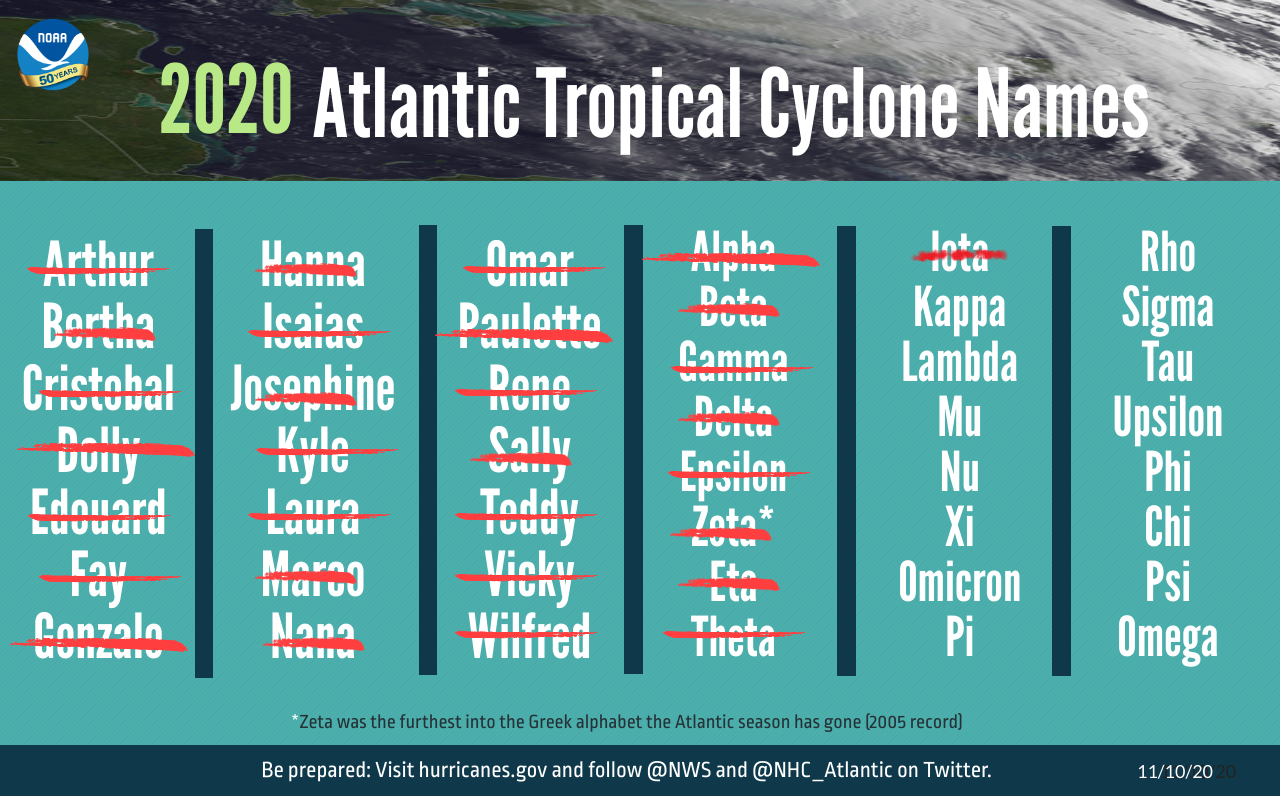
Preparation for the Hurricane Season Includes Insurance and Risk Reviews

The lodging and resort industry faces a significant exposure to hurricanes. In an article, Preparation for the Hurricane Season Includes Insurance and Risk Reviews, which I wrote for Lodging Hospitality, I noted the following:

Once again, the Atlantic hurricane season is upon us. With it comes a sense of apprehension for all along the coast, especially for those in the hospitality industry. For many, a few months’ income will make or break a business, so a severe storm brings potential ruin for a business that is not sufficiently insured. While business owners cannot predict a storm, they can protect their businesses financially; understanding both the insurance product and a business’ risk is essential.
...

Hospitality businesses thrive on the Atlantic and Gulf Coasts, but success comes with an unavoidable risk of hurricane loss. Sufficient insurance is the best way to confront that risk. It brings peace of mind for business owners, investors, employees and customers with knowledge that they are protected from the financial calamity that comes with a severe storm and that the business will have the opportunity to prosper in the years to come.

The current lull in the weather may be the last chance for many to properly prepare for this hurricane season. I strongly suggest policyholders follow the advice suggested in the above article and in yesterday's post, A Guide to Property Insurance for the Upcoming Hurricane Season.

A Guide to Property Insurance for the Upcoming Hurricane Season

This morning, I spoke to the Destin, Florida, chapter of the Condominium Association Institute about properly reviewing and purchasing insurance coverage. Before speaking, I saw the prettiest white sugar sand beaches on the planet. Destin also has the clearest crystal blue water you can find along the northern Gulf of Mexico.

As I was viewing this beautiful scene, I kept thinking:

"What a difference a year has made in Destin Florida."

At this time last year, I was giving speeches about the BP Oil Spill. Many were freaking out because the oil could not be stopped. On television and the internet, there were dire predictions about "black gold" destroying those white beaches and clear crystal blue water. Tourism plummeted.

Today, concerns about oil on the beach seem to have vanished. Once again, hurricanes seem to be the area’s prominent threat. I offered a few practical tips everybody should follow when reviewing insurance coverage.

Prospective policyholders should ask and answer the following basic questions:

  1. Who is supposed to be insured?
  2. What types of property or activities are covered?
  3. What perils are covered?
  4. What is coverage provided?
  5. What are the limitations, if any, on the amounts of coverages?
  6. What conditions (especially exclusions) and other policy provisions may affect the coverage otherwise provided?

These basic questions should be thoroughly discussed with the insurance agent. The worst situation is to find out, after a loss occurs, that the loss is not covered.

I noted some often overlooked coverage considerations. Some insurers now offer an endorsement for "wind driven rain." Excess flood insurance coverage is often not purchased because many incorrectly think that flood coverage is only offered through the National Flood Insurance Program. Law and Ordinance coverage is also missed by many. Finally, given high percentage deductibles purchased by many condominiums for hurricanes, deductible buy-down coverage may be needed.

Click here if you wish to read the full paper that accompanied my speech this morning.

Hurricane Models and SB 408

The Florida Commission on Hurricane Loss Projection Methodology (FCHLPM) recently approved catastrophe modeling firm Risk Management Solutions’ new hurricane model. The FCHLPM, an independent body of experts, was created by the Legislature in 1995 to develop standards and review hurricane loss models used in the development of residential property insurance rates and the calculation of probable maximum loss levels. The “experts” include engineers, meteorologists, actuaries, insurance academicians and the insurance consumer advocate. They review hurricane loss models submitted by various modelers.

What are hurricane models and why are they so important? A hurricane model is a very complex computer program. The programs simulate and predict how, where and when hurricanes form, their wind speed, intensity and size etc., their track, how they are affected by the terrain along the track after landfall, how the winds interact with different types of structures, the damage they can cause to house roofs, windows, doors, interior, contents etc., how much it will cost to rebuild the damaged structures, and how much of the loss will be paid by insurers. The models are then purchased by insurers and used to determine the premiums charged by insurance companies for hurricane risk.

In this field, Florida is a national leader. The FCHLPM subjects all the models submitted by the various modelers to rigorous review before they are approved. The models MUST be approved by the FCHLPM before the Florida Office of Insurance Regulation will allow its use in a rate filing. Hardly any other state has such a process; most states simply accept models that are approved by the FCHLPM. During my time on this Commission, I was consistently impressed with the knowledge and competency of the FCHLPM. The complexity of these modeling programs can not be overstated. Unfortunately, few are aware of how the FCHLPM impacts how much Floridians pay for insurance.

The new model that was recently approved, according to reports, will increase reinsurance costs.  These increased reinsurance costs are exactly the sort of costs that SB 408 allows insurance companies to charge an additional 15% for. Granted, this increase is linked to complicated hurricane models and offshore reinsurance companies; but it is still a rate increase. It has not even been a month, and consumers are already beginning to feel the negative effects of SB 408.

Florida Association of Public Insurance Adjusters Urges Policyholders to be Prepared for Hurricane Season 2011

Hurricane Season is here, and with the devastating weather that has already ravaged the United States this spring, Florida policyholders are urged to be prepared. The Florida Association of Public Insurance Adjusters’ most recent article reminds policyholders that true preparation requires homeowners and business owners to not only prepare their property and their families, but to also have an action plan in place for after the storm.

The Florida Association of Public Insurance Adjusters, commonly called FAPIA, has been an active organization of public adjusters helping policyholders in Florida with insurance claims since 1993. I wrote about the history of FAPIA in my prior post, The FAPIA website lists the contact information for its members and its directory can be searched by name or by zip code. FAPIA consists of nearly 500 members and associate members who have joined together to protect the interests of insured homeowners and businesses that suffer an insurance loss. Where company and independent adjusters represent the insurance companies, public adjusters represent the insured. The association is based in Maitland, and its members are located everywhere from the Panhandle to the Keys.

David Beasley is the current FAPIA president. Before becoming a public insurance adjuster, Mr. Beasley worked as a large loss adjuster for a very well known insurance giant. David Beasley and FAPIA remind policyholders to secure their property and check their policies of insurance.

Once basic supplies are secured and stored for the storm, begin a review of your insurance coverage. Does it cover flood or wind damage? Does it take into account current market value to rebuild your home or business? What is required of you under "Duties After Loss"? Failure to follow the provisions here could result in non-payment on your legitimate claim.

Carefully review the "Exclusions" portion of your windstorm policy. Some insurance companies have added new exclusions to coverage, which could affect your protection against property damage.

Now is the time to locate your policy, review the provisions, and ask questions.

Now is also a good time to take pictures. Many times, people photograph the damage after the storm, but photographs and video should also be taken before a storm starts brewing. Videos and photos complete with dates and descriptions are a great way to show an insurance company the condition of your property before a loss. These photos also become very valuable when trying to make a list of damaged property after a loss. Be sure to keep this information in several places or in a format that isn’t easily destroyed.

FAPIA’s website offers more tips to help prepare for a storm, suggesting stockpiling two weeks worth of necessary supplies, making a written hurricane plan for whole family, and making a few copies of your insurance policies before and storing them in more than one safe place.

FAPIA members follow the same statutory and ethical requirements imposed on all public adjusters licensed in Florida, but members have also elected to follow FAPIA’S Code of Ethics. The Code emphasizes professionalism and education. Each year, FAPIA holds two conferences with numerous educational courses for public adjusters.

Merlin Law Group has been invited by FAPIA to present at the next conference, in Fort Lauderdale, July 7-9.

Chip MerlinDoug Grose and David Pettinato will be presenting "What Experienced and Advanced Public Adjusters Should Have Included in their Claims File” -- Reaching the level of excellence through best practice methods of claim file documentation.

Javier Delgado and I will be presenting “Case Law Update” -- An overview of current case law that affects property insurance claim settlements –from the daily claim to those pertaining to windstorm claims.

For more information on how to attend the conference as a member or non-member, click here.

The 2011 Hurricane Season Is Predicted To Be Above-Average In Activity In The Atlantic Basin

Currently, many people may be focused on Spring-break vacations and thinking about the start of summer being right around the corner. There are some experts who are focused on another thing -- predicting Hurricane activity for the 2011 Hurricane season. The official start of the hurricane season is June 1st in the Atlantic Basin. This is just over six weeks away and the 2011 Hurricane predictions are in from the Colorado State University forecast team. While they slightly reduced their prediction from the one issued in December 2010, the forecast team is calling for an active season for 2011.

For the past twenty-eight years, the Colorado State University forecast team has issued predictions for hurricane activity utilizing a forecast scheme that relies on decades of historical data. The hurricane team’s forecast is based on the premise that certain ocean and atmospheric conditions - such as El Nino, sea surface temperatures, sea level pressures, etc. - that preceded active or inactive hurricane seasons in the past can provide meaningful information about similar conditions that may occur in the current year. As one could imagine, it is not an exact science, but rather a best estimate of activity to be expected during the upcoming season.

The forecast predicts that hurricane activity in 2011 will be approximately 175% of the average season. Following are some bullet points of the prediction for a major hurricane making landfall on U.S. soil:

  • A 72% chance that at least one major hurricane will make landfall on the U.S. coastline in 2011 (the long-term average probability is 52 percent);
  • A 48 % chance that a major hurricane will make landfall on the U.S. East Coast, including the Florida Peninsula (the long-term average is 31 percent);
  • A 47% chance that a major hurricane will make landfall on the Gulf Coast from the Florida Panhandle west to Brownsville (the long-term average is 30 percent); and
  • A 61% chance of a major hurricane tracking into the Caribbean (the long-term average is 42 percent).

Probabilities of tropical storm-force, hurricane-force and major hurricane-force winds occurring at specific locations along the U.S. East and Gulf Coasts are listed on the Landfall Probability website. The site provides U.S. landfall probabilities for 11 regions and 205 individual counties along the U.S. coastline from Brownsville, Texas, to Eastport, Maine.

What these predictions mean for residents of Coastal regions of the United States in hurricane zones is that now is the time to begin to prepare. Steps should be taken to review policies to confirm coverage, discuss other available coverage with insurance agents/representatives, potentially photograph the condition of insured property before any event, conduct basic maintenance like tree trimming and debris removal, and obtain peace of mind knowing that proactive steps have been taken. In the meantime, stay tuned to this blog for periodic updates as the Colorado State University team and other experts issue additional discussions on the 2011 hurricane season.

Hurricane Mitigation May Reduce Your Insurance Premiums

A couple of weeks ago, in Choose Your Hurricane Protection and Installers Wisely, I discussed the importance of proper hurricane preparation and mitigation when choosing window protection and installers. Hurricane window coverings help to protect your property during a hurricane, and can also help protect your wallet during quiet times because many property insurers offer significant discounts for hurricane mitigation.

Florida Statute § 627.711 requires property insurers to clearly identify and explain discounts available on the policies they sell if a property meets hurricane mitigation requirements. Pursuant to the statute, the Florida Financial Services Commission has developed a uniform mitigation inspection form that is used to determine whether a property has been properly mitigated for hurricane losses. To qualify for discounts on property insurance premiums, property owners simply need to have their property inspected by a licensed inspector who will complete the uniform mitigation inspection form and submit it to the property insurer.

To help with the cost of obtaining these property inspections, the State of Florida developed the My Safe Florida Home program. Unfortunately, due to budget cuts, this program was abandoned in 2009. Despite the program being discontinued, the State of Florida has left the My Safe Florida Home website up and running, and the site still has a wealth of information for property owners. The site includes videos that help explain general building construction, proper hurricane mitigating construction, and the effects of hurricane force winds on each type of building construction. The site also provides help identifying areas around property that may need reinforcement, some simple steps that property owners can do themselves to help protect their property, and tips for choosing a contractor to help assist with more complex mitigation procedures.

This last item can help avoid problems like the one discussed a couple of weeks ago when a homeowner was left with legal bills after a hurricane shutter installer breached its contract with the homeowner. Some of the advice on choosing the right contractor includes:

  1. Get at least three estimates from different contractors for the same job.
  2. Make sure that the contractor you choose is licensed by the State of Florida or your county government.
  3. Ask your contractor for references, and follow up with those references.
  4. Read your contract very carefully, including warranty information on any products used to strengthen your home.
  5. Make sure that the products used meet code requirements in your area and all appropriate building permits have been pulled.

Following this advice will help you prepare your property to resist hurricane damage, and help ensure that hurricane mitigation work is done right. When the mitigation work is done properly, it may qualify for a discount on your property insurance premiums, so be sure to check your policy or ask your insurance company what mitigation discounts are available.

Hurricane Law Tip - Advise Policyholders of the Importance to Complete and Document Repairs After a Loss

Fortunately, South Florida was not slammed this past hurricane season as the forcasters predicted. Now, with the holiday season here, the last thing on many policyholders’ minds is the ramifications surrounding hurricane claim settlements and restoring affected property. In my December 13, 2010, post titled Hurricane Law Tip - Document Hurricane Repair Expenditures Even After a Claim Settlement, I wrote about the importance of documenting repairs to property following a hurricane claim resolution. The focus of that blog was directed toward policyholders themselves. However, everyone involved in the first-party property insurance industry can do one thing for the policyholders who may not have the pleasure of reading the hurricane law blog posts. With the New Year approaching, we can make a resolution to discuss with our policyholder clients the importance of making repairs and documenting them after a hurricane claim resolution.

It seems like such an elementary issue, but from what I have seen in practice, many policyholders have a long list of questions/concerns about steps to be taken even after they achieve a favorable outcome in their claim. If we stop to think about it, those of us in the industry may find that we have not had lengthy informative discussions with policyholder clients regarding the important steps concerning documenting and completing repairs to hurricane damaged property after their claims are resolved.

Policyholders may feel the crunch of the economic times, yet there are a few important steps that can be discussed with them during the claim process and particularly when they receive a claim payment. Step one is explaining the importance of repairing the damaged property included in the insurance claim payment. Repairing the damage will decrease the chances of an insurer denying a later claim on the basis that the cause of damage was the earlier hurricane. It will not necessarily keep the later insurer from asserting a defense of causation or insufficient repairs, but it places the policyholder in a stronger position for the later event in meeting their burden of proof. Step two is to recommend the policyholder consider hiring a licensed and insured contractor to conduct the necessary repairs to the property and to have the necessary permits pulled with the local building authority. This will serve as evidentiary support the the repairs were made, should a laater claim occur.  Again, an insurer may still present a defense to the later claim and assert insufficient repairs as a cause of damages, however, the policyholder will have a stronger case than if the repairs are done by a handy man who they may not be able to locate later. Step three is to recommend policyholders maintain the documentation of repair expenditures following a favorable resolution of their hurricane claims as discussed in Hurricane Law Tip - Document Hurricane Repair Expenditures Even After a Claim Settlement.

Explaining the importance of these steps to policyholders when their claims are resolved can make the difference in a later claim.  

We Are Not Out Of the Woods Yet For the Atlantic Basin's Impressive Showing in the 2010 Hurricane Season

With the twists and “turns” that this hurricane season has challenged us with so far, those of us in Florida and the Southern United States have been fortunate. There have been a few close calls this 2010 season, and for the first time since 1926, we witnessed two category 4 systems in the Atlantic basin at the same time. Hurricane Igor battered Bermuda and may have an effect on the Eastern coastline of Newfoundland, which is predicted to be next in its path.

High pressure systems have diverted disaster from the United States coastline, so far this hurricane season. However, we cannot stress enough the importance for people living near the coastline not to let their guard down. A good motto to live by is to “be prepared.” Hurricane season continues for more than two months, and many late-season hurricanes, such as Wilma in 2005, have caused tremendous damage. This chart shows that we have just passed the height of hurricane season, but it reveals that hurricanes and tropical storms frequently strike late into the season and through the end of October.

Many Floridians are very familiar with this chart and know that the absence of hurricanes making landfall before September is not particularly indicative of the final seasonal outcome. Some of the more memorable hurricanes making landfall during this time frame include: Andrew (August 1992), Charley (August 2004), Donna (September 1960), Frances (September 2004), Jeanne (September 2004), Kate (November 1985), Katrina (August 2005), Ivan (September 2004), and Wilma (October 2005).

Please be aware of these facts during the remainder of this hurricane season and ensure that proper precautions are taken.

Essentials:

  • Battery-operated radio
  • Flashlights
  • Extra batteries

Water:

  • 3 gallons/person, minimum, in a food-grade, plastic container
  • Additional water for sanitation

Food: Minimum 3-day supply of non-perishable food that requires no refrigeration, or preparation

First Aid Kit: (one for your home and one for each car)

See: http://www.floridaoceanographic.org/hurricane2.html for a more thorough list of essentials and precautions.

So Far So Good in Hurricane Season--Will Igor Change Everything?

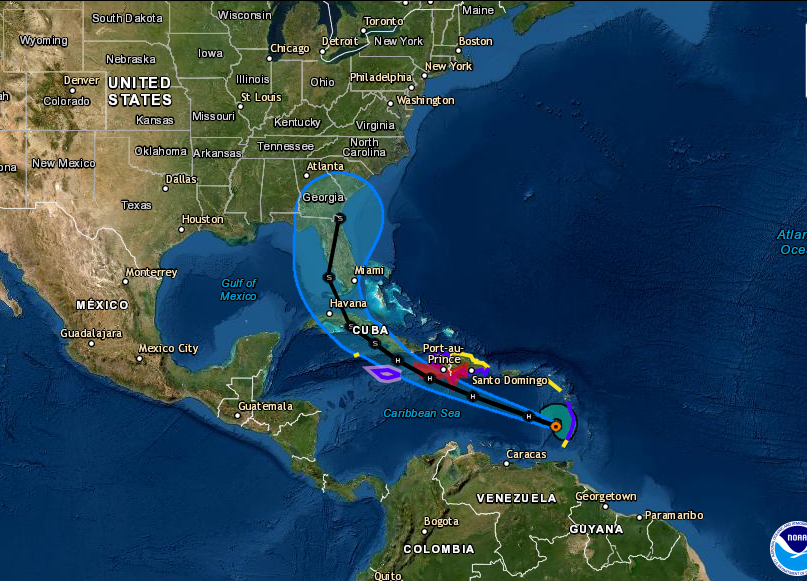
We have been lucky so far this 2010 Hurricane Season. Strong northern turns have moved powerful hurricanes away from Gulf and Atlantic shores. Next Friday, I might be writing something else as Igor moves towards the United States.

Here is its current combined trajectory for the next several days:


Let's hope it also starts that right hook.

Since we won't know if Igor is going to effect us until it gets closer, it seems this song may be fitting for everybody with Friday night on the mind:


Enforceability of Large Hurricane Deductibles in Florida

As discussed in, According To Florida Statute An Insurer Cannot Apply A Policy Hurricane Deductible More Than Once During A Calendar Year For Personal Lines Residential Claims, in Florida, the hurricane deductible can be 2%, 5%, or even 10% of the dwelling policy limit. These percentage deductibles can be very large on personal lines residential claims, and even larger on condominium and commercial hurricane claims. Condominium and commercial hurricane deductibles can be well over a million dollars per loss.

The enforceability of these hurricane deductibles and the penalty for failure to comply with Florida’s statutory requirements is currently pending before the Florida Supreme Court. Florida Statute §627.701(4)(a) states:

Any policy that contains a separate hurricane deductible must on its face include in boldfaced type no smaller than 18 points the following statement: ‘THIS POLICY CONTAINS A SEPARATE DEDUCTIBLE FOR HURRICANE LOSSES, WHICH MAY RESULT IN HIGH OUT-OF-POCKET EXPENSES TO YOU.’

In Chalfonte Condo. Apartment Assoc., Inc. v. QBE Insurance Corp., 561 F.3d 1267 (11th Cir. 2009), the Eleventh Circuit Court of Appeals certified two questions to the Florida Supreme Court concerning the statute. The questions certified are:

  1. May an insured bring a claim against an insurer for failure to comply with the language and type-size requirements established by Florida Statute §627.701(4)(a)?
  2. Does an insurer's failure to comply with the language and type-size requirements established by Florida Statute §627.701(4)(a) render a noncompliant hurricane deductible provision in an insurance policy void and unenforceable?

The Eleventh Circuit Court of Appeals noted in Chalfonte that resolution of both of these issues requires a determination of how the Florida Legislature intended courts to handle violations of §627.701(4)(a) in the absence of a specific remedy within the Statute’s plain language. The Statute does not contain a penalty or remedy for an insurance carrier’s failure to comply with the hurricane deductible boldfaced type and font requirements.

The Florida Supreme Court has not yet answered these questions, among others in the case. The appropriate penalty for an insurer’s failure to comply with §627.701(4)(a) will be very important since condominium association and commercial policyholders with large hurricane deductibles may have been required to sustain and pay millions of dollars in damages before being entitled to any payment. Would they be entitled to the money withheld for the very large hurricane deductible, or a portion of it, as the penalty? We will keep you posted when the Supreme Court answers these questions.

Basic Claim Step Advice For Hurricane Earl Policyholders

Tina Nicholson is based in our Houston office. She wrote a very basic article "Steps For Handling an Insurance Claim" for the Hotel World Network. With Hurricane Earl winds beating the mid-Atlantic coast, her tips may be helpful for many policyholders:

  1. Contact your insurance company immediately to notify it of the claim. The first contact will likely be a telephone call, but follow that up in writing. In some states, you are only entitled to certain legal rights if you notify the insurance company of the claim in writing.
  2. Read your insurance policy carefully to determine exactly what your policy does and does not cover. For example, if your policy covers water damage but not mold damage, then you will need to emphasize to the insurance adjuster that your carpet is wet, rather than saying it "smells moldy.”
  3. Document the damage with lots of photographs. Photograph every room and each item that is damaged. After the property is cleaned up and repaired, the insurance company may dispute the extent of the damage and you will need proof.
  4. Hire reputable contractors for the repairs. Avoid “restoration” companies, particularly if they tell you they will only charge you what the insurance company pays. That situation can result in the restoration company getting the bulk of your insurance check and leaving you with a lot of out-of-pocket expenses.
  5. Keep track of the amount of time your employees spend on clean-up or repairs. The insurance company may reimburse you for the cost of its time.
  6. Provide the insurance company with all of the documentation it requests. If you fail to cooperate with the insurance company, you could jeopardize your insurance claim.
  7. Document all contacts with the insurance company, including names, telephone numbers and conversations. It is common for a policyholder to receive conflicting information from the insurance company. The adjuster who says the company will pay for your loss may be overruled at the home office.
  8. If your claim is not paid quickly and fairly, contact an attorney experienced in property insurance claims to determine your rights. Many states require the insurance company to pay your attorney fees if you have to take legal action to obtain full payment on your insurance claim.

Policyholders who are in the path of high wind events should require their insurers to closely inspect for the subtle damages caused by hurricanes. Many catastrophe adjusters do not have the time, experience, training or motivation to find these types of damage. The more thorough the examination of the structure following a loss, the better the chance of finding damage which often is overlooked until it causes other portions of the building to break down far sooner than the designed life expectancy.

Nicholson's tip to keep track of everything said and done by the adjusters and representatives of the insurance company can be crucial. Often, multiple adjusters will be assigned to a loss. Agreements and discussions are often forgotten or lost. Our strong suggestion is for the policyholder to carefully note every interaction with the insurance company by time and date.

Take many videos and photographs of obvious damage to your property and neighboring properties. Documenting the "war zone" scenario often found following a storm prevents any argument later by the insurer that the storm was not as bad as the policyholder suggests. Insurers that want to minimize damage payments often have few photographs of very badly damaged structures or devastated areas. Those same insurers will take many photographs of areas with little damage.

This observation is not meant for most of the adjusters who are trying to do a great job in getting benefits to policyholders, but you don't know what breed of adjuster you will be assigned. Safe is better than sorry.

Tropical Waves off Africa Indicate a Need for Concern

The water is warm, the wind sheer is declining, and it is late August. For those along the southern coastal areas, it is important to monitor waves of weather off the African coast for the next six weeks. The most active part of hurricane season is upon us. There is reason to be concerned.

A couple of days ago, BobbiStorm of Hurricane Harbor cryptically noted that it "looks like we have a swimmer to me." For those that do not follow her wacko rhetoric as often as I do, the interpretation is that she thought a classic hurricane would be forming off the African coast. Her prediction appears to be right. Dr. Jeff Masters' WunderBlog confirmed that:

A tropical wave (Invest 95L) in the far eastern Atlantic about 350 miles southwest of the Cape Verdes Islands has become more organized this morning. Satellite loops show that the wave has some rotation, and heavy thunderstorm activity has increased in recent hours, after a period overnight with little change. Water vapor satellite loops show that there is some dry air to the north of 95L, but this dry air currently appears to be too far away to significantly interfere with development. The main impediment to development is the moderate 10 - 20 knots of wind shear over the system. The shear is forecast to remain in the moderate range through Monday, then decrease. This should allow 95L to develop into a tropical depression Monday or Tuesday. NHC is giving 95L a 30% chance of developing into a tropical depression by Monday morning. With 95L's recent increase in organization, these odds should probably be 50%.

If it forms into a hurricane, the name will be Danielle. It only seems fitting to play a video from Danielle Peck, whose song could add Hurricane Danielle to a list of things that are bad for us:
 

Hurricane Law Tip - A Picture Is Worth A Thousand Words

Following the passage of a hurricane or tropical storm, policyholders should photograph or video record hurricane-related damage to insured property as soon as possible. The more detail the better. Photographs of the condition of the roof system immediately after a hurricane can be particularly helpful in the insurance claim for damages. The photographs can capture the condition of the damaged property immediately after the storm’s passage and can be used to potentially refute arguments that the hurricane was not the cause of the damage. The importance of the photographic evidence ties in with the discussions that Jeremy Tyler and I have had over the last several weeks in the “Late Notice of the Claim” postings.

Generally, policyholders are not familiar with their rights under their insurance policies, and may not be familiar with structural damage related to hurricanes. For instance, a policyholder may notice some broken, missing, shifted, or cracked roof tiles after a hurricane and think that the damage is only limited to those affected tiles. He may have someone perform a minor repair to the affected tiles and take no photographs. Down the road when that policyholder files a claim with the insurance carrier, he will be asked if there is any photographic evidence of the damages claimed. When that documentation is not produced, particularly in a late filed hurricane claim, carriers deny the claims citing “foot traffic” as a cause for extensive roof tile damage. This is particularly the case where the insurance carrier discovers, through the policyholder’s testimony, that there have been power washing companies on the roof since the hurricane.

“Foot traffic,” an insurance carrier’s explanation for extensive tile damage spread over several areas of the roof, can be refuted by providing pictures or videos of the damages to those areas following the hurricane. Additionally, the pictures or videos can help to reveal a broken bond between the roof tiles and the roof decking. The forces of the wind during a hurricane can bend and flex the plywood beneath the tiles, causing the failure of the bond between the tiles and the deck.

The pictures could even reflect specific areas of the roof that are still well-bonded and show no signs of damage. This can be important to refute arguments that the cause of de-bonding tiles is an installation defect issue with the roof as a whole and not caused by the hurricane.

If there is one thing we learned from the 2004 and 2005 hurricane seasons in Florida and litigation that has ensued, it is shoot pictures first and ask questions later.

How to Prepare for the Hurricane Season and Avoid Being Underinsured for Business Interruption Coverage

*(Note: Bob Glasser is a managing director at BDO Consulting, a division of BDO and Seidman, LLP, in the New York office. Mr. Glasser is a certified public accountant, a certified fraud examiner and a certified insolvency reorganization accountant, with more than thirty years of diverse financial management and accounting experience at public and private companies. Mr. Glasser leads the firm’s New York Insurance Claim Services practice).

Most CFOs and risk managers have an understanding of their property and liability insurance needs and dollar limits and are comfortable purchasing coverage that protects their companies from a loss due to an insured peril. However, it has been my experience that their comfort level drops dramatically when it comes to business interruption coverage and limits. The uncertainty surrounding business interruption coverage, extensions of coverage and respective limits of that coverage consistently results in many middle-market organizations finding themselves underinsured and short of cash when faced with a major loss. Even the fortunate CFOs and risk managers who have not experienced a major loss may eventually discover that they have been significantly overinsured for business interruption losses and paying unnecessarily higher premiums for their coverage. Of course, the more devastating situation is finding out after a shutdown of operations from a loss that company management has not mitigated the company’s risk of lost profits and now has insufficient coverage to protect profits and cash flow during a potentially long period of restoration.

How can you, the CFO or risk manager avoid that day of reckoning when your company cannot afford the economic consequences of an underinsured loss?

When you meet with your broker to review your insurance policy for renewal, focus on your reported or insured values for your business interruption coverage and on the numerous extensions of coverage that are available based on your organization’s specific operations and needs. Calculating the appropriate business interruption values will help you select the proper coverage and respective limits and will enable you to better manage and, more importantly, minimize your financial risk.

Fundamental to obtaining the proper limits/sub-limits and type of business interruption coverage is an updating and reevaluation (or assessment for the first time) of your business interruption values. From my prior experience as a CFO (and being responsible for insurance), I recall the temptation to take business interruption worksheets provided by the broker and subsequently give them back to him or her, along with a copy of the company’s most recent financial statements, and saying, “I don’t understand this form. It does not relate to my business operations. So take my financials and tell me how much BI coverage I should have!” If you recognize yourself in that scenario, you are not alone. CFOs and risk managers should work with brokers and insurance consultants to create a comprehensive analysis of the needed coverage by identifying and quantifying potential operational and financial risks to the organization and by shifting that risk to the company’s insurance carrier(s).

When preparing your updated (or initial) business interruption values calculation, I recommend the following five-step action plan:

  1. Communication – Meet with your senior management to review existing business risk assessments, previous loss history, business plans and financial projections and to identify potential mitigation strategies.
  2. Diagnosis – Identify contingent and extended exposures, internal and external interdependencies as well as other exposures that may not be triggered from first-party property damage.
  3. Technology – Integrate technological solutions to create an efficient and timely valuation process.
  4. Analysis – Review and analyze risk exposures to facilitate the quantification of business interruption values.
  5. Documentation – Create detailed schedules supporting calculated values by operation and location, including the underlying assumptions.

Preparing a Maximum Loss Scenario (“MLS”) analysis is also beneficial and is generally well received by both senior management executives and underwriters. An MLS analysis is the process of simulating an occurrence in which an organization experiences a catastrophic loss event. The financial impact of this simulated loss event is quantified and addressed in a report to underwriters that provides a more comprehensive analysis and understanding of the risk that they are evaluating and underwriting. Senior management benefits from the MLS analysis because it may identify critical path weaknesses and interdependencies in an organization which may then be used to update their strategic and disaster recovery plans. The MLS analysis should also include an assessment of potential extra expenses that could be incurred as a result of the simulated risk, in addition to the business interruption losses.

As part of the process of determining your business interruption values, you also need to understand the numerous extensions of coverage that are available to mitigate your risk. Many of these additional time-element coverages may be critical to safeguarding potential lost profits from a catastrophic event, and therefore need to be individually analyzed and addressed with your broker. The following are some of the additional coverages to consider:

  • Contingent business interruption
    • Provides additional coverage as a result of a covered loss to suppliers and receivers of goods and services. Without this coverage extension, companies that have critical suppliers, customers or feeder-type properties may find themselves at the mercy of a supplier’s or customer’s rebuilding schedule. In the worst-case scenario, you may have to shut down due to a supplier’s or customer’s physical loss.
  • Ordinary payroll coverage
    • Your managerial and salaried employees are normally covered as a continued expense. However, your hourly non-managerial employees may not be covered. If you have hourly skilled labor or if you are located in a tight labor market and cannot afford to lose trained workers from not continuing to pay them during a business interruption, you can purchase an extension of coverage that will allow you to pay these workers for a specified period of time while the company is shut down, generally, the coverage is purchased for a specific number of days, e.g., 30, 60, 90, and up to 365. To determine how many days of coverage you may need to purchase, you must determine the skill level of your workforce and evaluate the risk that they will not return to work after a closure.
  • Extended period of indemnity
    • Your business interruption coverage indemnifies you through the period of interruption, which is also referred to as the period of indemnity or restoration. This period is often defined as the time it takes to rebuild or restore the damaged property to its pre-loss condition using due diligence and dispatch. An extension of coverage allows for continued indemnification from your insurance coverage for the time necessary to ramp up your business to its pre-loss levels following the physical restoration. This is an important coverage for businesses in a highly competitive environment, such as the hospitality industry.

The following are some additional types of extensions of coverage to consider with your broker:

  • Claim preparation fee
  • Service interruption/power outage, including off-premises service and overhead transmission lines
  • Extra expense
  • Expediting expense
  • Finished goods inventory selling price
  • Loss of attraction (primarily for the hospitality industry)
  • Ingress/Egress
  • Sue and labor
  • Civil authority

CFOs and risk managers should meet with their brokers to closely examine their business interruption values, limits and available extensions of coverage in their current policies. The critical takeaway is that properly calibrated business interruption coverage can be one of your most valuable assets for providing the critical working capital needed to survive a catastrophic event.

- Bob Glasser

Bracing for the Worst - Understanding Business Interruption Claims, Part 29

Yesterday, Rocco Calaci posted a blog entry announcing that La Niña conditions are already being observed. While I dare not attempt to explain the mechanics of these conditions, it is generally understood that La Niña is a climate phenomenon that is marked by an unusual cooling of the sea surface in the Pacific Ocean, which in turn affects wind and weather patterns globally. It is also generally said that these conditions foster more frequent and stronger storms in the Atlantic Ocean and the Gulf of Mexico. As a result, NOAA has forecasted 14 to 23 named storms, of which 8 to 14 are expected to be hurricanes and 3 to 7 major hurricanes during this season.

While no one can predict the future, we all can at least prepare for it. In his blog post, Mr. Calaci correctly warned:

This year has already produced 2 tropical systems early in the season. We are receiving a warning loud and clear. Please take time to make hurricane plans. Inventory your belongings. Make necessary changes to your insurance policy. Many folks have their property under-insured, don't let this happen to you. If you need to increase your insurance limits, then do so...don't expect the insurance companies to know your needs. This is your responsibility.

From a Business Interruption perspective, these forecasts should not be taken lightly. For those who do not regularly keep up with this blog, I suggest you read Learning from Other’s Mistakes – Understanding Business Interruption Claims – Part 15 to learn how a catastrophic loss could run a business to the ground without the possibility of recovery despite having adequate insurance coverage. For those keeping score at home, I suggest you read it again.

The best business interruption claim is one that is planned for in advance of a loss. In other words, the success of a business interruption claim after a catastrophic loss will most likely depend on how well prepared the business is to handle an interruption event. Many companies have emergency response plans, which include team coordination and responsibilities. However, many small businesses barely have such response plans in place.

I recently came across an article in CAT Claims: Insurance Coverage for Natural and Man-made Disasters – Chapter 10- Proving Business Interruption Losses, where the authors suggested that many businesses should consider having an “insurance recovery team” as part of their response plans, where the team would work in tandem with risk managers and attorneys in order to address issues such as preservation of evidence to prove insurance coverage and causation, as well as the costs incurred in responding to a loss and the interruption event.

The article suggests a few pointers worth sharing:

• At the first team meeting the risk management personnel or the broker should brief the other team members on the scope of the coverage provided in the policy to insure that everyone has a clear understanding of what is covered and what type of documentation is needed to support a claim. Documentation will include accounting documents for all loss related expenses, budget/forecasts, accident reports made by the company, etc.

• The operations representative should review the loss event and the impact that it will have on the business. As this is early in the process it is unlikely that all the effects will be identified and the discussions should address the worst case and the likely case [scenarios].

• The accounting representative should inform the team on how the normal accounting process would respond to the event and what additional steps will need to be taken to capture the information needed to substantiate the claim to an adjuster.

• The planning representative will need to review the budget and model that is used for forecasting income and expenses. This [step] is critical as BI claims are based on theoretical calculations of what the business would have made as income had the event not occurred. The risk management personnel broker and claim consultant need to have a good grasp of this prior to communicating with the insurance adjuster. The adjuster’s first report to the underwriter sets the stage for the claim and correcting any misunderstanding in this first opinion is very difficult.

• The team, with the input of the claim consultant should develop the initial strategy for the handling of the claim along with setting up the schedule for the next meeting.

• The legal representative should advise the team on confidentiality issues and assist in the analysis of subrogation potential as the facts surrounding the event become known.

The reality is that many small businesses can only dream of having such an organized team in place to assist it before or after a loss. However, carefully following the highlighted pointers should, at minimum, give the business owners or managers an idea of the value of its claim and the period of time it will take to bring the claim to a successful conclusion and, hopefully, to a full resumption of operations.

Rocco Calaci's Tropical Update - July 2010

(*Chip Merlin's Note--Rocco Calaci has been a noted meteorology expert witness in the Katrina Legal Wars. Click here to read his previous guest blogs)

In late April and May 2010, I wrote about the La Niña situation in the eastern Pacific Ocean, how it would develop, and its impact on the 2010 Atlantic hurricane season. One reason the forecast numbers for potential hurricanes is above average is due to the expected La Niña.

In today's paper, NOAA issued a possible La Niña alert. NOAA announced that the conditions for La Niña were developing, and this scenario would be prevalent by August to September and extend into the beginning of 2011.

I'm here to tell you that La Niña isn't coming in August because it is already here. A quick check of water temperatures off the coast of Central and South America (Pacific Ocean side) shows that the temperatures for this region are almost 1.5 degrees Celsius colder than average. The chart below is current as of July 8, 2010. 

For a La Niña situation this is very cold, and, if this theory is correct, it should prove to be quite a hurricane season for the Atlantic and Gulf of Mexico areas.

The various forecasts from the National Hurricane Center show between 14 to 23 named storms this hurricane season. With a strong La Niña, I expect to see storms at the higher end of the predicted range.

The chart below shows how the numerical models are looking at La Nina conditions to persist into next year.

Typical La Niña conditions result in hotter temperatures in the South and fewer tornadoes east of the Mississippi. Remember, these so-called "typical" conditions are based solely on statistics from an era when there was little or no knowledge about El Niño/La Niña situations.

The two busiest hurricane seasons on record (1994 - 1995) occurred during La Niña conditions. At the same time, don't overlook the fact that 2008, (Hurricane Ike) occurred during La Niña conditions and the infamous 2005 (Hurricane Katrina) happened during La Niña.

This year has already produced 2 tropical systems early in the season. We are receiving a warning loud and clear. Please take time to make hurricane plans. Inventory your belongings. Make necessary changes to your insurance policy. Many folks have their property under-insured, don't let this happen to you. If you need to increase your insurance limits, then do so...don't expect the insurance companies to know your needs. This is your responsibility.

As I said, the La Niña predictions are based on statistics. Sometimes the numbers are totally wrong, but it doesn't hurt to prepare...just in case the numbers are correct.

--Rocco Calaci

Oil and Hurricanes: Here Comes the One Two Punch

Could there be a worse time to have a hurricane or tropical storm than the summer and fall of 2010? Given the extraordinary warmth of water this early in the hurricane season and the ongoing BP oil spill catastrophe, policyholders and public officials need to start taking immediate steps to prepare for two catastrophes which are greater than their sum. Jeff Masters, of WunderBlog, is discussing the possibility that a tropical depression is currently forming in the Atlantic. Those in the Gulf Coast have one eye out for the increasing probability of a hurricane while also watching for the spread of oil.

There are some lessons from experience that all can apply as we get deeper into the summer months. First, purchase flood insurance. As noted in our Condominium Insurance Law Blog post, FEMA Clarifies Position: Flood Waters Mixed With Oil Will Be Covered, National Flood has told everybody in advance that it will pay for additional costs of oil if floods or storm surge carry oil with it during a hurricane. Do not underinsure the amount--be safe and err on the side of overinsuring your structure because my experience is that most underestimate how much repairs costs. Think of the additional costs associated with removing oil if you have a problem paying a little extra to follow my advice.

The only problem is that you might not be able to purchase flood insurance right now. As noted yesterday in Industry Groups Urge Congress To Extend NFIP, Put Politics Aside:

The official start date of the Atlantic hurricane season was June 1, but no flood policies have been issued or renewed because the National Flood Insurance Program has expired, said two insurance groups, calling for a long-term extension of the program.

The NFIP expired May 31, resulting in the third lapse in the ability to purchase flood insurance coverage this year.

As a result, no NFIP policies can be issued or renewed until Congress reauthorizes the program, and existing policyholders cannot increase their coverage limits during the program’s hiatus, which is particularly troubling for those who may be impacted by the Deepwater Horizon oil spill should a storm occur, the Property Casualty Insurers Association of America (PCI) said.

Second, review all your coverages with your agent. Insure to full value and especially consider whether you have sufficient code upgrade coverage. Discuss whether your policy covers damage from wind blown rain and whether your business policy has sufficient loss of earning coverage and forms for dependent losses. Some of these coverages are discussed in Nationwide Insurance Commercial Customers Should Check Their Policies for Dependent Property Lost Income Coverage and Oh My Cheese! What Can Dairy Farmers Teach Us About Contingent Business Coverage? -- Understanding Business Interruption Claims, Part 7.

Third, harden your structures by repairing roofs, painting, and glazing or caulking openings, doors and windows. These are the most cost effective protective measures that can be taken. They will even help prevent loss during severe rainstorms.

I am writing this post late Monday night, flying home from Destin, Florida. I was in Pensacola earlier, and debated for BP contributing to a $20 billion oil spill trust fund on Fox Business News . Cash is the lifeblood to businesses. If BP does not get money it owes to Gulf Coast businesses soon, business death in the form of bankruptcy will quickly occur to many businesses with resultant harm to employees and their families.

In Destin, the City council convened an emergency meeting which I attended. Fishermen reported oil slicks 4.5 miles from Fort Walton Beach. Given this development, Destin City Hall was the scene of democracy in action. Out of frustration, the Okaloosa County Commission defied federal officers and voted to take self help measures to preserve their water and beaches, claiming they would willingly go to jail, rather than do nothing.

For those who may be critical of President Obama for alienating the British regarding the BP Oil Spill, I suggest that the people of the Gulf Coast really don't care. The Gulf Coast way of life has been damaged and more is threatened by BP's lukewarm reaction. Earlier in the evening, elected County officials joined the angry crowd and took measures into their own hands. They voted to take action not approved by the Federal Government. One official threatened use of their own police to implement their own remedy and battle BP oil spill responders.

Others not from the southern coastal states should get the feeling that many local leaders and people of the Gulf Coast don't care who is upset. They require any action which will keep the oil out of their local waters and off their shores. They are tired of hearing nothing can be done to fight the oil. A comment was made at the emergency meeting that people from Washington D.C. and Chicago don't enjoy or go on the water or beaches, but spend their time in fancy restaurants. To say that there was "anger in the air" caused by frustration would be an understatement.

While observing this, I thought about the already warm water and the season's first tropical wave  possibly forming in the Atlantic. It has been my experience that misfortune happens at precisely the wrong time. Since the precisely wrong time for a hurricane to strike the Gulf of Mexico is over the next several months, Bob Dylan's immortal lyrics come to mind..."It does not take a weatherman to know which way the wind blows."

Prepare for the worst. Hope and pray for the best.

Rocco Calaci Contemplates the 2010 Hurricane Season

(*Chip Merlin's Note--Rocco Calaci has been a noted meteorology expert witness in the Katrina Legal Wars. Click here to read his previous guest blogs)

In about six weeks, the 2010 hurricane season will begin. As most of you already know, the National Hurricane Center and Dr. William Gray are predicting an "above average" year for hurricane activity. This was similar to last year's forecast for the 2009 hurricane season and we had a very quiet year. This year should be different.

In 2009, the El Niño effect developed in the eastern Pacific, resulting in a very slow year for hurricanes. As of today, April 13, 2010, the eastern Pacific sea temperatures are approximately 3.5 degrees Fahrenheit warmer than normal...a moderate El Niño situation.

The temperatures in the eastern Pacific have been dropping and forecast numerical models agree that by the end of August, sea temperatures will cause a "neutral" zone, thereby having no effect on Atlantic hurricanes. Some models go as far as predicting an El Niño zone, causing Atlantic hurricanes to become stronger. Of course, it is much too early to know exactly what will occur. Remember, numerical models are only as good as the data input.

Normally when an El Niño situation occurs, the northern Gulf Coast and southern Florida should experience wetter than normal conditions. Up to today, the northern Gulf Coast is well behind in rainfall, but South Florida is above monthly averages. El Niño was also supposed to cause warmer than normal conditions along the northern Gulf Coast, yet we had a winter with much colder than normal temperatures. This goes to show that you can't rely on statistics alone.

As with previous years, I will explain in laymen’s terms what the National Hurricane Center is forecasting. I will also provide an update of the upper level weather situation and an outlook of how well the National Hurricane Center is performing.

Here are some points of interest for everyone:

  1. Have a hurricane evacuation plan.
  2. Review your insurance policy and determine of you have enough insurance coverage. After Hurricane Ike, I found that the majority of folks were under-insured on their properties. Don't expect the insurance companies to pay you more than what you have insured your property for. You may have to pay more for additional coverage, but it's better than not having enough to cover potential losses.
  3. Inventory your belongings on paper and video, if possible. Again, my experience shows that the majority of homeowners do not take this step prior to a hurricane hitting their area.
  4. Understand your responsibilities as a policyholder. Insurance companies have thousands of customers and can't spoon-feed every policyholder; policyholders should take responsibility for their own belongings and contractual obligations. You can't expect your insurance company to do its part if you don't do yours.
  5. Pay attention to bulletins from the National Hurricane Center and your local authorities. In 2008, the initial thought was Hurricane Ike would strike the East Coast of Florida and it wound up in Galveston, Texas.

Everyone knows the danger and devastation that comes with a hurricane. Please protect yourselves, your families and your property.

-Rocco Calaci

Hurricane Ida and the Unpredictable Weather

No hurricanes all summer. The water is cooling. People are preparing for Thanksgiving and muttering about retail shops putting up holiday lights in the first week of November. And out of the blue comes Hurricane Ida.

I am supposed to be in Poplarville, Mississippi tomorrow morning for an event with former client, Pearl River Community College. I was hoping to see Mississippi Congressman Gene Taylor about his efforts to demand a hurricane policy that covers wind, flood, and storm surge. I doubt any of this will happen, given the wide projections of landfall for Hurricane Ida.

Instead, Florida panhandle clients have been calling and asking what to do. Storm surge is probably the most potentially devastating aspect of Hurricane Ida unless a tornado or microburst hits. Florida panhandle beachfront businesses and residents have suffered pretty significant beach erosion since Hurricane Ivan. Generally, there is far less protection from the impact of waves, surge and flood in most areas from Gulf Shores, Alabama, eastward to Cape San Blas, Florida. These are beautiful white sand beaches that have had significant growth since the early 1970's.

This is what a Florida panhandle resident and meteorologist Rocco Calaci has to say about Hurricane Ida this morning:

Hurricane Ida has shown everyone that she is on her own schedule. The storm moved faster than anticipated and now is weakening sooner than expected. Current sustained winds have dropped from 105 mph to 80 mph and should make landfall as a very minimal Category 1 hurricane and weakening as it moves over land.

Hurricane Ida is moving slightly towards 340 degrees from its' position at 16 miles per hour. This is an increase of 4 miles per hour in the forward speed. The different models seem to agree that Ida will make landfall early Tuesday morning near 7:00AM. The media keeps saying landfall will be at Pensacola Florida, but it will probably be inside the Alabama border at Orange Beach and Gulf Shores Alabama.

No one has sighted Jim Cantore from the Weather Channel, so the exact landfall spot is iffy. Al Roker from NBC will be in Pensacola for the landfall of Hurricane Ida. The last time Mr. Roker was in Pensacola was during Hurricane Ivan and he was a lot heavier then. Hopefully someone will be holding on to him during his live broadcasts tomorrow.

What is interesting is that there are still some numerical models that place the landfall near New Orleans, but the upper level winds at 30,000 feet will keep Ida along the Alabama - Florida border. Winds will steadily increase throughout the day as Ida moves closer to shore. Wind speeds tomorrow morning will be around 50 to 60 miles per hour sustained with higher gusts along the immediate coast line. As Ida continues to weaken, these wind speeds will most likely decrease.

Once Ida makes landfall tomorrow morning, winds will lower to tropical storm strength in general, but be aware of isolated gusts that could be as high as 65 miles per hour. From eastern Mississippi towards New Orleans, winds will be from the Northeast and East at speeds between 45 to 55 miles per hour on the shoreline. Gusts will be a bit higher, but the local environment plays a significant part in gustiness at each location.

Hurricanes release destructive energy over widespread areas. As I am writing this, insurance catastrophe adjusting teams are making final staging plans. There is a myriad of significant decision making at governmental levels. These decisions pertain to evacuation calls for low areas, shelters, governmental closings, etc. The impact on local communities cannot be overstated as a result of Hurricane Ida--even if it is a relatively late storm that is expected to weaken--nobody will take it lightly.
 

Are There Going to Be Any Hurricanes in 2009?

I get asked that question quite often. Doing what I do for a living, given my last name, and having proven my prognostication prowess (with money backing up my opinion) by opening our Texas office BEFORE the first of two major hurricanes to hit Texas, I can understand why many come to me for that answer rather than professional meteorologists and psychics. I am not betting on any “major” hurricanes this year. El Niño seems to be preventing tropical storms from making the trek across the Atlantic Ocean. Upper level wind shear has been destroying the movement towards the coastal United States and Gulf regions. Let’s hope it stays that way. And, as I suggested in May with a post, Weak El Nino and Cooler Tropical Waters Lead to Predictions of Fewer Hurricanes, who really knows?

There are two recent and very interesting posts regarding hurricanes worth reading. One is found on Dr. Jeff Masters' WunderBlog regarding storm surge misconceptions. Everybody should read this important discussion of storm surge. Dr. Master’s correctly noted:

The storm surge is usually the most dangerous threat of a hurricane. The ten deadliest U.S. hurricane disasters, including the Galveston Hurricane of 1900 (8000 killed), the Lake Okeechobee Hurricane of 1928 (2500 killed), and Hurricane Katrina of 2005 (1833 killed), were all primarily storm surge disasters.

He then listed and discussed a number of storm surge misconceptions:

Misconception: Call 911 and you can be rescued, while the water is pouring into your home.
How? No one will be able to get to you. Water rises quickly--sometimes six to ten feet within minutes; cars can't drive in it, and it is usually unnavigable by boats when it is coming ashore.

Misconception: Just stuff towels under the door jambs. Then rush around to start picking up things that are close to floor level, so you can save them.
Bad idea. In a minute or so the surge will burst open the door, and instead of standing in a room with four inches of water, you'll be knocked off your feet and into whatever piece of furniture is closest, and will suddenly be in three or four feet of moving water that you can't make any headway into...just before the refrigerator, quickly rushing through the water towards you, knocks you cold.

Misconception: You'll be able to maneuver around in the rushing water.
Probably not. Some people who drowned were not even able to get out of the room they were in, when the water started pouring into the home. The speed of water in surge can be equivalent to a Class III or IV rapids (Class V is hardly navigable by expert kayakers and canoers, and Class VI is not navigable at all).

Misconception: You'll know in time.
The surge is usually not a wall of water as is often assumed, but rather a rapid rise of water of several feet over a period of minutes. It can sneak in unexpectedly, on little cat feet. Most people that were not completely taken by surprise simply happened to look out the window at the right time.

Misconception: You can outrun the storm surge in your car.
Here's an email I got last year from a resident in the Florida Keys who ignored the evacuation order for Hurricane Ike in 2008: I hate to bother you again, but we live on Marathon in the Florida Keys on the Atlantic side, and my husband says that if we see water coming up from storm surge and have an inch of water in our house, that we can outrun the storm surge in our car. Can you please tell me if there is any way this can possibly be true? P.S., I don't know of anyone who lives down here who is planning on evacuating for Ike. Everyone says they are staying. If you wait until the water is an inch high before trying to outrun the surge, the odds are that the surge will rise to over a foot high before you get your car out of the driveway. If the water is a foot high, the typical 10 - 15 mph speed of the storm surge's current has enough force to sweep a car away. In many places along the coast, there is only one road out of a low-lying region prone to storm surges, and the surge will cut off one's only escape route. The Keys have only one road, and the storm surge will likely be moving perpendicular to the road, cutting off the only escape route. One of these days, there are going to be a lot of people who fail to evacuate caught and killed in the Keys by the storm surge from a major hurricane.

The other post, Tornado Threat Increases as Gulf Hurricanes Get Larger, verifies a number of observations that a Guest Columnist, Rocco Calacci, has made in six previous posts to this Blog. Those posts are:

  1. Is The Saffir-Simpson Scale Still Relevant
  2. Hidden Causes of Hurricane Damage: Meteorologist Rocco Calaci Explains That Hurricanes Are More Than Just High Winds And Water
  3. Part 2: Hidden Causes of Hurricane Damage: Meteorologist Rocco Calaci Explains That Hurricanes Are More Than Just High Winds And Water
  4. A Call To Reassess How We Gauge Damage From Hurricane Winds
  5. Rocco Calaci Questions Current Models Used to Determine Wind Damage
  6. Tropical Storm Erika? - Rocco Calaci Gives His Plain-Talk Interpretation of the National Hurricane Center Bulletin

Rocco will be giving an update on the wind speed data this Friday at our seminar, Hurricane Ike--What a Difference a Year Makes, on September 11, 2009. The Insurance Journal article noted:

Currently, it's well known that when hurricanes hit land, there's a risk that tornadoes may form in the area. Until now, no one has quantified that risk because observations of tornadoes were too sporadic prior to the installation of the NEXRAD Doppler Radar Network in 1995. Belanger along with co-authors Judith Curry, professor and chair of the School of Earth and Atmospheric Sciences at Tech and research scientist Carlos Hoyos, decided to see if they could create a model using the more reliable tornado record that's existed since 1995.

The model that they developed for hurricane-induced tornadoes uses four factors that serve as good predictors of tornado activity: size, intensity, track direction and whether there's a strong gradient of moisture at midlevels in the storm's environment.

"The size of a tropical cyclone basically sets the domain over which tornadoes can form. So a larger storm that has more exposure over land has a higher propensity for producing tornadoes than a smaller one, on average," said Belanger.

While some may suggest that tornado activity is well accepted, I have sat across from Dr. Max Mayfield and debated this topic at a Windstorm Conference. The better the measuring devices are becoming, the better we understand how some very unique strong winds and gusts are more prevalent than previously thought in hurricanes.

An Insurance Risk Manager Gives Fantastic Advice to Policyholders Getting Ready for a Potential Hurricane Claim

At the Greater Delray Beach Chamber of Commerce Hurricane Seminar this morning, Brent Winans of the Plastridge Agency gave a fantastic presentation, "10 Ways to Get Ready for a Hurricane Claim in 10 Minutes." Winans holds the coveted CPCU designation and is Vice President of Risk Management Services.

I first came across Winans when he sent me an article he wrote, Florida Flirting with Hurricane Insurance Disaster, published by the International Risk Management Institute in 2008. At the time, I was on the Citizens Property Insurance Corporation's Mission Review Task Force. Winan's views are worthy of reflection. Florida will be flirting with that potential financial disaster for some time, although the recent laws allowing rate changes to Citizens will help place them on a much sounder actuarial method of premium rates.

Here were the points from Winan's presentation this morning:

Prepare your insurance policy

1. Do you have proper coverage--

  • Flood?

  • Excess flood?

  • Ordinance and law?

  • Offsite power outage?

  • Business Interruption/Extra Expense?

  • Contingent Business Insurance coverage?

2. Do you have enough coverage—

  • Building?

  • Contents?

  • Inventory?

  • Business Interruption/Extra Expense?

3. Your insurance policy—

  • Get a complete copy

  • Put it in a safe/accessible place

Prepare for the storm

4. Put a catastrophe plan in place

5. Prepare for cash needs

6. Take photos and videos now

7. Back up and protect critical data

After the storm

8. Document the damage

  • Photos and videos

  • Don’t throw damaged items away

  • Save receipts

9. Protect your property from further damage

10. Beware of contractors wanting…

  • Cash

  • To start without documentation

  • To contract non-emergency work

  • Payment in full

Policyholders should start on the first four points immediately. Summer is here and the water is warming everyday. Sometime and somewhere, there will be a tropical cyclone threatening the Coastal region before the cooling days of November.

Trends in the Florida Insurance Market That Business Managers Must Consider In Hurricane Preparations

(This post is part of a presentation I will provide to the Chambers of Commerce in Del Ray Beach and Boca Raton over the next two weeks.)

Since 1985, I have had the pleasure of providing legal counsel to hundreds of different companies with virtually every type of insurance claim problem and concern following a disaster. There are recent trends in the Florida insurance industry regarding insurance coverage that many do not appreciate. Without the perspective gained by experience, I find many providing advice do so from a limited, and often self serving, perspective. Many of these advisors are unknowingly part of one of the newer trends.

As "outside legal insurance coverage council," I am generally called after a disaster to fix problems. This work requires thorough knowledge of practical but specialized issues and the legal consequences arising from each issue. Many involved in the disaster preparedness and recovery business know that each action and every issue has many legal issues. Often, the business policyholder is not aware of this or wistfully hopes the potential legal problem does not materialize. Part of this discussion will provide suggestions to avoid potential problems.

The insurance disaster landscape affects all businesses differently. The type of business, its inter-relationship to other businesses, opportunities available following catastrophe, location, customer base, and sophistication of management all play integral roles in preparation for a widespread hurricane disaster.

Here are some basic trends in property insurance which impact businesses:

  1. Insurers non-renew and leave markets much quicker. There is little allegiance.
  2. Surplus lines carriers with non-standard forms are increasing in the marketplace.
  3. Agents are significantly impacted by the first two trends.
  4. Comparing insurance based on price can be very deceptive because coverage terms vary.
  5. Deductibles have increased. Financing of large deductibles through insurance or financial sources has to be contemplated.
  6. Experienced claims expertise from the insurer is limited because Florida claims laws have changed significantly.
  7. Prompt claim payments are decreasing as try to pay on actual rebuilding versus theoretical estimates.
  8. The insurance disaster restoration industry has significantly expanded and matured.
  9. The Florida public adjuster industry and "claim consultant" business has grown and changed.
  10. Business managers and owners are much more on their own and subject to second guessing following large scale disasters (this differs from isolated incidents).

The Agent Relationship

Insurance agents play a vital role in the success of any business. Good commercial agents know the marketplace for the businesses of their clients, the trends, competing available products, and the coverage which should be considered. Agents have many duties to their clients; the most important is to educate the customer regarding the coverage needed to sustain a business following a disaster.

Because insurer allegiance is decreasing and forms of coverage, through various markets, are increasing, the role of the insurance agent is becoming more important. Business management must consider more educational meetings with their agent far in advance of the renewal period. Interviewing more than one truly qualified and professional agent is often necessary to obtain the optimal best price and fullest coverage scenario because the insurance markets are so dynamic.

A warning about dealing with surplus lines markets: the new surplus lines legislation will undoubtedly result in a wild west of rates and coverage offered by surplus lines carriers. Because surplus lines are now not subject to consumer protection statutes and regulations, businesses must guard against buying illusory coverage which cannot be enforced--even through legal redress. For example, surplus lines carriers are now writing unfair forum venue, law, and procedure clauses into policies, which our courts may have no option but to enforce.

Imagine having to fight a coverage dispute in the surplus lines carrier's state or country, through an arbitration panel dominated by insurer interests, with the jurisdictional law selected by the surplus lines carrier? This is exactly what many clauses in some surplus lines policies call for, and your Florida legislators just passed a law making these unfair clauses legal.

My advice: establish a great relationship with an agent and consider two. Meet at least twice a year. Do not buy on price alone, but on coverage provided. In fairness and for protection, buy only from those that will agree to resolve differences in a courtroom where your business is located. Such agreements may keep disputes from occurring in the first place.

A few suggestions to prevent legal and practical problems from occurring:

  1. Make certain to not be underinsured. Prices for repair and replacement are often 20 to 45 percent higher than construction prices for new construction not impacted by a catastrophe. The amount of insurance is very important.
  2. Make certain that property excluded from coverage is limited. Policies exclude certain items from coverage, but make certain you know what they are when selecting a policy. For example, a policy with a small deductible but extensive non-covered property can be as expensive as a policy with a high deductible that fully insures all property.
  3. If available, consider deductible buy down coverage if the business cannot finance a large deductible.
  4. Ensure the names of all policyholders and businesses are accurately listed on the policy. For example, in many companies, the property may be held in the name of an entity different than the entity operating the business for tax, financing, or liability issues. Name all as first party insureds if they are common businesses to avoid issues as to the amount an "interest" is to be paid on a claim.
  5. Consider insurance coverage for dependent or contingent loss if you are dependant on other businesses that supply customers, product, or supplies to you. Otherwise, if the business depended on is damaged by a hurricane, your business may be financially destroyed. Examples are independent bars and restaurants in or next to hotels or other establishments. While your business may be up and ready to run, it does no good if you cannot get customers to purchase or products to sell.

Disaster Restoration Services and Contractors

The number of contractors, consultants, emergency responders, dry-out companies, and fly-by-night entrepreneurs in this business has exploded in the last decade. There are many reputable and many disreputable companies in this business. Discerning the two is very difficult, and I have had to deal with both.

Since the number of experienced adjusters has decreased and chances are most businesses will be on their own to make emergency repairs and initiate construction following a widespread hurricane, it makes sense to interview and retain the best and most reputable emergency contractors in advance of the catastrophe.

References, lawsuits, and background checks should be part of any application of these vendors. Try to include provisions requiring performance standards and limitations regarding payment that will not exceed the amount an insurer will pay. There are increasing examples of some emergency contractors charging outrageous amounts for dry-out services and mitigation which consume significant amounts otherwise available for repair. Businesses cannot find themselves held hostage by unrestricted amounts spent by emergency contractors.

The larger the business, the more valuable a disaster planning company may be. Planning to prevent a loss, limiting damage from a hurricane, and then returning to operation as quickly as possible is extraordinarily important. This should be a normal duty of those in operational management.

Restoration contractors can be interviewed in advance. The policyholder should remain in control of the claim and reconstruction. It is illegal in virtually every state, criminal in Florida, for a contractor to hold itself out as the policyholder when dealing with the insurance company.

Providing estimates, documents, and cooperation to assist the business policyholder in the presentation of the claim to the adjuster is paramount of any good restoration contractor. The restoration contractor can not adjust the claim, negotiate rights and decide what is owed and for how much under the policy; that is illegal, and it will most likely hurt the insured’s recovery. The truth is many insurance adjusters and restoration contractors wrongly cut deals regarding the quality and scope of repair that are never disclosed to the business owner. The rule is to remain in control of the claim and restoration.

Because many insurance companies do not have as many in-house adjusters with significant claims experience and authority, the need for business owners to hire their own adjusters and consultants has increased. Most public adjusters or attorneys can be retained for ten percent or less of the insurance claim. I have found that most public adjusters increase recoveries more than ten percent. The best public adjusters, and even attorneys, typically accomplish the task of insurance claim recovery without lengthy litigation, arbitration or appraisal by working with the insurance adjuster and company to document the loss quickly and completely. Often, all that is required is a thoroughly documented and logically shown claim to satisfy an insurer and get what is owed.

Weak El Nino and Cooler Tropical Waters Lead to Predictions of Fewer Hurricanes

Hurricane prognosticators are still trying to beat psychics at the game of hurricane prediction. As I indicated in two past posts, When, Where and How Big are the Windstorms of the 2009 Hurricane Season? and Psychic Predicts No Hurricanes On Florida's Treasure Coast, both scientists and psychics claim credit when they accurately predict a hurricane season and blame mother nature when they are wrong. Sounds a lot like the stock brokers I have known.

Accuweather.com released its revised forecast (”guess”) even before the Hurricane Season has started. This possibly could mean they are unreliable and have lost before the game has started. They now expect that there will be fewer named storms. Why should we pay attention to this forecast if they already admit they were wrong?

Nevertheless, here is the basis for their brand new forecast:

“AccuWeather predicts three tropical storms will hit the U.S. coastline, including two hurricanes, one of which could be at least category 3 strength.

Anywhere along the U.S. coast is susceptible to an impact, but the Texas coast early in the season and East Coast from Carolinas northward during the heart of the season are areas that have us worried," said Bastardi in a statement.

A weak El Nino pattern of warm water in the Pacific Ocean is expected to create wind shear to blow apart storms while cool water in the tropical Atlantic ocean will rob the storms of their primary energy source as dust and dry air blowing from Africa will inhibit storm development, AccuWeather said.”

I will try to contact the psychic I referenced above to see what she thinks. I imagine that her basis for a change may be no better than the meteorologists, but it may be much more interesting.

Stay tuned.

And seriously, now is the time to check that policy.

Lessons for Policyholders Years After the Loss

I saw a number of property managers of former Community Association clients yesterday at the Community Associations Institute National Conference in New Orleans. We recalled the trials and tribulations of catastrophes long past. We consult with a number of them regarding their insurance programs and will sometimes have a conference with their insurance brokers and agents trying to anticipate coverage which would be needed in the event of another disaster.

Following up on my post this morning, I told one property management owner at breakfast that his business could be financially destroyed if, due to a natural disaster, the significant properties they manage could not be rented. His firm receives a percentage of rental revenues as a management fee. When I explained that Consequential or Dependent Business Interruption Coverage could help insure his loss of income if that happened, he seemed amazed that such coverage existed.

Chances are a loss will not happen. Chances are that if a loss does happen, it will be minor. But, I have found that Fate is kinder to those that have anticipated life's financial disasters and make preparation through insurance.

Tip One--Every business owner and property owner should have a discussion with their agent about their property and business with "what if" scenarios at least once a year to make certain they are fully covered.

Later in the morning, I flew with a client to Destin, Florida. We represented a number of Condominium Associations in Destin with their insurance claims or insurance litigation following Hurricane Opal and more recently Hurricane Ivan in 2004. Every year we provide a disaster preparedness seminar for them. As we took off from the airport and I viewed the clear blue waters and the prettiest white sandy beaches anywhere, I thought about how all that serenity changes in an instant when a hurricane strikes.

Tip Two--Take action today for the steps you need to harden your structures.

While an article in this morning's Insurance Journal mentions that Mississippi is starting a research project on wind damage mitigation steps, you do not have to be an engineer to figure out some basic things to do:

  1. Inspect and, if needed, repair or replace your roof. This is the number one cause of failure in a hurricane.
  2. Inspect and repair windows with caulking and glazing. Some old windows may simply have to be replaced.
  3. Make a plan for what you are going to do for evacuation and then list disaster activities down to the smallest of steps. For example, what will you do with pets in case of an evacuation? If you are a business owner, what are your employees’ duties after a loss if they have personal tragedies which need attending?

Late April and the entire month of May are usually beautiful throughout this country. These are the months in the South and along the Eastern Seaboard to take actions which will provide you the peace of mind knowing you are as ready as you can be for the upcoming hurricane season. Do yourself a favor and don't just agree with me if you have read this far---pick up the phone and call your agent. Write out a plan and encourage others to do the same.

RIMS Convention Shows Trends in Insurance Industry

As noted in Sunday's post, the Risk and Insurance Managers Conference was held in Orlando this week. In a reflection of the economy (and most of our stock portfolios), the attendance was down 40% over last year. Corporate risk managers are facing budget cuts just like everybody else. Even the large insurance broker, Willis, reflected the austere mood by having no booth and greeting people in an open area.

I noticed a few trends worthy of note. The number of restoration companies and disaster contractors has significantly increased. This industry has boomed in the last decade. Their business model before the large catastrophes led them to market adjusters and insurance claims departments for leads to policyholders with losses. It was not uncommon for them to arrive, arm in arm, with an insurance adjuster. In response, insurance companies obtained the promise of a bid proposal and work which would be less than local contractors. Insurance companies essentially controlled the scope of work and therefore, the adjustment by having a "favored vendor" do the repair work. Whether the work was excellent or left something to be desired is hard to tell when covered up with paint. If the policyholder did not want to choose that contractor, the adjuster would simply use the lowball estimate of that contractor against the policyholder. These contractors wined and dined field adjusters and claim departments to get these leads.

After the 2004 storms, these restoration contractors more frequently directly marketed their services to policyholders. They claim to be "insurance recovery and restoration" firms and go so far as to claim that they will negotiate the policyholder’s rights with the insurance company. This is illegal, but this is how many, not all, market their services. They will contract to do the work for whatever the insurer will pay.

This scenario sets up a situation where the insurance company often is overcharged on pricing, especially labor charges, and the policyholder gets inferior work. There is no bidding and negotiation regarding quality and price. Insurers are overpaying for what is done and policyholders are not getting enough done and in the quality the policy provides. But, that industry, unlike other aspects of construction, is booming.

Computerization of claims and the sophistication of database mining is evolving. Before long, insurers will be able to profile very private and subtle aspects of every policyholder. "Good" policyholders will be those who pay premiums and never call an agent, much less report claims. Your risk as an insured will be tracked on your property and how aggressive you are expecting payment. CSC Corporation is a leader in this insurance computerization field.

The message is clear--"if you make a claim, you are not as good a policyholder as one that does not. Do not rock the boat or we will make you somewhat uninsurable." Risk managers are often evaluated on how well they keep premium costs down. They should also get evaluated on how much courage and effectiveness they have getting the insurer to pay promptly and fully.

Mega-disasters and the effects of global warming was the subject of prominent discussions. The concern is that the floods, tornados, and hurricanes are getting stronger and bigger. Whether this plays out over the long term or is just something which appears as a trend, is something we will find over time. Yet, there were many more "disaster preparation" seminars and vendors at the convention.

Trends are important to me as I try to analyze the decisions and circumstances that affect my clients. Many lawyers seem to think you become an "expert" (lawyers do not ethically call themselves "experts" in certain types of cases) in a field of law by reading cases and doing enough of them to advertise some experience. The truth is that the best in my field know what has, and is, going on with our opponents and their motivations for various activities. This is learned by talking with people at various levels and in different disciplines of the insurance industry and by observing--not by reading insurance case law, which a second year law student could do.

RIMS Knows that to Avoid Coverage Issues is to Avoid Losses: A Good Lesson For All

The Risk and Insurance Management Society (RIMS), kicks off its annual convention in Orlando today. One of the basic principals of risk management is the avoidance of loss. A second principal is to mitigate the effect of losses. These are win/win situations for the policyholder and the insurance company because financial and time resources are not used on replacement of otherwise unnecessary losses. Indeed, if practiced widely, insurance premium rates should be reduced. It has been my position that loss prevention and mitigation must be part of public policy and should be reflected in building codes, life safety codes, and taxation policy. The benefit would be far greater than just reduced insurance premiums. Just as insurance is a societal product, risk management and loss prevention are socially significant. This should be reflected in our laws.

A recent news article, Disaster Planning By Businesses Helps Even When Minor Disruptions Hit, noted a book that I suggest every small business owner or manger consider purchasing. Donna Childs’ Prepare for the Worst, Plan for the Best: Disaster Preparedness and Recovery for Small Businesses, 2nd Edition, contains specific considerations and practical applications of how small businesses (the rules apply to large ones as well) can mitigate and prevent losses. Her initial findings are on point and a warning to business owners and communities that do not take these measures:

"Disasters occur more frequently than we realize. Research consistently shows
that for small businesses, the effects of a disaster can be devastating:

  • More than one in four businesses will experience a significant crisis in any year.
  • Of those businesses that experience a disaster and have no emergency plan, 43% never reopen.
  • Of those that reopen, only 29% are operating two years later.

The losses that these figures represent do not appear to have motivated
preparedness efforts by small businesses: A recent survey of 2,500
small business owners found that 71% did not have a disaster preparedness
plan in place. Nearly two-thirds of them stated that they do not need one.
63% expressed confidence that they would resume business within 72 hours
if they were affected by a natural disaster, even though historical experience
shows that this is absolutely not the case.

Disasters are, for the most part, manageable. We cannot prevent disasters
from occurring, but we can equip small business owners with the knowledge that they will need to mitigate their risks and to recover quickly when disasters do strike.
"

Natural disasters, losses and insurance controversies are as certain to occur in the future as death and taxes. While they can be minimized, my law firm is there to help policyholders recover as fully and as quickly as possible. Insurance defense attorneys are there to advocate for the insurance companies and attempt to justify their denial and excuses for delay.

Recognizing this, we are distributing a small handout with some suggestions for business owners and risk mangers, A Risk Manager’s Guide To Property Insurance For The Upcoming Hurricane Season. We think some easy pre hurricane season risk management techniques can help all in the possible wake of a hurricane. Spring is here, and now is the time to prepare for possible catastrophes that we all hope will never come.

First Day of Hurricane Season and the First Named Storm is History

Tropical Storm Arthur starts off the 2008 hurricane season with some early inning excitement.  In my line of work, I am always asked during the summer months how many hurricanes there will be and where they will hit.  The newspapers are full of stories from meteorologic prognosticators regarding these events.  I simply reply it is a guess:  the odds are a major hurricane will form in the Gulf of Mexico and there may be an Atlantic Coast hurricane as well.  The truth is nobody knows. But the fact that nobody knows does not mean that you should not be vigilant, especially along the Gulf Coast areas in June and July. 

Arthur is a classic early season storm because generally, hurricanes will form only in the Gulf of Mexico early in the season.  Why?  The warm water temperature needed to form major storm systems is most favorable only in the Gulf of Mexico.  The entire Atlantic Caribbean area warms as the summer progresses.

The Associated Press ran a story correctly noting that hurricane forecasts should not be the basis for bets.  It quoted Craig Fugate, the Director of Emergency Management in Florida, as stating that these early forecasts "are not useful at all."  Indeed, I believe that most people, having two years of dire forecasts which never materialized, will inevitably become complacent.  This is human nature. Instead, as indicated by the Insurance Information Institute, now is the time to make final preparations for the hurricane season.  The Institute lists five tips:

  1. Buy Enough Insurance;
  2. Buy the Right Insurance;
  3. Create a Home Inventory;
  4. Prepare an Evacuation Plan;
  5. Hurricane-Proof Your Structures.

Numbers one and two are easy enough.  Call your insurance agent and make certain you have high enough policy limits to rebuild your structure--brand new--to new codes.  Obtain Flood Coverage if you live even remotely close to a body of water--even if you are not in a flood zone.  For businesses, buy Business Income and, especially, Extra Expense Coverage.  Many businesses need off-premise power coverage.

Nobody does number three.  I have yet to have a residential client who has made an inventory before a hurricane.  Businesses and governmental clients are not much better.  Indeed, some businesses have coverage for non-listed assets.  A before-loss videotape of structures and everything contained in them can be a big help for a number of adjustment reasons. Businesses cannot spend enough time going over a risk management operation plan in the event of a catastrophe. 

Safekeeping of records, property, and information is one aspect.  Making contingency plans to get back in business as soon as possible is crucial to the survivability of many businesses. Hurricane-proofing residential and business structures is the best thing that can be done.  Repair and maintain the exterior envelope of the building.  Trim trees and remove objects that can crash into structures.  Think about purchasing an alternative energy source if you have a business or can afford one for your home. As I have said before, if you do all of the above five steps, chances are nothing will happen to you.