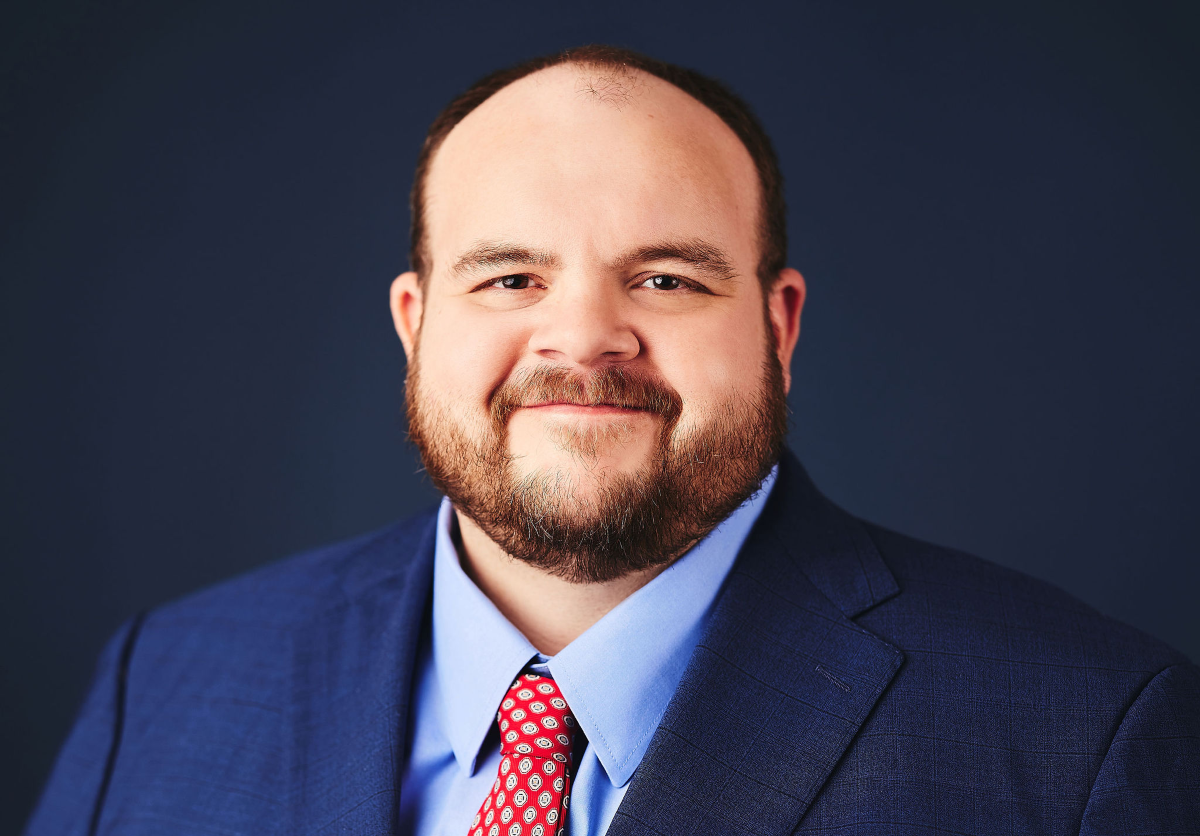
The Colodny, Fass, Talenfeld, Karlinsky & Abate law firm sent a newsletter regarding Freshman House Representative Frank Artiles’ recent teleconference. In "Freshman State Representative Frank Artiles, a Public Adjuster, Meets With Florida Insurance Industry Representatives On Concerns, Commonalities" the lawfirm noted the following:
Newly-elected State Representative Frank Artiles, a public adjuster, appraiser and umpire by trade, held a teleconference on November 22, 2010, with the goal of introducing himself to Florida insurance industry representatives and other interested parties and discussing their concerns, such as fraud and other issues impacting the property and casualty market.
Joined by Paul Handerhan, president of a new insurance advocacy group (founded by Representative Artiles) called "Florida Association for Insurance Reform," Representative Artiles explained that, through various working groups he has facilitated, he has learned there are ways to compromise on the issues, while advocating for consumers.
"I didn’t come to Tallahassee to represent public adjusters," he emphasized several times, "I came to represent my district."
After discussing his background at length, Representative Artiles touched on general Florida insurance issues, such as Citizens Property Insurance Corporation ("Citizens"), which he said puts private insurance companies at a competitive disadvantage, principally because it is immune from bad faith claims.
"I want to protect insurance companies to make sure they do make a profit, because at the end of the day, I am a Republican," he added.
Representative Artiles also said he wants to "stamp out fraud," because of its negative impact on the State, as well as on insurance policyholders.
The meeting participants quickly prompted a discussion on claims-related issues and public adjuster fraud. The subject of insurance-related Special Investigative Unit ("SIU") personnel also was touched upon.
"There are good public adjusters and bad SIU people," Representative Artiles said.
In regard to ongoing Hurricane Wilma fraud, Representative Artiles said that there is no reason insurance carriers should be getting newly reported losses from several years ago, when claimaints have had ample time and opportunity to do so earlier.
Arson, he said, is also an issue in certain parts of Florida because of the economic situation. "When someone buys a house in the foreclosure process for $40,000 and insures it for $250,000, the policy alone motivates them to burn down the house," he explained. "We are also limited by the Valued Policy Law."
Further, because of the way Florida’s laws are written, he continued, many claims are not technically classified as fraud.
…
On the subject of public adjusters, he referenced Florida’s requirement that each public adjuster must carry errors and omissions insurance and said that, since this mandate, nearly 1,000 public adjusters have vacated the field.
Together with Mr. Handerhan, Representative Artiles discussed the licensing of appraisers and umpires. Apparently, many of those who currently hold appraisal and umpire licenses, or "consider themselves appraisers" have been convicted of Medicare fraud and "been literally unlicensed in every aspect."
Representative Artiles alluded that SIU investigators should be licensed as stringently as public adjusters and appraisers. It was pointed out that many of these independent people are not even trained as thoroughly as their counterparts at private corporations.
He added that, in the context of a claim, the SIU representative doesn’t make an ultimate decision, but has a significant impact on the process.
One meeting participant said that public adjusters canvassing neighborhoods present a danger to policyholders, who have no screening process to determine their qualifications.
Another meeting participant said he would like to see licensing standards for SIU personnel that are comparable to those applicable to public adjusters and appraisers. The large disparity in requirements sends mixed signals, he explained.
…
"Citizens is literally eating its cake and hurting the entire industry," Representative Artiles said.
…
Representative Artiles remarked that many cases of fraud don’t involve public adjusters, adding that a change in Florida’s replacement cost value ("RCV") statute has "turned the claims industry on its ear." He explained that, because Florida is the only state that requires insurers to pay RCV up front, the law is anti-consumer, since the costs of these payments are passed along in higher premiums.
He went on to say that Florida should adopt an "Arizona-style" law that would mandate a comprehensive inspection prior to selling a home. The information would be kept in a database and, according to Representative Artiles, would provide a long-term savings for insurers that have access to this type of information. It also would help takeout companies, he said, which he described as "flying blind" from the outset of assuming a policy.
…
He also remarked that many general contractors are out of work and would welcome the opportunity to be employed as public adjusters.
Candidate Frank Artiles wrote a guest post on this blog, Everyone Must Participate In The Political Process. There he was quite emphatic about the number one problem regarding insurance:
Over the last few years, many voters have not been provided the truth regarding the insurance industry agenda of higher insurance rates and less regulation. This agenda fosters the biggest problem with insurance– insurance companies that are denying, delaying and not paying claims.
Time will tell what laws Frank Artiles will support on that agenda. Privately, I will do what I can to explain fully the various issues Frank Artiles raised in the teleconference.
I absolutely disagree that the current Replacement Cost law is anti-consumer. It makes insurance companies pay for what they sell: replacement cost insurance. Most consumers will never believe that allowing insurance companies to sell Replacement Cost Insurance and not requiring that replacement costs be paid is a pro-consumer law because it is not. Such a change in the law promotes deceptive advertising and avoids the legal problems noted in Prevention of Performance with Replacement Cost Value:
…the 11th Circuit Court of Appeals did not agree that the doctrine of prevention of performance should be applied to replacement cost value provisions in insurance contracts when an insurer fails to pay at least actual cash value. The 11th Circuit recognized that it would have been costly, inconvenient, and most certainly a hardship for the association to pay for millions of dollars in repairs without the assistance of insurance benefits, but held that the hardship would not excuse the contractual requirement to actually repair the property before replacement cost value damages could be awarded. The appeals court reversed the trial court’s award for replacement cost value, but affirmed the trial court’s award for actual cash value damages, finding that they had been sufficiently proven.
This decision leaves many unanswered questions for policyholders. For starters, where is one who suffers a large loss supposed to get money to make repairs in order to get replacement cost value? Other issues are equally unsettling in the case, including the supposed election of remedies between ACV and RCV when making an insurance claim that the 11th Circuit discusses.
The flaw in the type of law Representative Frank Artiles now proposes was explained in QBE Insurance Case Rewrites Replacement Cost Adjustment, where I said:
The practical impact of such legal reasoning is that insurers, absent consumer protection statutes requiring payment of replacement costs, can now underpay losses and get away with it.
The existing law protects Representative Artiles’ constituents; the law he proposes would essentially allow insurance companies to delay paying or even fleece the difference between replacement cost and actual cash value from policyholders who are at a financial disadvantage when it is time to rebuild or repair after a loss.
Given that Representative Artiles stated that the number one insurance problem was delayed and denied claims, I cannot imagine why he would support changes to insurance laws that encourage this wrongful behavior.