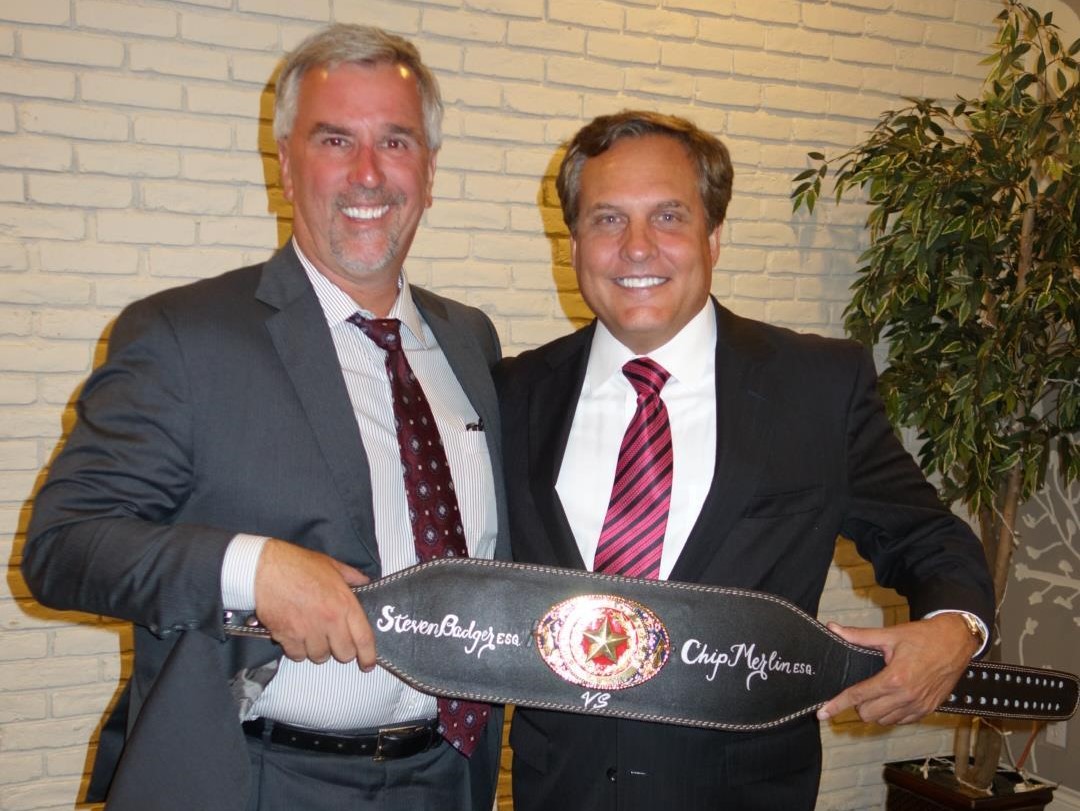
Ever get a job assignment you wish went to anybody other than you? The First Party Claims Conference had one speaker drop out of a presentation, Subrogation Opportunities Do’s and Don’ts, for which Jean Niven of our firm was the co-panelist. I had not prepared materials for a presentation nor given a public speech on subrogation topics since 1984, when I was still with Paul Butler representing insurers. While the novel issues concerning my presentation on The Science of Roof Damage Claims excited me, the truth is that claim issues of subrogation can be tedious for all adjusters. It is often an overlooked area of claims handling-especially from the policyholder’s perspective.
I am fortunate that Jean Niven works closely with me on my cases because she is extraordinarily thorough and prepared. She makes me look far better than what I am. We have a tremendously successful track record when working on projects together, primarily due to her efforts.
Regarding the subrogation speech, she put together the cases and basic outline of the speech. As I went through it, I remembered various instances where subrogation rights and issues became significant considerations of a first party claim. As I studied the issue and thought about these experiences, I recalled that subrogation provides significant opportunities to a policyholder that may soften the blow from uninsured losses.
The first rule from the policyholder’s perspective is that subrogation should become a major consideration when significant uninsured losses occur. It is becoming more frequent that policyholders have such uninsured damage scenarios for a number of reasons. These include, but are not limited to:
- High Deductibles.
- Exclusions
- Being Under insured.
- Having limited amounts of coverage for certain types of loss.
- Co-insurance penalties.
- Gaps in coverage.
- Non-Covered Property
The greater the uninsured loss, the more important for a claims handler to suggest that policyholder counsel be retained to orchestrate a procedure to recover uninsured losses. Our firm strongly suggests that policyholders retain their own counsel, even if it is solely to work out subrogation and litigation agreements with the insurer.
Ethically, we cannot understand how insurance retained counsel can approach a policyholder for dual representation. Yet, it is commonplace and probably a fertile field for malpractice because no attorney can serve competing masters. Indeed, it has been our experience that independent policyholder counsel can work hand in hand with the insurer’s counsel far more productively and ethically than if one law firm is representing entities with competing interests in money and control of how the recovery will be attempted, distributed, and paid for.
A primary coverage issue for policyholders to be concerned about following a loss is to do nothing to waive or impair the insurer’s right to subrogation. A typical subrogation clause reads:
In the event of any payment made hereunder, the Company shall be subrogated to the extent of such payment to all Insureds’ rights of recovery thereof against any person or organization and the Insured shall execute and deliver instruments and papers and do whatever else is necessary to secure such rights. The Insured shall do nothing after loss to prejudice such rights.
The problem with the clause in cases of uninsured loss is that the papers and agreements are not indicative of who gets what, in what order of preference, who pays for the expenses of legal fees and costs, who controls decisions of settlement, trial and arbitration, who pays for the insured’s efforts to aid the insurer, etc. All these matters should be addressed in agreements that are subject to negotiation. It is legally complex because state laws vary on these issues. In some states and situations, policyholders may be giving away rights to free first reimbursement of uninsured losses by not retaining their own counsel to research and negotiate these issues.
Policyholders should also be concerned with "spoliation of evidence" needed to prove responsibility of third parties. Proper preservation of evidence is crucial in these situations. Insurer subrogation departments and policyholders should be urged to cooperate so that mitigation efforts do not destroy crucial evidence. Again, quickly obtaining counsel to orchestrate the loss scene recovery and contemplate claims against third parties is crucial.
Some teach about subrogation by trying to demonstrate all the different scenarios third parties cause, contribute to, or fail to prevent losses to the policyholder. I suggest that policyholders and their representatives first ask how significant the uninsured loss may be. The more that portion of the loss is uninsured for whatever reason, the more crucial it is to quickly retain counsel that can help orchestrate a plan for potential recovery. My experience is that such counsel can decide if it is best for the policyholder to work with the insurer and how those arrangements can be made. Often, counsel will work on a contingency fee basis and advance all costs towards the recovery.
So, in the end, I was pleasantly surprised at how much I enjoyed presenting views and teaching on this topic. Given that deductibles seem to be getting larger and larger, while coverages are becoming more limited, it is a fairly common occurrence for significant uninsured loss to take place. Thus, this area and topic of claims handling will become more important to policyholders, who may find themselves working closely with their property insurer to recover for losses.